
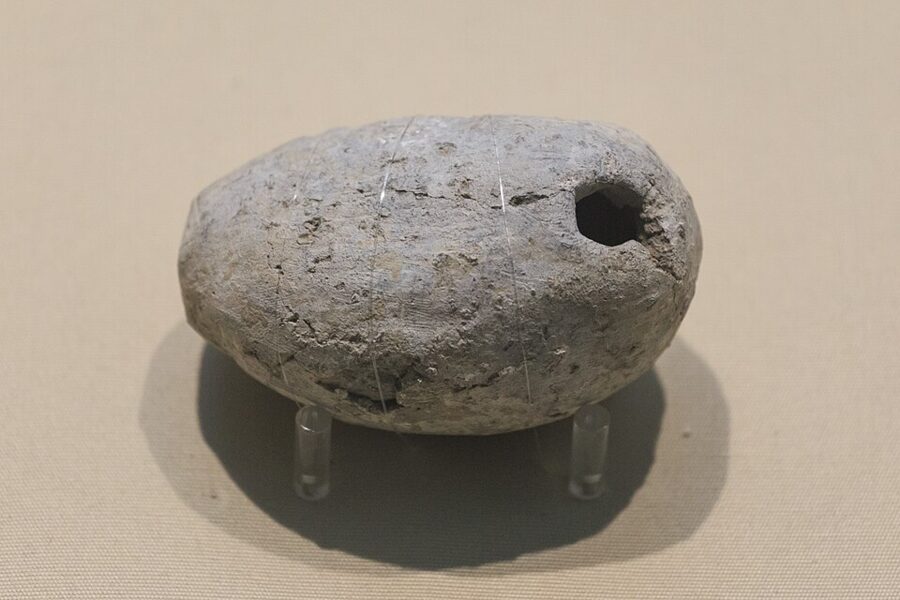

The oldest xun (埙) anyone has found is 9 centimeters tall, made of gritty gray clay, and has exactly one hole. It came out of the waterlogged ground at Hemudu, near Yuyao in Zhejiang, and it is about seven thousand years old. Blow across that hole at the right angle and the hollow inside answers with a single low, breathy note, the same note it gave the person who pinched it into shape.
Everything that happened to the instrument afterward is a story of holes. A second one turns up at Banpo, outside Xi’an, a thousand years later. By the Shang (1600–1046 BC) the xun has five finger holes and can play eleven notes. By the time Confucius was alive it had six, and it had a seat in the court orchestra as the only voice made of earth.
Then it went quiet for most of two thousand years, kept alive in temple ritual and a single printed songbook, until a flutist in Wuhan spent years in the early 1980s testing more than a thousand experimental xun to find one that could carry a modern melody. Today you can hear it in film scores and on a museum stage in Wuhan, see the Neolithic originals in Xi’an, Hangzhou and Beijing, and buy one on a Xi’an side street. The trick is telling the instrument from the souvenir.
On this page
A pot of air: how the xun makes its note
A xun is a vessel flute. Instead of a long tube of air, as in a bamboo dizi or an end-blown xiao, it has a closed chamber with a blowhole at the top and finger holes in the walls. You shape your lips into a narrow stream and aim it at the far edge of the blowhole. The edge splits the air, and the whole body of air inside the chamber starts to vibrate at once.
Acoustically it behaves as a Helmholtz resonator, the same physics as blowing across the neck of a bottle. The pitch depends on the volume of air inside and on the total area of open holes, not on where those holes sit. That is why a xun’s finger holes can be scattered over the body wherever fingers fall comfortably, rather than lined up in a row as on a flute. Open more hole area and the note rises.
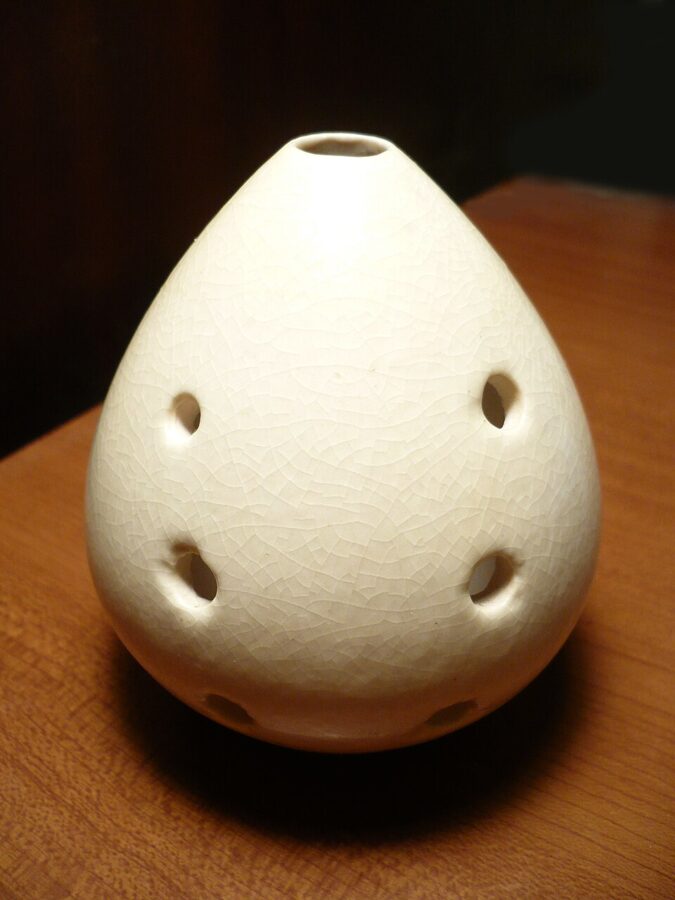

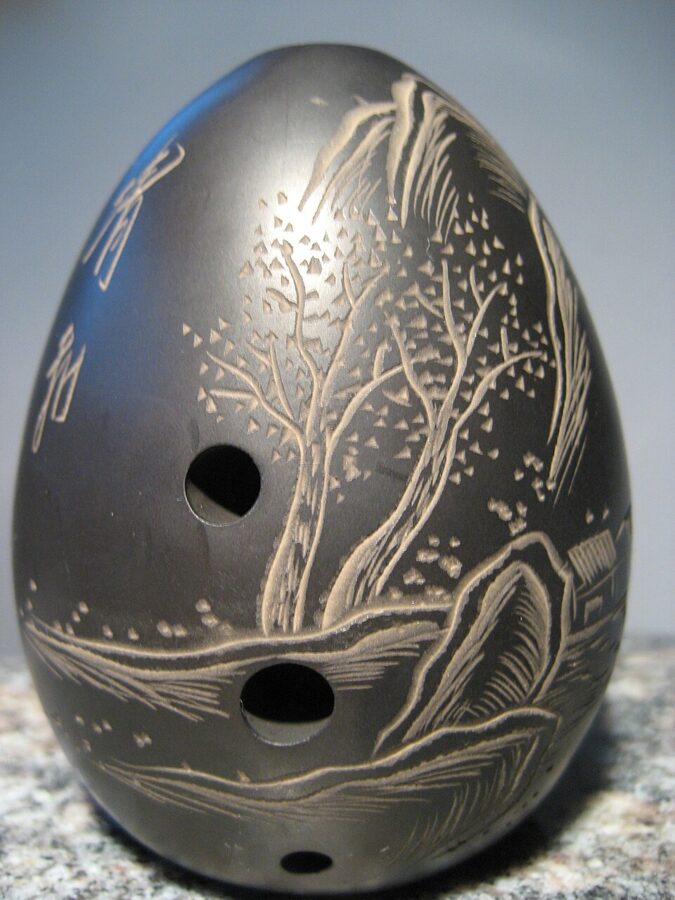
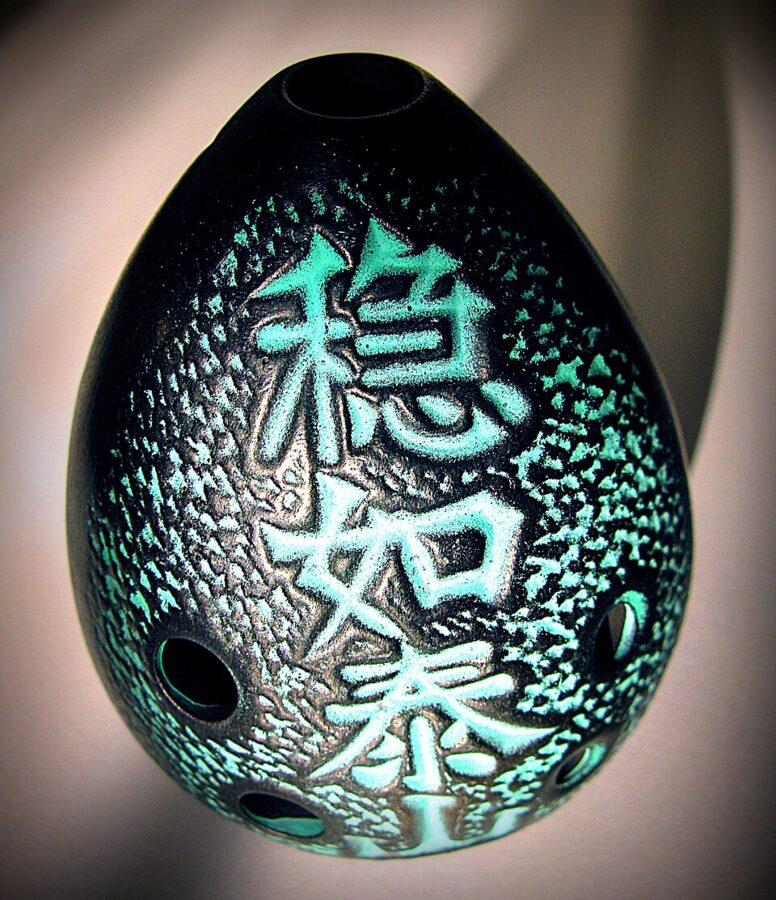
The classic modern xun is pear-shaped or a flattened egg, narrow at the top and wide at the base, with a flat bottom so it can stand on a table. Most have eight, nine or ten holes: a cluster on the front for the fingers of both hands and two on the back for the thumbs. Makers also produce gourd shapes, a tall “pen-holder” cylinder, water drops, big fish and ox heads, and double-chamber models with two resonators side by side that extend the range.
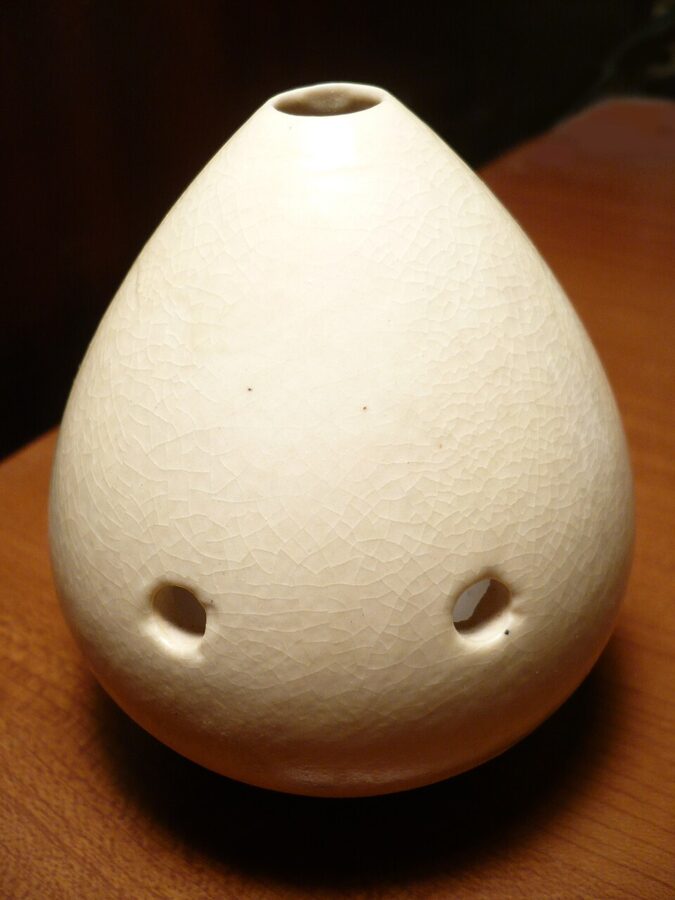

Clay is the default, fired black or red depending on kiln temperature. There are porcelain, purple-clay (zisha), bamboo, horn and resin versions, and the archaeological record adds stone and bone. The sound that comes out is low, round and very breathy, with a soft attack: closer to a voice humming in an empty room than to a whistle.
Xun or ocarina?
They belong to the same family, and in English shops a xun is often sold as a “Chinese ocarina.” The difference is in the mouthpiece. An ocarina has a duct: a built-in windway that channels your breath to the edge, so it sounds as soon as you blow. A xun has none: you form the air jet yourself with your lips, as on a transverse flute, and the angle of the instrument against your chin changes the pitch and color of the note.
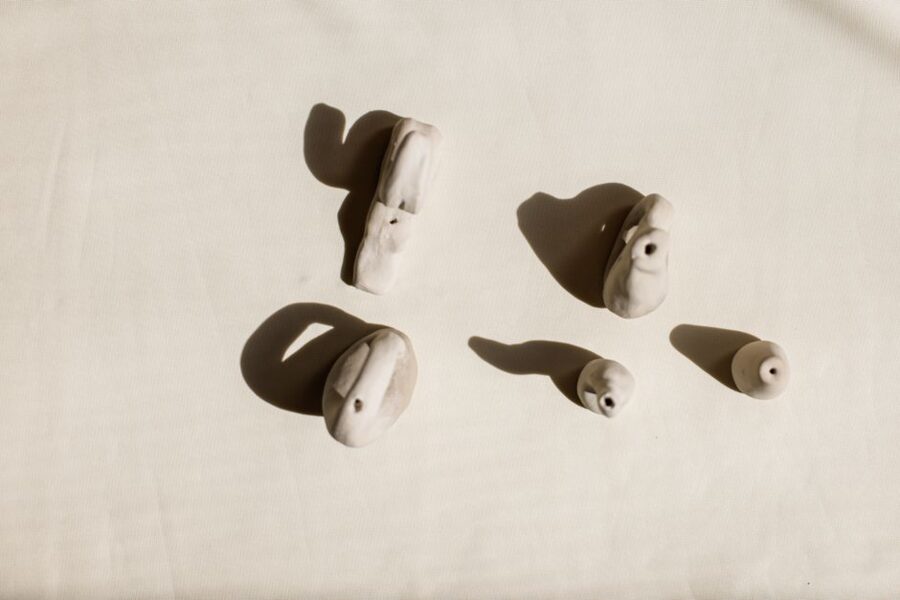
That makes the xun harder to start and more expressive once you can. Players bend notes by tilting the body, add vibrato from the breath or the fingers, and slide between pitches in a way a ducted instrument resists. The modern European ocarina, by contrast, has a birth certificate: in 1853 Giuseppe Donati of Budrio, near Bologna, turned a few-note clay toy into a proper instrument and named it after the local dialect word for “little goose.”

Seven thousand years of holes
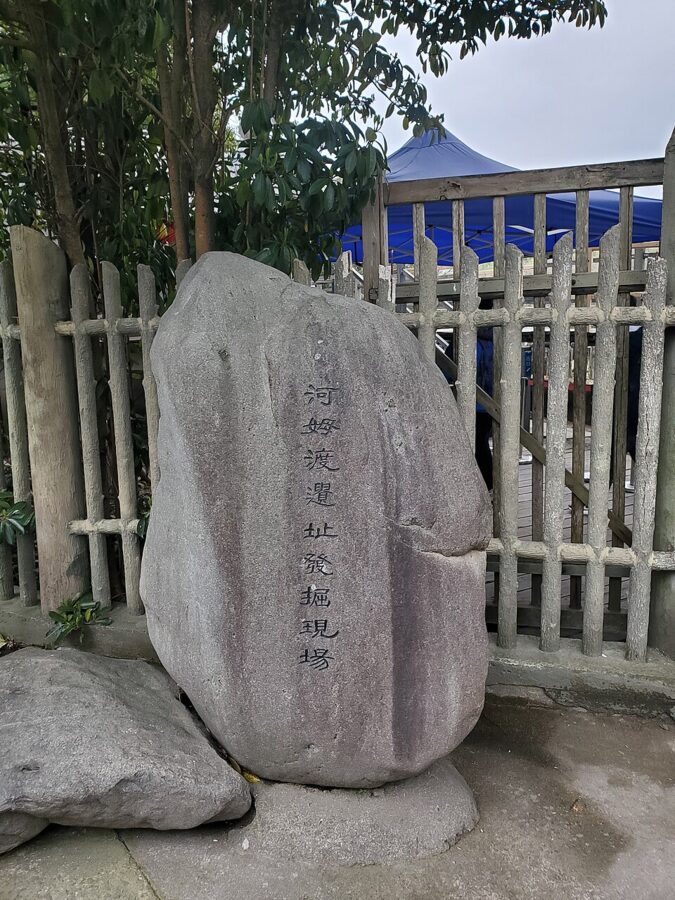
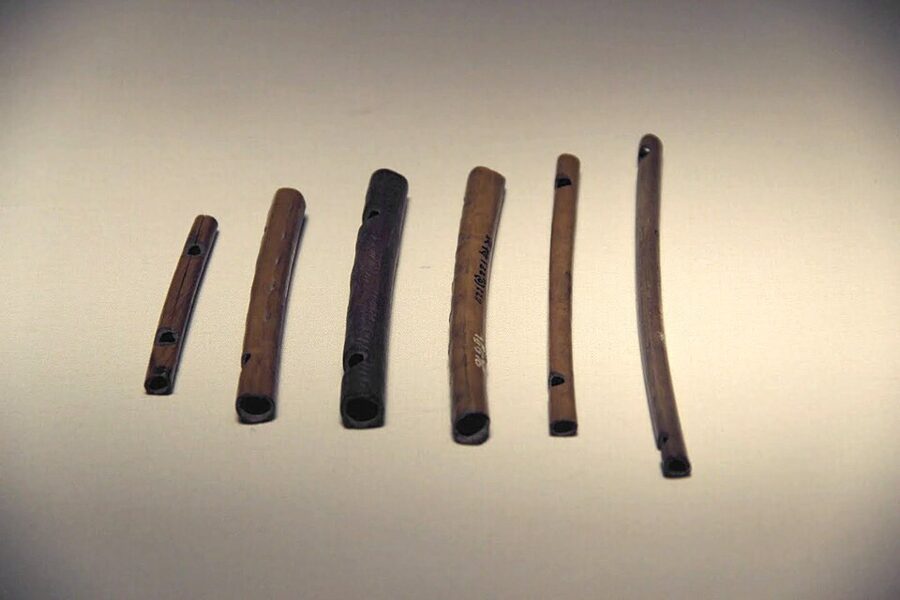
The Hemudu xun was found in the Neolithic village site discovered in the summer of 1973, when farmers digging for a drainage project on the Yao River plain turned it up. Two excavations, in 1973 and 1977, uncovered stilt houses with mortise-and-tenon joints, cultivated rice, lacquer, ivory carving and a set of bone whistles made from bird bones. The xun is the plainest thing of the lot.

It may have started as a hunting lure. Chinese accounts of the xun’s origin repeat the idea that early hunters threw stones or clay balls on cords, noticed that the hollow ones whistled, and learned to blow into them to imitate birds and animals. There is no way to prove it, and the bone whistles from the same Hemudu layers, which still produce something like a bird call, make the theory at least plausible.

Banpo and the first finger hole
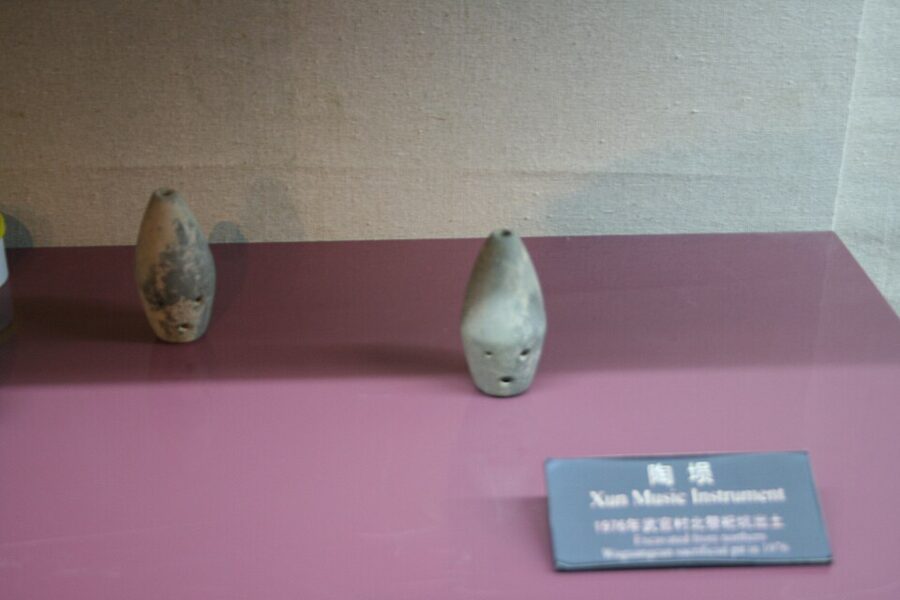
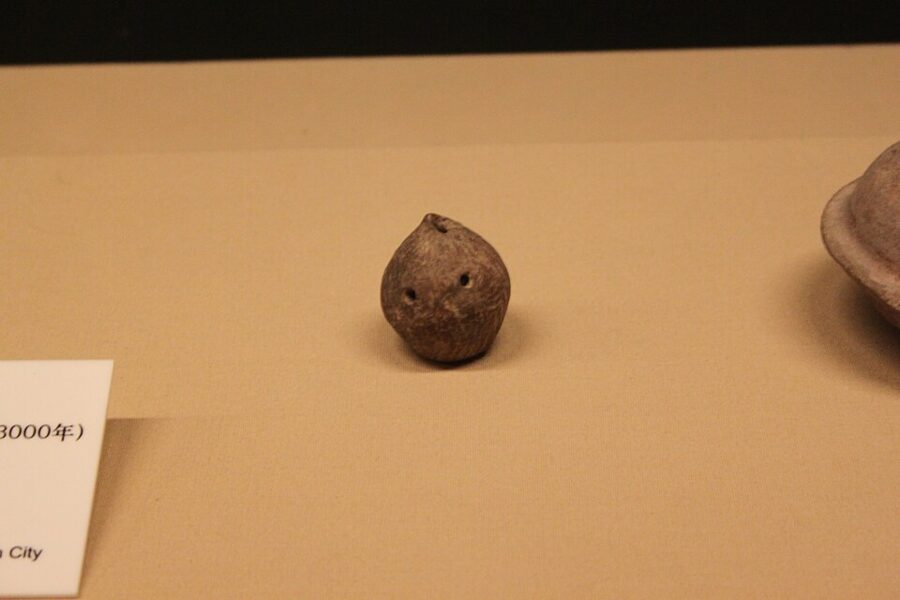
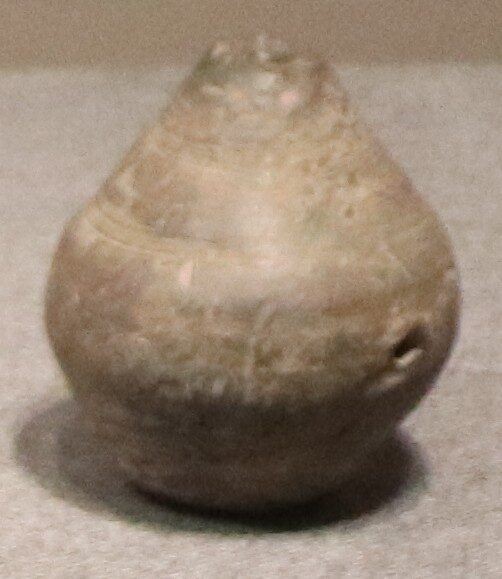
At Banpo, the Yangshao culture village on the east bank of the Chan River in Xi’an, archaeologists in the 1950s found two small xun of fine gray-black clay, pinched by hand into the shape of olives and still intact. The settlement is between 5,600 and 6,700 years old. One of the pair is 5.8 centimeters long and has a finger hole as well as the blowhole, which means it could play two pitches instead of one.
Sources describe the second Banpo xun differently: one Xi’an account says it has two holes running straight through, top to bottom, while most others give it a single blowhole. Either way, tests showed both could be played, and they are routinely cited alongside the Hemudu piece as the earliest wind instruments in China. A similar egg-shaped xun came from Jiangzhai in nearby Lintong, another Yangshao village.
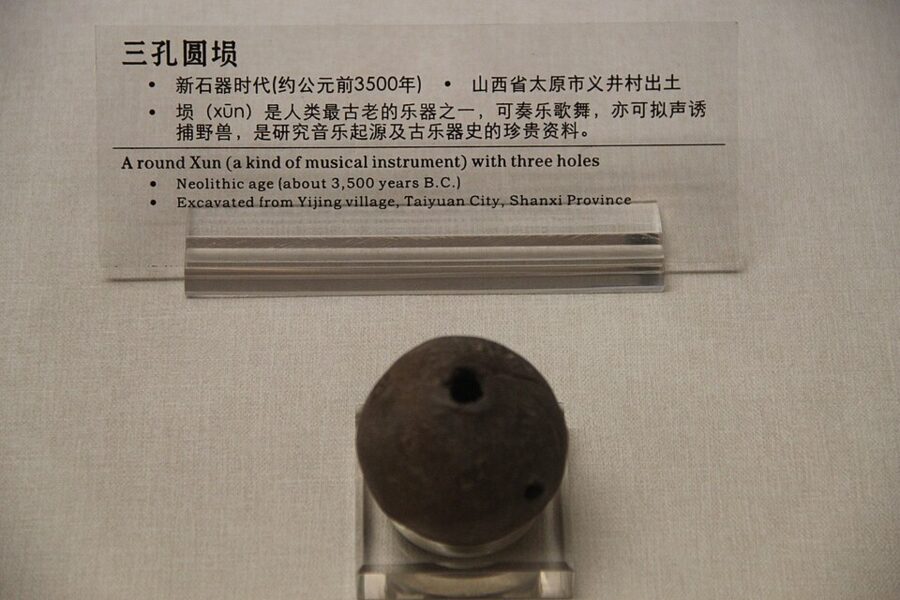
The holes kept arriving slowly. Around four or five thousand years ago some xun had two holes and three notes. A xun from Huoshaogou in Yumen, Gansu, dated to the very end of the Neolithic or the start of the Bronze Age, has three finger holes and can play four notes. Every added hole represents generations of potters, which is the part of this story I find hardest to picture: a melody that took a thousand years to gain a note.
The Shang xun sets the shape
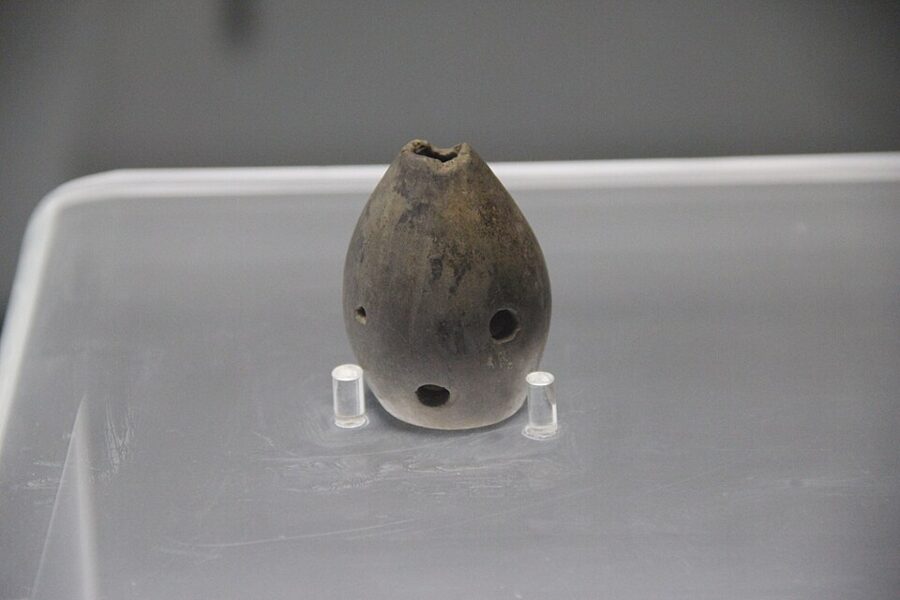
By the late Shang the instrument had settled into the form you see in every museum case: a flat-bottomed egg, slightly pointed at the top, with five finger holes. Three sit on the front in an inverted triangle and two on the back. The tomb of Fu Hao at Anyang, the royal consort and general who died around 1200 BC, held three xun of gray pottery built this way. Measured today, they play eleven notes and can cover a seven-note scale.
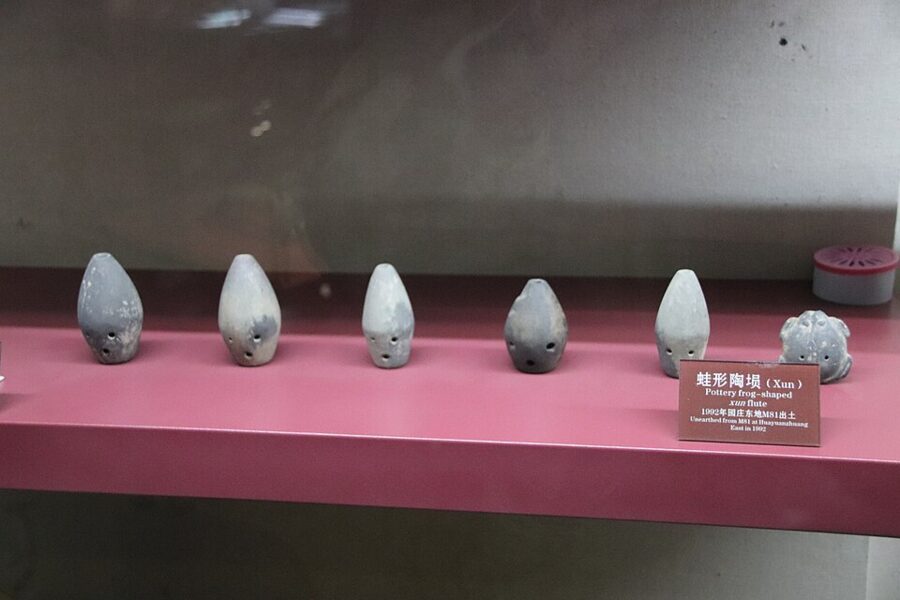
Another late Shang xun, from Liulige in Hui County, Henan, is in the National Museum of China. Its fundamental note is an A, and the museum’s own description suggests that musicians of the time may already have had some idea of a fixed reference pitch.
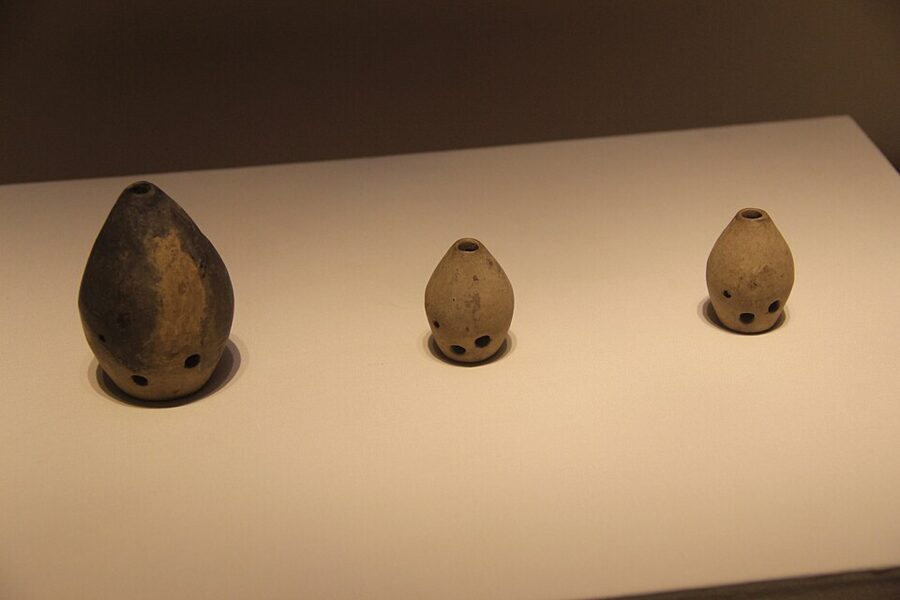
The Fu Hao design has had a long afterlife. When the 2023 fantasy epic Creation of the Gods I needed a Shang-period instrument for the screen, the prop was modeled on the Anyang xun. The step to six holes came by the Spring and Autumn period (770–476 BC), when the xun could play full five- and seven-note scales, and the six-hole egg stayed the court standard until the last dynasty fell.
The earth voice among the eight sounds
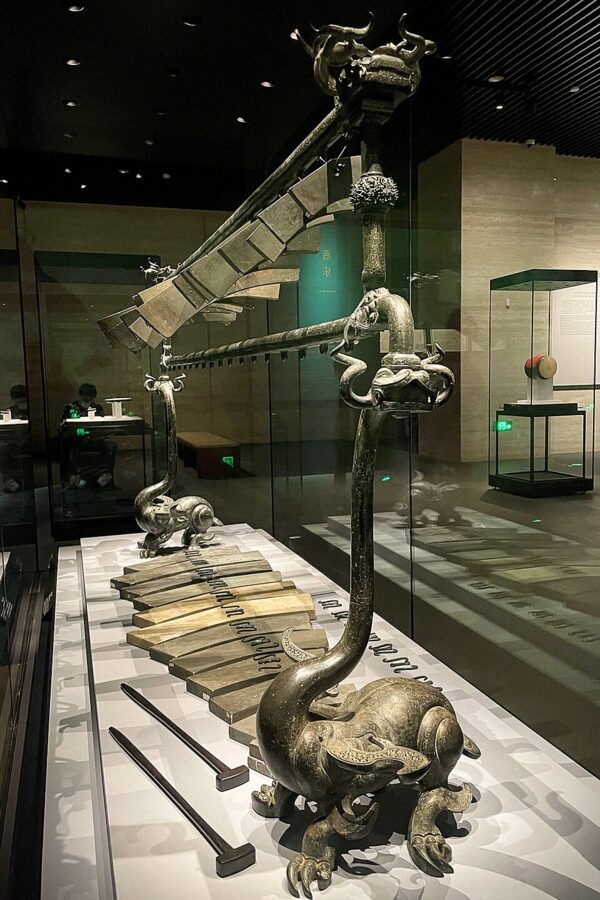
The Rites of Zhou, a ritual handbook compiled in the late first millennium BC, sorted every instrument by what it was made of. The scheme is called bayin (八音), “the eight sounds”: metal (bells), stone (chime stones), silk (zithers), bamboo (flutes and panpipes), gourd (the mouth organ), earth, leather (drums) and wood. The xun was the earth sound, and of the instruments still played today it is the only one that fills that category.
In a ritual orchestra it filled the middle register between the bells and the high flutes, and court writers ranked it alongside bells and chime stones in importance. Later commentators liked to call it “the sound of the beginning of autumn”: a voice for the season when the year turns toward cold. A Tang dynasty poet, Zheng Xiji, wrote an entire ode to it, praising the instrument’s “virtue of plain thickness, which the sages prize.”

The oldest Chinese dictionary, the Erya, compiled around the third century BC, gives two sizes: a large xun “like a goose egg, flat at the bottom, with six holes,” and a small one like a chicken egg. That is still a fair description of the instrument in a modern shop window.
The elder brother’s xun, the younger brother’s chi
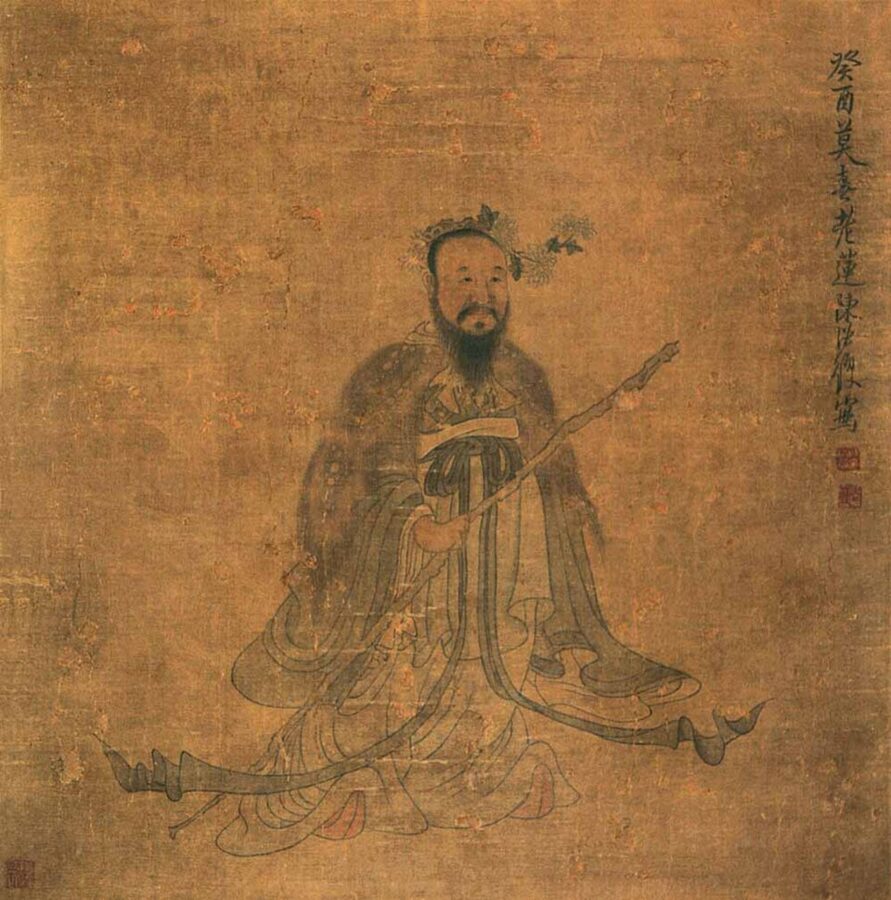
The line everyone quotes comes from the Book of Songs (Shijing), the anthology of poems collected around the sixth century BC. In the poem “He Ren Si,” in the Minor Odes section, the speaker recalls a time when “the elder brother blew the xun, the younger brother blew the chi.” The chi (篪) was a transverse bamboo flute. Since then the pairing xunchi (埙篪) has meant brothers, or friends, in perfect harmony.
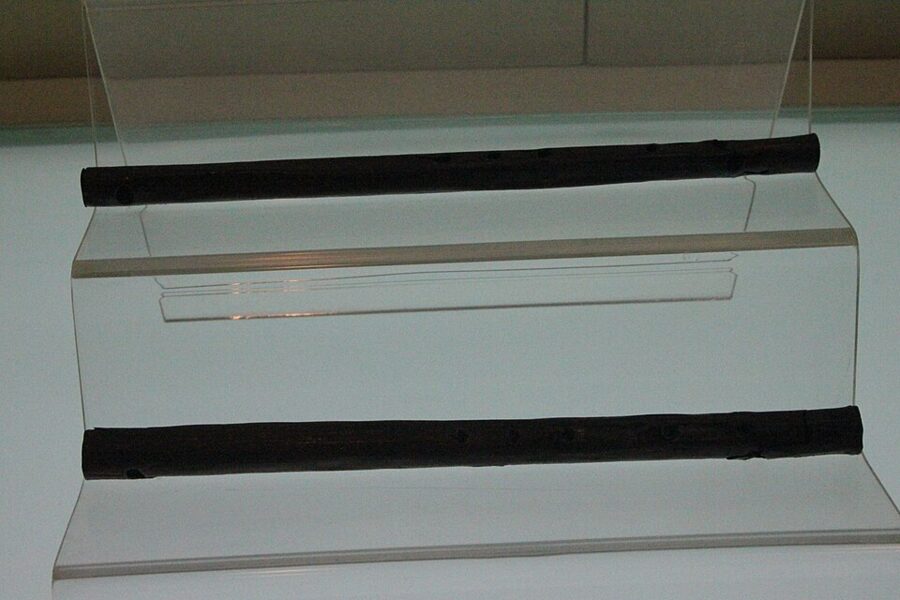
Read the whole poem and the harmony is in the past tense. The traditional interpretation is a lord of Su breaking off his friendship with a lord of Bao, and modern readers often take it as a wife’s complaint against a cruel husband. Either way, the most famous line about the xun is a memory of getting along, quoted by someone who no longer does. An old genealogy of inventions, the Shiben, adds a twist: it credits the xun itself to a Lord Bao.
Court instrument, toy, relic
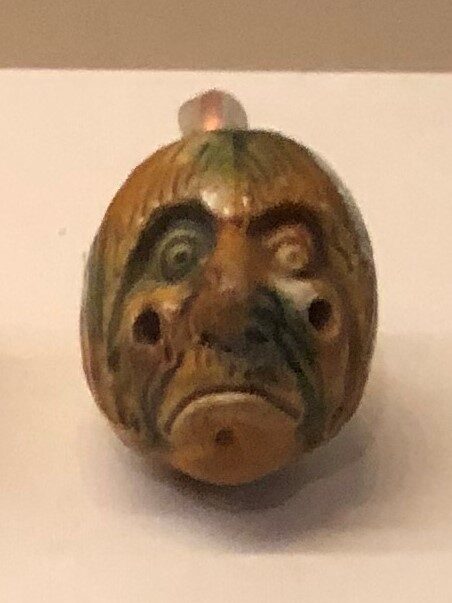
From the Qin and Han onward the xun belonged to yayue, the formal ritual music of the court, played at sacrifices to Heaven and the ancestors. At the same time it drifted into popular entertainment. Han potters made xun with human faces, and by the Tang (618–907) the instrument had a playful streak, with animal-head and human-head shapes and glazed ox-shaped whistles that look as much like toys as instruments.
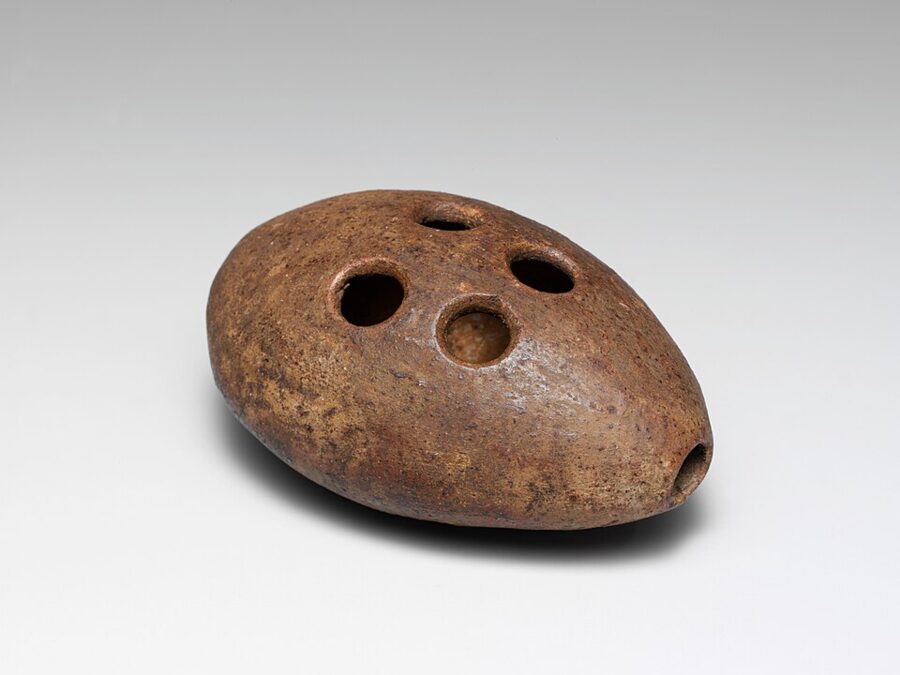
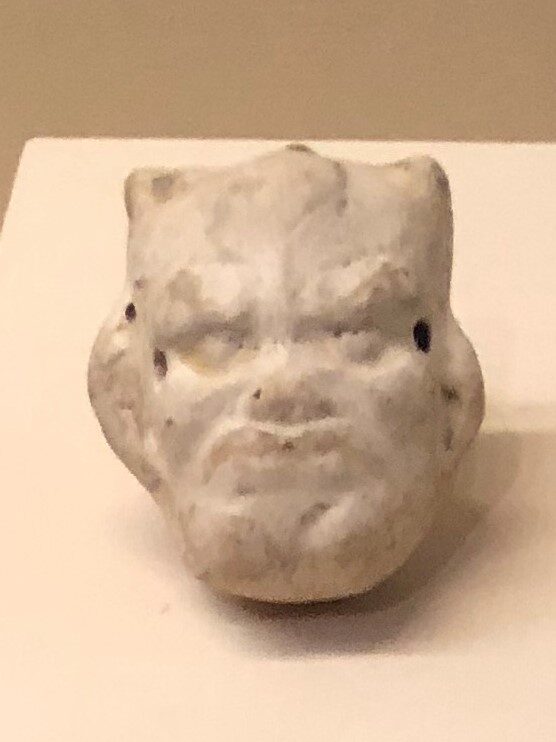

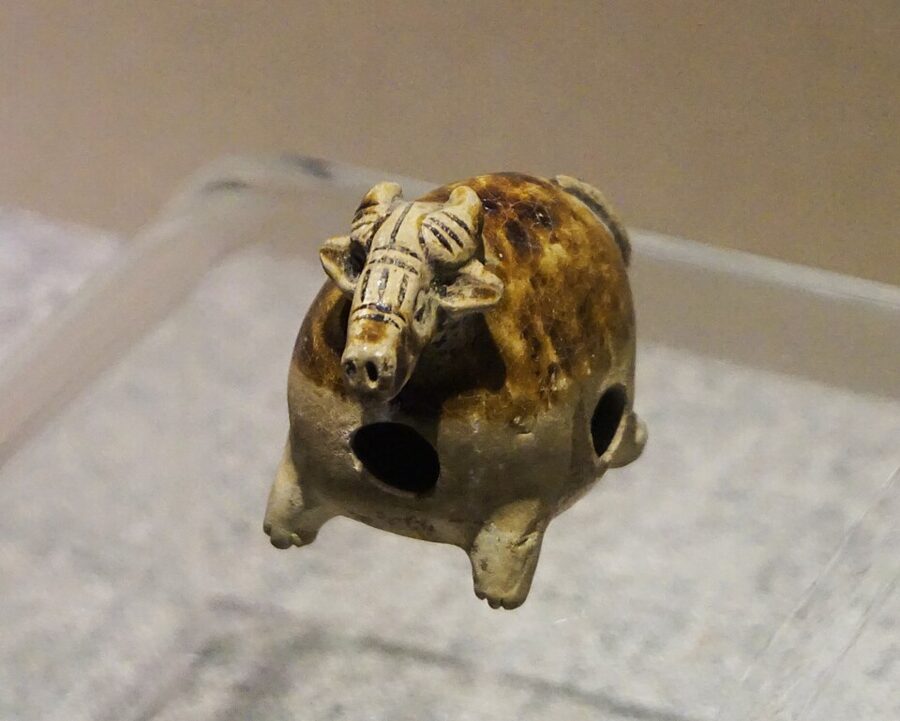


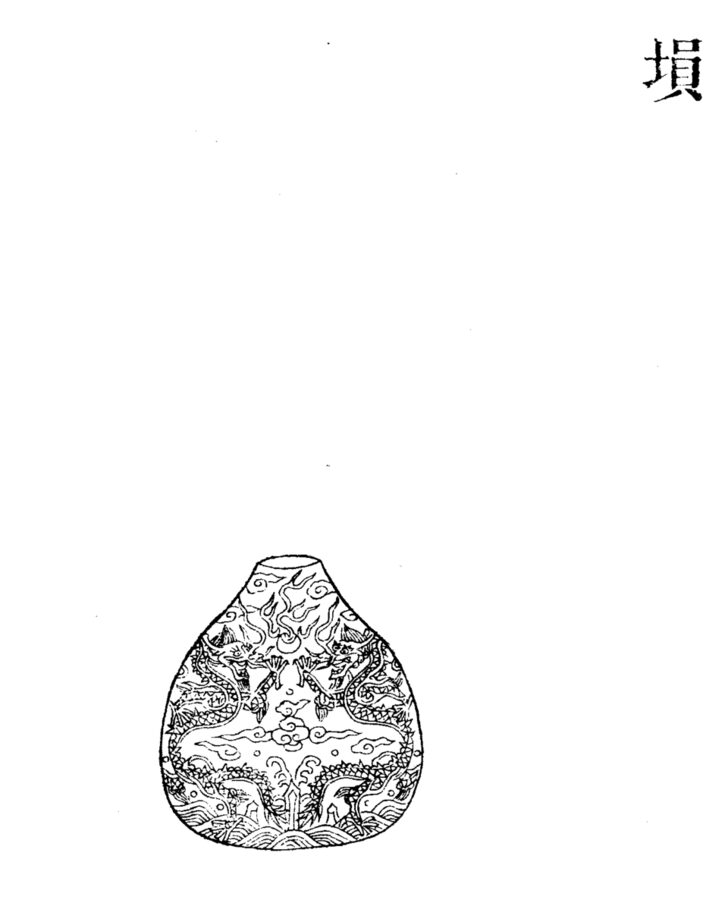
The court kept its xun to the end. The Palace Museum in Beijing holds a Qing dynasty example in red lacquer painted with gold clouds and dragons, made for Zhonghe Shaoyue, the music of “central harmony” that the Ming and Qing used at their great state sacrifices. It is the size of a goose egg, shaped like a steelyard weight, with a blowhole on top and six finger holes, and the museum files it under arms and ceremonial regalia rather than music.

The last old score is just as solitary. In 1888 the scholar Wu Xunyuan, working at the Lianchi Academy in Baoding, compiled the Tanghu Xun Pu, a book of seven pieces with diagrams of a five-hole pear-shaped xun and its fingerings. It is the only printed xun songbook known from any dynasty. After the Qing court fell in 1912, the xun had nowhere left to be played and very nearly stopped being heard at all.
Zhao Liangshan’s one minute
The revival started with a bamboo flutist. Zhao Liangshan, born in Heishan, Liaoning, in 1939, studied the dizi at the Central Conservatory of Music in Beijing from 1959 and in 1963 joined the Hubei Song and Dance Troupe in Wuhan. Encouraged by his teacher Chen Zhong, he set out to rebuild the xun as a stage instrument, starting from the shapes of the prehistoric originals.

It took him years and, by one count, more than a thousand trial instruments. What he arrived at was a ten-hole xun with a wooden bottom that could be adjusted, which widened the narrow traditional range and made the fingering consistent enough to play a melody in tune. In 1983 the troupe brought its chime-bell music and dance program to Beijing, and in the middle of it Zhao played a xun piece called “Ai Ying.”
The title comes from Qu Yuan’s poem “Lament for Ying,” written for the fallen capital of the state of Chu. The piece lasts about a minute, and Chinese accounts credit that minute with bringing the instrument back into public hearing. Zhao moved to Xiamen University in 1986, recorded the first solo xun album, Tao Xun Xin Hun (“A New Soul for the Clay Xun”), in 1988, and died in Xiamen in 2011. Xiamen listed his xun playing as city-level intangible heritage in 2009, and Fujian made it a provincial listing in 2017.
The next step was abroad. At the Olympic Arts Festival in Los Angeles in 1984, Du Ciwen, a flutist of the Central Conservatory, played “Chu Ge” (“Song of Chu”) on the xun. Du went on to teach generations of wind players in Beijing and to work on further refinements of the instrument. He died in Beijing on October 18, 2026, aged 87.
Liu Kuanren, Jia Pingwa and the “Ruined City”
In Xi’an the xun found its writer. Liu Kuanren, a flutist from Pucheng in Shaanxi, born in 1963, picked up the instrument in the early 1980s and added the vibrato of the erhu and the calm of the guqin to its playing. The novelist Jia Pingwa heard a tape of Liu’s piece “Xia Si” (“Reverie”), and the sound is credited with setting the mood for his novel Fei Du (“The Ruined City”), published in 1993, in which the xun drifts through the old streets of a thinly disguised Xi’an.

The two made an album together under the same title, with Jia reading an opening monologue about the xun as a thing of mud that gives off “the sound of earth and the breath of the ground.” The novel’s notoriety did the rest, and xun sellers spread through Xi’an’s streets. Shaanxi listed xun music as provincial intangible heritage in 2012.
Liu worked with the instrument maker Zhang Ronghua on a standardized, wide-range ten-hole xun, became the first president of the China Xun Culture Society in 2006, and on December 15, 2011, gave what was billed as the first full concert of xun music at the National Centre for the Performing Arts in Beijing. He later moved into politics, rising to vice-chairman of Shaanxi’s provincial political consultative conference, and in August 2026 a court in Urumqi sentenced him at first instance to 15 years for bribery and embezzlement.
On screen: Ju Dou and after
The xun’s biggest audience came through cinema. For Zhang Yimou’s Ju Dou (1990), set in a sealed dye-works compound in 1920s rural China, the composer Zhao Jiping scored the whole film with almost nothing but a xun. He had the player perform while watching the picture, so the breath of the instrument follows the characters scene by scene. The flutist Zhang Weiliang is usually credited as the player.
Since then the sound has become screen shorthand for the distant past: tombs, deserts, the end of a dynasty. Good players spend careers proving it can also dance.
Where to start listening
Start with “Ai Ying” in Zhao Liangshan’s recording, which explains in sixty seconds why his audience in 1983 was stunned. Then Du Ciwen’s “Chu Ge,” and Liu Kuanren’s albums, especially the Fei Du recording with Jia Pingwa’s spoken opening. Watch Ju Dou last, once your ear knows the instrument: the score works best when you notice how little of it there is.

Seeing the ancient ones
The Neolithic and Shang xun are small, plain and easy to walk past. Look for them in the earliest galleries, next to the bone whistles, pottery and spindle whorls, and check before you travel: museums rotate objects, and none of the collections below promises a particular xun will be in its case on a given day.
Xi’an: Banpo Museum and Shaanxi History Museum
The Banpo Museum was China’s first museum built over a prehistoric site, opened in 1958 on the ground where the village was excavated. A great hall covers the house foundations, kilns and the ditch that ringed the settlement, and the galleries hold finds from Banpo and Jiangzhai. Take Metro Line 1 to Banpo station, leave by Exit A, walk west about 300 meters and turn left onto Banpo Road for another 200.
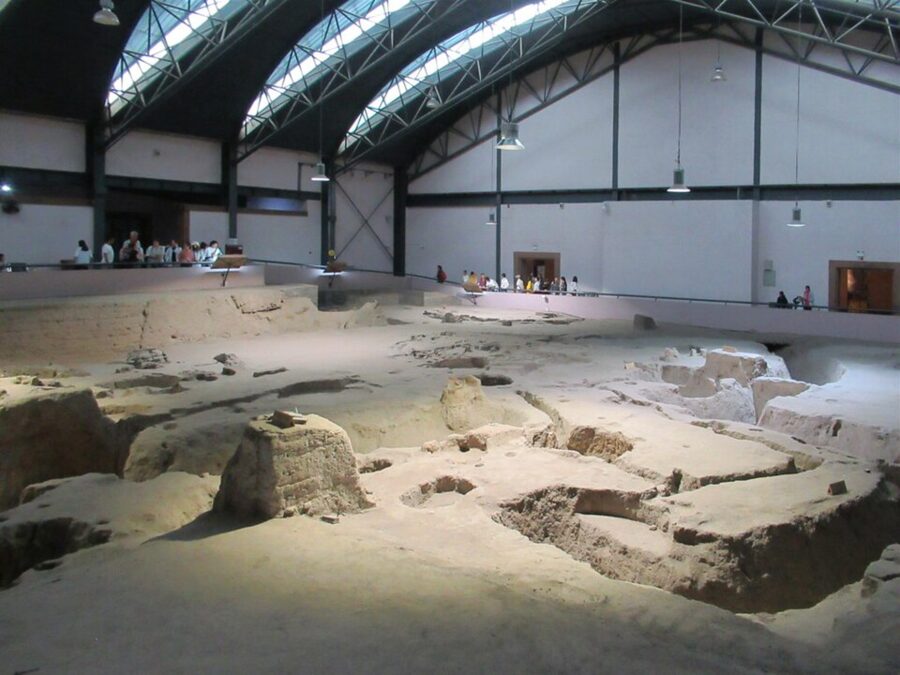

Banpo’s ticket rules are posted on its own site: 55 yuan from March 1 to November 30 and 40 yuan from December 1 to the end of February, free for under-18s and over-65s. Hours are 08:00–17:30 in the high season (last entry 17:00) and 08:00–17:00 in winter (last entry 16:30). Allow an hour or two. A temporary exhibition on prehistoric pottery-making, open since July 31, 2026, shows 153 objects from the collection, many for the first time.
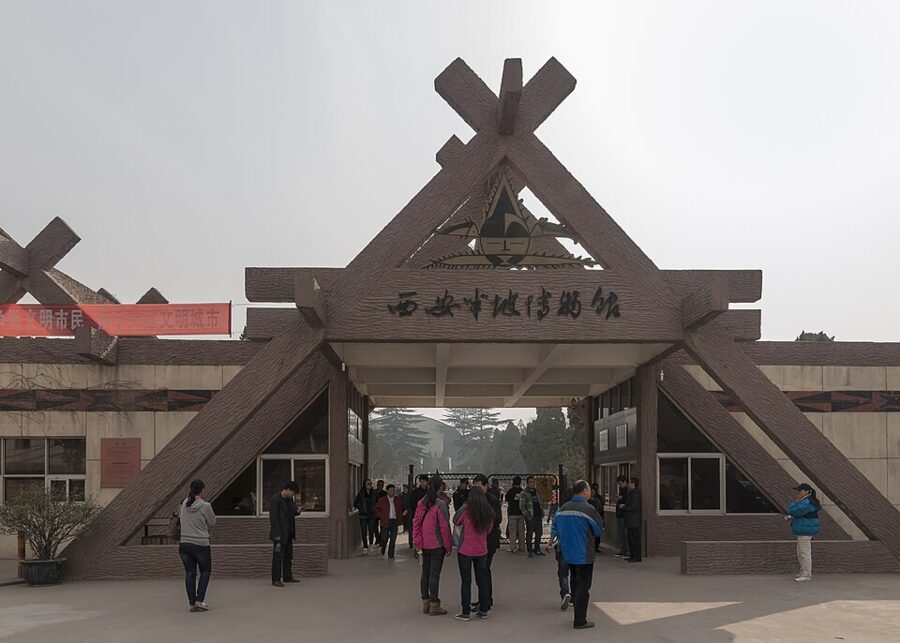

The Shaanxi History Museum also holds a Yangshao xun. Entry to the permanent galleries is free but needs a timed, real-name booking through the museum’s official WeChat account, made with your passport, and the release of tickets a few days ahead is famously competitive. The main building closes on Mondays and the Qin–Han branch on Tuesdays, except on public holidays.
Zhejiang: the provincial museum and Hemudu itself
The Hemudu xun, a first-grade national relic, belongs to the Zhejiang Provincial Museum, which is free and open Tuesday to Sunday, 09:00–17:00 (last entry 16:30). The newer Zhijiang branch, opened in 2023 in the southwest of the city, tells the province’s history from its first rice farmers onward and shows Hemudu finds, including the bone whistles. The xun was photographed in 2014 at the older Wulin branch, and the branch that shows it today depends on the museum’s rotations, so check its announcements before crossing town.

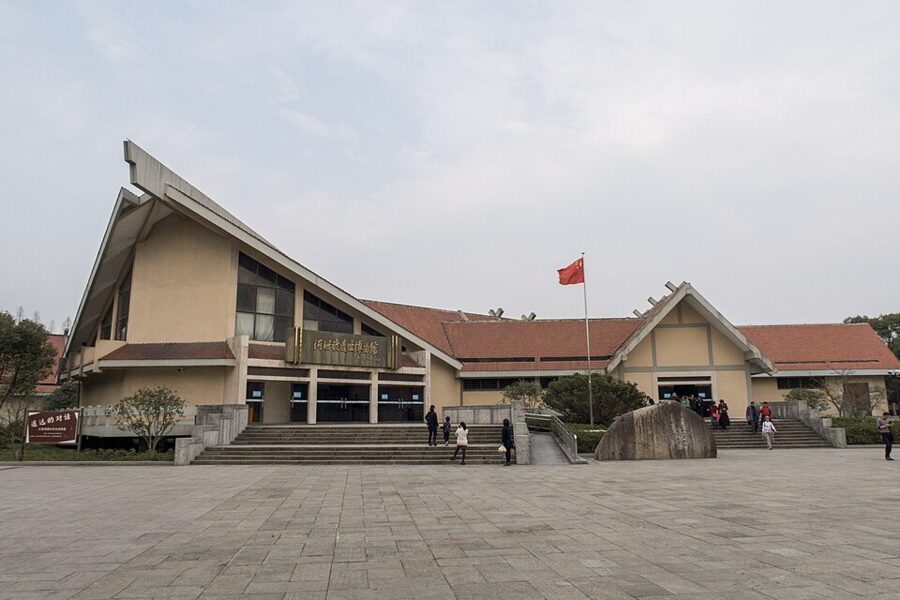
For the site, go to Hemudu town in Yuyao, west of Ningbo. The Hemudu Site Museum, opened in 1993 in a building modeled on the village’s long-ridged stilt houses, is free and closed on Mondays. Beside it, the new Hemudu Archaeological Site Park opened for trial operation on February 7, 2026, and has charged a trial price of 30 yuan since March 27, booked through its official WeChat mini program. The park is open 09:00–16:30 (last entry 16:00) and Yuyao bus 405 stops at “Hemudu Yizhi.”

Beijing: the Palace Museum, the Temple of Heaven and the Shang xun
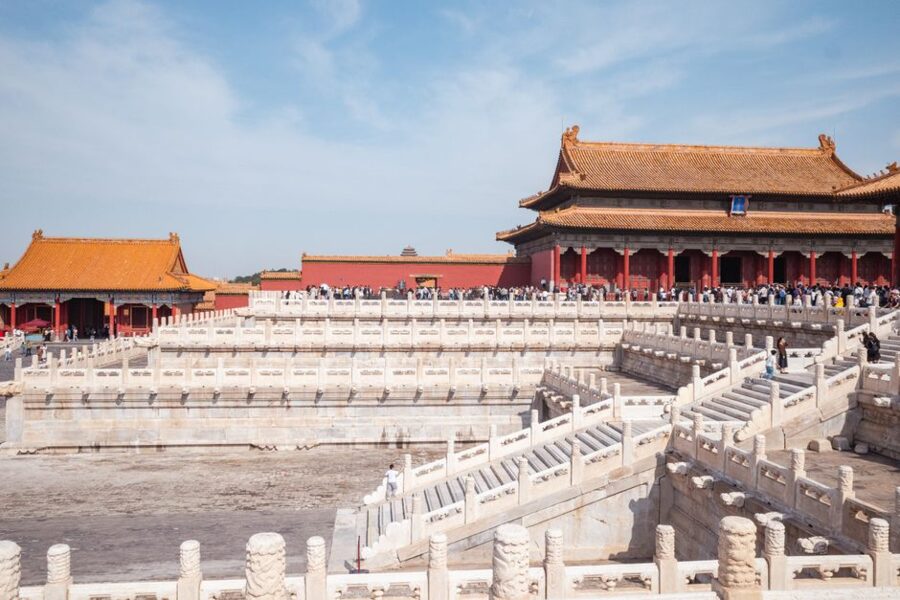
The Palace Museum’s lacquered Zhonghe Shaoyue xun is catalogued in its digital collection, but it is not listed in any current display, so treat a visit as a visit to the palace rather than to the xun. Tickets are sold only in advance through the museum’s official mini program or website, released at 20:00 seven days before your visit, one per passport per day: 40 yuan from November 1 to March 31 and 60 yuan from April 1 to October 31.
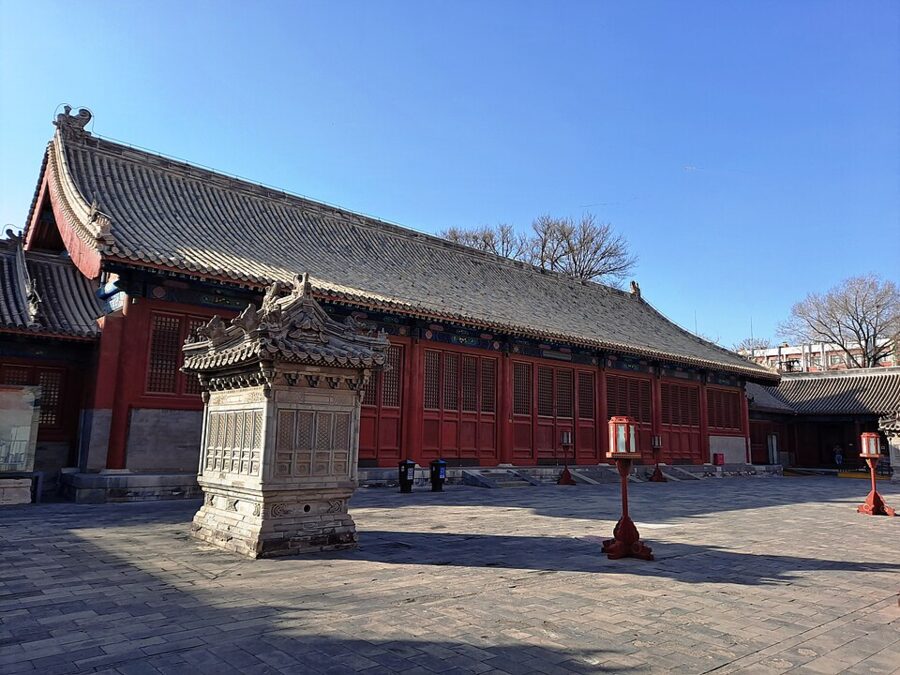
For the music the Qing xun was made for, go to the Temple of Heaven. The Divine Music Administration (Shenyueshu), founded in 1420 to train the musicians and dancers for the imperial sacrifices, reopened on February 10, 2026, after three years of restoration, with a 1,500-square-meter exhibition on Zhonghe Shaoyue. Its “eight sounds” room lays out sixteen instruments across all eight materials, xun included, with a listening wall where you can hear each one. Since June 2026 it has been the main hall of the new Temple of Heaven Museum.
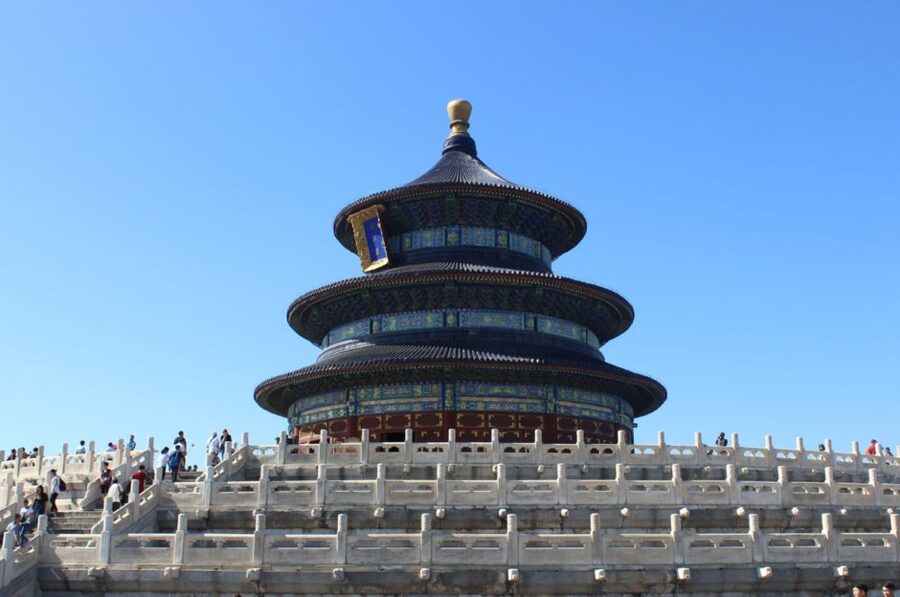
The Divine Music Administration is just inside the park’s west gate, open 08:00–17:00 and closed on Mondays, with a separate 10-yuan ticket. I’d do it before the Hall of Prayer for Good Harvests, while the courtyards are still quiet.
A gray pottery xun from Fu Hao’s tomb has been shown at the China Archaeology Museum in the north of the city, run by the Chinese Academy of Social Sciences, and its galleries also show a small pottery xun from Erlitou in Henan, the Bronze Age site often linked to the Xia. It opens to the public Wednesday to Sunday, 09:00–16:30 (last entry 16:00), with real-name bookings opening three days ahead.
Where to hear one played
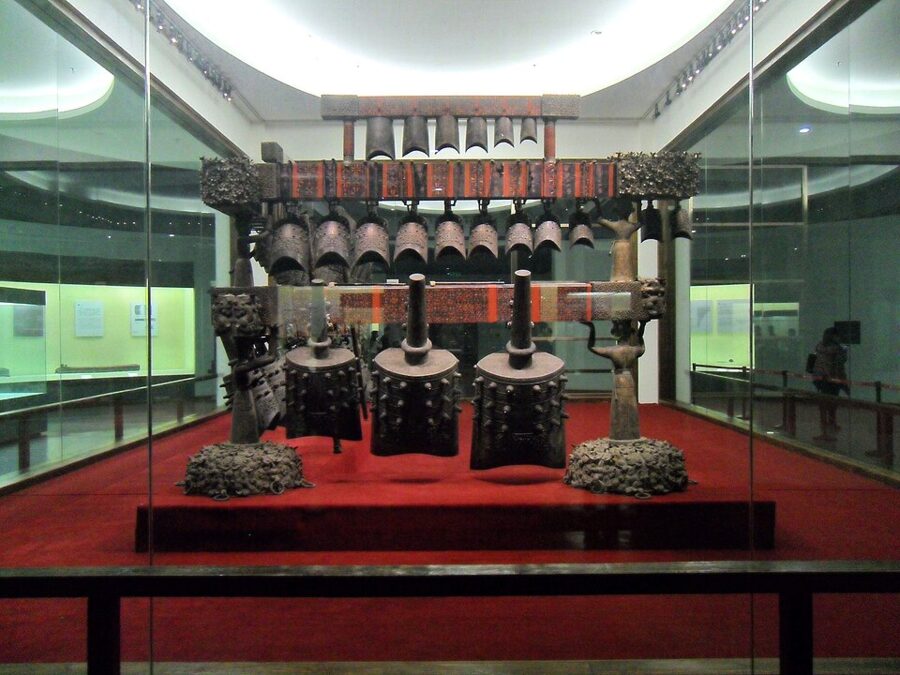
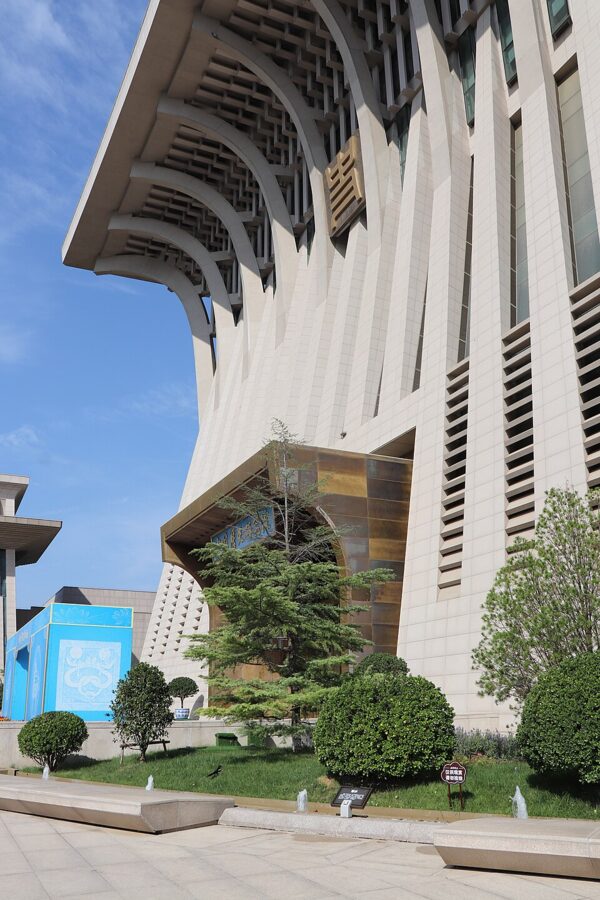
The most reliable live xun in China is in Wuhan, the city where Zhao Liangshan’s revival began. The Hubei Provincial Museum has run a chime-bell ensemble since 1987, playing a replica of the 65-piece bell set from the tomb of Marquis Yi of Zeng. Its program is built to sound all eight materials: replica chime stones, zithers, panpipes, the chi and the xun play alongside the bells. In October 2026 the program included “Chu Diao,” “Liu Shui” and “Chu Shang.”
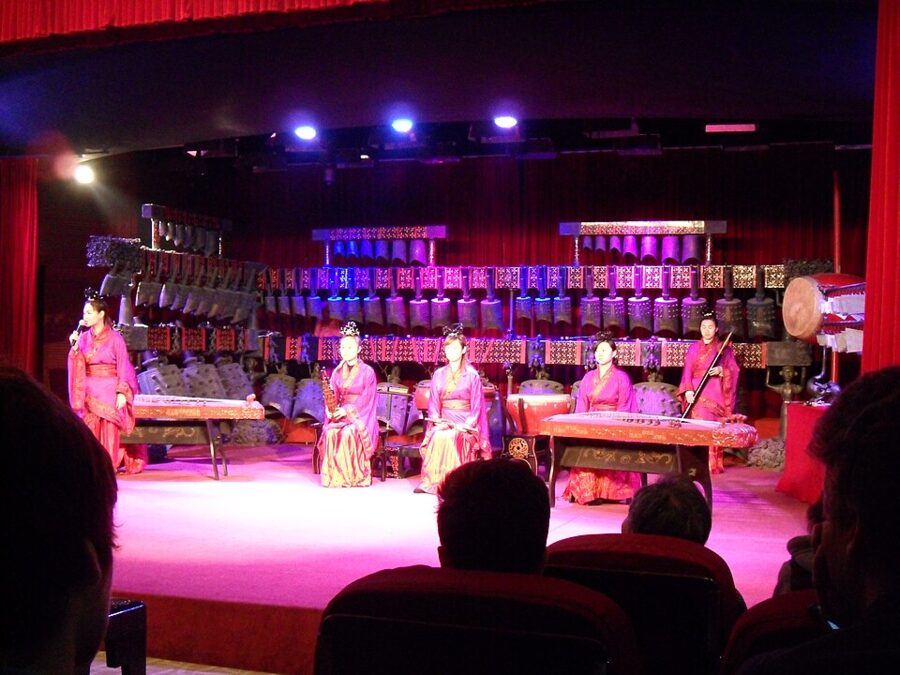

Shows last about 30 minutes in the hall on the basement level of the south building, with four or five performances a day and none on Mondays. Book your free museum entry first (real-name, through the museum’s official channels), then buy the performance ticket inside: about 50 yuan for adults and 30 yuan for students and visitors aged 65–69, with over-70s free.
In Xi’an, walk Shuyuanmen, the old street of brushes, paper and rubbings that runs east from the South Gate inside the city wall. It has long been the center of the city’s xun trade, and the people who sell them often play a few bars to show a good one off. It is street music, not a concert, but you will hear the difference between a tuned instrument and a decorative one in seconds.


Buying one that plays
Most xun sold at scenic spots are decorations that happen to have holes. A playable one is tuned to a stated key, usually F or G for a beginner (F sounds a little darker, G a little brighter), and should hit every note of its scale in tune from the lowest, with all holes closed, to the highest. Bring a tuner app on your phone and play a slow scale before you pay. Clay shrinks unevenly in the kiln, so two instruments from the same mold can differ.
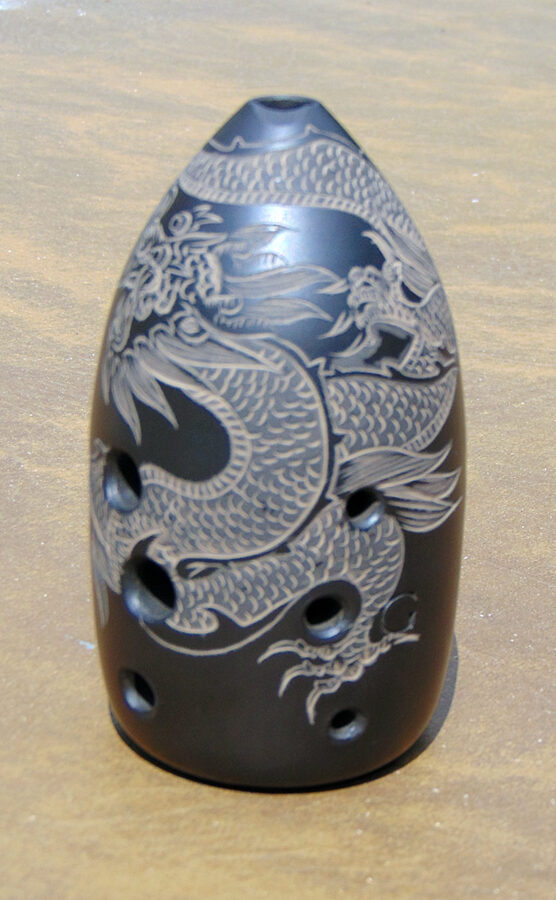

Look at the blowhole first. Its far edge should be clean and even, with no glaze pooled in it and no chips, since that edge makes the sound. Check that your fingers can seal the holes comfortably, especially the two thumb holes on the back. Carving, painted dragons and calligraphy add nothing to the sound.
Players disagree on the first instrument. Many teachers recommend a single-chamber pear xun with eight or ten holes for its fuller tone, even though the top notes take practice. Others start students on a double-chamber “pen-holder” model because it sounds easily across its range. A ten-hole xun reaches higher than an eight-hole one and transposes more easily, which matters if you want to play with other people.
Then try the oldest note first. Close every hole, tilt the xun until the sound catches, and hold it: the low, breathy tone that came out of a one-hole lump of clay at Hemudu, seven thousand years before anyone thought to add a second.