On the night after the Lantern Festival in 1112, a flock of cranes came in low over Xuande Gate, the main gate of the palace at Kaifeng, and circled it calling until the crowd below stopped to look. Emperor Huizong took it as a sign that heaven approved of his reign. He painted the scene himself: twenty red-crowned cranes, eighteen in the air and two standing on the roof ornaments, against a sky of flat blue silk.
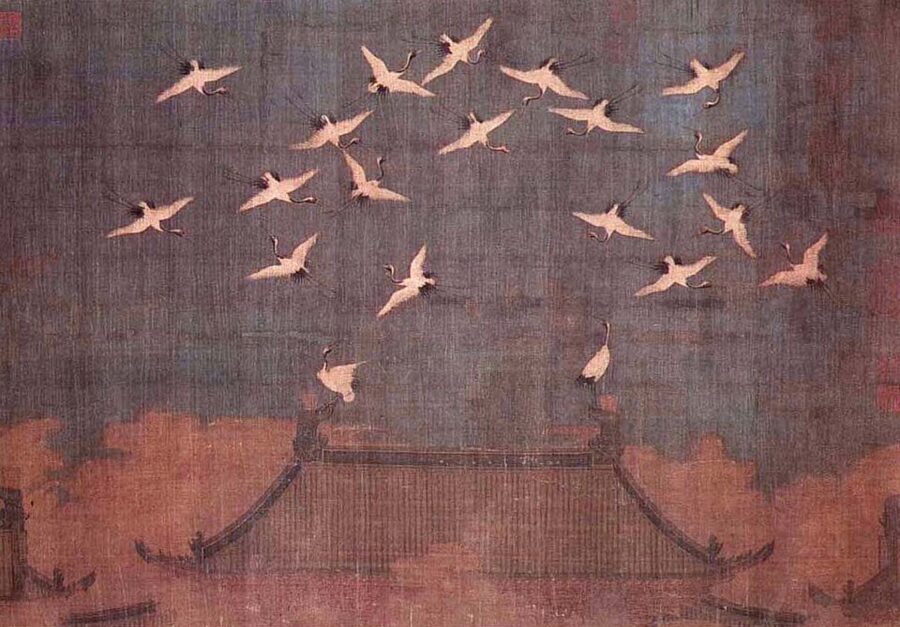
That scroll, Ruihe tu (瑞鹤图, Auspicious Cranes), now belongs to the Liaoning Provincial Museum in Shenyang, whose deputy director counts it among perhaps three surviving paintings by Huizong’s own hand. Fifteen years after he painted it, the Jurchen army took Kaifeng and carried the emperor north as a prisoner.
The cranes are a fair place to start with huaniao hua (花鸟画), Chinese flower-and-bird painting, because they show how much the genre could carry. A branch, a bird and a stretch of empty silk were enough for an emperor’s politics, a hermit’s grief or a merchant’s wish for a son.
On this page
- Flowers, birds, fish and insects: how the genre got its name
- Huang Quan and Xu Xi: two ways to paint a sparrow
- Emperor Huizong’s academy
- Gongbi and xieyi: the two manners in practice
- Names you will meet on the gallery wall
- How to read a painting: plants, birds and puns
- Where to see the originals in China
- Picking up a brush yourself
Flowers, birds, fish and insects: how the genre got its name
Chinese painting sorts itself by subject, and the three big families are figures, mountains-and-water (shanshui, 山水), and flowers and birds. The last is the broadest. Its old full name runs “flowers, birds, fish and insects” (花鸟鱼虫), and it takes in vegetables, fruit, cats, crabs and the occasional rat. What holds it together is scale: a single branch or a corner of a pond, looked at closely, against plain ground.
Birds and blossoms turn up on Neolithic pots and on the silk banner from the Han-dynasty tomb at Mawangdui in Changsha, but as decoration or as part of something larger. Sources from the Tang (618–907) are the first to name painters known mainly for birds and flowers. Xue Ji painted cranes so well that the poet Du Fu wrote verses about his eleven of them; none survive. Bian Luan, working at court in the late eighth century, is remembered for the zhezhi (折枝), the “broken branch”: a cut spray of flowers painted on its own, with no tree, no ground and no horizon.
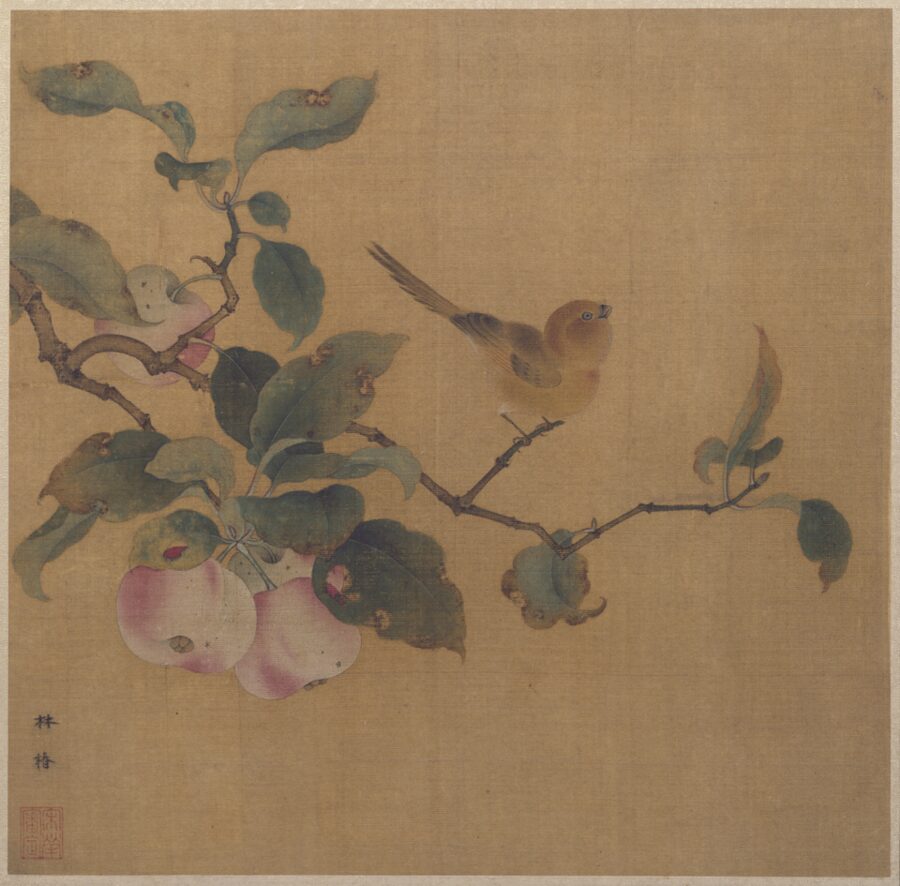
The broken branch is the genre’s basic unit. A painter leaves out almost everything, then puts all his care into a few leaves and the angle of a bird’s head. The empty silk around them is not background; it is air.
By the early twelfth century the category had fully arrived. Huizong’s palace catalogue, the Xuanhe huapu (宣和画谱), finished in 1120, divided 6,396 scrolls by 231 painters into ten subjects. Flowers and birds alone took 2,786 of them, more than four in every ten, ahead of Buddhist and Taoist figures and far ahead of mountains and water.
Huang Quan and Xu Xi: two ways to paint a sparrow
The genre’s founding argument belongs to the tenth century, when China was split into rival kingdoms. In Chengdu, Huang Quan (903–965) served the Shu court for some forty years, painting the rare birds and flowers of the palace gardens. In Nanjing, then the Southern Tang capital, Xu Xi painted the reeds, ducks, vegetables and bamboo of the riverbank, and never held office at all.
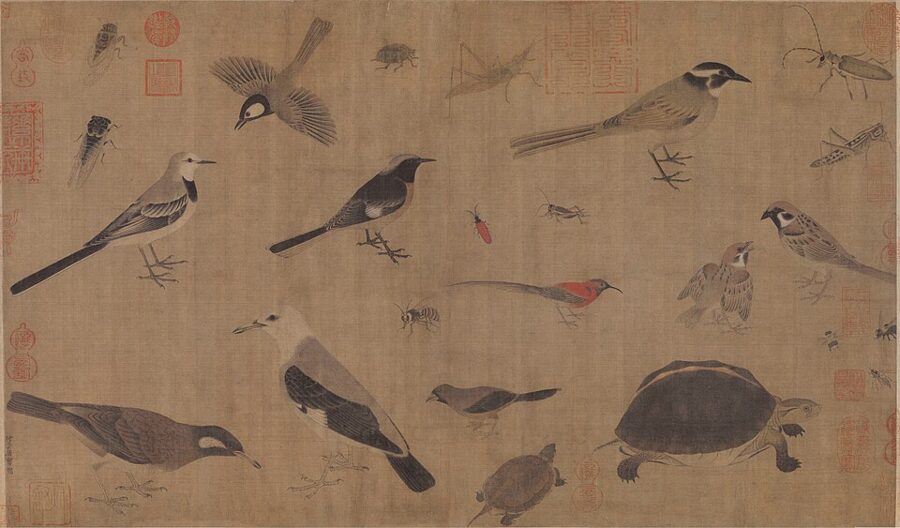
Huang’s method was to draw a fine, pale ink outline first and then fill it with layers of color until the ink line almost disappeared. Xu Xi worked the other way round, laying down the ink first with a freer brush, then touching in a little color. Later writers called this luomo (落墨), “dropping the ink”.
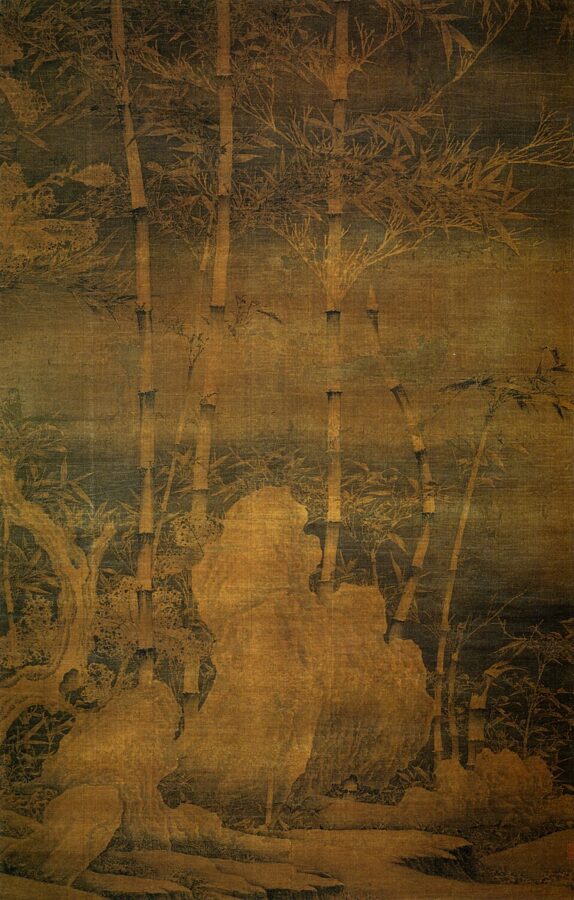
Around 1074 the critic Guo Ruoxu put the difference in eight characters: Huang jia fugui, Xu Xi yeyi (黄家富贵,徐熙野逸), “the Huang family, rich and noble; Xu Xi, untamed and free.” The court won the first round. After the Song (960–1279) took Chengdu in 965, Huang’s son Jucai became the arbiter of bird-and-flower painting at the new court, and for about a century the Huang manner was the standard by which court painters were judged. Xu Xi’s grandson reportedly dropped the ink outline altogether to fit in, painting in color alone.
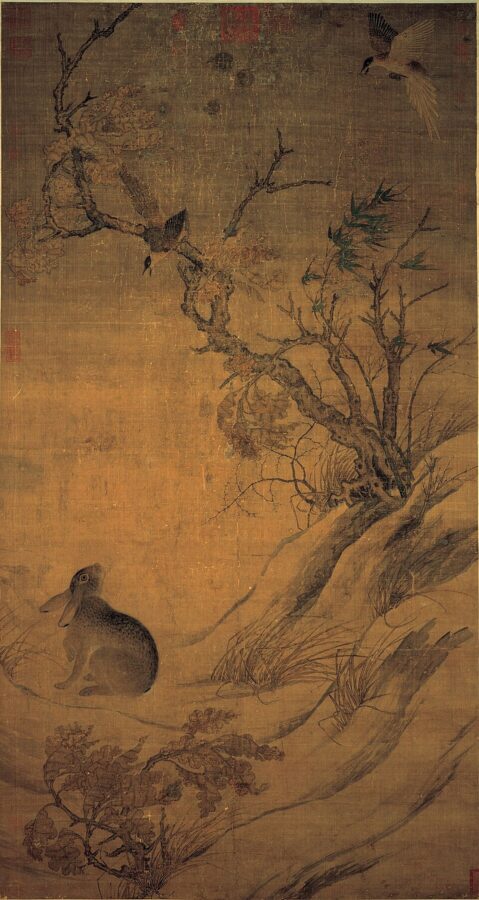
The man who broke the Huang monopoly was Cui Bai, from Anhui, who later joined the Kaifeng court. His Magpies and Hare puts an autumn gale into one hanging scroll: still careful, observed painting, but it moves.
Emperor Huizong’s academy
Huizong (reigned 1100–1126) could have made a living as a painter, and he ran his painting academy like a demanding art school. Entrance tests took lines of poetry as the brief. For “a tavern by the bridge, deep in the bamboo”, the winner painted no tavern, only a wine flag showing above the leaves.
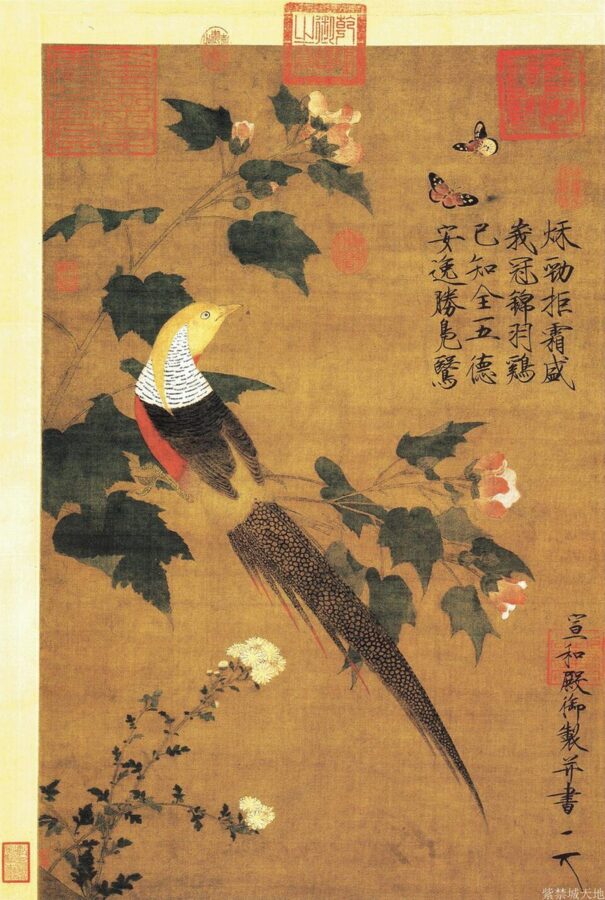
He also corrected the details. One story has him rejecting a set of peacock paintings because a peacock stepping up onto a perch always lifts its left foot first, and his painters had it backwards. True or not, the standard the story describes is plain in the paintings.
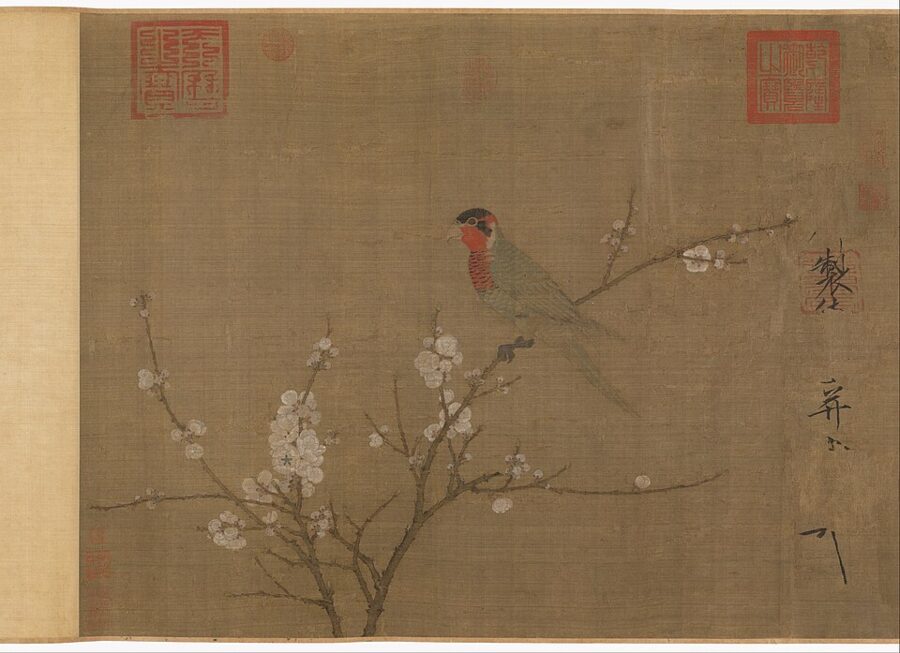
The problem for anyone trying to sort Huizong’s own work from his academy’s is that he signed both. The Golden Pheasant carries his poem and cipher, yet a Southern Song record files it among paintings the emperor merely inscribed, and most specialists think a court painter did the brushwork. In 2016 researchers looked at the pheasant itself and identified it as a hybrid, which would make the painting one of the earliest records of a hybrid bird anywhere.
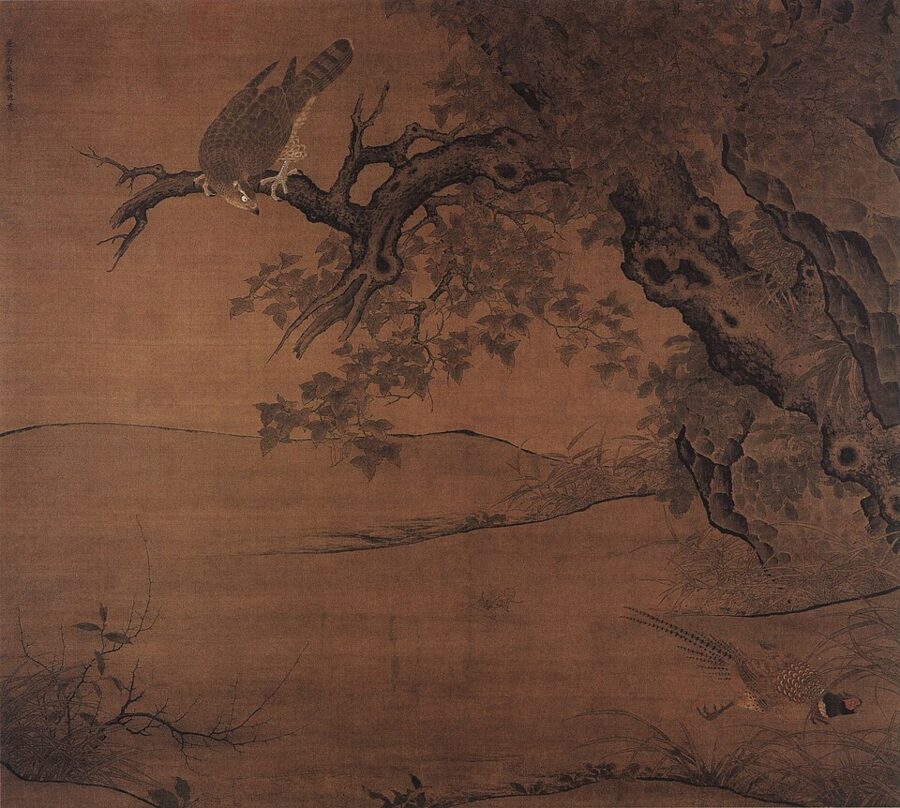
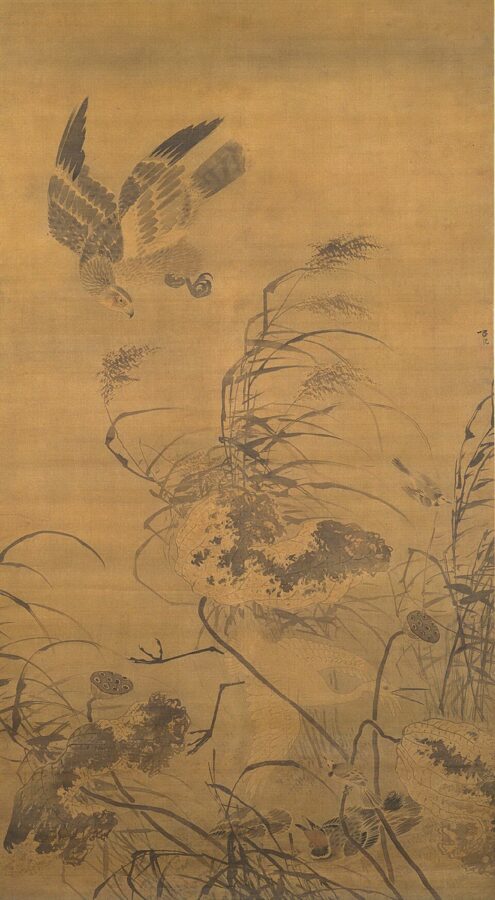
The academy outlived the dynasty’s fall in 1127. Painters who escaped south rebuilt it at Hangzhou, and in 1196 one of them, Li Di, painted a falcon watching a pheasant on a scroll more than two meters wide. The scale had changed; the attention to feather and claw had not.
Gongbi and xieyi: the two manners in practice
Gallery labels sort flower-and-bird paintings into two manners, and the split goes back to Huang Quan and Xu Xi. Gongbi (工笔), “meticulous brush”, is the court tradition: a fine outline, then color built up in many thin washes on silk or paper sized with alum so it does not bleed. Painters still describe the process as “three sizings and nine washes”, and a single gongbi peony can take weeks.
Xieyi (写意), “writing the idea”, is the scholar’s tradition: ink, a loaded brush, raw absorbent paper, and strokes that cannot be corrected once they land. The word “writing” is deliberate. The men who developed it were calligraphers first, and a bamboo leaf in xieyi is made with the same pressed-and-lifted stroke as a character. Between them sits a mixed manner, a careful bird on a loosely brushed branch, and there is also mogu (没骨), “boneless” painting, which builds petals from color alone with no outline at all.
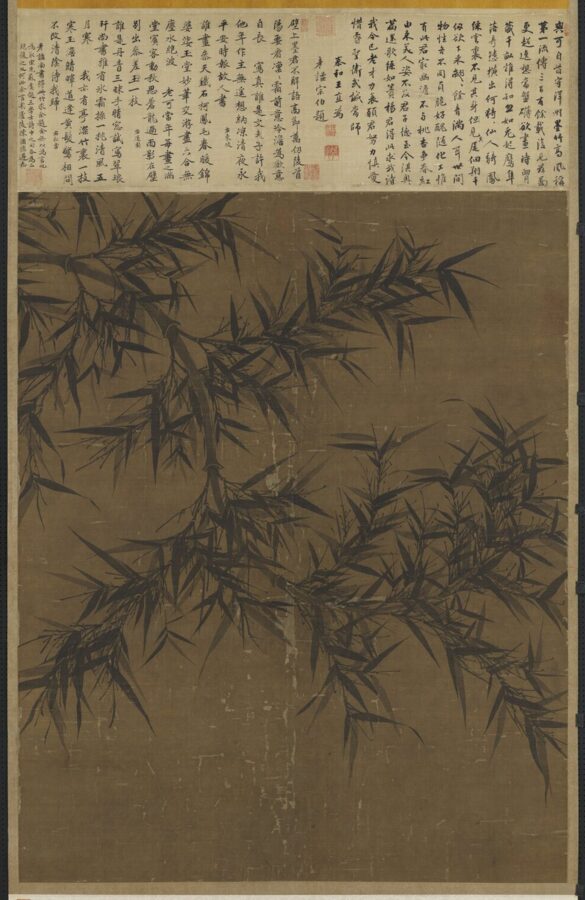
The scholar’s side found its voice in the eleventh century. Wen Tong (1018–1079) painted bamboo in ink alone, and his cousin Su Shi, the most quoted of the Song masters of Chinese classical prose, wrote that before painting bamboo Wen had the whole plant formed in his mind. That line became a proverb, xiong you cheng zhu (胸有成竹), “bamboo complete in the chest”, still used for anyone who knows exactly what they are doing.
Su Shi went further in a poem written on a painting of flowering branches: “To judge a painting by likeness is to see like a child.” He was not against observation: he gleefully recorded someone noticing that one of Huang Quan’s flying birds had neck and legs both stretched out, which no bird in flight does. His point was that likeness was where painting started, not where it finished.
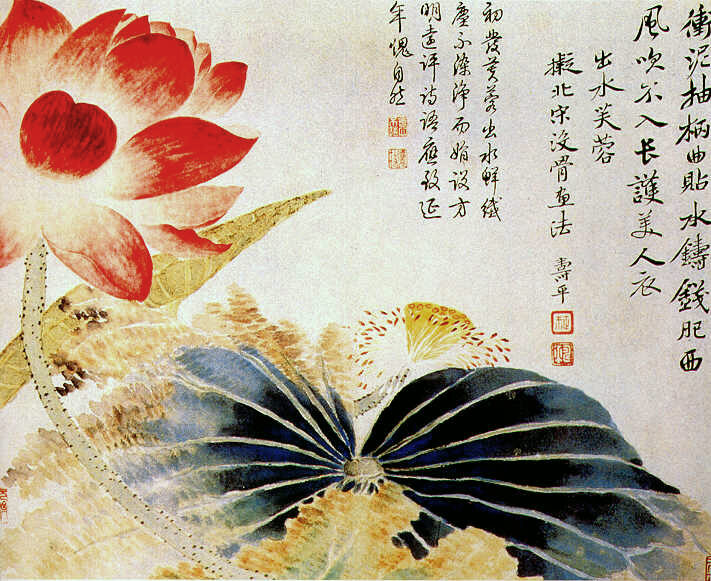
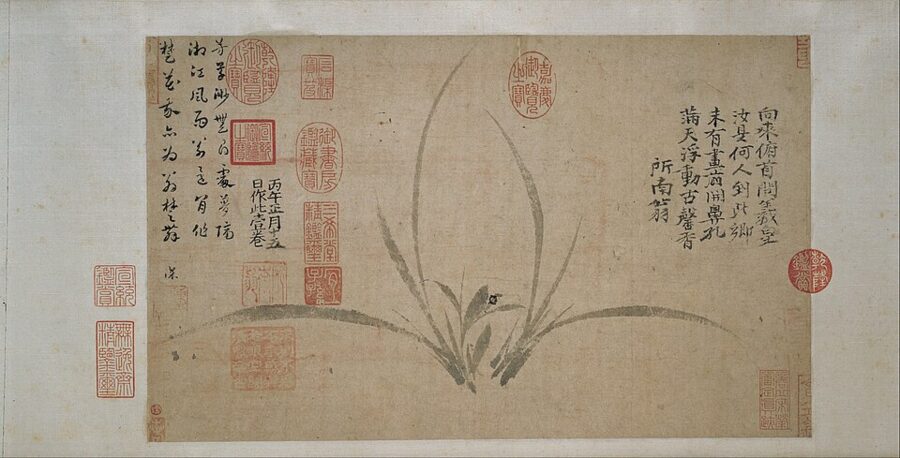
After the Mongols ended the Song, the scholar’s manner became a way of saying what could not be said aloud. In 1306 the Song loyalist Zheng Sixiao painted an orchid floating with no soil around its roots; asked why, he is said to have answered that the earth had been taken by foreigners. The painting, now in Osaka, is the clearest case of something you will meet again and again: a plant standing in for a person.
Names you will meet on the gallery wall
Flower-and-bird painting never stopped after the Song, and a gallery’s rooms for the Ming (1368–1644) and Qing (1644–1912) are usually the fullest. These are the names most likely to be on the labels.
Lin Liang, Lu Ji and the Ming court
Two Ming painters revived the big bird picture. Lin Liang, from Guangdong, painted hawks and crows in fast, wet ink; Lu Ji, from Ningbo, painted the full-color Song manner on a grand scale for the Hongzhi Emperor in the late 1400s. Their scrolls were made to fill a palace wall.
Xu Wei, who could not sell his pearls
Xu Wei (1521–1593) of Shaoxing failed the civil examinations eight times, served as secretary to a general fighting pirates on the coast, and after the general’s fall went mad. He tried to kill himself several times, killed his wife in 1566, and spent about seven years in prison. Then he painted grapes.
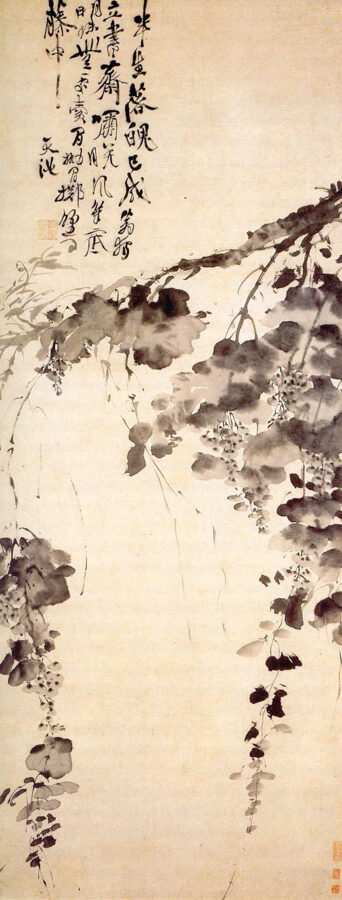
His Ink Grapes is xieyi at its wildest: the fruit are single blots, the leaves pools of ink, and the poem at the top explains them. “Half my life down and out, and now an old man, / I stand alone in my study whistling at the evening wind. / The pearls from my brush have nowhere to be sold, / so I toss them idly among the wild vines.” Grapes, in other words, are his unsold talent.
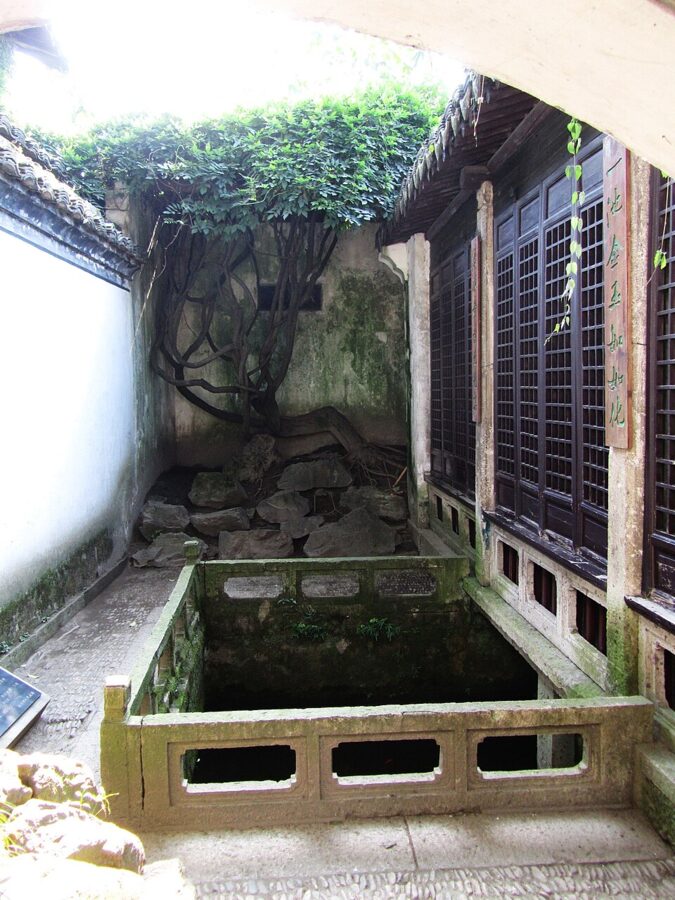
Later painters treated Xu Wei almost as a saint. Zheng Xie had a seal cut calling himself a servant at Xu’s gate, and Qi Baishi wished he had been born three hundred years earlier to grind ink for Xu and Bada Shanren. Xu’s old house in Shaoxing, Qingteng Studio (青藤书屋), is kept as a small memorial with the square pool he called his “heavenly pond”.

Bada Shanren and his white-eyed birds
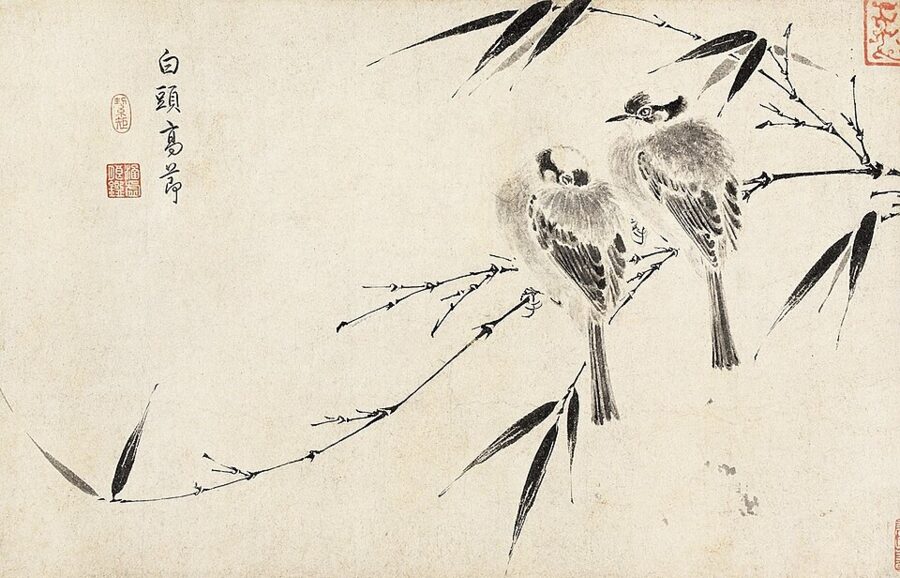
Zhu Da (1626–1705) was born a prince, a descendant of the Ming founder’s seventeenth son, in Nanchang. When the dynasty fell in 1644 he became a Buddhist monk, and for a time he either went mad or pretended to, writing the character for “mute” on his door. In old age he signed his paintings Bada Shanren (八大山人), four characters run together so that they look like either “crying at it” or “laughing at it”.
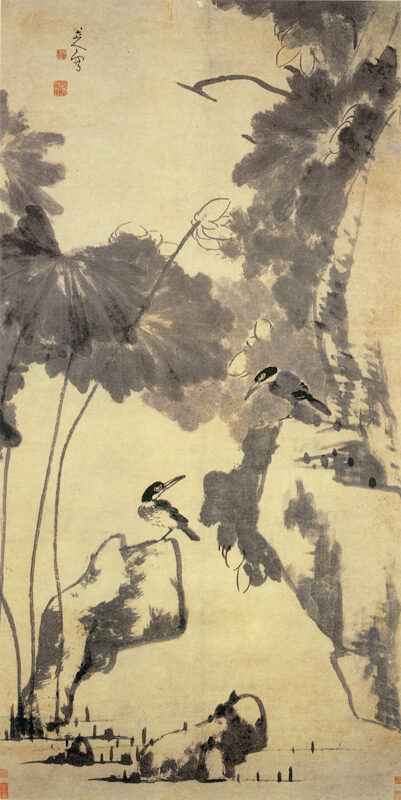
His birds are unmistakable: hunched, one-legged, perched on rocks too heavy at the top, with a square eye whose pupil is pushed up into the corner, so that the bird glares at you sideways. Chinese has an idiom for exactly that look, “showing the whites of the eyes”, meaning contempt. A gallery label will rarely say so, but the glare is aimed at the new Qing dynasty.
The Yangzhou eccentrics
In the 1700s the salt merchants of Yangzhou were among the richest men in China, and they paid well for painting that looked individual. The painters who supplied it became known as the Eight Eccentrics of Yangzhou, though the lists name more than eight.
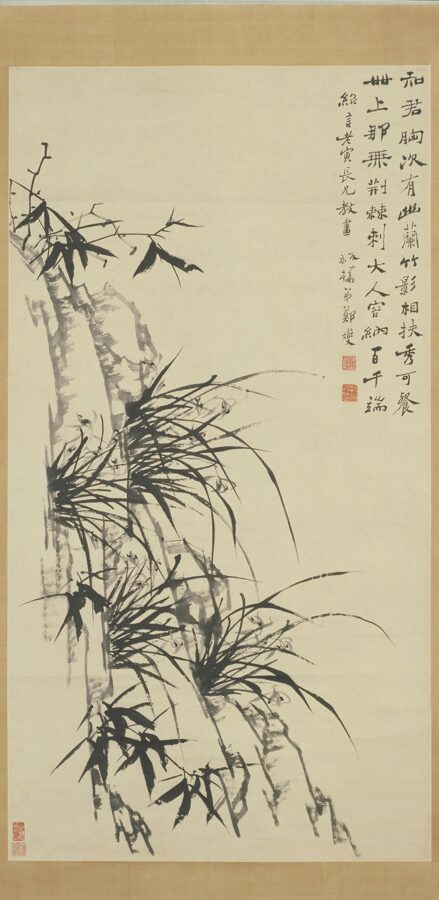
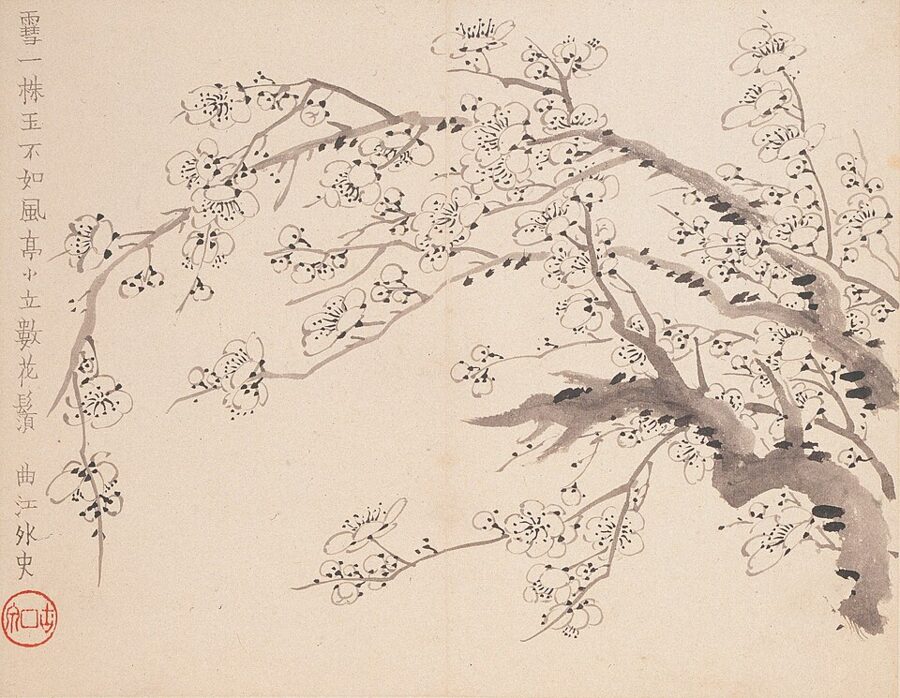
The most famous, Zheng Xie (1693–1765), usually called Zheng Banqiao, quit as a county magistrate after a quarrel over famine relief and went home to sell bamboo. In 1759 he posted a price list: six taels of silver for a large scroll, four for a medium, two for a small, and a note that silver was preferable to gifts of food. Jin Nong, who painted plum blossom crowded onto the branch like snow, spent his last years lodging in Yangzhou’s Xifang Temple, which is now the group’s memorial hall.
Ren Bonian and Wu Changshuo in Shanghai
In the late nineteenth century the market moved to the treaty port of Shanghai, and painting moved with it. Ren Bonian (Ren Yi, born 1840) arrived from Zhejiang and sold to merchants who wanted bright color, lively birds and a quick turnaround. His birds and blossoms have an easy, cheerful speed that Bada Shanren would have despised.
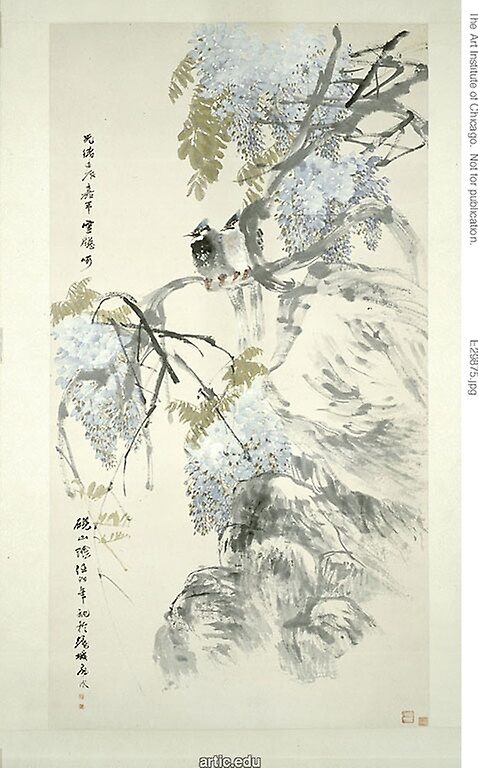
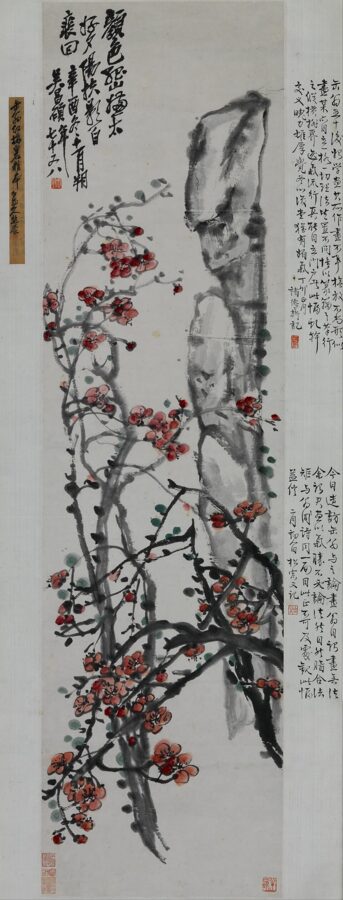
His friend Wu Changshuo (1844–1927), from Anji in Zhejiang, came to painting from seal carving and calligraphy, and it shows. His plum branches are written in the thick, rounded strokes of the ancient stone-drum script, and his reds are as heavy as seal paste. In 1913 he became the first president of the Xiling Seal Engravers’ Society in Hangzhou, and his manner shaped Chinese ink painting for the next half-century.
Qi Baishi, the carpenter from Xiangtan
Qi Baishi (1864–1957) grew up poor near Xiangtan in Hunan and trained as a carpenter, carving flowers onto furniture. Around the age of twenty he found a copy of the Mustard Seed Garden Manual of Painting (芥子园画传) and traced it page by page at night. He moved to Beijing in his fifties, struggled to sell, and on a friend’s advice remade his style almost from scratch.
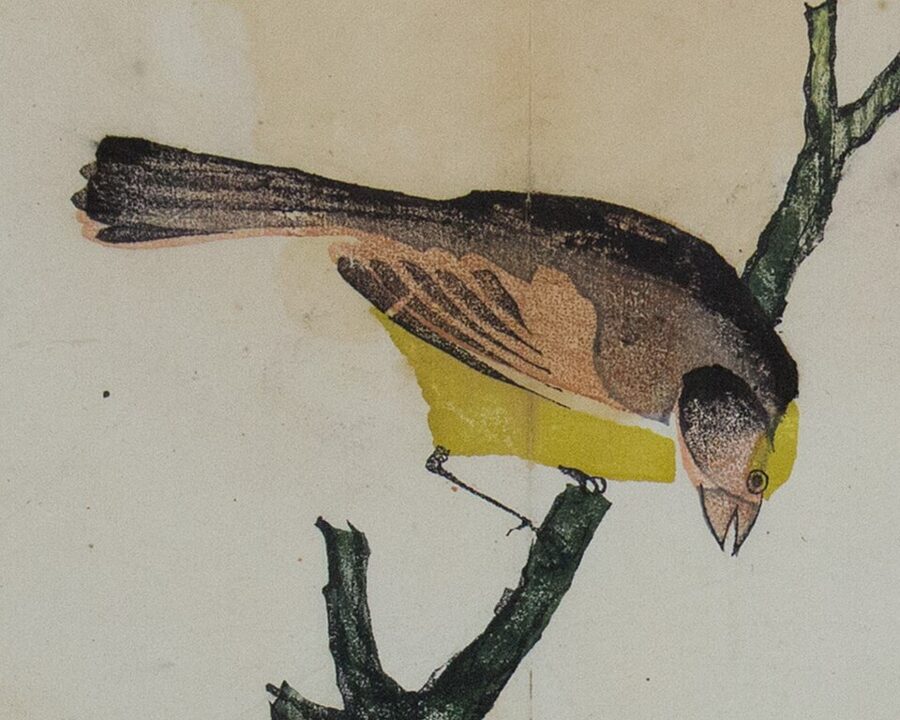
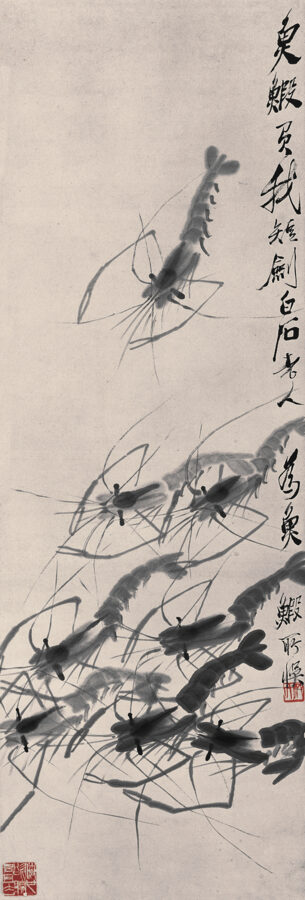
What he arrived at was the plainest xieyi ever made: shrimp, crabs, frogs, cabbages, chicks, and a meticulously painted insect sitting on a carelessly splashed leaf. He said the art lay “between likeness and unlikeness: too like flatters the vulgar, too unlike cheats the world.” He also added two years to his age in 1937 on a fortune-teller’s advice, so the age he writes on a late painting runs two years ahead of the truth.
In one quatrain he named his three heroes, Xu Wei, Bada Shanren and Wu Changshuo, and wished to be a dog at their gates in the next world.
How to read a painting: plants, birds and puns
Almost nothing in a flower-and-bird painting is there by accident. Some subjects stand for a kind of person, and some stand for a wish, usually through a pun, because Chinese is full of words that sound alike.
Plants that stand for people
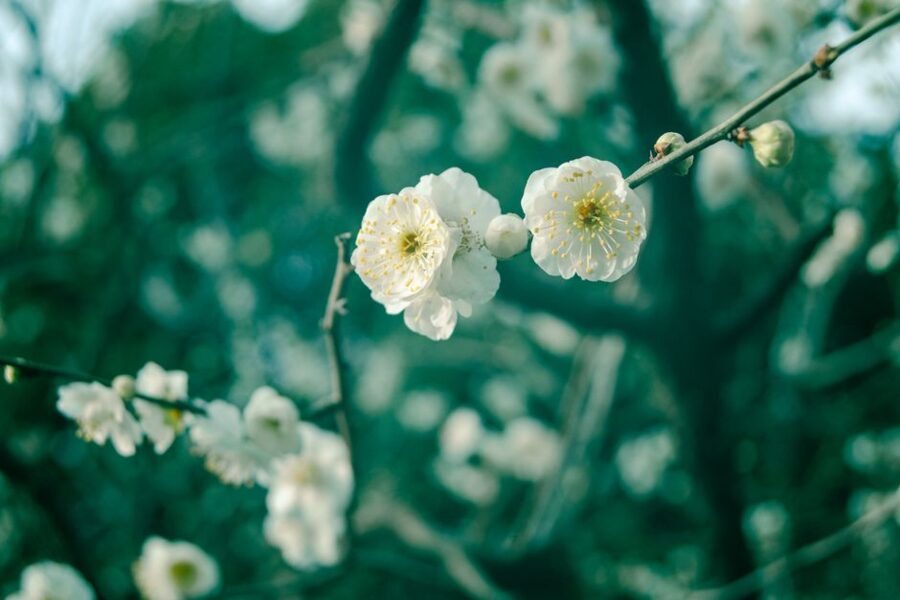
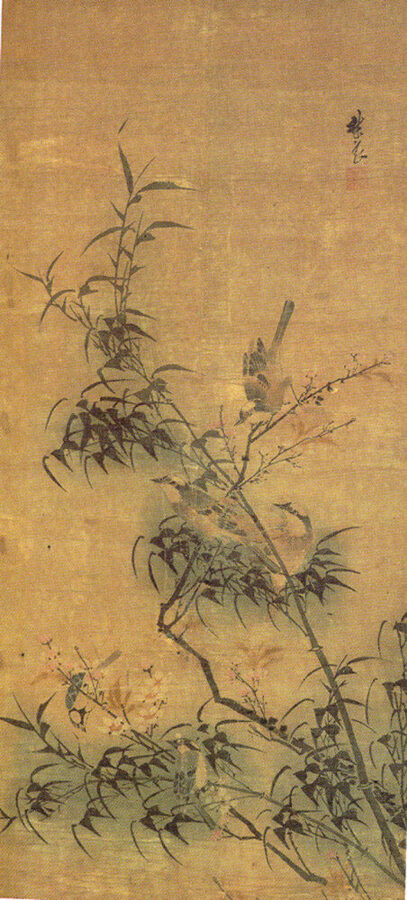
The “four gentlemen” (四君子) are the core set. The plum (梅) flowers on bare wood in late winter, so it means endurance and integrity under pressure. The orchid (兰) grows in remote valleys and is fragrant whether or not anyone smells it, so it means a good man unrecognized. Bamboo (竹) bends in the wind without breaking, is hollow (humble) inside, and has joints whose word, jie (节), also means moral principle.
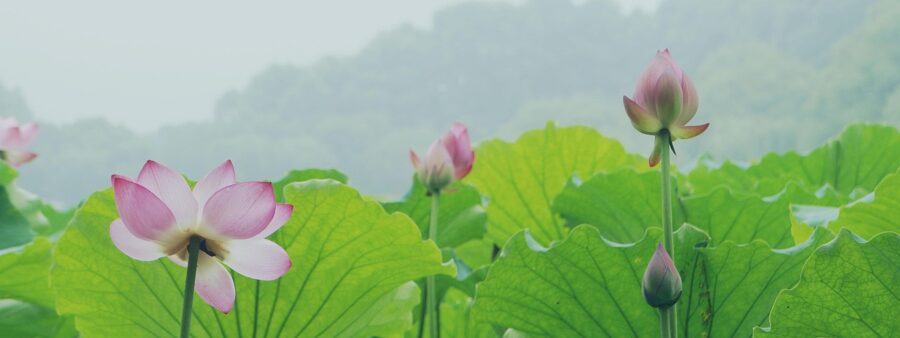
The chrysanthemum (菊) blooms after the first frost, so it means a person who flourishes late or alone, and it belongs to the poet Tao Yuanming, who picked them by his eastern fence after resigning office. Pine, bamboo and plum together are the “three friends of the cold season” (岁寒三友), which stay green or flower through winter. The lotus (莲) rises clean out of mud, and the Song philosopher Zhou Dunyi’s short essay “On Loving the Lotus” made it the emblem of the official who stays clean in a dirty government.
Birds that stand for wishes
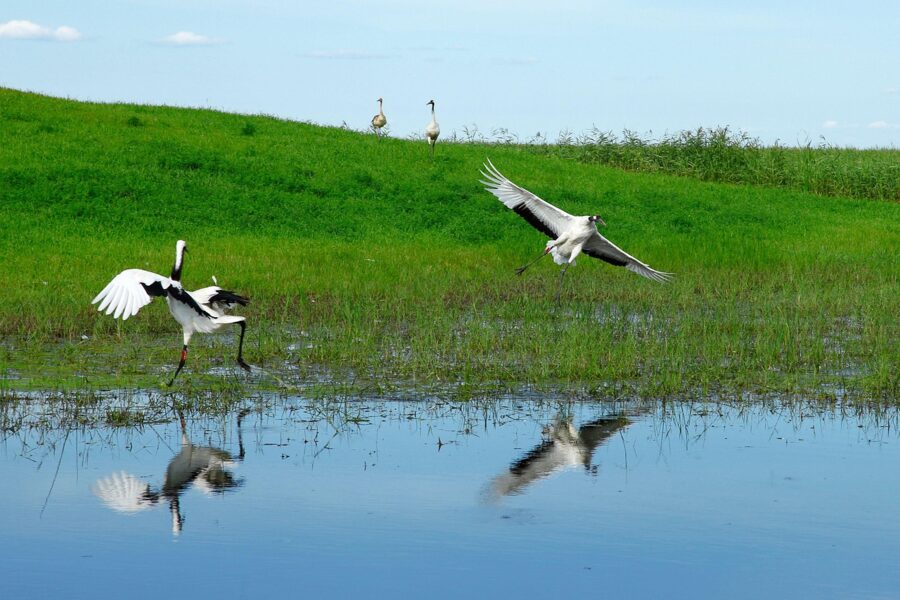
The red-crowned crane is longevity; with a pine it means “long life like the pine and crane”, a standard birthday gift. Under the Ming and Qing the crane was also the badge sewn on the robes of first-rank civil officials, so a crane facing the sun is a wish for high office. Mandarin ducks always come in pairs and mean a faithful marriage.
The magpie (喜鹊) has the word “joy” in its name, so it is the bird of good news. Put one on a plum branch and you get xi shang mei shao (喜上眉梢), “joy up to the eyebrows”, because the plum’s mei sounds like the word for eyebrow. Two magpies make “double happiness”, which is why Cui Bai’s Magpies and Hare is often read as a wedding picture.
The puns behind the pictures
Other common combinations:
- Fish (鱼, yu) with lotus (莲, lian): “surplus year after year” (连年有余), because yu sounds like the word for surplus and lian like the word for continuous.
- Egret (鹭, lu) with lotus: “passing every exam all the way” (一路连科), from lu for road.
- Rooster (鸡, ji) with a cockscomb flower (鸡冠花): “promotion on promotion” (官上加官), since ji echoes “lucky” and the comb, guan, echoes “office”.
- Quail (鹌, an) with chrysanthemum (菊, ju) and fallen leaves (落叶, luoye): “live in peace and work in contentment” (安居乐业).
- Bat (蝠, fu): good fortune (福). Peony: wealth and rank.
Then read the writing. A painting is often finished by a poem, a dedication and red seals from every later owner, and the Qianlong Emperor (reigned 1736–1795) stamped so many scrolls that you will learn his seals before anyone else’s.
Where to see the originals in China
One rule governs everything here: old paintings on silk and paper are damaged by light, so museums show them briefly and then rest them, sometimes for years. Check the museum’s own exhibition page the week you go, because the painting you want may simply be in the dark.
Palace Museum, Beijing
The former imperial collection holds Huang Quan’s Sketches of Rare Birds, the Golden Pheasant, Xu Wei’s Ink Grapes and Li Di’s falcon. Paintings are now shown in Wenhua Hall (文华殿, the Hall of Literary Glory), on the east side of the outer court, in themed exhibitions of about two months. In autumn 2026 it held a show of Tang and Song painting and calligraphy in two phases from September 1 to November 1, with 107 works, 24 of them on view for the first time in nearly thirty years; one Tang scroll had just finished a three-year rest.
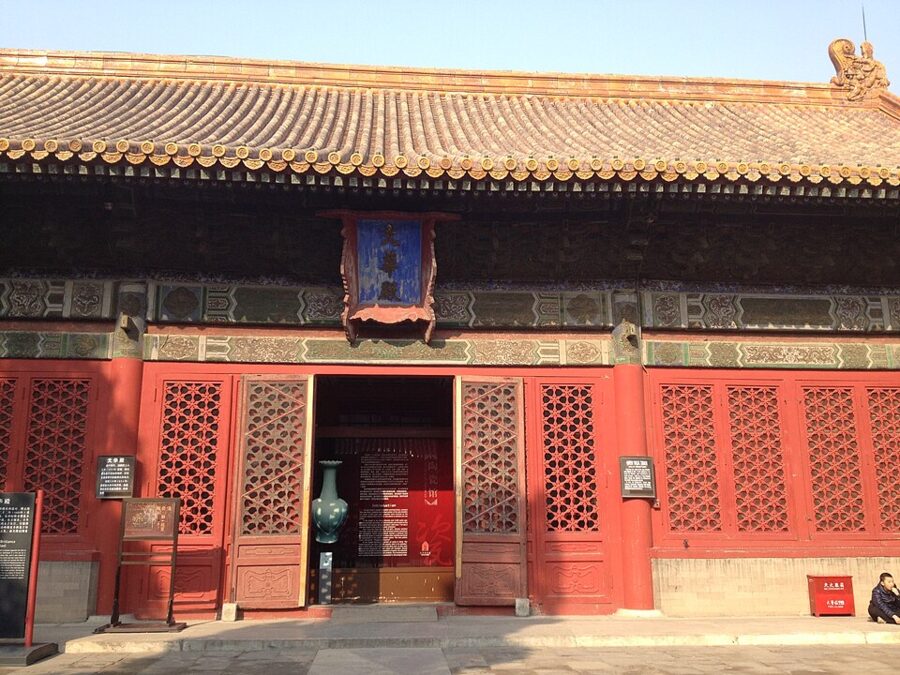

Wuying Hall, which also used to hold painting shows, closed on October 19, 2026 for repairs and a new display, with no reopening date given. Special painting exhibitions carry no extra fee but can need a separate timed reservation in the “故宫博物院” WeChat mini program, and people have reached the door of Wenhua Hall with a gate ticket only to be turned away.
According to the Palace Museum’s opening hours and ticket rules, the gate ticket is 40 yuan from November 1 to March 31 and 60 yuan from April 1 to October 31. Winter hours are 08:30–16:30 with last entry at 15:30 (summer 08:30–17:00, last entry 16:00), and the museum is closed on Mondays except public holidays. Tickets are sold only in advance and in your own name, on the museum’s ticket site or its mini program, so have your passport number ready. Everyone enters by the Meridian Gate (Wumen) on the south and leaves by the north or east gate.
Shanghai Museum East
The Shanghai Museum holds Snowy Bamboo attributed to Xu Xi and Bada Shanren’s Lotus and Birds. Its paintings are now shown in the East building on Century Avenue in Pudong, opened in late 2024, where the permanent galleries include a Chinese Painting Gallery and a gallery of the Shanghai school, the home of Ren Bonian and Wu Changshuo.
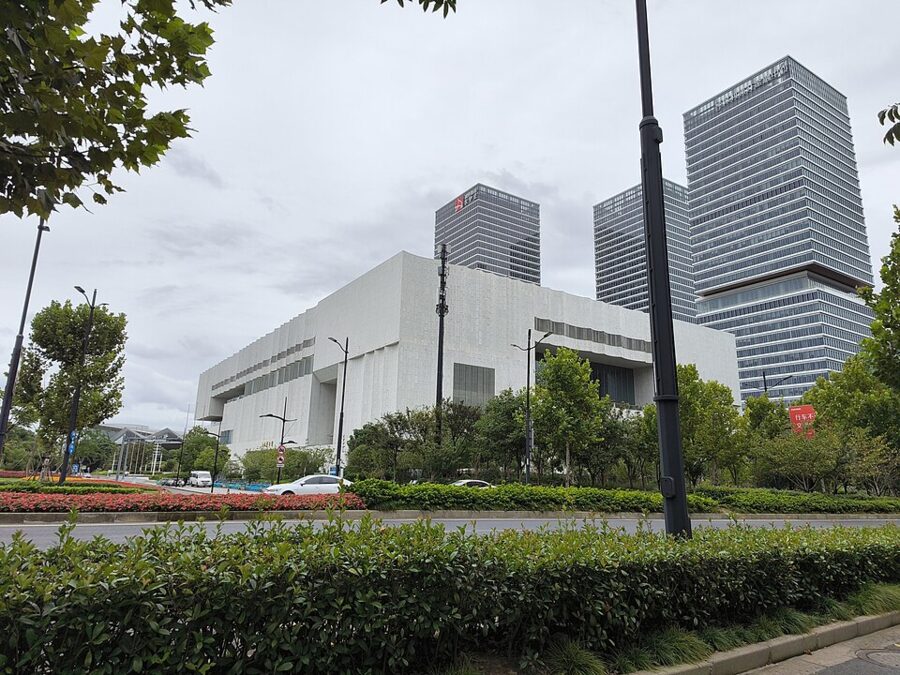

The East building opens 10:00–18:00 with last entry at 17:00, is closed on Tuesdays except public holidays, and needs no booking for the permanent galleries. The old building on People’s Square is a different case until November 14, 2027: all three exhibition floors are given to a ticketed show on the ancient Americas, so do not go there for Chinese painting.
Liaoning Provincial Museum, Shenyang
This is where the Auspicious Cranes lives. The last emperor, Puyi, took the cranes to his Manchukuo palace in Changchun; they were seized when he was captured in 1945. The cranes come out only for special exhibitions; the last big showing, in a Liao and Jin history exhibition that opened on September 29, 2024, had queues of two hours.
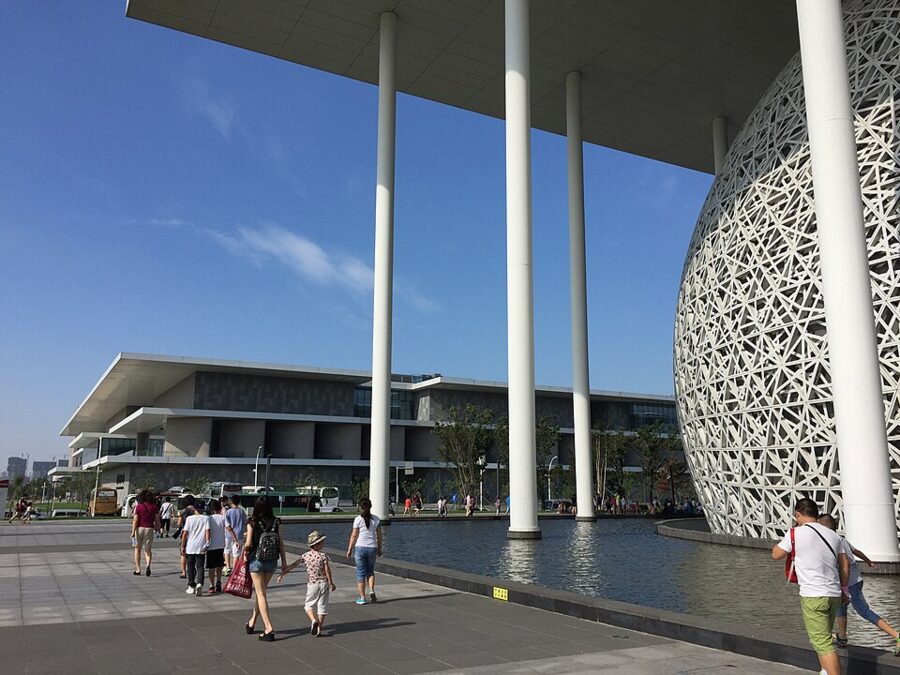

Since September 1, 2026 the museum has been open Tuesday to Sunday, 09:00–17:00, with last entry at 16:30 and Mondays closed except public holidays. Entry is free and needs no reservation; Chinese visitors swipe their ID cards, and passport holders use a separate lane.
Nanjing Museum
Xu Xi’s city has one of China’s three great museums, on Zhongshan East Road below Purple Mountain, and its Art Hall rotates painting from a collection of more than 400,000 objects. It is free, open 09:00–17:00 with the last ticket check at 16:00, and closed on Mondays except public holidays, as well as on Lunar New Year’s Eve and the first day of the new year.
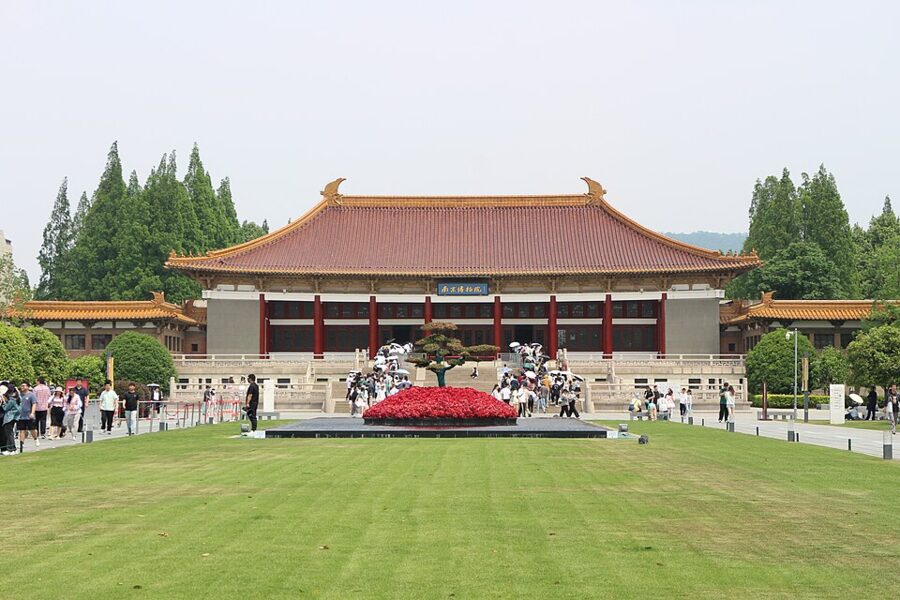
Booking is the catch. Older advice says foreigners cannot reserve online and must queue on the day. The museum’s own visitor page now says passport holders should make their own reservation and then take the passport and the booking confirmation to the green-channel window at the service center to be let in.
Qi Baishi in Beijing and Xiangtan
In Beijing, the Qi Baishi Former Residence Memorial at 13 Yu’er Hutong is a small courtyard house where he lived briefly in 1955. Entry is free but needs booking at least a day ahead through the memorial’s page in the Meituan or Dianping app; it is open Tuesday to Sunday, 09:00–17:00, with last entry at 16:00. Take Line 6 or 8 to Nanluoguxiang, leave by Exit E, walk about 390 meters north up Nanluogu Lane, then turn west into Yu’er Hutong.
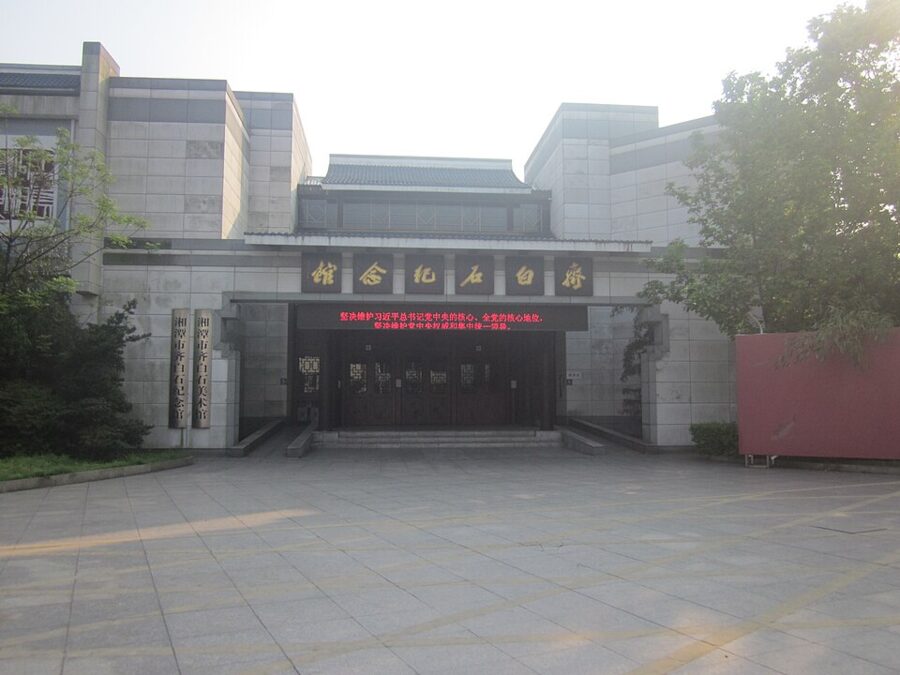
The Beijing Fine Art Academy Art Museum, by Chaoyang Park, is built around its Qi Baishi holdings and runs themed exhibitions of his work; the 2026 show, on his insects, ran from March 20 to October 11. In his hometown, the Qi Baishi Memorial Hall in Baishi Park, Xiangtan, reopened on May 30, 2026 after a renovation. It is free, open Tuesday to Sunday 09:00–17:00 with last entry at 16:30, and closed on Mondays except public holidays.

Painters’ houses in Nanchang and Yangzhou
The Bada Shanren Memorial Hall occupies Qingyunpu, an old Taoist compound in Nanchang’s southern suburbs that tradition connects with the painter, and holds more than forty of his originals. It is free with ID or a booking code, open 09:00–17:00 with last entry at 16:30, and closed on Mondays except public holidays. The hall has been marking 2026, his four hundredth anniversary year, with a series of events.
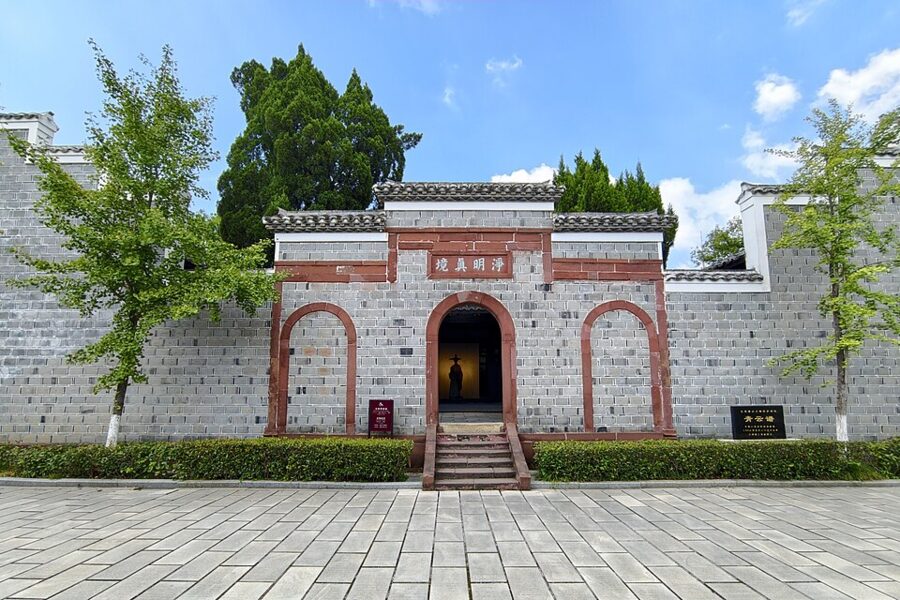

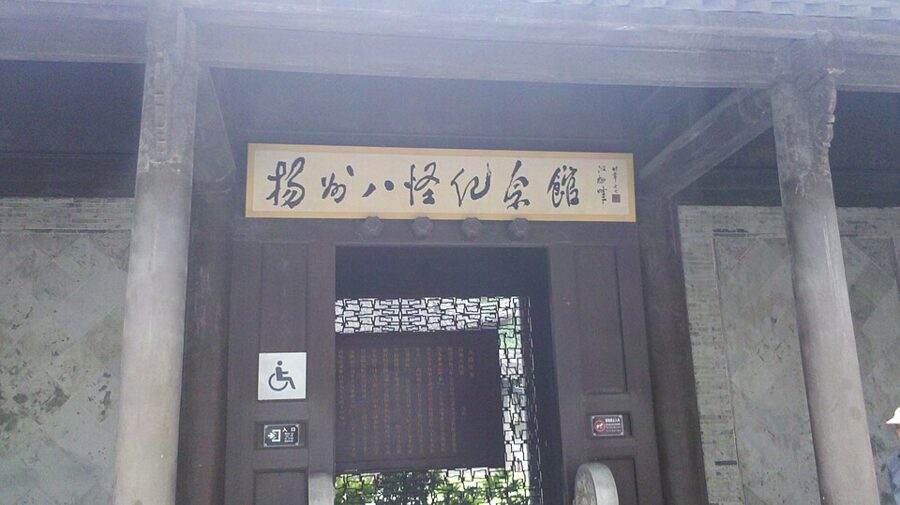
In Yangzhou, the Eight Eccentrics Memorial Hall fills the old Xifang Temple on Tuoling Lane, where Jin Nong spent his last years. It opens 08:30–17:00 every day; ticket sources disagree, giving 15, 22.5 or 25 yuan, so expect something in that range. It is a short walk from Slender West Lake.
Picking up a brush yourself
The traditional way in is the way Qi Baishi took: copy. The Mustard Seed Garden Manual, first published in 1679 with later volumes on orchids, bamboo, plum, chrysanthemum, flowers and birds in 1701, breaks every subject into strokes. Teachers still start with the four gentlemen in roughly the same order, because the orchid leaf teaches the pressed-and-lifted stroke, bamboo teaches structure, plum teaches the branch and chrysanthemum teaches the petal.
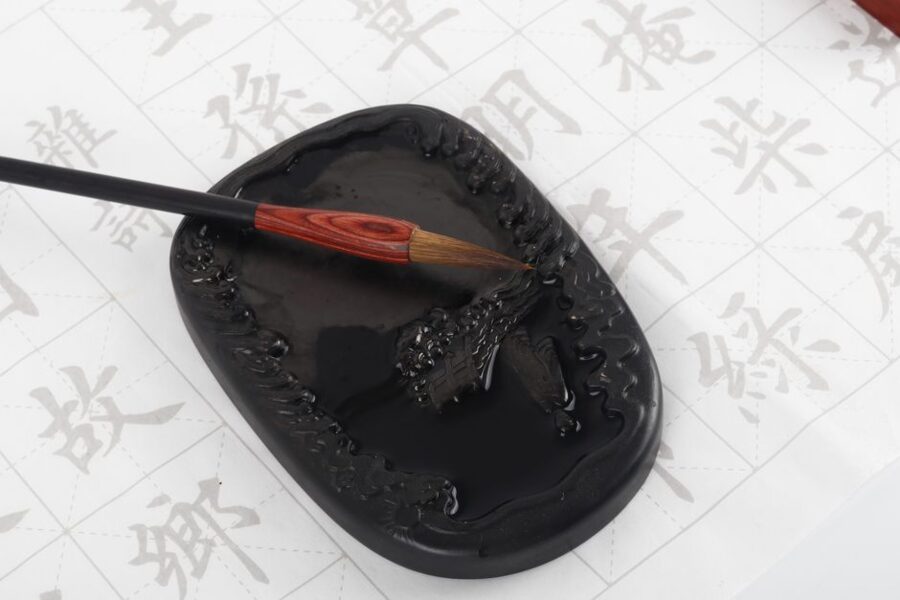
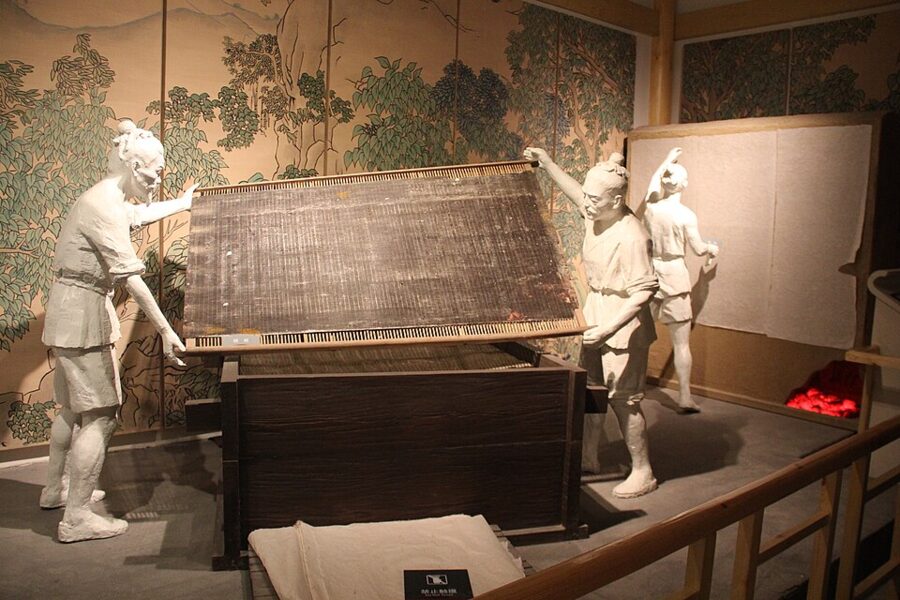
The materials are the scholar’s “four treasures”: brush, ink, paper and inkstone. The classic sources are brushes from Huzhou in Zhejiang, ink sticks from Huizhou in Anhui, and xuan paper (宣纸) from Jing County, also in Anhui. Buy raw (sheng) xuan for xieyi, which drinks the ink and spreads it, and sized (shu) xuan for gongbi, which holds a fine line and takes layer after layer of wash.
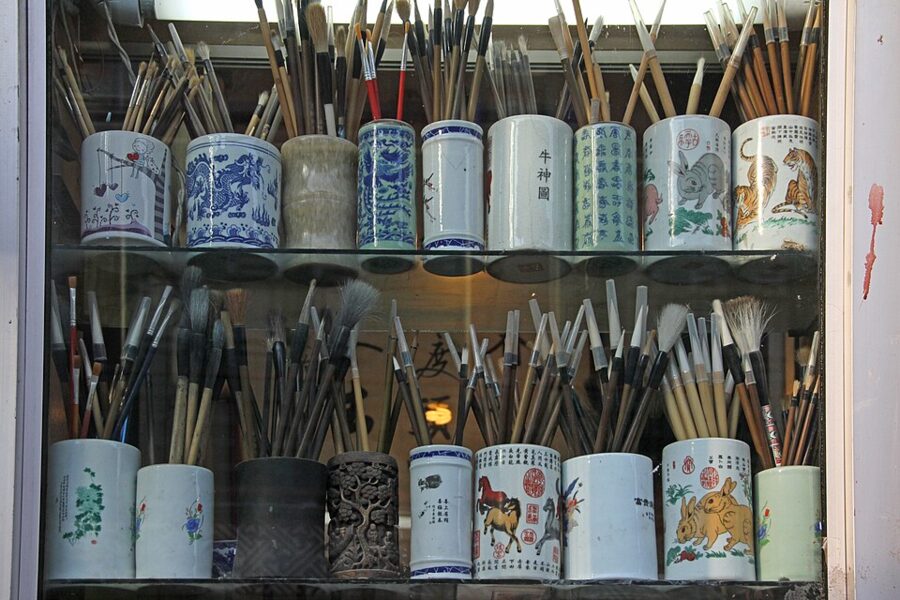

In Beijing, Liulichang is the obvious street for all four, a short walk south of Hepingmen station on Line 2. Many museums and city cultural centers run short painting workshops, mostly taught in Chinese and booked through the venue’s own WeChat account; I would book one before buying anything expensive, since an hour with a teacher shows you what a brush can do faster than a week alone.
Then go back to Huizong’s cranes, or to whichever painting the museum has out that week, and look at one bird for a full minute. Count the feathers the painter bothered to draw. Notice where he stopped. Nine hundred years on, that is still the whole trick: look harder than anyone else, then leave most of it out.