
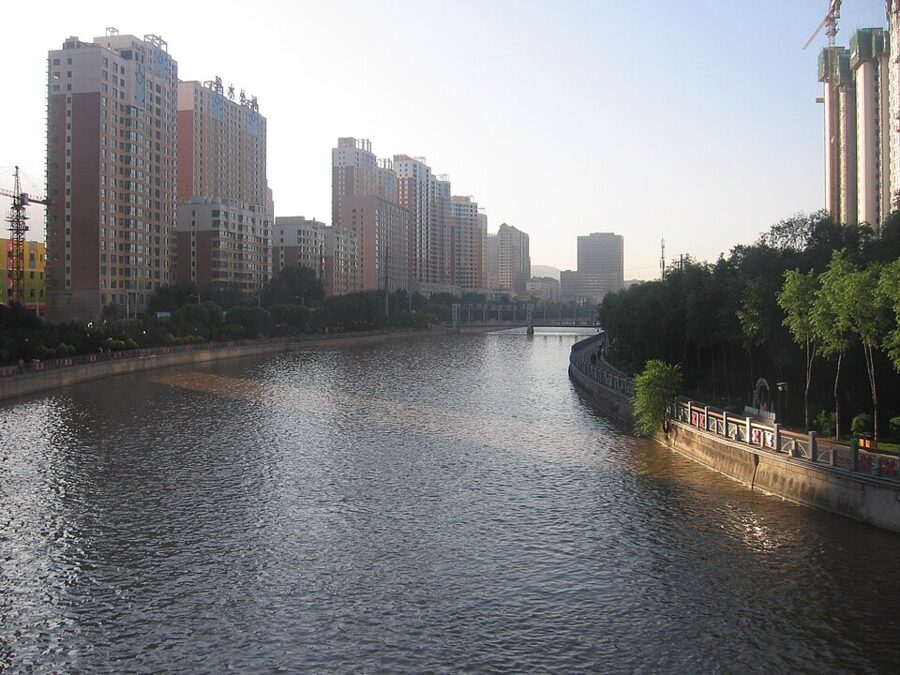
From the terrace of Fenghuangtai on Nanshan, 2,419 meters up, Xining looks like what it is: a city poured into a trench. The Huangshui River runs east along the bottom, tower blocks crowd both banks, and opposite you the red sandstone of the north hill rises in bands, with a Daoist temple fixed to its face like swallows’ nests. Somewhere in the grid below, the tiered roofs of the Dongguan Mosque mark the old east suburb, where the call to prayer has carried over the Chinese city for six hundred years.

Xining (西宁) is the capital of Qinghai, a province most people cross on the way to somewhere higher. The city deserves a day or two of its own: a great mosque, a warlord’s jade mansion shut since 2016, a cliff temple described by a sixth-century geographer, and two museums that explain the plateau better than any viewpoint.
It also does a practical job. At 2,261 meters, Xining is high enough to start your body adjusting and low enough that almost nobody falls ill, so a night or two here before Qinghai Lake (3,200 m) is the cheapest insurance against altitude sickness there is.

On this page
A valley city at 2,261 meters
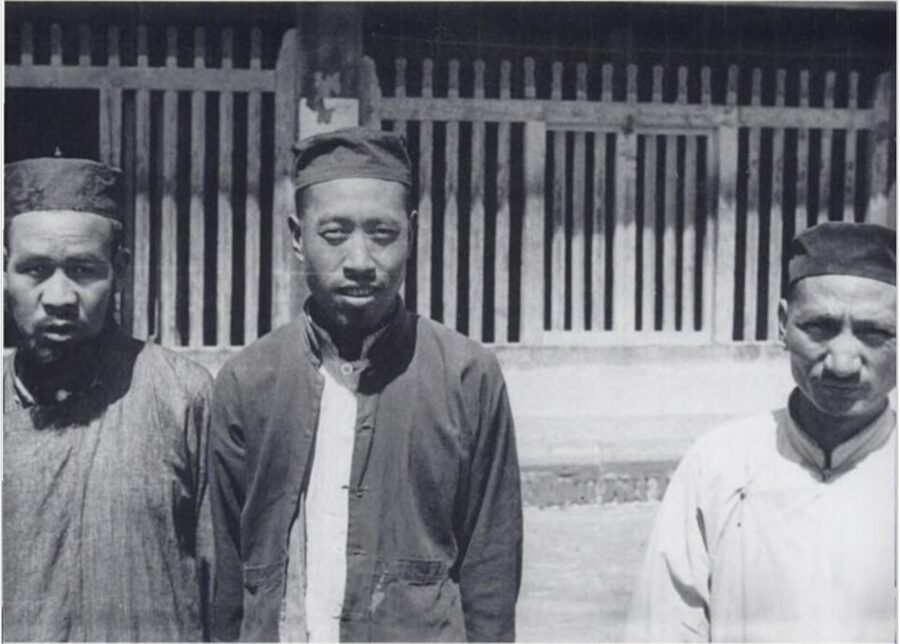
The Huangshui valley is a long trough between the Daban Shan to the north and the Laji Shan to the south, and the city fills it from side to side. About 2.48 million people lived in Xining’s districts and counties at the end of 2025. Most are Han, but the valley has always been a meeting ground: the Hui, Chinese-speaking Muslims, cluster in the east of the city, Tibetans come in from the grasslands, and the Tu (土族), a Mongolic-speaking people, farm the hills toward Huzhu.
The site has been a frontier post for two thousand years. The Western Han built a fort here called Xiping (西平亭), the Tang lost it to the Tibetan empire in the eighth century, and under Tibetan rule it became Qingtang (青唐城). In the eleventh century Qingtang was the capital of Gusiluo (唃厮啰), a Tibetan ruler who sided with the Song against the Tangut Xia, and when the Song finally held the town they renamed it Xining, “peace in the west”, in 1104.
The name stuck, the peace less so. Chinese writers called the town the lock and key of the western sea, because every road to Lhasa and the Qaidam ran through it, including the Tang-Tibet road that Princess Wencheng is said to have taken in 641. The Ming began a new wall in 1385, and the city kept to its square for the next five centuries.
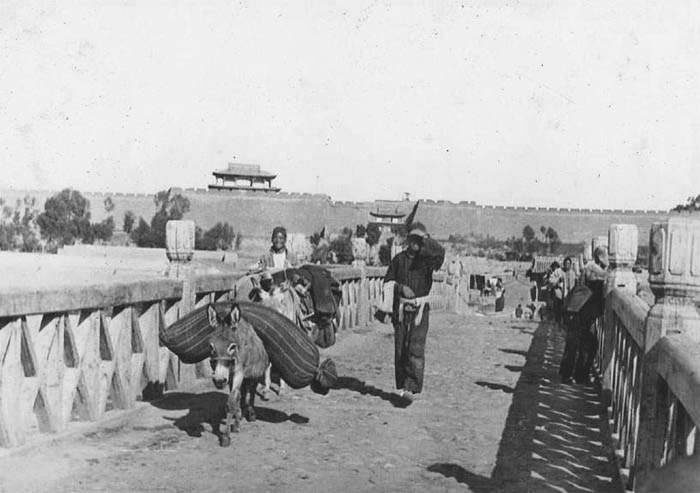
What you see today is mostly late twentieth-century concrete, with the sights as islands in it. I’d plan by district: the mosque and the Hui quarter in the east, the provincial museum in the west, Beishan across the river, Nanshan to the south, and the Tibetan culture museum out in a business park to the north.
The Dongguan Mosque and the Hui quarter
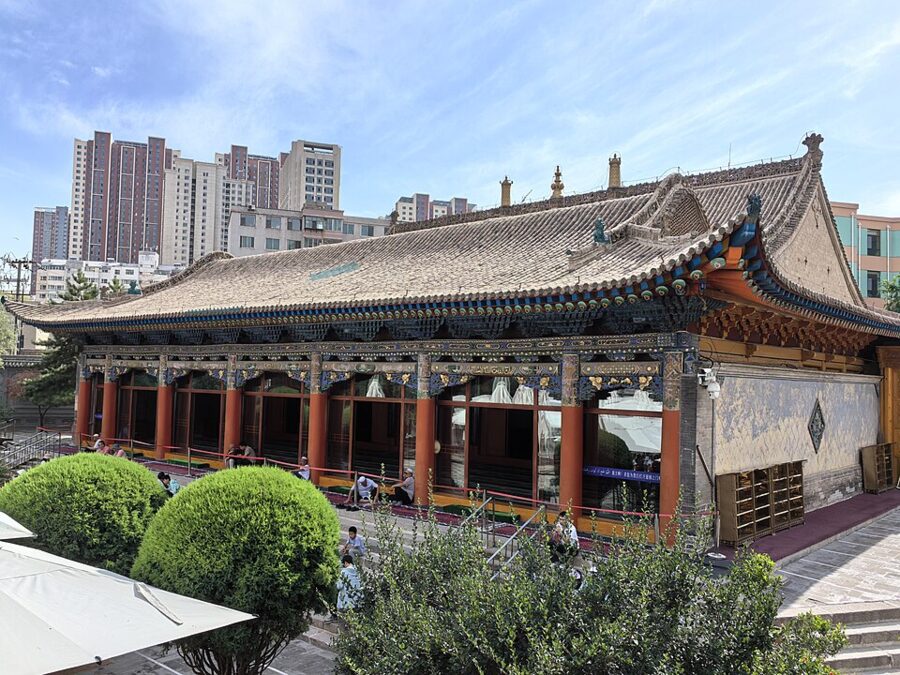
The Dongguan Mosque (东关清真大寺, the Great Mosque of the East Gate) is the largest mosque in Qinghai and the place to start. With Xi’an’s Great Mosque, Lanzhou’s Qiaomen Mosque and the Id Kah in Kashgar, it is counted among the four great mosques of the northwest. It was founded under the first Ming emperor, usually dated to about 1380, and local tradition credits Mu Ying, the general who held the region for the Hongwu Emperor.
Almost nothing of that first building survives. Two steles inside, dated 1914 and 1948, record its rebuilding in the Republic: the core of the present mosque went up in 1913 and 1914 under Ma Qi, the Hui general then commanding Xining, and it was enlarged in 1946 and again in 1979. It was closed during the Cultural Revolution, reopened after it, and has been a national heritage site since 2013.
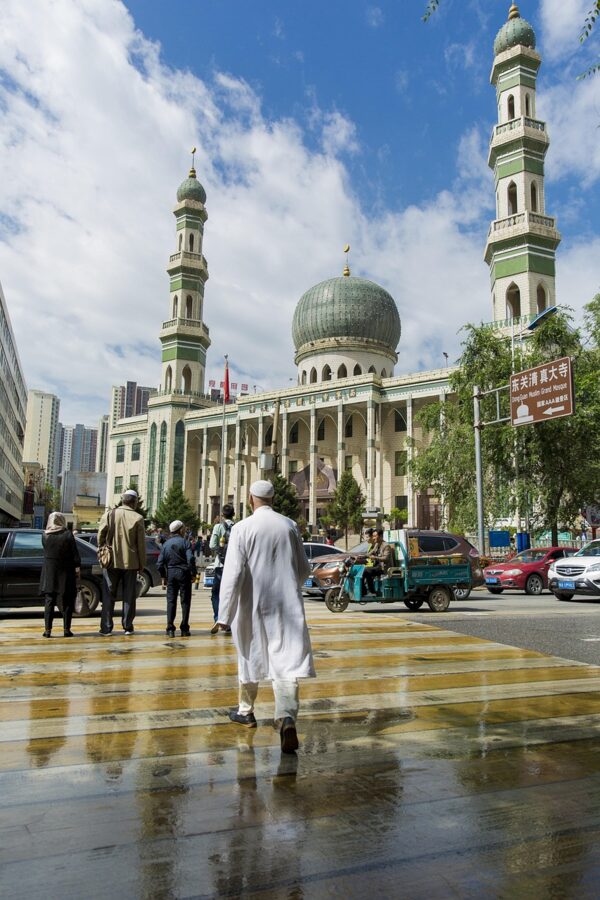
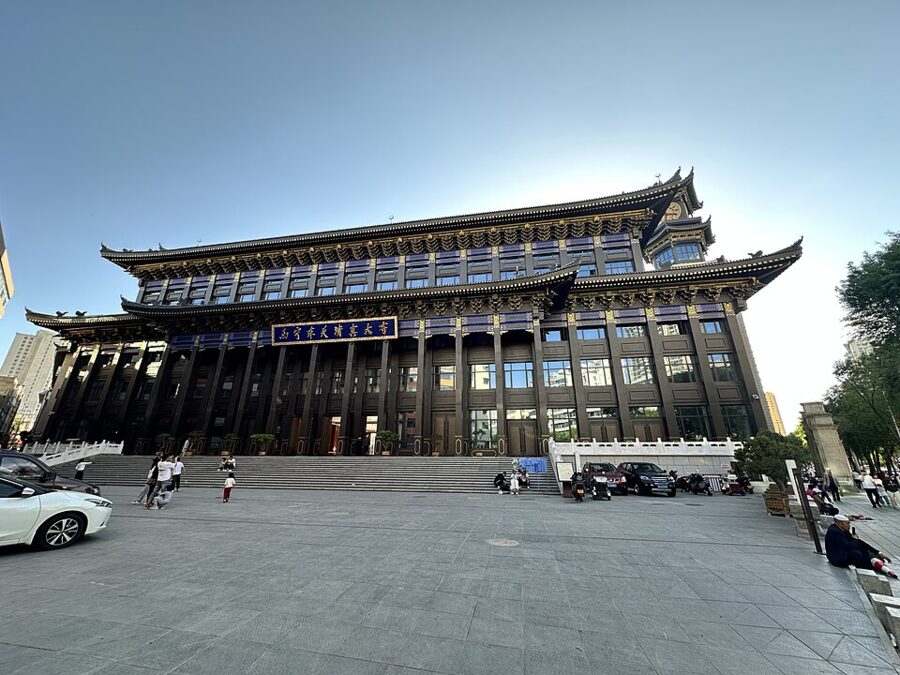
The latest chapter is the most visible. Around the turn of the century the front building was rebuilt with a green dome and minarets in a Middle Eastern style, and in 2021 they came off, replaced by pavilion roofs, in a national drive to make religious buildings look Chinese. The mosque committee said the removed parts were never part of the protected relic, which is true: the older buildings behind were Chinese in style all along.
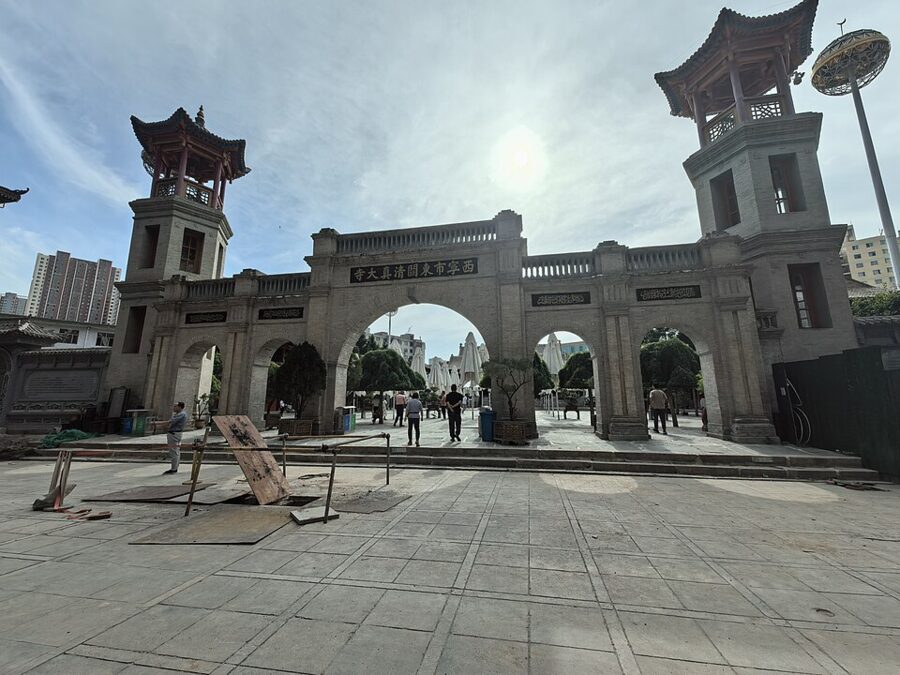
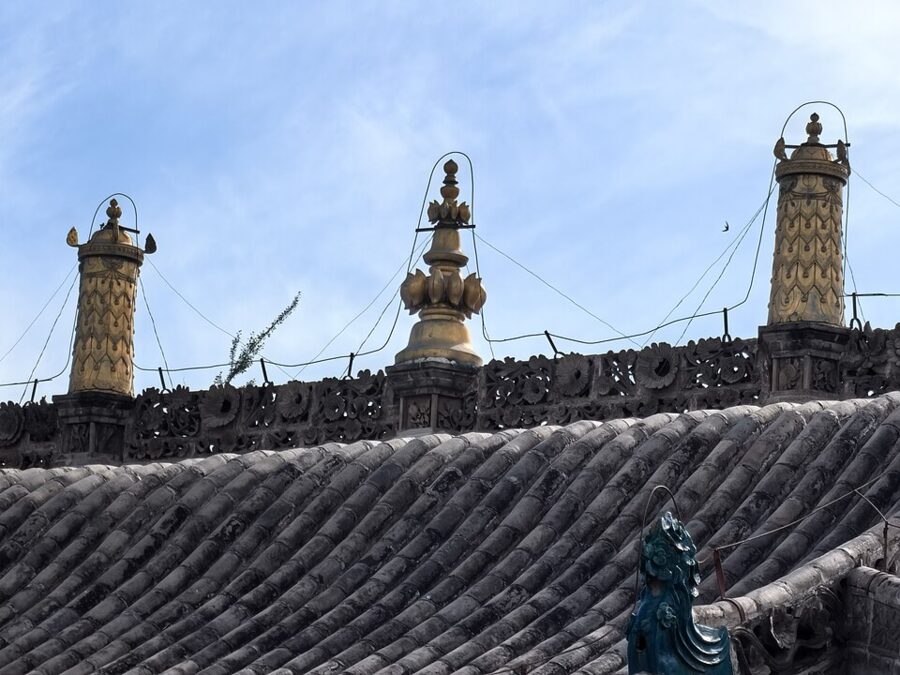
The plan is a single axis with two courtyards. You pass the gate, the Five Gates (五门) and the minaret tower, with long two-story wings on either side, and face the prayer hall across the paved court. The gilded vase finials on its ridge and on the minaret were gifts from Labrang and Kumbum, the two great Tibetan Buddhist monasteries of the region, and the name over the main gate was written by Yu Youren, the Nationalist statesman and calligrapher.
Visiting rules, and why Friday afternoon
Entry is free. The mosque is open to sightseers from 08:00 to 18:00, except on Friday, the day of congregational prayer, when nobody who is not praying is let in before 15:00. Cover your arms and legs (shorts and short skirts are refused at the gate), women should bring a scarf for their hair, and you should not walk in front of anyone praying or photograph people at prayer.
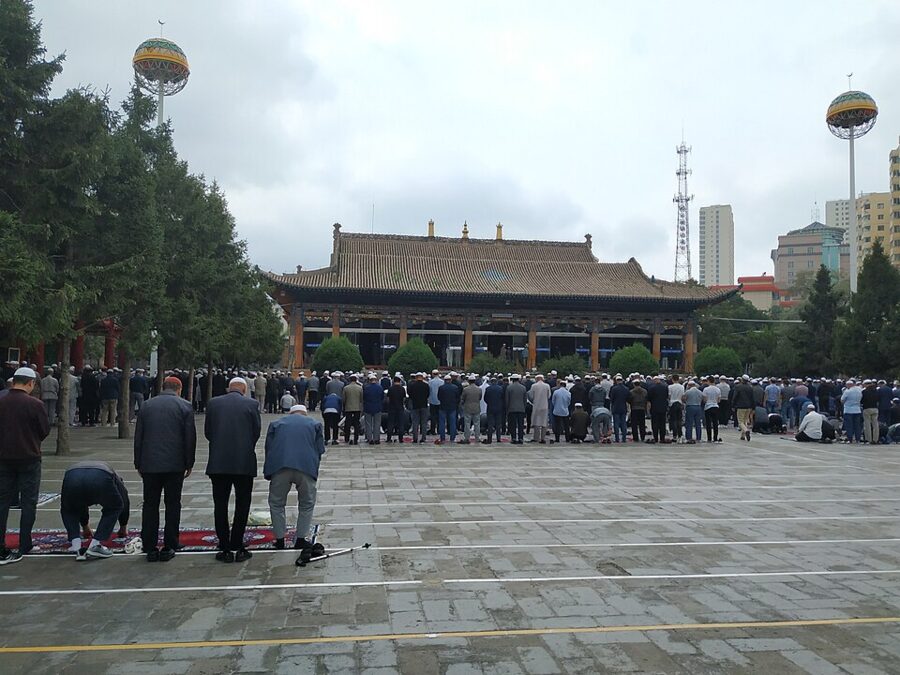
Friday is still the day to come, just later. Around midday the men of the east city fill the courtyard and spill into the square outside, rows of white caps facing west. Watch from across Dongguan Dajie, then come in after 15:00, when the courtyard has emptied and the hall is quiet.

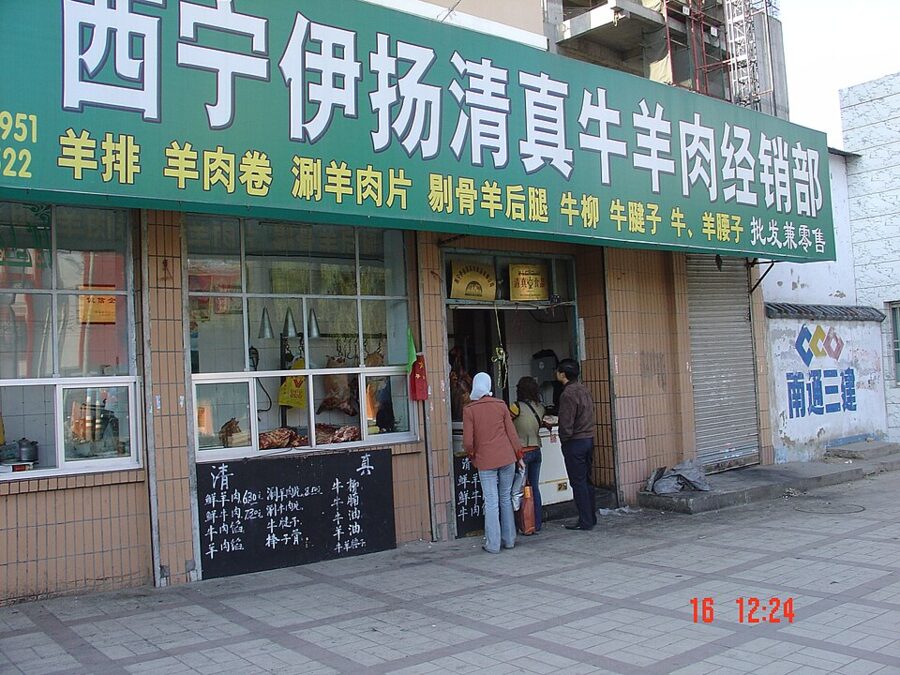
The streets around the mosque are the Hui quarter. Dongguan Dajie and the lanes south of it are lined with halal butchers, bakers with stacks of round flatbread, and shops selling white caps, prayer mats and headscarves. It is a working neighborhood, and the lunch hour is when it is most itself.

Ma Bufang and the jade mansion
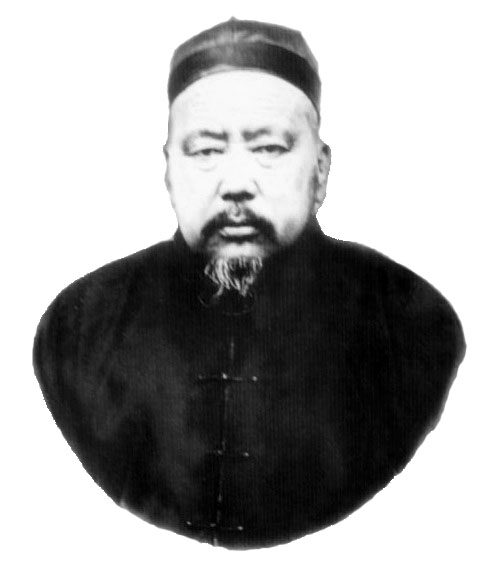
For most of the first half of the twentieth century, the family that controlled the mosque also ran the province. The Ma family came from Hezhou, today’s Linxia in Gansu. Ma Qi (马麒, 1869–1931) was made garrison commander of Xining in 1912, raised his own Ninghai Army, and governed the region for the warlord governments in Beijing until his death.
His second son, Ma Bufang (马步芳, 1903–1975), was trained first as an imam and then as a soldier. He pushed aside his uncle Ma Lin in the late 1930s and was formally appointed governor of Qinghai in 1938, holding the province until 1949. With his brother Ma Buqing and their Ningxia cousins he destroyed the Red Army’s Western Route Army in the Hexi Corridor in the winter of 1936–1937, the episode that still defines him in official Chinese histories.
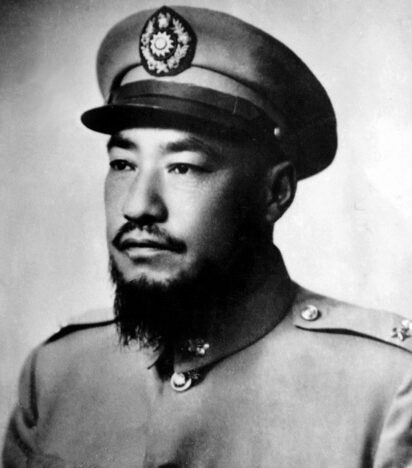
His record depends on who is telling it. He sent his cavalry east against the Japanese and built schools. He also ran Qinghai as a family estate, drafted two sons out of every three in a household, and sent repeated punitive expeditions against the Golog and other Tibetan tribes of the south, burning monasteries as he went. In 1939, after Lhasa’s search party found the boy who became the 14th Dalai Lama in a village near Kumbum, Ma reportedly demanded 100,000 silver dollars before letting him leave.
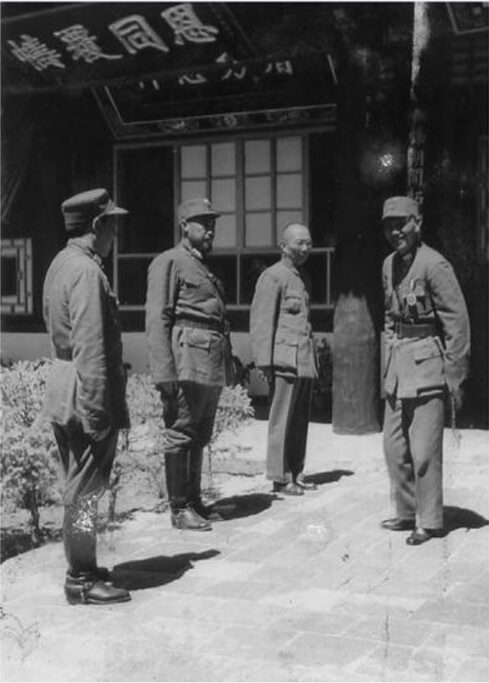
The end was quick. Lanzhou fell to the People’s Liberation Army on August 26, 1949, and the next day Ma flew out of Xining with, by the city’s party history, about 31,000 taels of gold; some accounts date his flight to the 28th. He went on to Mecca, Cairo and Saudi Arabia, where Taipei made him its ambassador from 1957 until a scandal ended his posting in 1961. He died there on July 31, 1975.
Xinlu, the house
Ma Bufang’s mansion was begun in June 1942 and finished a year later, and he lived there with his family until 1949. He called it Xinlu (馨庐), and the name came in jade characters from Lin Sen, then head of the Nationalist government. Both characters are borrowed from Liu Yuxi’s Tang essay “Inscription on a Humble Room”, whose author insists that a hut is no hovel so long as its owner’s virtue is fragrant. The irony needs no help from me.
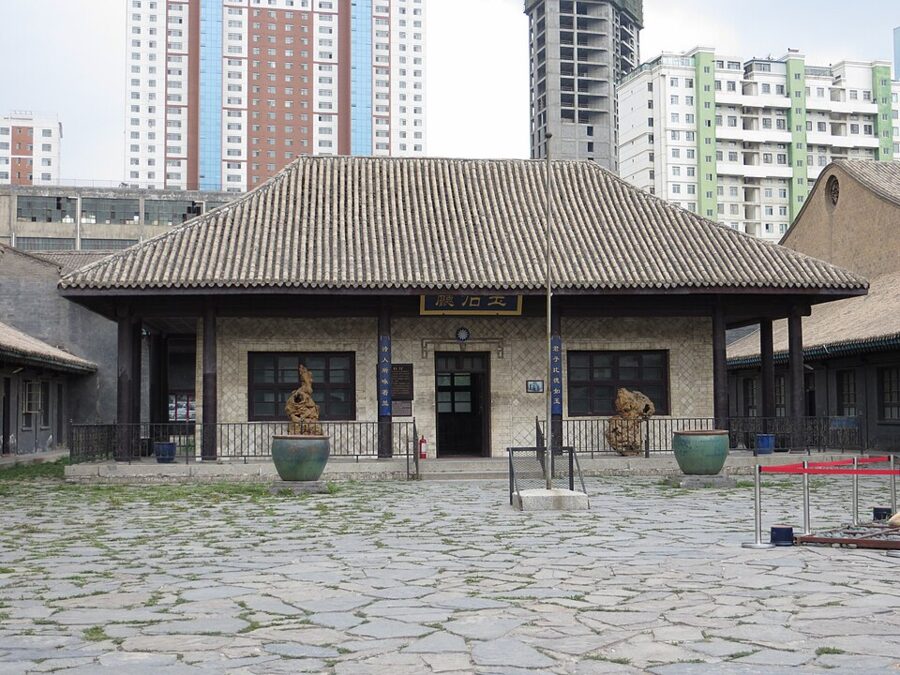

The compound covers about 29,550 square meters, with some 290 rooms around a run of courtyards: a guest hall, offices for adjutants and staff officers, guard quarters, a galleried building for the women of the household, an oil press and a mill. Its fame is the stone. Walls, floors and fireplaces are inlaid with the pale “sheep-brain stone” (羊脑石) of Qinghai, and it is usually called the only official residence in China built with jade.
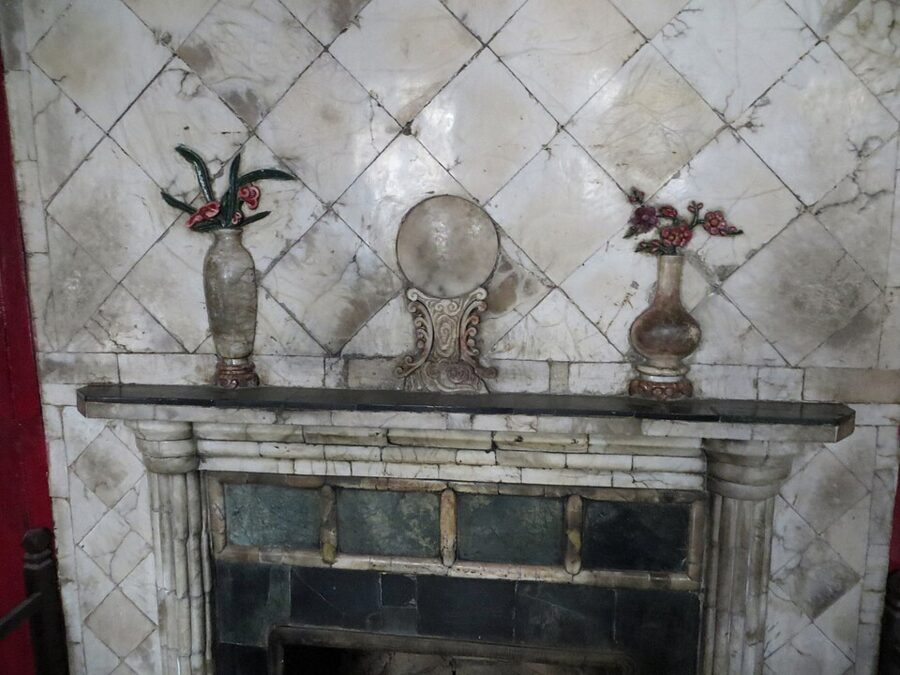

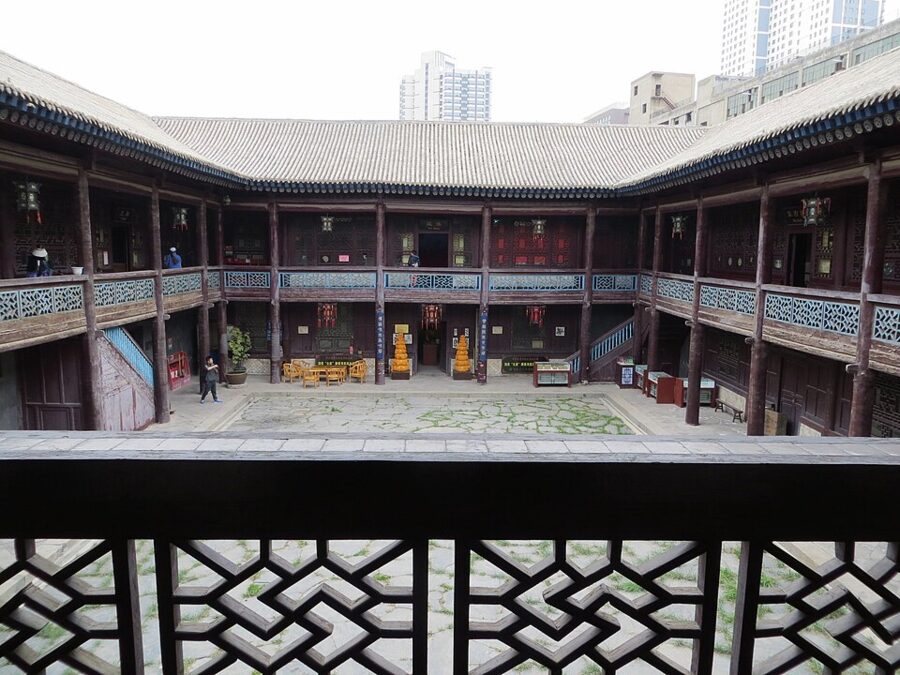

How the museum told it, and why it is shut
After 1949 the house passed to the state, and from 1986 to 2001 it was the first home of the Qinghai Provincial Museum. In 2006 it reopened as the Qinghai Folk Customs Museum, run by a private operator, with the rooms furnished as Ma’s household and side galleries on the province’s peoples.
In April 2016 a storm broke online over the way it told Ma Bufang’s story: its texts and guides praised him for fighting Japan, founding schools, banning opium and greening the hills, with little about the Western Route Army or the Golog campaigns. The provincial heritage bureau blamed “a very few guides” for careless, one-sided commentary. The national tourism authority stripped the site of its 4A rating, and the mansion closed that spring.
It has not reopened. Xinlu, on Weimin Xiang (为民巷) in the east city, keeps its own conservation office, and in April 2026 that office put the restoration of the mansion’s octagonal pavilion out to tender, a 90-day job. No reopening date has been announced, so for now the Ma family’s story is best read in the provincial museum and at the Dongguan Mosque.
Beishan Temple: a cliff with caves
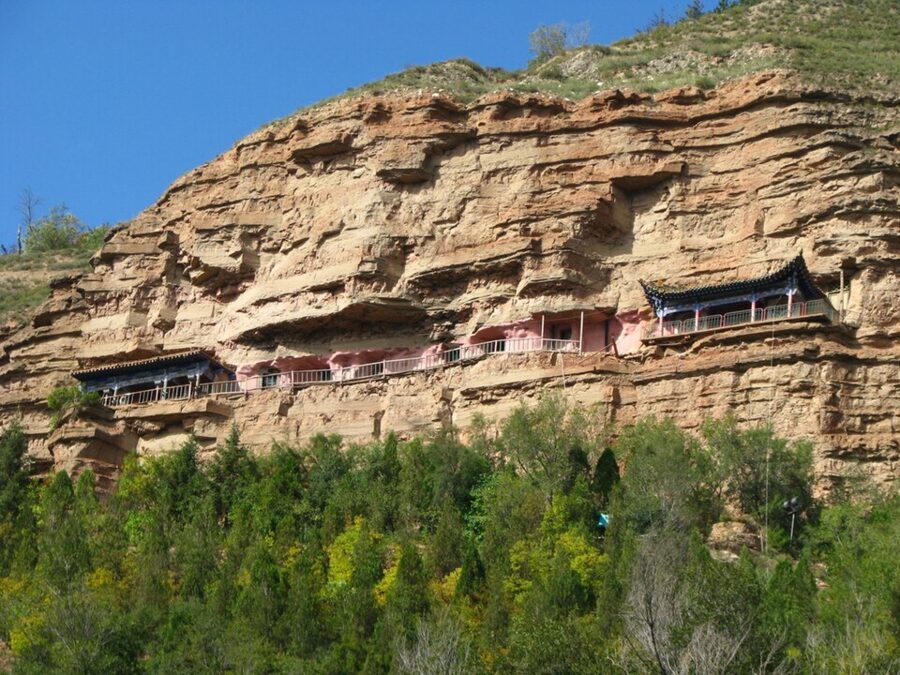
Across the Huangshui from the old city, the north hill rises in horizontal bands of red sandstone and conglomerate streaked with gypsum. Water and frost have hollowed it into caves, and people have built into them for at least fifteen centuries. Li Daoyuan, the Northern Wei geographer who died in 527, described the spot in his Commentary on the Water Classic: the Huangshui flows east past the Earth Tower, a peak “more than three hundred chi high, as if pared with a blade”.
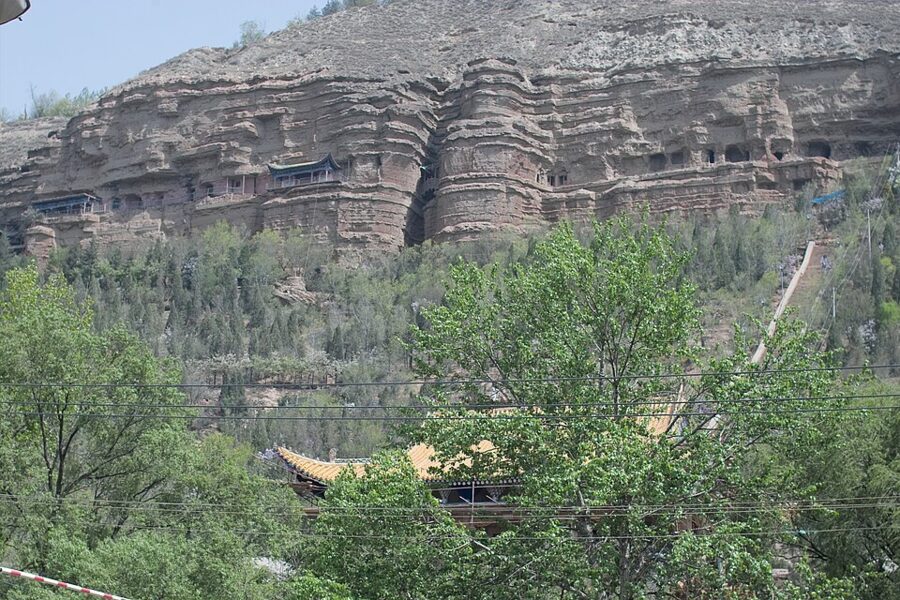

The temple has had several names. It began as a Buddhist cave temple in the Northern Wei, Beishan Si (北山寺) or Beichan Si (北禅寺), and the Ming named it Yongxing Si. By the end of the Qing it had become Daoist, and since 1983 it has officially been Tulouguan (土楼观), the Earth Tower Temple, the name on the gate.
The draw is the cliff itself. A set of hollows known as the Nine Caves and Eighteen Grottoes (九窟十八洞) was linked by plank walkways and galleries pinned to the rock, which earned it the nickname of China’s second Hanging Temple, after the one near Datong. Some caves hold murals from the late Tang to the Yuan, Tang guardian figures stand in the open partway up, and the Ningshou Pagoda (宁寿塔) crowns the hill.

Erosion has eaten into the cliff, and most of the caves are now seen from the paths rather than entered; the site has been surveyed and scanned in 3D so a record survives whatever the rock does next. “Misty rain on the north mountain” (北山烟雨) is one of Xining’s eight classic views, and on a damp day the cliff goes soft and red behind the drizzle.
The temple is open 08:00–18:00. Entry is free, though a few listings still quote a 5-yuan ticket; allow two to three hours. Go in the morning, before the sun gets onto the south-facing steps.
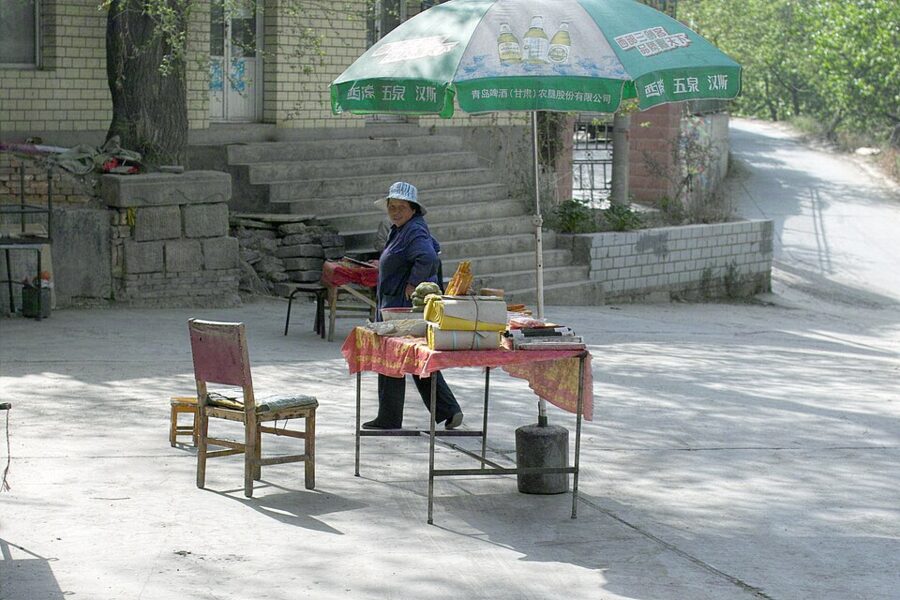

Go up Nanshan at dusk
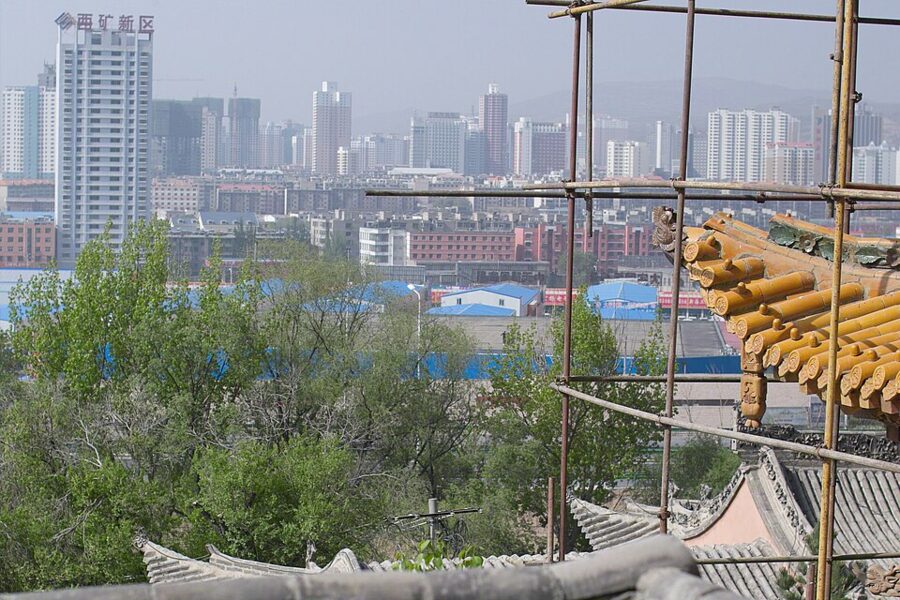
The south side of the valley is gentler. Nanshan Park (南山公园) is a free city park of pines and stone stairs, and at its summit stands Fenghuangtai (凤凰台), the Phoenix Terrace, at 2,419 meters. “Clouds lingering on the phoenix terrace” (凤台留云) was another of the eight views; the old pavilion here was replaced in 2001 by the present 30-meter structure, white tensile sails paid for by Shanghai’s Pudong district, with a bookshop cafe at the top.
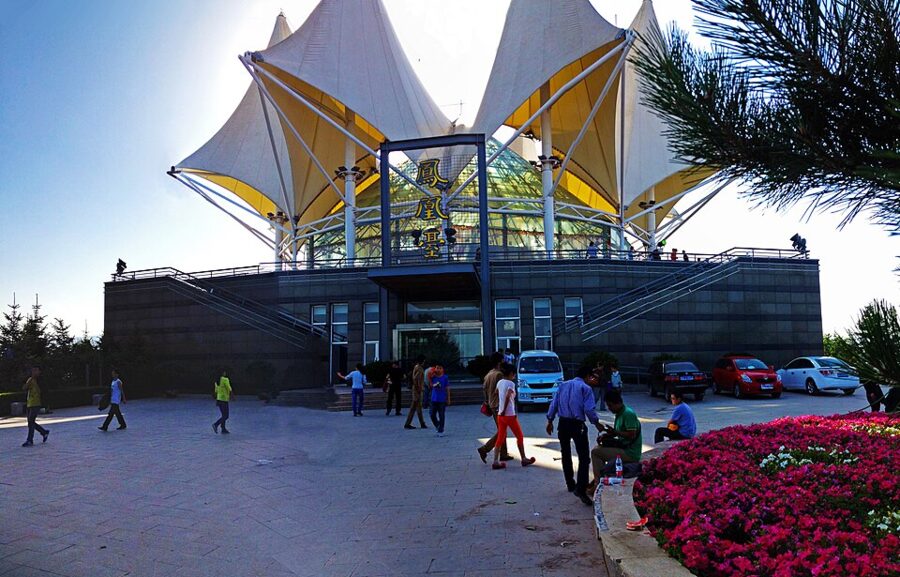

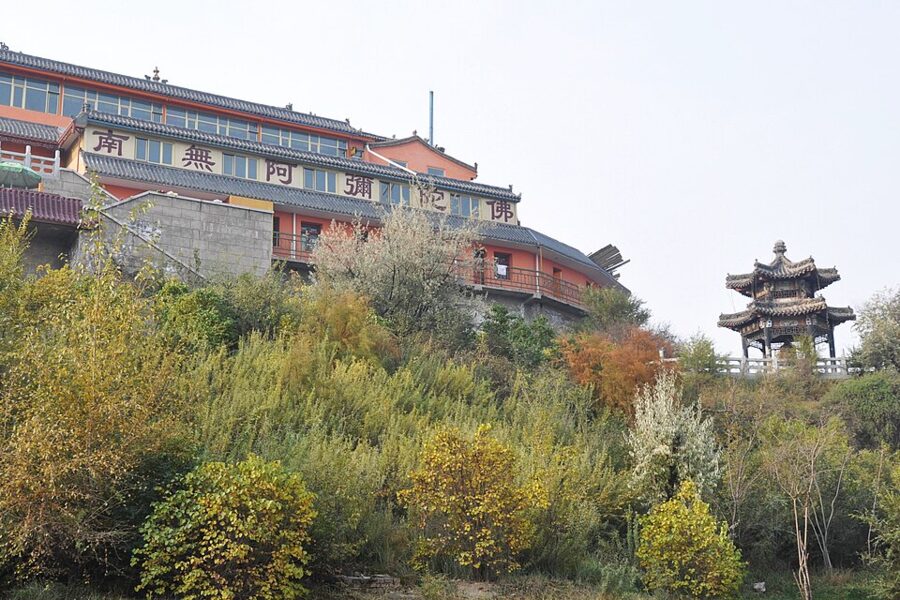
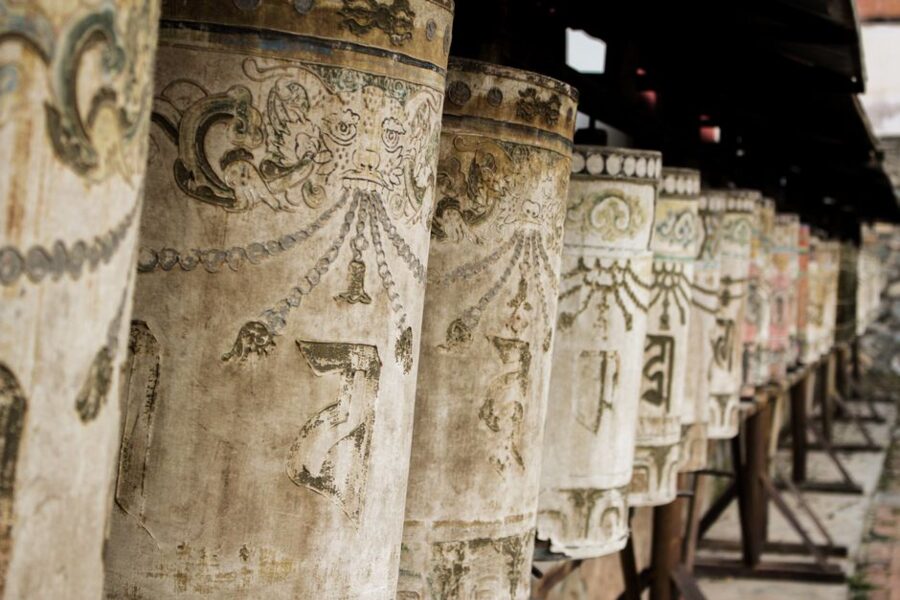
Time it for the last hour of light, when the whole valley lies below you and Beishan’s cliff turns red across the city. On the way, stop at the two Buddhist temples on the north slope: Nanchan Si (南禅寺), with its tiers of halls and gilded prayer wheels, and Fachuang Si (法幢寺), the largest Chinese Buddhist nunnery in Qinghai, moved here in 2003 when its old site was needed for the expressway to Kumbum.

Two museums worth a morning each
If the weather turns, Xining’s two big museums will fill a day. One is a state collection on a public square; the other was built by a Tibetan medicine company and holds the longest thangka on record.
The Qinghai Provincial Museum
The Qinghai Provincial Museum (青海省博物馆) stands on the east side of Xinning Square, at 58 Xiguan Dajie, in a building that opened in 2001. It is free, open Tuesday to Sunday 09:00–17:00 with last entry at 16:30, and closed on Mondays. Normally you book a named slot in advance, but the museum is trialing walk-in entry from October 10, 2026 to April 30, 2027: Chinese ID cards are swiped at the gate, and without one you scan a code for a real-name check, so bring your passport.
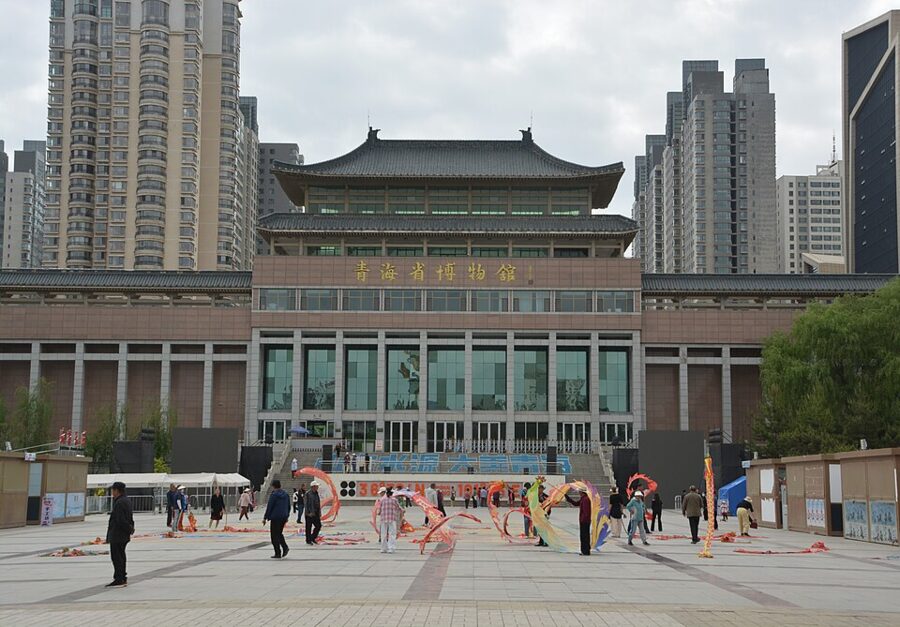

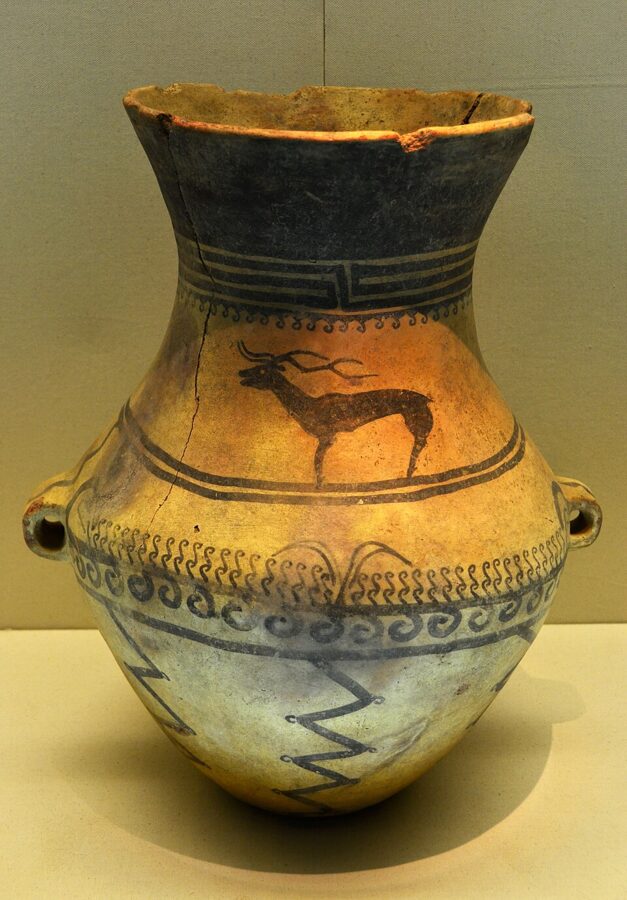
The collection runs to about 15,700 objects, and the history galleries are the reason to come. Neolithic painted pottery is the heart of it, and the museum’s emblem comes from a basin from Zongri in Tongde county, painted inside with four pairs of figures carrying something round between them.
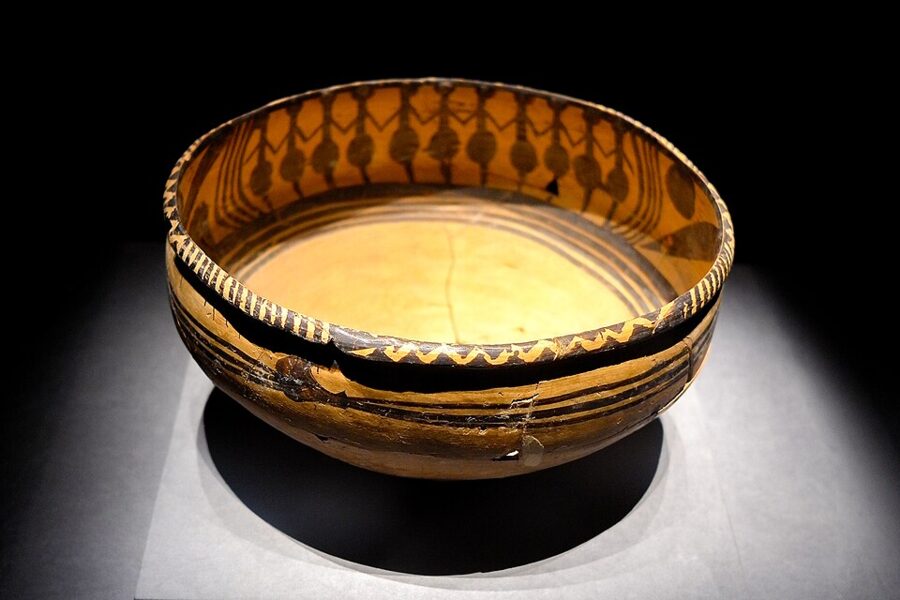

Its partner is the dancing-figure basin from Zongri: two rings of dancers holding hands inside the rim, about five thousand years old. The more famous dancing basin, found at Datong near Xining in 1973, is in the National Museum in Beijing, so this is the one you can see on the plateau. Both are listed with a third piece as the museum’s three treasures.

The third is a gilt-bronze Guanyin, 1.46 meters tall and marked with the reign of the Yongle Emperor (1403–1424), which stood for centuries in Qutan Si, the Ming temple in Ledu east of Xining, and entered the museum in 2001. When it was lent to Beijing in July 2026, a viewer spotted print on its base, and the museum explained that Qutan’s monks had sealed the broken base with newspaper to keep the relics inside from falling out.
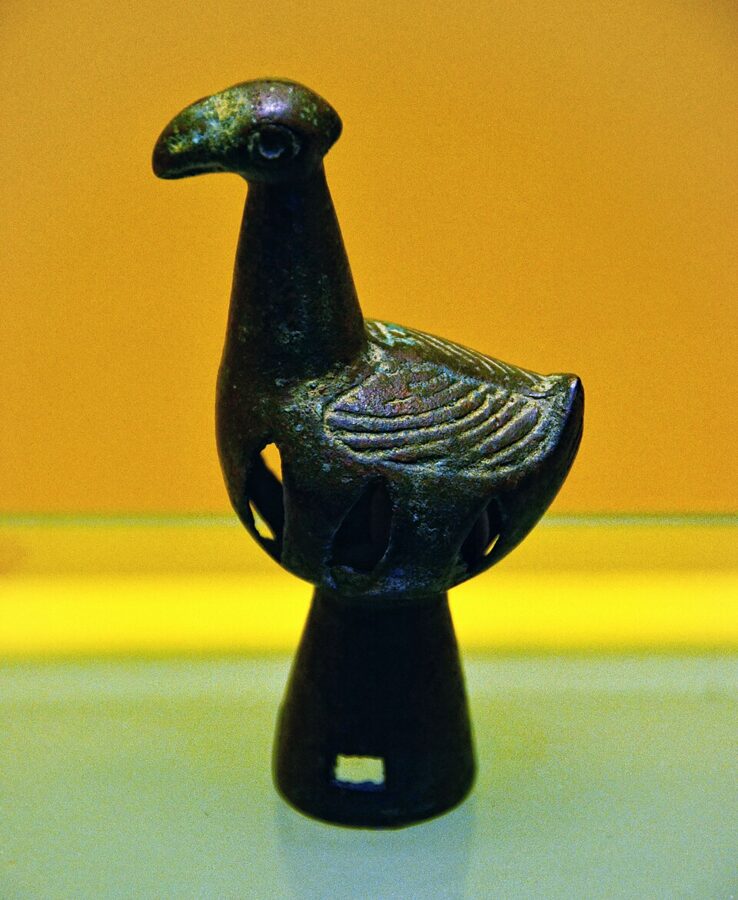

Leave time for the intangible heritage hall, with the shadow puppets and lantern work of the valley villages. No tripods, selfie sticks or flash. The museum has warned that it authorizes nobody to sell tickets or “guide plus ticket” bundles, so ignore anyone outside offering either.
The Tibetan medicine and culture museum
The Qinghai Tibetan Culture Museum (青海藏文化博物院) began life as the Qinghai Tibetan Medicine Culture Museum (青海藏医药文化博物馆), and many maps and taxi drivers still use that name. It was built by a Tibetan pharmaceutical company in the biotech park of Chengbei district, at 36 Jing’er Lu, formally opened in 2007, and was rated a national first-grade museum in 2020.
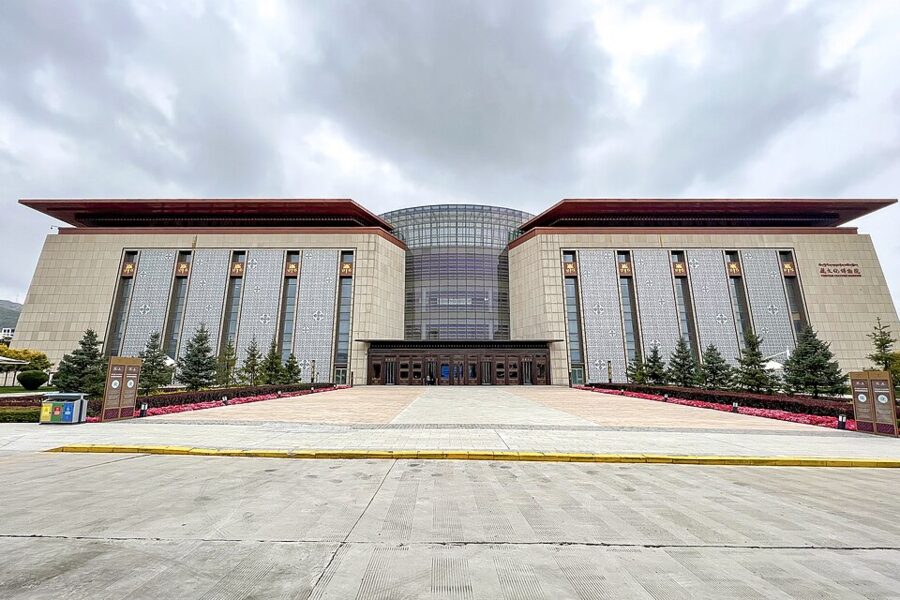

The medicine halls are the original core: the history of Tibetan medicine, surgical instruments, herbal and mineral specimens, the astronomy and calendar used to time treatment, and early editions of the Four Medical Tantras (四部医典), the eighth-century classic that UNESCO added to its Memory of the World register in 2023. The medical thangkas are the highlight, painted charts of anatomy, pulse diagnosis and disease that read like a textbook in pictures.
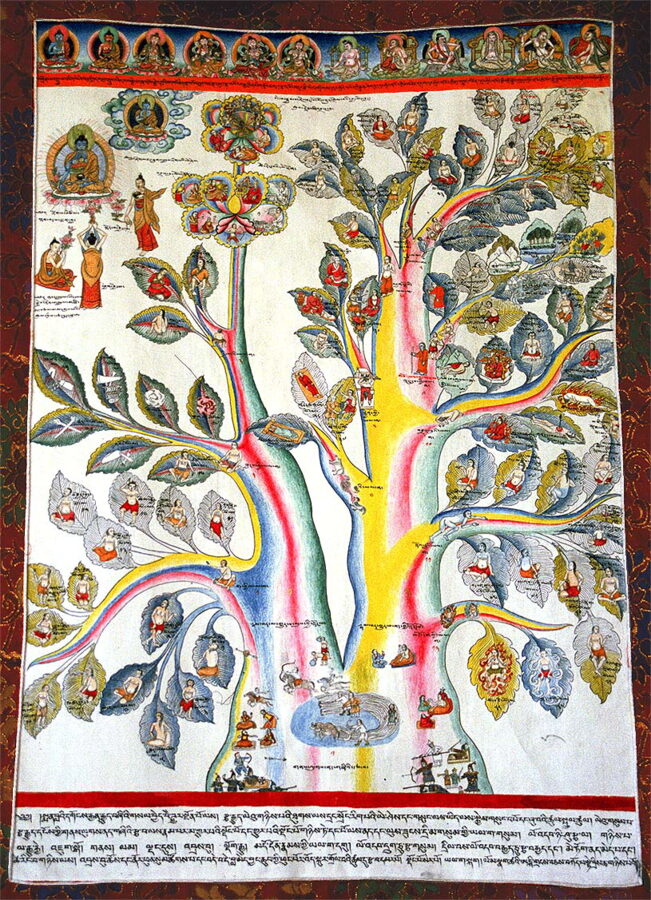
Upstairs is the Great Thangka, properly the Grand Painted Panorama of Tibetan Culture: 618 meters long and 2.5 meters high, painted by more than 400 artists, and entered in China’s own book of records as the longest thangka in the world in 1999. It winds through a darkened gallery on the fourth floor, from the Tibetan creation myth through kings, saints, medicine and festivals, and it takes an hour to walk properly. Photography there was long forbidden, and flash certainly is.
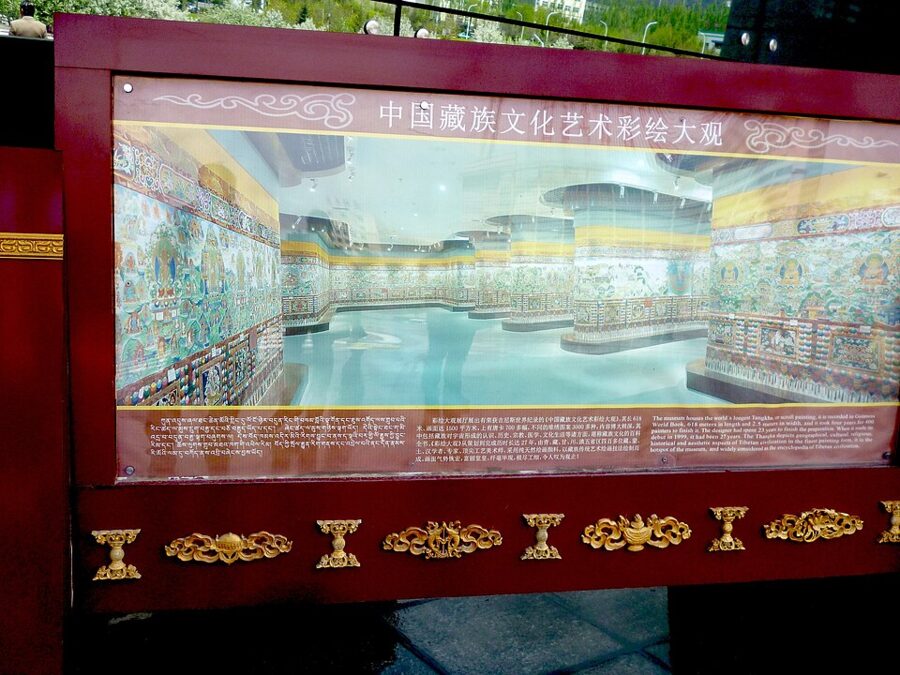

The museum’s hours run 09:00–18:00 from May through September (last entry 17:30) and 09:00–17:30 from October through April (last entry 17:00). It closes for the three days of the Spring Festival holiday but, unlike most Chinese museums, stays open on Mondays. The thangka hall carries a ticket of about 60 yuan, half price for students, while the medicine halls have been free with ID; allow three hours.
Mojia Street, the night markets and what to eat
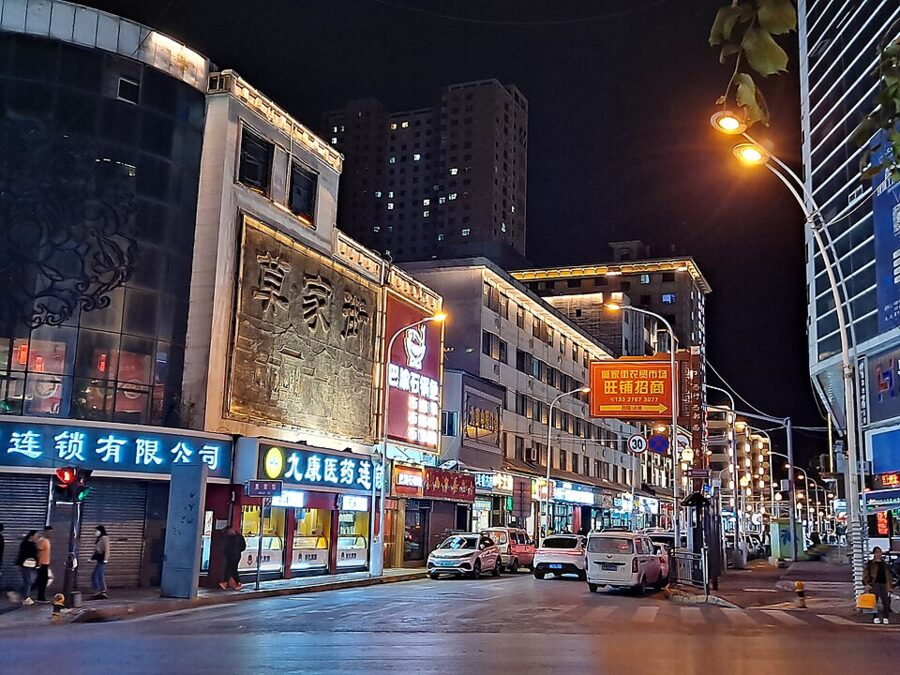
Xining’s street food is mostly Hui food: lamb, wheat noodles, yogurt and sweets. The obvious place to start is Mojia Street (莫家街), on the south side of Dongdajie in the old city. Its name is said to go back to a Ming official called Mo who built a house and a family temple here; it has long been the city’s food street, and it was relit and refitted in December 2025.
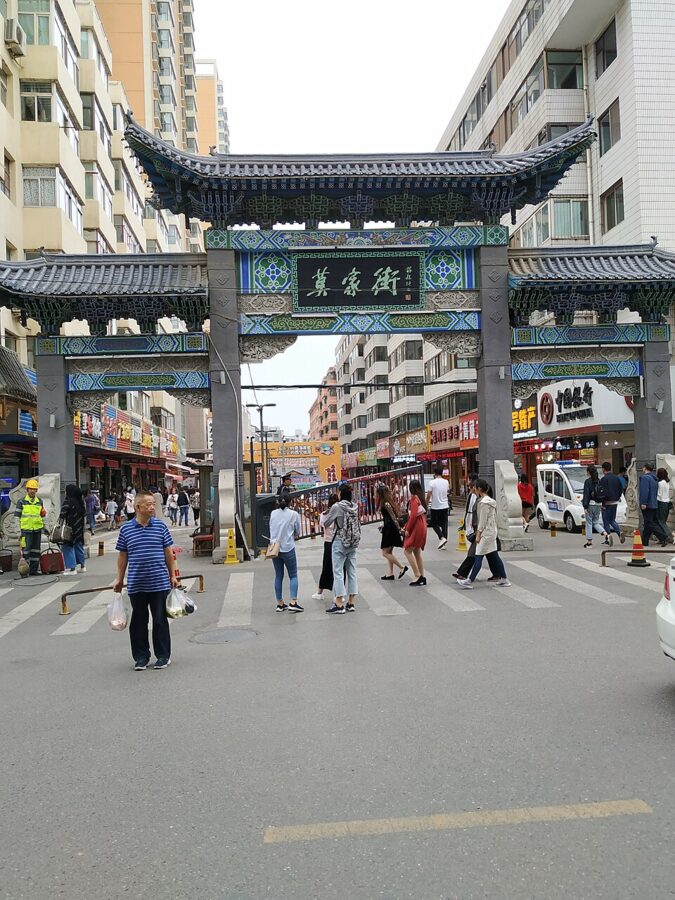

The night market here runs all year from about 17:30 to midnight. In the east city, near the mosque, Xia Nanguan Street (下南关街) is the newer favorite: a 400-meter lane of food stalls along what was a Qing-dynasty moat, which drew about 4.2 million people in 2024 and has 394 marked-out stalls. Locals call it the street you cannot leave empty-handed. Daxin Street (大新街) in the center runs a third night market.
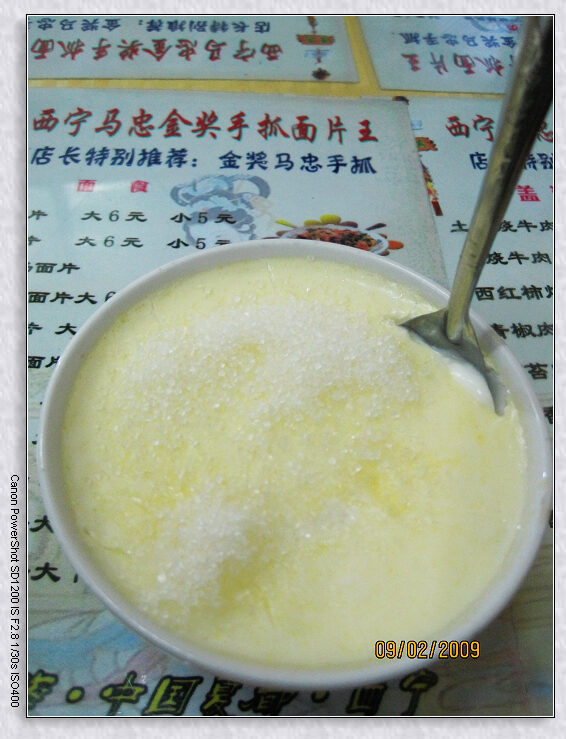
I would not chase named stalls; they change, and the queue tells you more than a list does. Look for the dishes. Niangpi (酿皮) is the city’s signature snack, steamed wheat starch cut into thick strips and dressed with chili oil, vinegar and garlic. Qinghai yogurt (酸奶) is set in the bowl from yak or cow milk, thick enough to hold a spoon upright, with a skin on top and sugar scattered over it.


Tianpei (甜醅) is fermented highland barley, sweet and faintly boozy, served cold in summer. For a meal, order shouzhua yangrou (手抓羊肉), lamb on the bone boiled plain and eaten with your hands and a dip of salt and pepper, or kangguo yangrou (炕锅羊肉), lamb, potatoes and peppers seared in a hot iron pan.
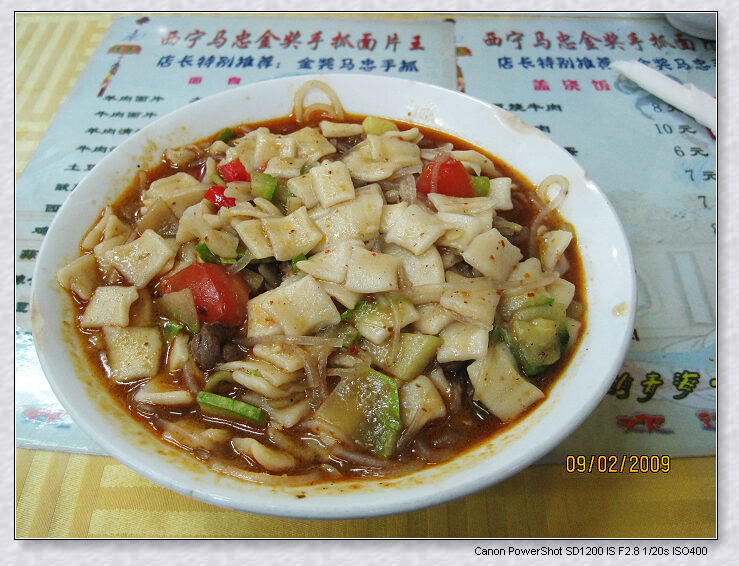

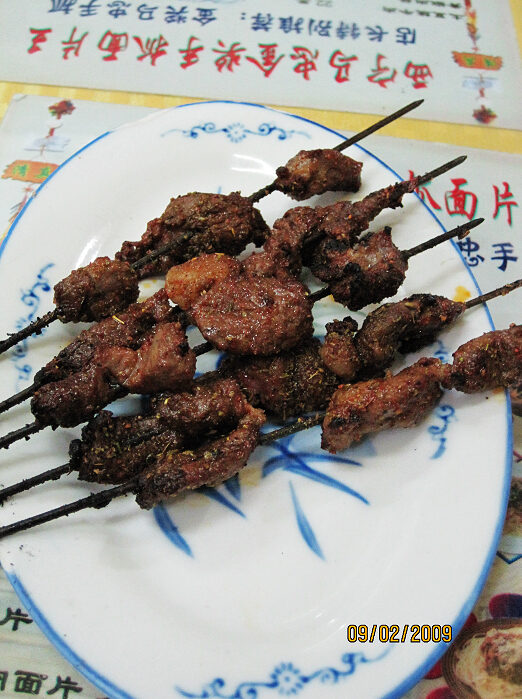
Noodles come as mianpian or as Lanzhou-style beef noodles in clear soup. For breakfast, try hot milk with egg and fermented rice (牛奶鸡蛋醪糟) and carry a barley flatbread (青稞饼). In the evening the smoke over the night markets comes from lamb skewers rubbed with cumin and chili.

Hui restaurants serve no pork and usually no alcohol, and it is polite not to bring either in. If you want beer with your skewers, look for a Han barbecue place instead.
Kumbum and Qinghai Lake as day trips
Kumbum Monastery (塔尔寺, Ta’er Si) lies 26 km southwest of the center in Huangzhong, about 40 minutes by car. It is one of the six great monasteries of the Gelug school and grew from a stupa that the mother of Tsongkhapa, the school’s founder, built at his birthplace in 1379: “first the stupa, then the monastery”, as the Chinese name has it. Its butter sculptures, murals and applique embroidery are counted as its three arts.
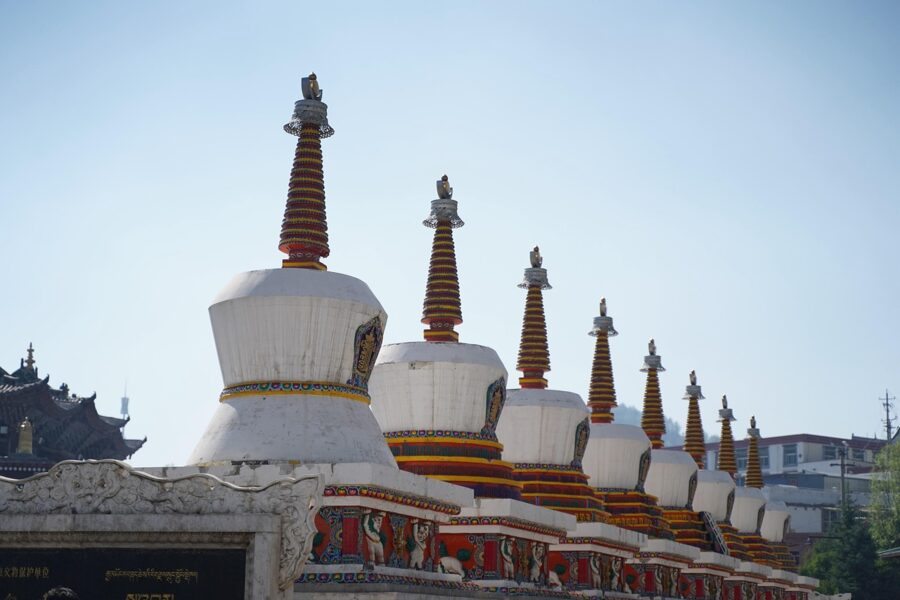
Tickets are 70 yuan from April through October and 40 yuan from November through March. Give it half a day and start early, before the tour buses: walk clockwise, keep shoulders and knees covered, and do not photograph inside the halls.
Qinghai Lake is a full day. The nearest shore at Erlangjian is about 150 km west over the Riyue Shan pass, where the farmland ends and the grassland begins, and the water sits at 3,200 meters. Chaka’s salt flats are farther still and better done as an overnight. Either way, Xining is where you sleep before and after.
Two days in Xining
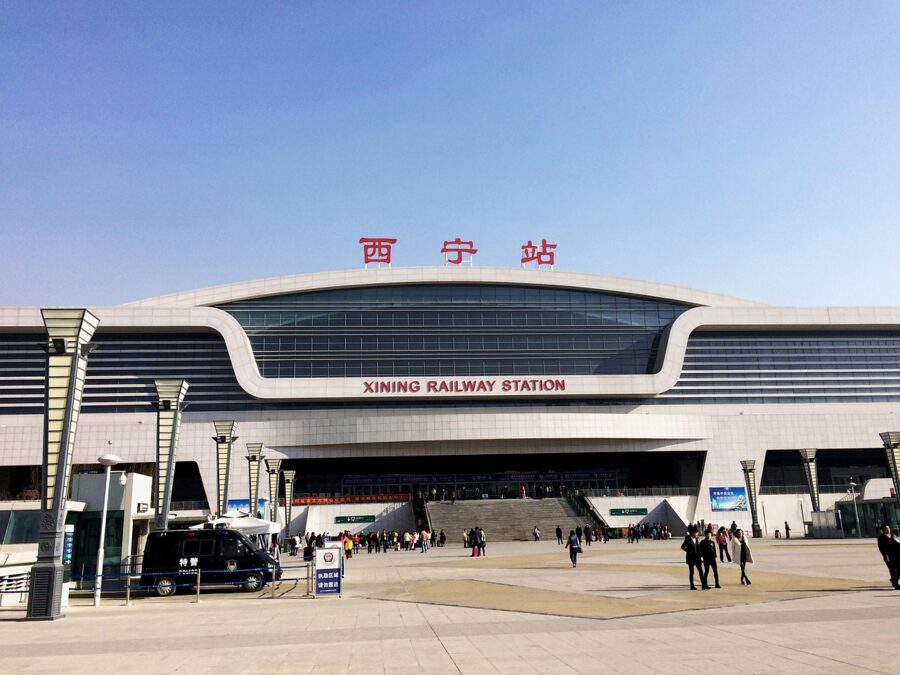
Arrive by train if you can. Xining Railway Station, rebuilt in 2014, is the terminus of the line from Lanzhou and the start of the Qinghai-Tibet Railway, and since January 2026 direct high-speed trains run to Beijing North. The airport at Caojiabao lies east of the city. Taxis are cheap and the easiest way between the districts.
On the first day, go up to Beishan when it opens at 08:00 and spend the morning on the cliff. Cross to the provincial museum by 11:00 for the history galleries, eat lunch in the west city, then reach the Dongguan Mosque in mid-afternoon (after 15:00 on a Friday). Walk the Hui quarter afterward and finish with dinner on Xia Nanguan Street or Mojia Street.
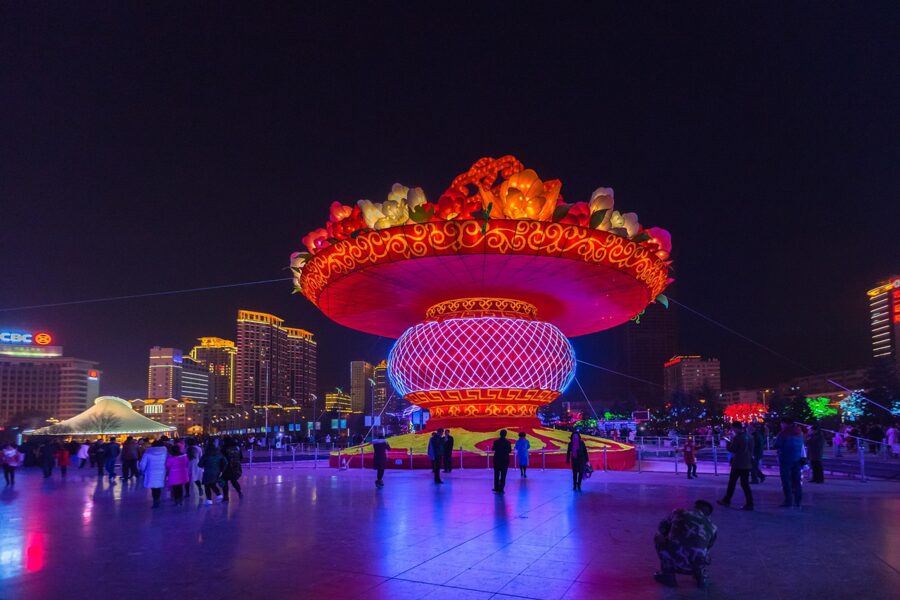
On the second day, leave for Kumbum at opening and be back in the city by early afternoon. Spend the afternoon at the Tibetan Culture Museum, with an hour for the medicine halls and another for the great scroll. Then take a taxi to the foot of Nanshan and walk up to Fenghuangtai as the light goes.
Below the terrace the trench turns to lights, the river roads first. Find the dark band of the north hill opposite, where the day before began, and somewhere below it the roofs on Dongguan Dajie, holding the east end of the city as they have, in one shape or another, since the first Ming emperor.