
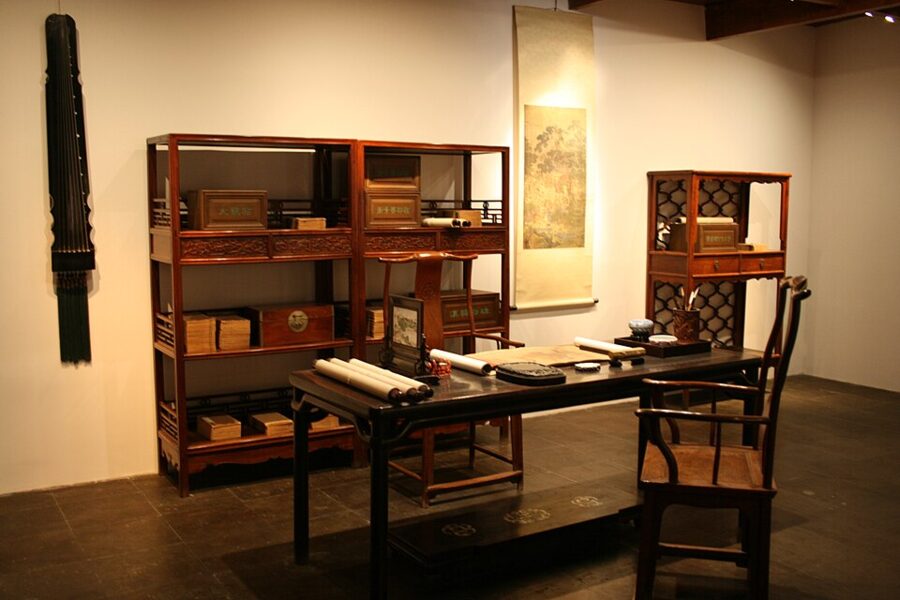
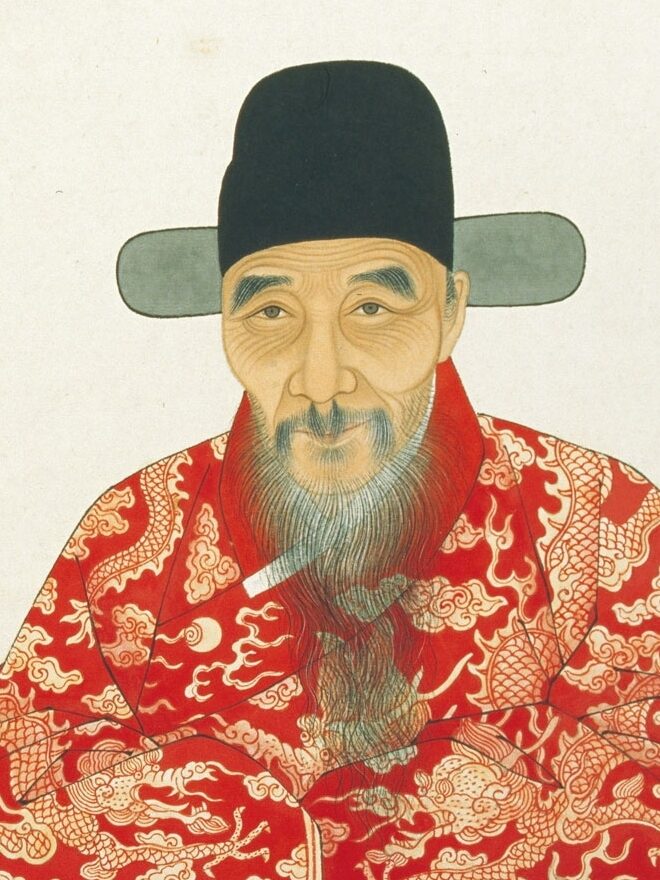
Sometime in the Wanli reign (1573–1620), a local gentleman named Fan Lian sat down in Songjiang, then a cotton-cloth town and now a district of Shanghai, and wrote down what had happened to the furniture. In his boyhood, he said, he had never once seen a writing table or a meditation chair made of fine hardwood. Ordinary families ate at square tables of ginkgo wood under a coat of gold lacquer.
Then the painter Mo Shilong and the young heirs of the Gu and Song families bought a few pieces of hardwood furniture in Suzhou, and the fashion ran through the town. By the Longqing (1567–1572) and Wanli years, Fan wrote, even the households of servants and yamen runners owned “fine wood”, and small cabinetmakers crowded into the prefectural seat to sell it. The rich decided the local ju wood was no longer good enough and ordered beds, cabinets and tables in huali, burl and boxwood, at ten thousand cash a time.
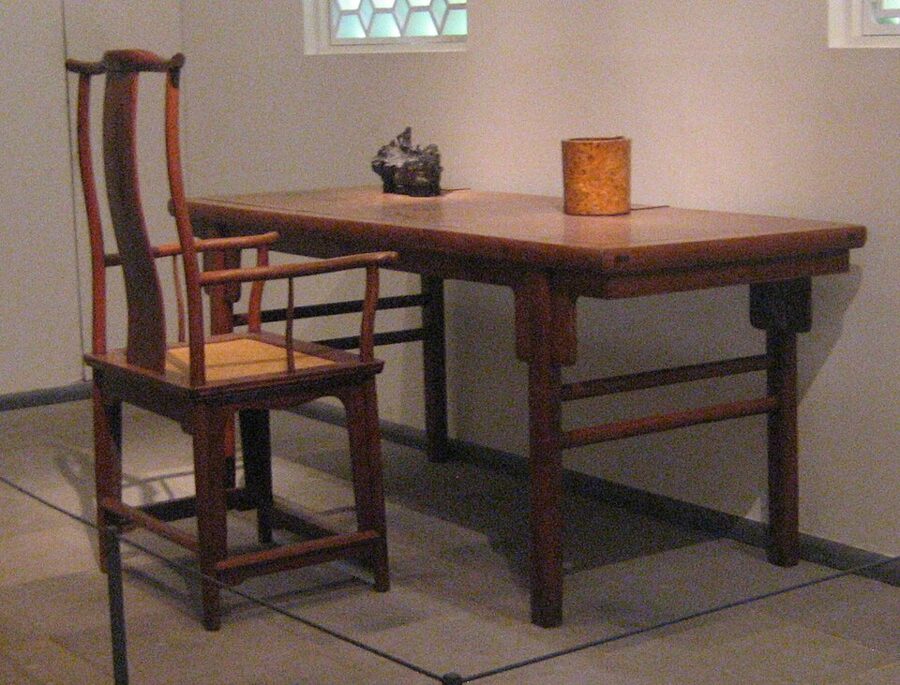
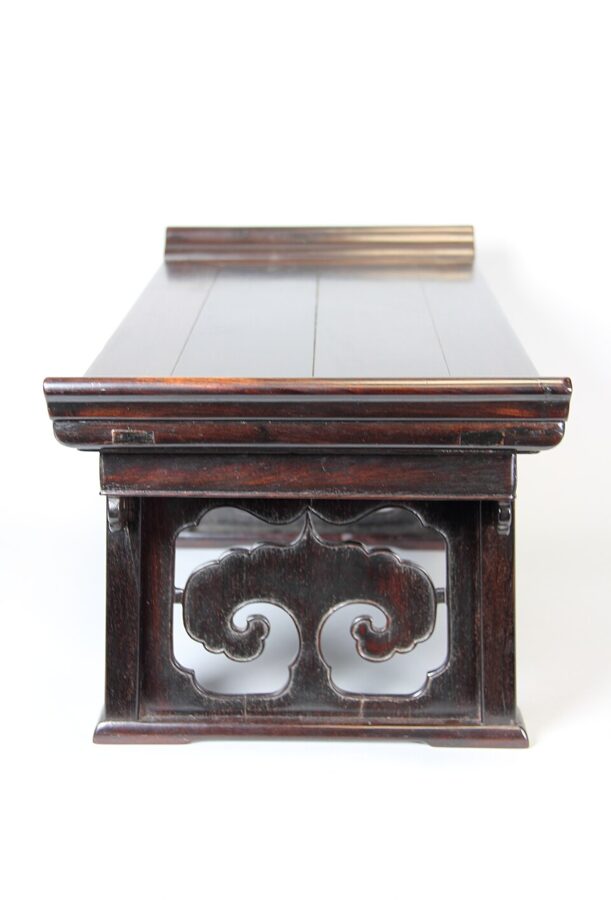
Fan Lian thought it a sign of a society losing its manners. What he was watching was the birth of Ming-style furniture (明式家具, Mingshi jiaju): chairs, tables, cabinets and beds made in the cities of the lower Yangtze from the late sixteenth century into the early eighteenth, in dense tropical hardwood left unpainted, held together by joinery instead of nails, with so little carving that the grain does most of the decorating.

On this page
What “Ming style” means: a taste, not a date
The name is modern, and it describes a look rather than a reign. A huanghuali table made in Suzhou in 1700, under the Kangxi Emperor (r. 1661–1722), is Ming style; a gold-lacquered cabinet made for the Wanli Emperor’s palace is Ming but not Ming style. Chinese scholars define the style as hardwood furniture from the late Ming to the early Qing (1644–1911), set apart from the lacquered furniture before it and the heavier, carved Qing hardwood after it.
Three things came together to make it. Chinese households had sat on mats and low platforms until about the tenth century, so by the Ming the chair and the high table had had five centuries to settle into their forms. In 1567 the Longqing Emperor lifted the ban on private overseas trade, with Yuegang in Fujian as the one licensed port, and junks came back from Southeast Asia with tropical hardwood. And the lower Yangtze, with Suzhou at its center, was the richest region in the empire, full of new gardens and houses that needed furnishing.
The scholars who set the rules
Suzhou’s workshops had the skill, but the taste was set by the literati, the educated gentry who painted, collected and wrote about how to live. The fullest guide is Zhangwu zhi (长物志, Treatise on Superfluous Things), finished in 1621 by Wen Zhenheng (1585–1645). Its chapter on tables and couches reads like a list of commandments.
Chairs should be low rather than high. A natural-grain table in huali or tieli is better the wider it is. The square “eight immortals” dining table “does not enter the elegant”. In his phrase it is better to be old than modern, plain than clever, frugal than vulgar.
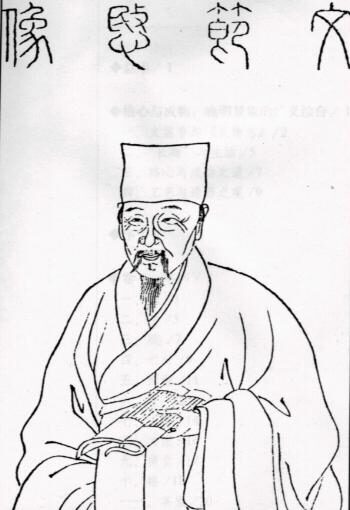
Fifty years later the playwright Li Yu (1611–1680) advised scholars to copy the pharmacist’s “hundred-eye cabinet” of small drawers for their papers. The literati did not make furniture. They described it, commissioned it and argued about it, and the cabinetmakers who wanted their custom listened.
The style did not end in 1644. It carried on into the early Qing, until the Yongzheng and Qianlong courts pulled hardwood furniture toward thicker timber and heavier carving. In 2006 Ming-style furniture making went onto China’s national list of intangible cultural heritage, with a Suzhou hardwood carving works as its keeper.
Huanghuali, zitan and the woods that ran out
Ming texts call the favorite wood huali (花梨). Today it is huanghuali (黄花梨), “yellow flowering pear”, from Dalbergia odorifera, a rosewood native to Hainan Island, where it grows on dry slopes below about 600 meters. It runs from pale gold to reddish brown, smells faintly sweet when worked, and its figure swirls into dark knots that collectors call “ghost faces” (鬼脸). It is also stable, hardly moving with the seasons, which is what a joiner who refuses to use nails needs most.

Zitan (紫檀) covers several species of Pterocarpus, and the most prized, Pterocarpus santalinus, comes from southern India. It is the densest of the furniture woods and sinks in water. Fresh-cut it is orange-red; it ages to a purple so dark it reads as black, with almost no visible grain. The Qing court prized it above every other wood and made it the material of thrones.

Jichimu (鸡翅木), “chicken-wing wood”, has stripes like a bird’s feathers; it came into use late in the Ming and was most popular under the Qing. Tieli (铁力木), Mesua ferrea from Yunnan and Guangdong, is the hardest and heaviest Chinese timber and went into big tables. Then come the softer woods: ju (榉木), the Chinese zelkova that Fan Lian’s neighbors scorned but that stayed Suzhou’s everyday cabinet wood, fragrant nanmu, and boxwood for small things.
How the supply ran out
The trade that made the style also unmade it. Hainan huanghuali grows slowly, and by the Qianlong reign (1736–1795) the big trees were gone; after that the wood went into brush pots and boxes. Zitan took over as the court wood, and when that grew scarce in the late Qing, workshops turned to the red rosewoods of Southeast Asia, sold as hongmu (红木, “red wood”).
The collectors’ boom of the last forty years moved the problem to other countries’ forests. China’s national hongmu standard lists 29 species, most now threatened, and trade in most rosewoods needs CITES permits.


How a table holds itself together
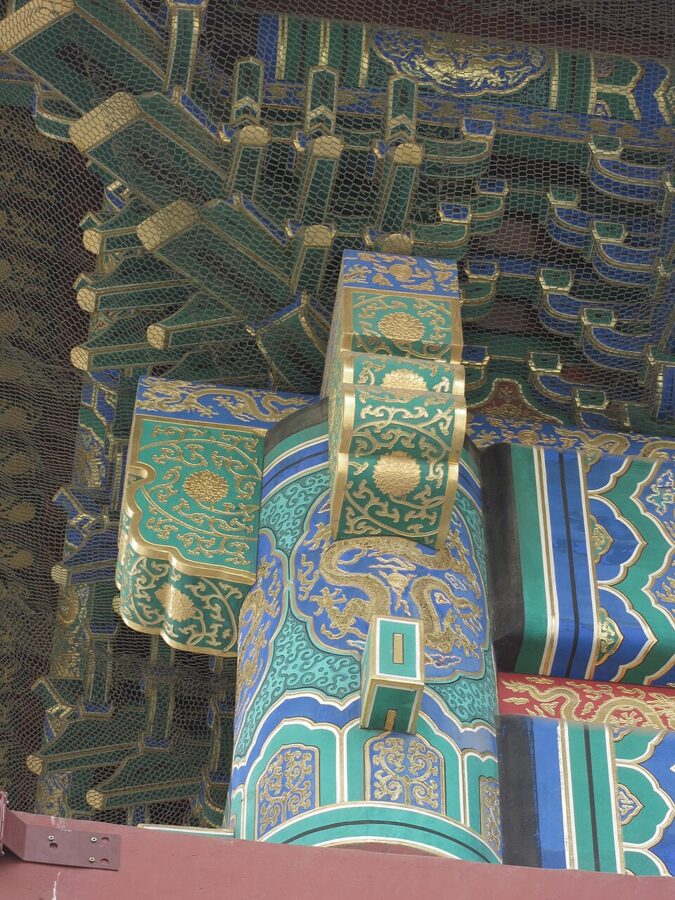
The Chinese word for joinery is sunmao (榫卯): the sun is the tenon, the shaped tongue at the end of one piece, and the mao is the mortise cut to receive it. Mortise-and-tenon joints turn up in the seven-thousand-year-old houses of Hemudu in Zhejiang, and the same logic holds up the roofs of the Forbidden City. Ming cabinetmakers refined a builder’s system until the joints in a chair were as exact as a temple’s, and mostly invisible.

The floating panel
Start with a tabletop. Wood swells and shrinks across its grain with the humidity, so a board fixed at its edges will split. The answer, zanbian dacao zhuangban (攒边打槽装板), is a frame of four mitered members with a groove cut along the inside. The panel’s thinned edge sits in the groove unglued, free to move, and battens dovetailed across its underside hold it flat, so the edge of a Ming tabletop shows the frame, never the panel’s end grain.
Six joints worth knowing
- The mitered frame joint (格角榫): a 45-degree corner with a hidden tenon, so no end grain shows.
- The “rice-dumpling corner” (粽角榫): three members meeting at one corner of a flush-sided table or cabinet, each face showing a miter, like the corner of a zongzi. Cut badly, it gapes.
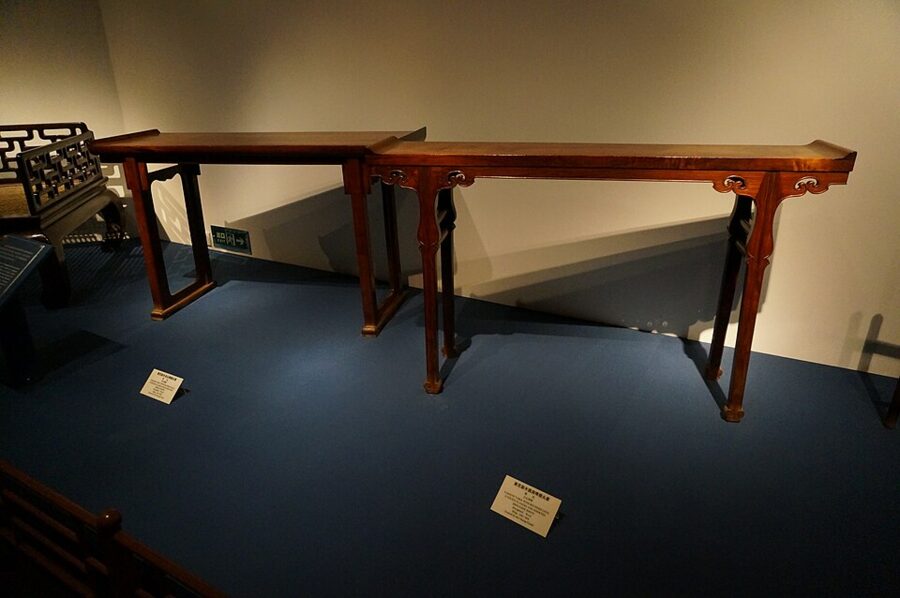
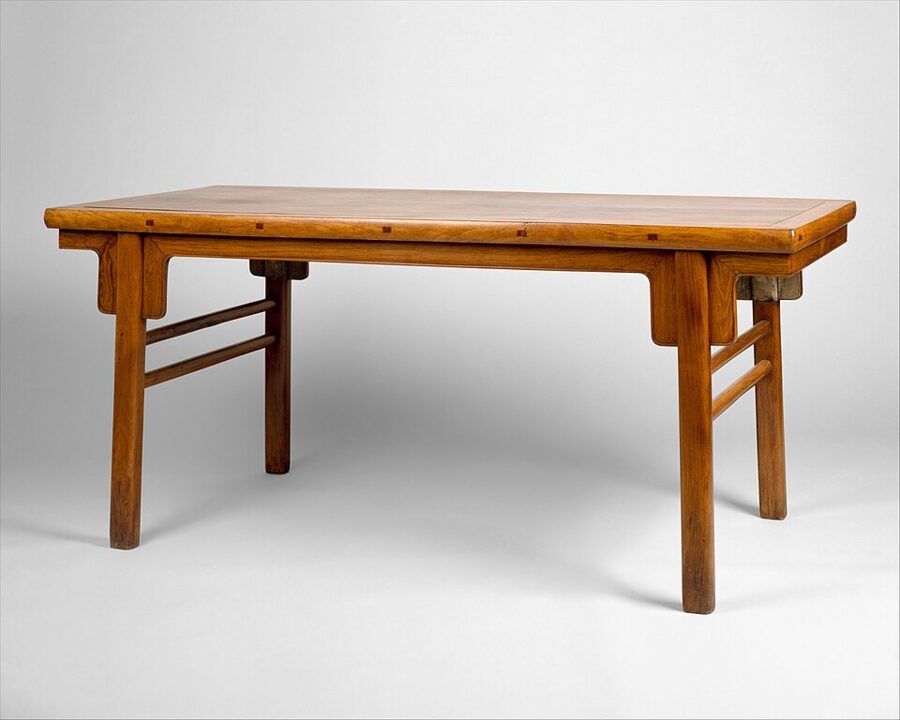
- The elongated bridle joint (夹头榫): the standard joint of the recessed-leg table. The leg top is slotted, apron and spandrel slide into the slot, and the leg tenons up into the top. It was fully developed by the Yuan (1271–1368).
- The inserted shoulder joint (插肩榫): the leg top is cut into a V-shaped shoulder that the apron fits over flush. Weight on the top pushes it tighter.
- The “embracing shoulder” (抱肩榫): where leg, waist and apron meet on a waisted table, the apron hangs on a dovetailed pin and the corner locks itself.
- The wedged pin joint (楔钉榫): the answer to curves. A roundback chair’s crest rail is three or five arcs, half-lapped and hooked together, then locked by a tapered square pin.

Add the “hegemon’s brace” (霸王枨), an S-curved strut from high on a leg to a batten under the top. It replaces stretchers, leaves room for your knees, and is named, with a cabinetmaker’s sense of drama, after the warlord Xiang Yu lifting a bronze cauldron.
No nails, and glue sometimes
“Not one nail, not one drop of glue” is how Ming furniture is usually sold, and the first half is true. Traditional cabinetmakers did use a strong glue boiled from fish bladders or pigskin (鳔胶) in joints meant to be permanent; once a wedged pin joint is glued, craftsmen call it a “dead tenon”. Beijing joiners also drove wooden or bamboo pins through some finished joints, the “closing-the-door nail” (关门钉).
The glue never does the work, though. Old craftsmen said a good joint is closed by its fit, not stopped up with glue. That is why so many pieces have survived four centuries of damp Jiangnan summers and dry Beijing winters, and why most can still be taken apart for repair.
Reading the forms
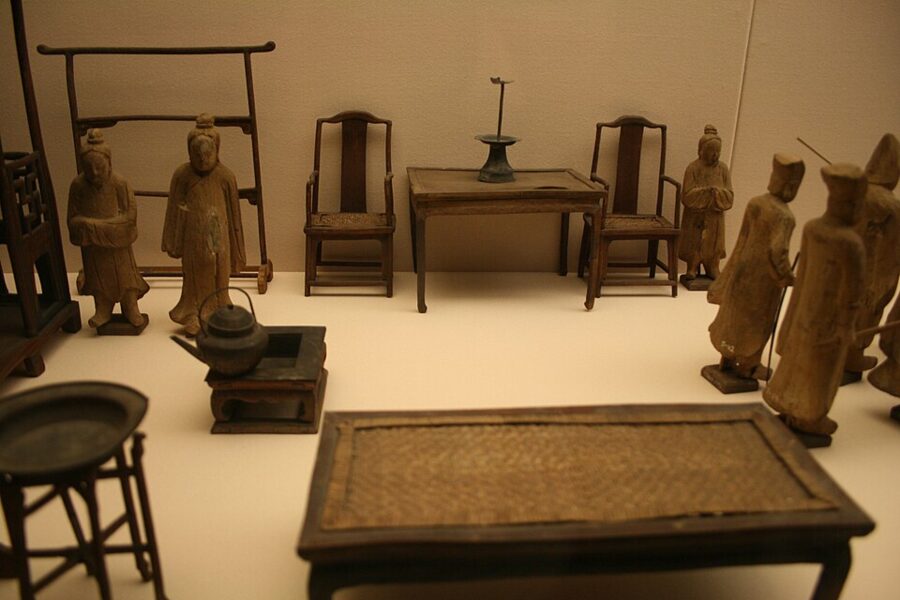
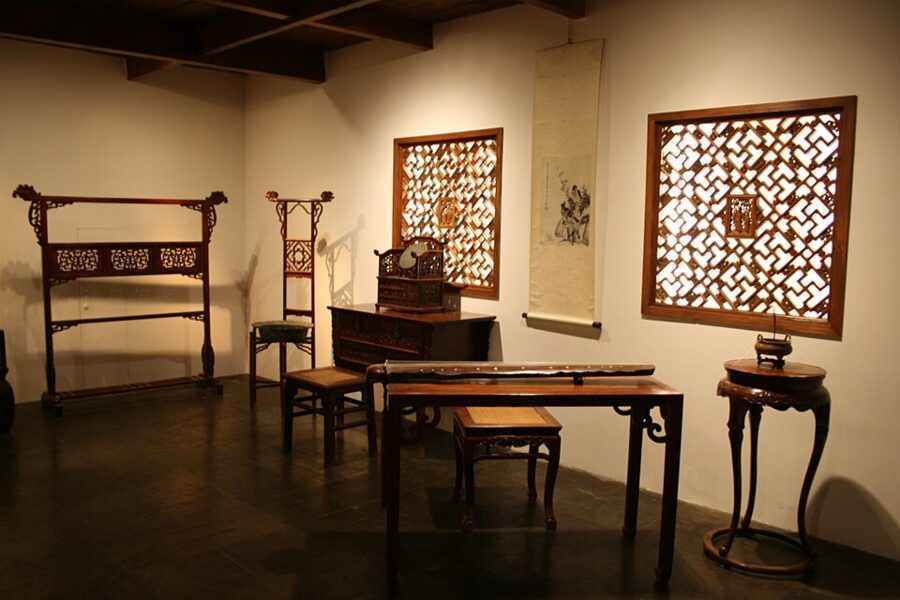
Ming houses were furnished sparsely and symmetrically. A reception hall had a long table against the back wall, a square table before it, paired armchairs and more chairs down both sides. A study had a painting table, one good chair, a bookshelf, an incense stand and little else.
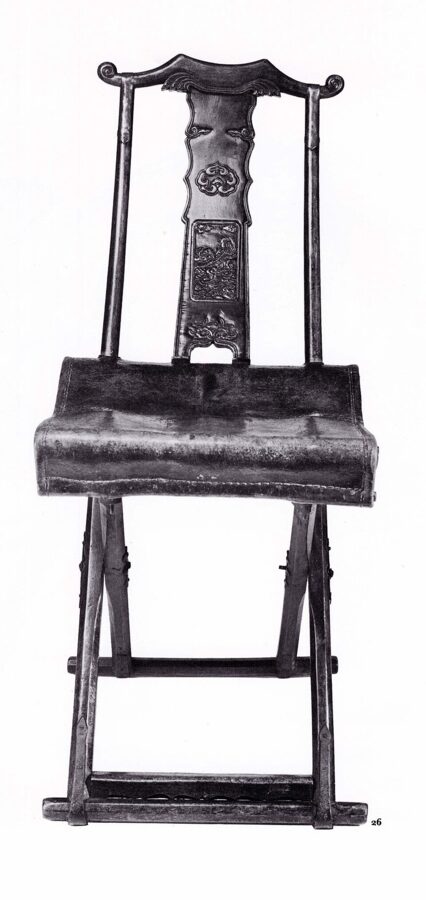
Chairs: yokeback, official’s hat, roundback, folding
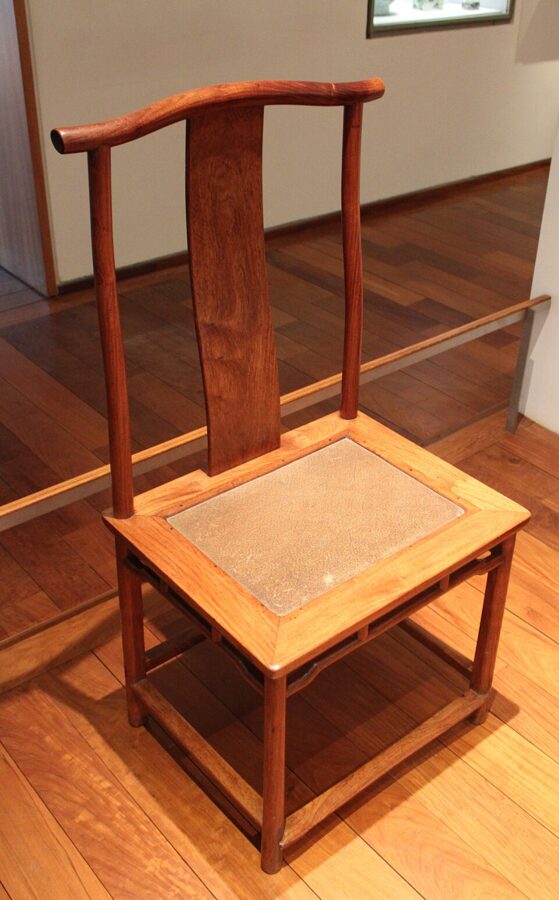
The yokeback chair is named for its crest rail, which runs out past the back posts like the ends of an ox yoke. With arms that also run out past their front posts, it becomes the “four protruding ends” official’s hat armchair (四出头官帽椅). Wang Shixiang pointed out that the “southern official’s hat chair” (南官帽椅) has no protruding ends at all, so the name must come from the cap’s overall shape, low in front and high behind, not from the ends.
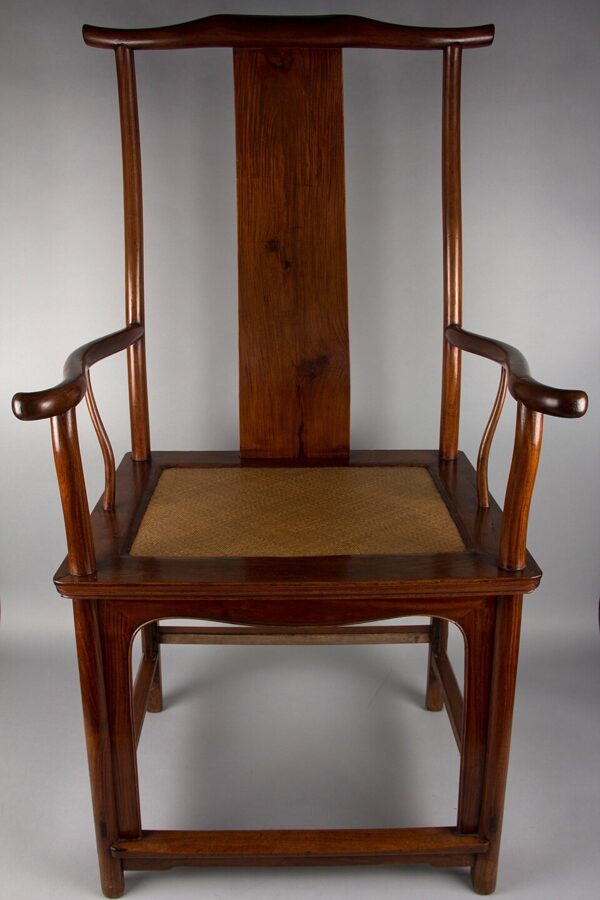
Sit in one and you notice the splat: a single board in a shallow S that follows the spine. Seats were usually woven cane over palm-fiber cord, which is why so many surviving chairs have new ones.

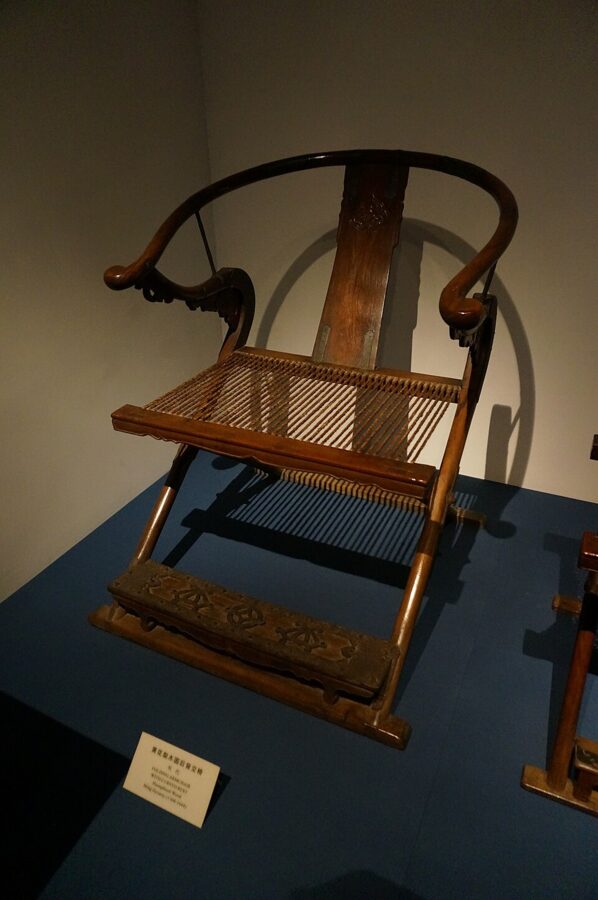
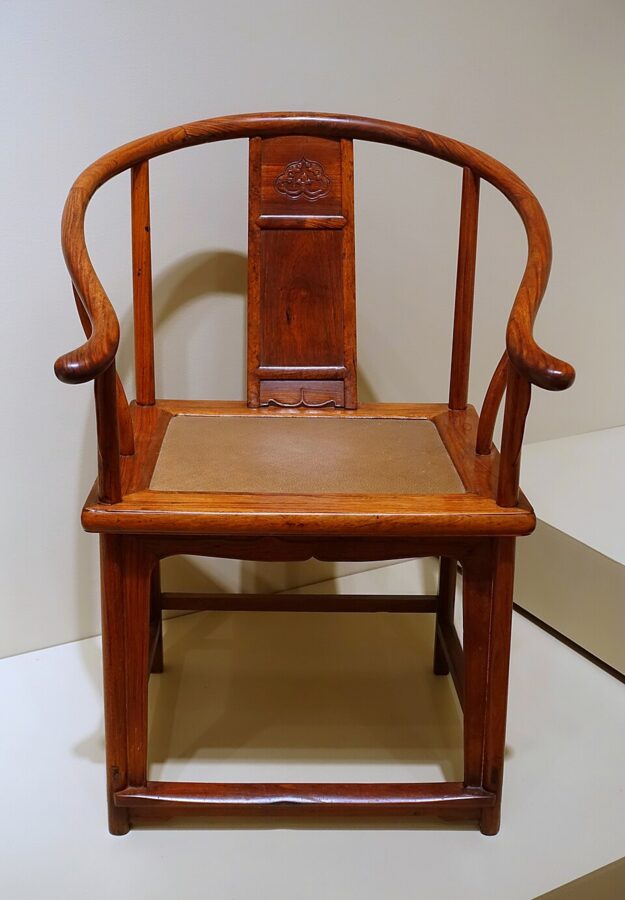
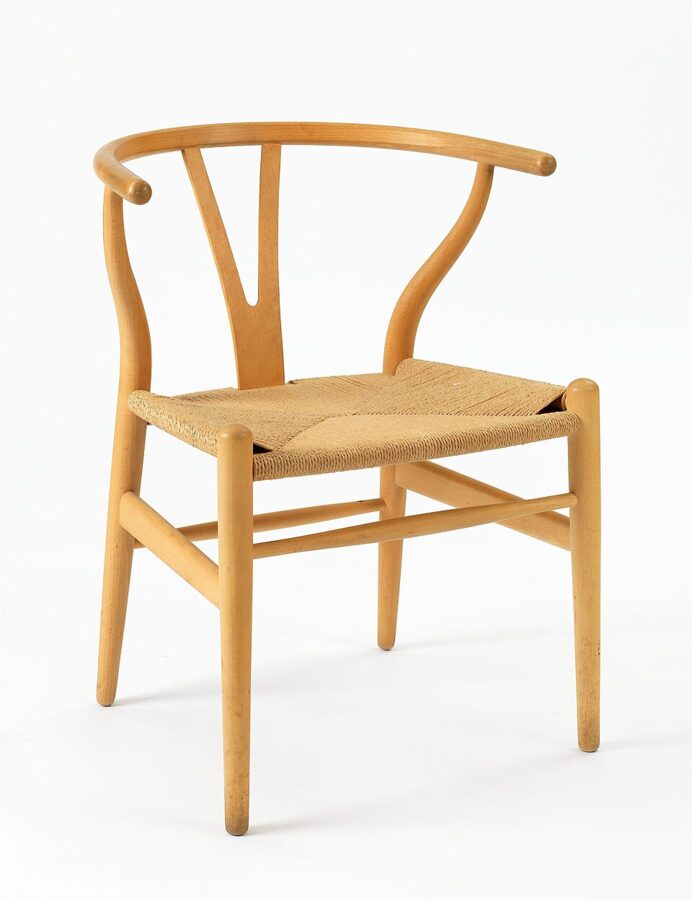
The roundback chair (圈椅, quanyi) is the one most people picture: its crest rail sweeps down in one curve to become the arms, holding the sitter in a half circle. It descends from the curved armrests people leaned on when they still sat on the floor, and the Ming perfected it. Hans Wegner’s Wishbone chair of 1949 was one of several designs the Danish cabinetmaker based on Ming chairs.

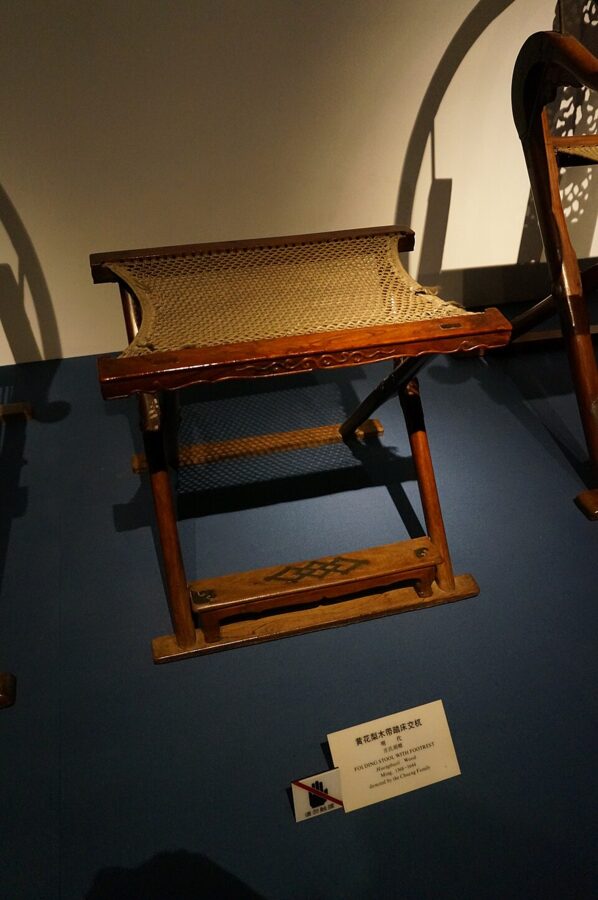
The folding armchair (交椅) began as a camp stool brought in from the northern steppe in the Han dynasty. Given a round back, it became the seat of honor that attendants carried for their master on journeys and hunts, and in a hall it was kept for the master or the chief guest.
Tables and stands
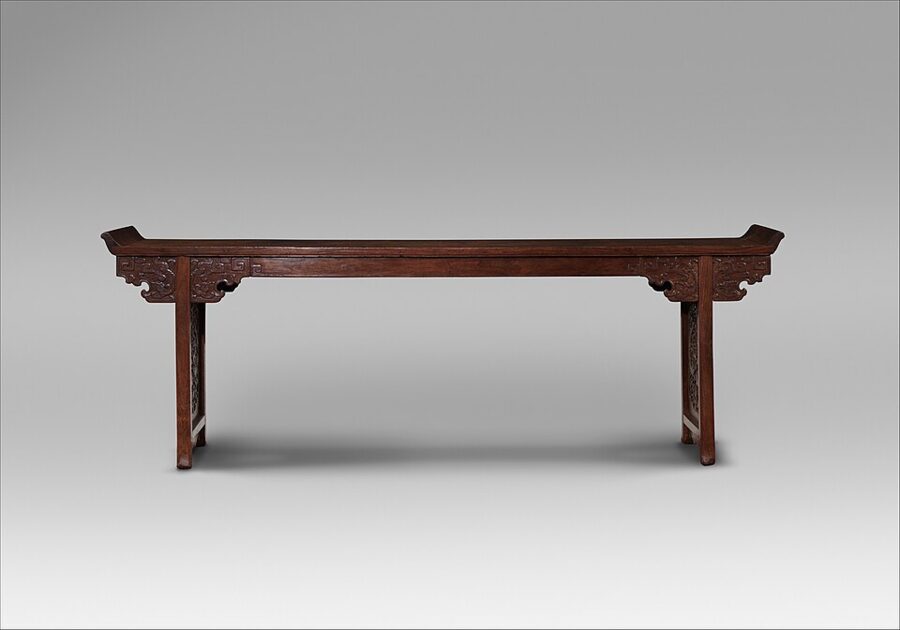
Chinese has two words for what English calls a table. A zhuo (桌) has its legs at the corners. An an (案) has its legs set in from the ends on bridle joints, and it was the more formal piece. The long an with upturned ends stood against the back wall of a hall, holding a rock, seasonal flowers or an old bronze.
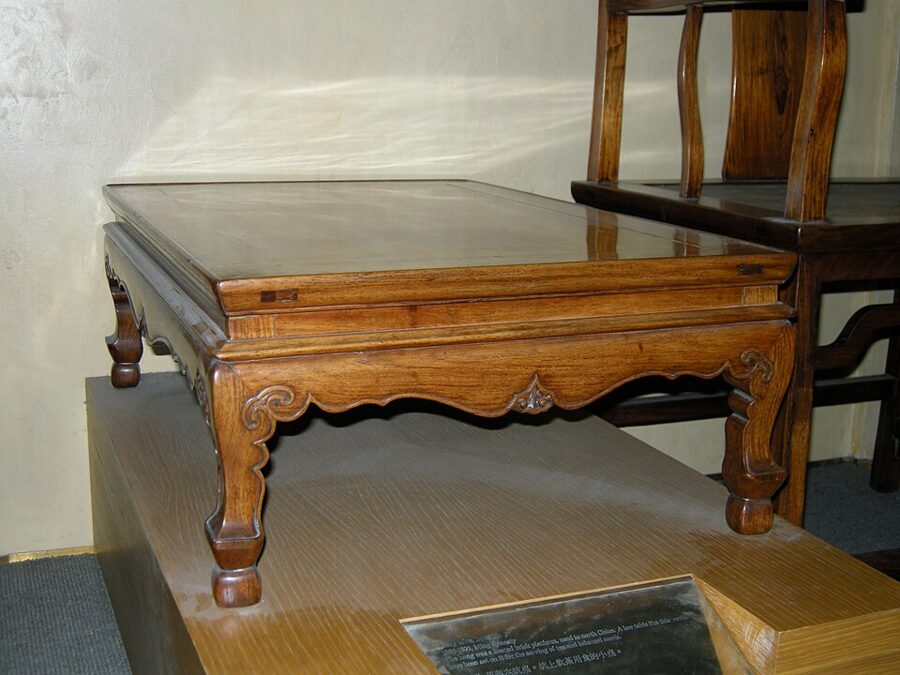
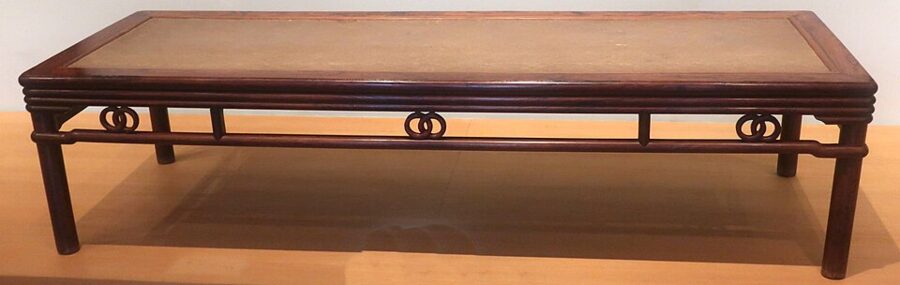
In north China, where houses were heated by a brick platform called the kang (炕), daily life happened on top of it, and low kang tables stood there for meals, tea and writing. Incense stands, flower stands and lamp stands fill out the family.

Cabinets: round corners and square
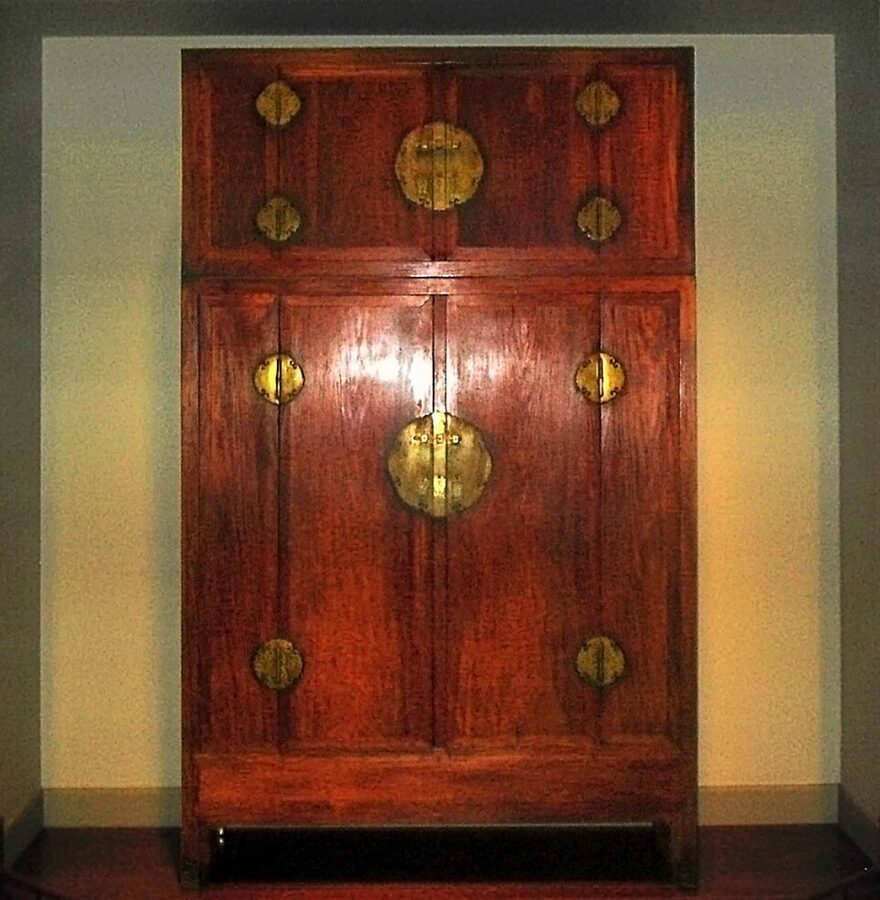
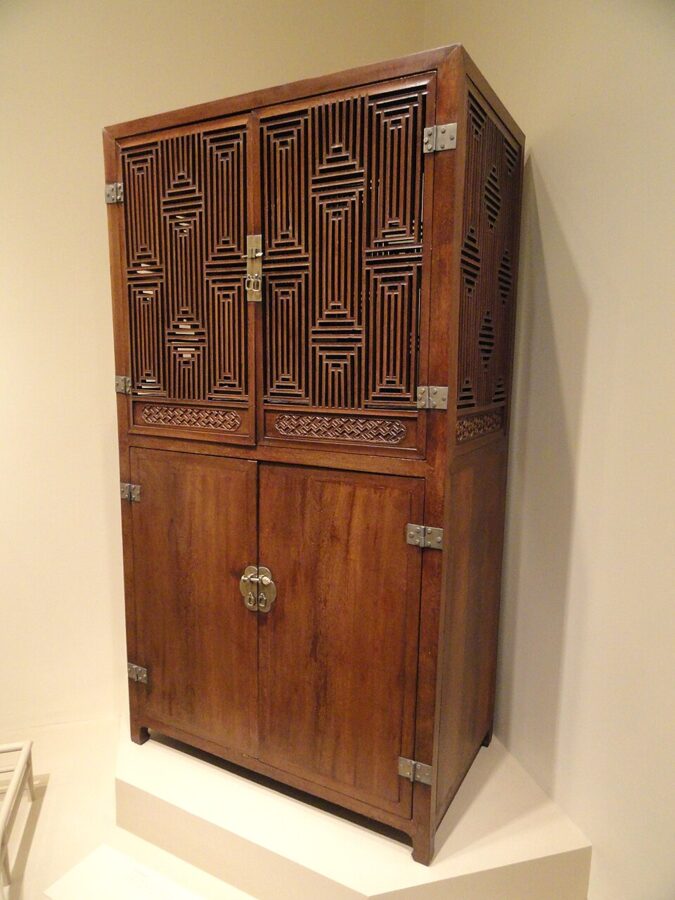
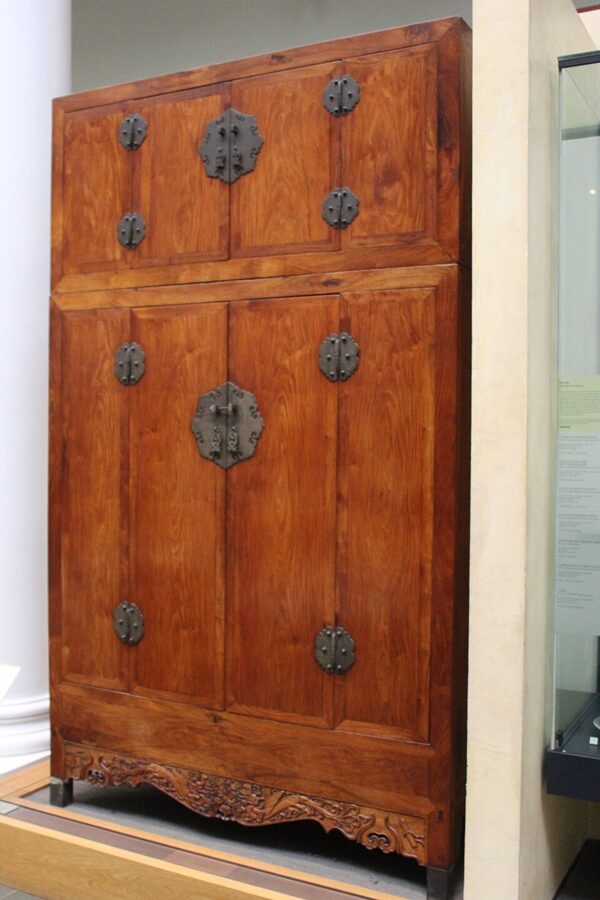
Ming clothes were folded flat and stacked, never hung, so the cabinet was the essential storage piece. The round-corner cabinet has a top overhanging on rounded edges, legs that splay slightly outward, and doors turning on wooden pins with no hinges at all. The square-corner cabinet is a plain box with metal hinges. Stack a smaller one on top and you have the compound wardrobe, the largest piece a household owned and often part of a bride’s dowry.
Beds: couch, daybed, canopy bed
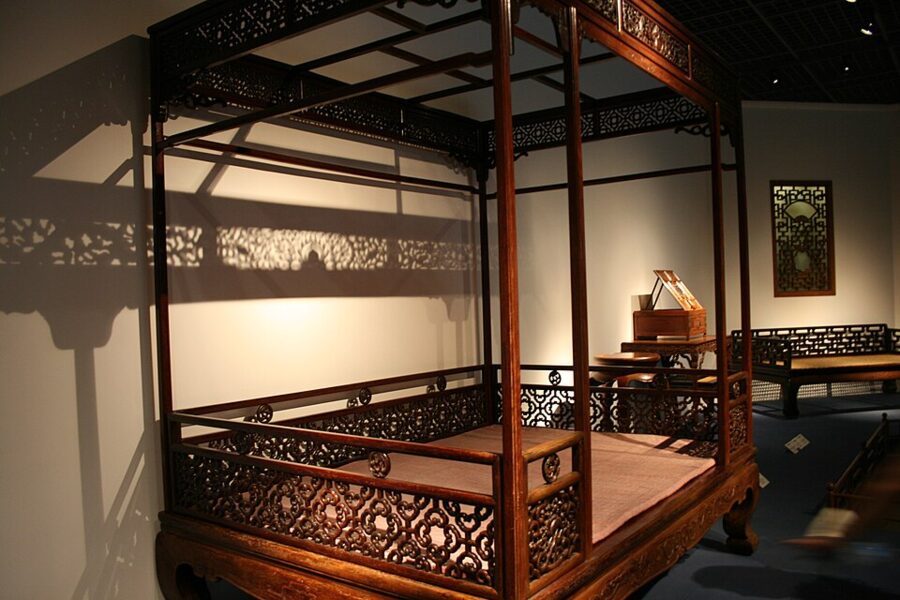
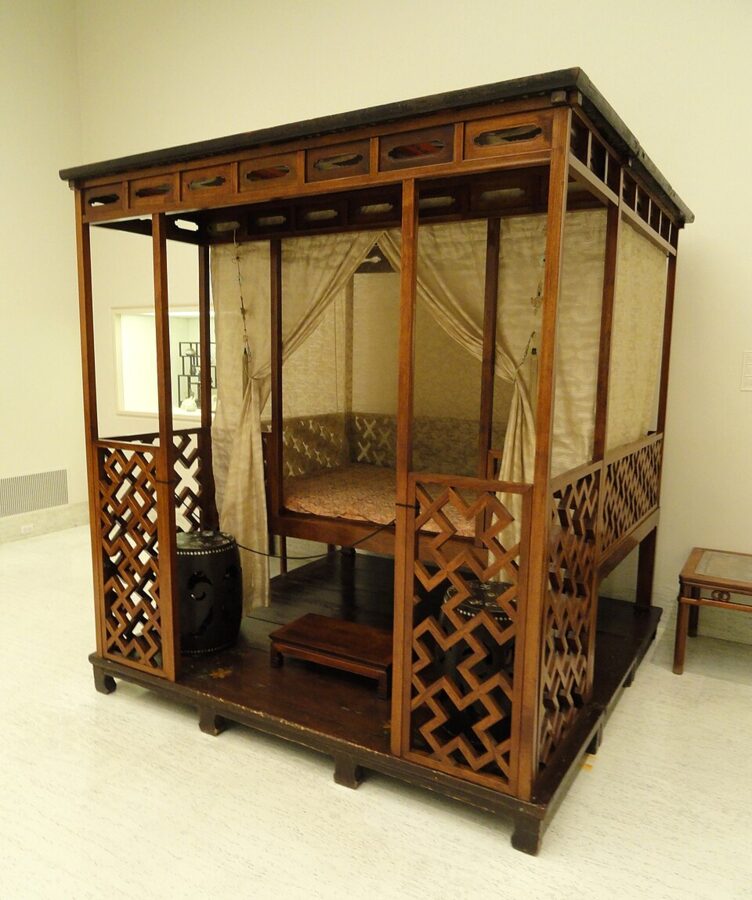
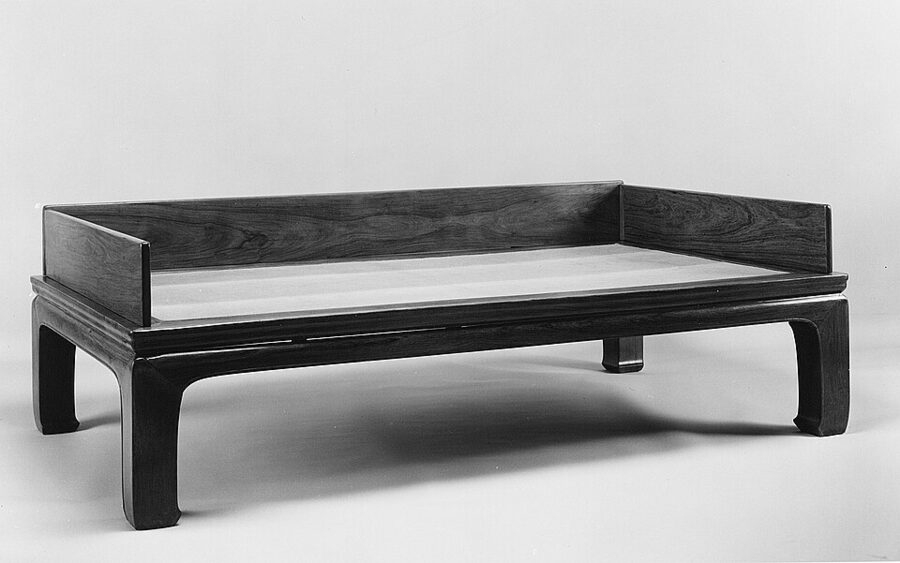
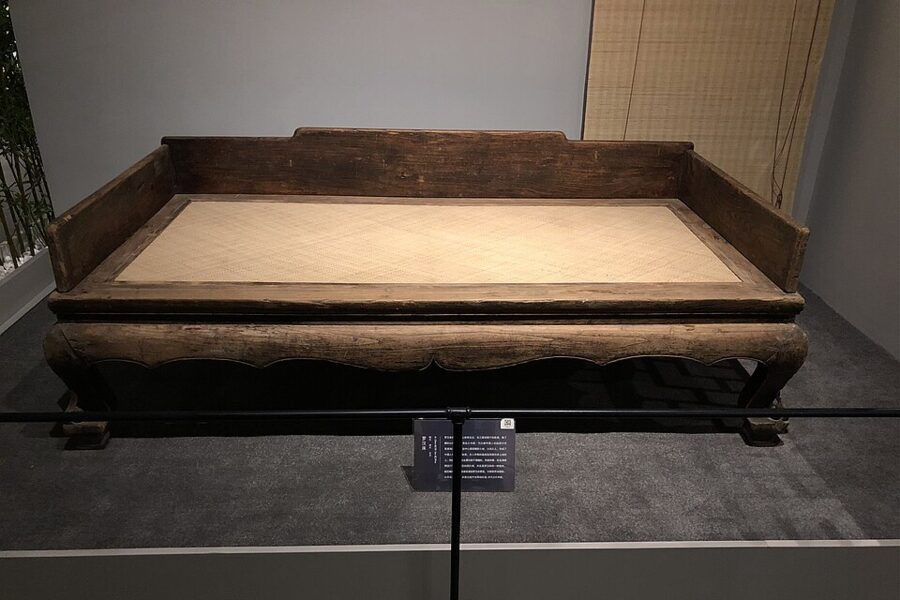
The daybed (榻, ta) is a plain platform for reclining in a study or pavilion. The couch bed, usually called a luohan bed (罗汉床), adds low rails on three sides and served for receiving guests as much as for sleep. The canopy bed (架子床) has corner posts, a roof frame and lattice rails; with its curtains drawn it was a room within a room. The grandest, the alcove bed (拔步床), stood on its own platform with a small anteroom in front.
Wang Shixiang and the second discovery
For most of the twentieth century this was second-hand household furniture. Families sold it, workshops cut it down, and hardwood was broken up for its timber. The first serious study came from a German art historian teaching in Beijing, Gustav Ecke, who bought pieces around the city, measured them like buildings and in 1944 published Chinese Domestic Furniture, with photographs and drawings of 122 pieces.
Reading Ecke started Wang Shixiang (1914–2009) on the subject. Wang studied at Yenching University in Beijing, worked for the Society for Research in Chinese Architecture, and after 1945 recovered seven batches of artworks taken during the war. He collected furniture from the 1940s on, kept eighty or ninety pieces through the Cultural Revolution, and measured and photographed all of it.

In 1985 he published Mingshi jiaju zhenshang (明式家具珍赏), soon translated as Classic Chinese Furniture, in full color with most of his own pieces among the plates. Within a few years, as a Shanghai Museum furniture specialist put it, Wang had “lit a fire”: country furniture used for centuries was being sought out, saved and sold as art. His 1989 Mingshi jiaju yanjiu (明式家具研究), in English Connoisseurship of Chinese Furniture, became the standard reference, with his sixteen “qualities” of good Ming furniture, beginning with “simple and spare”, and his eight faults.
In the early 1990s the Hong Kong industrialist Zhuang Guilun bought all 79 pieces, at a price neither man disclosed, and gave them to the Shanghai Museum in memory of his father and uncle. Wang wrote that he asked only enough to buy a small flat to grow old in. In February 1993 museum staff carried the pieces out of his Beijing house with him, crated them and sent them south by rail. In 2000 the museum added 26 pieces from the poet and archaeologist Chen Mengjia.
Telling Ming from Qing in a gallery
Many labels say “Ming or early Qing”, and the two styles are tendencies, not rules: Ming workshops made carved and painted pieces too, and plain hardwood went on being made after the court’s taste changed. Still, these are worth checking.
| Look at | Ming style (late 1500s to early 1700s) | Mid and late Qing (1730s onward) |
|---|---|---|
| Wood | Mostly huanghuali; also jichimu, tieli, zelkova | Mostly zitan, then hongmu |
| Proportions | Slender members, round legs, space between them | Thicker, squarer members; heavier than their size |
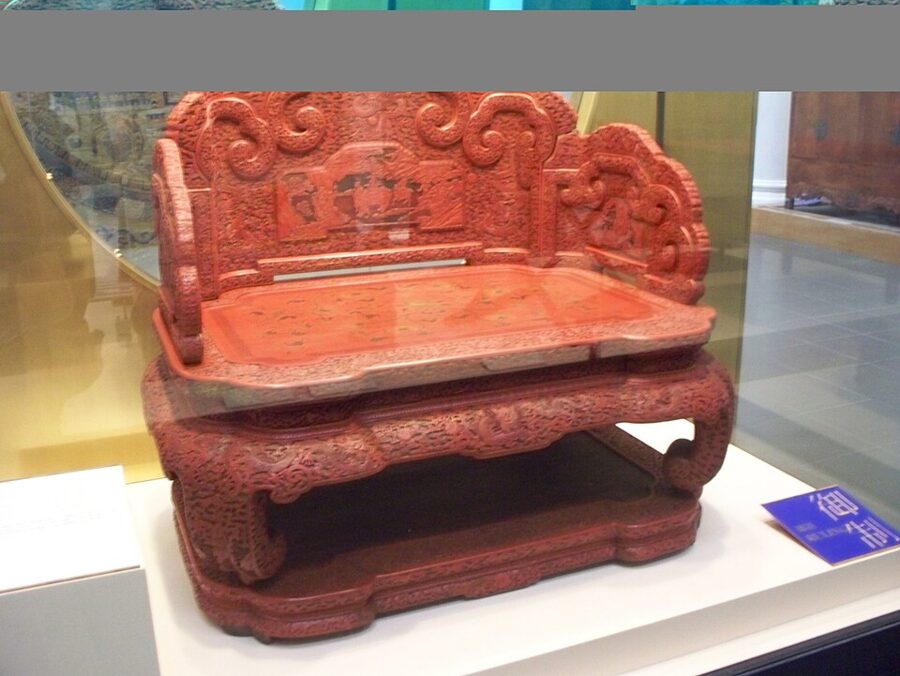
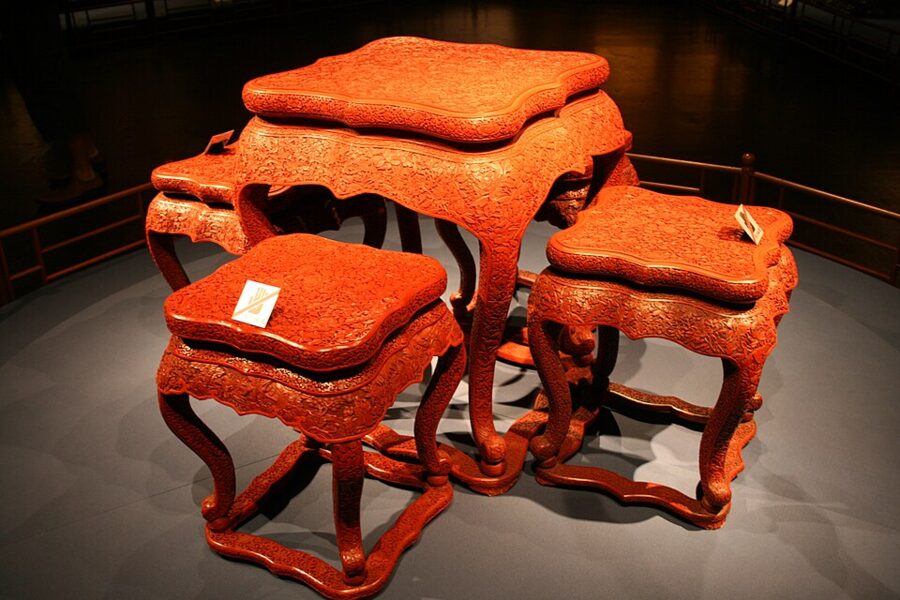
| Carving | Small and in one place, often a single medallion on a chair back | Relief over large areas: dragons, clouds, the Western-derived “foreign lotus” scroll |
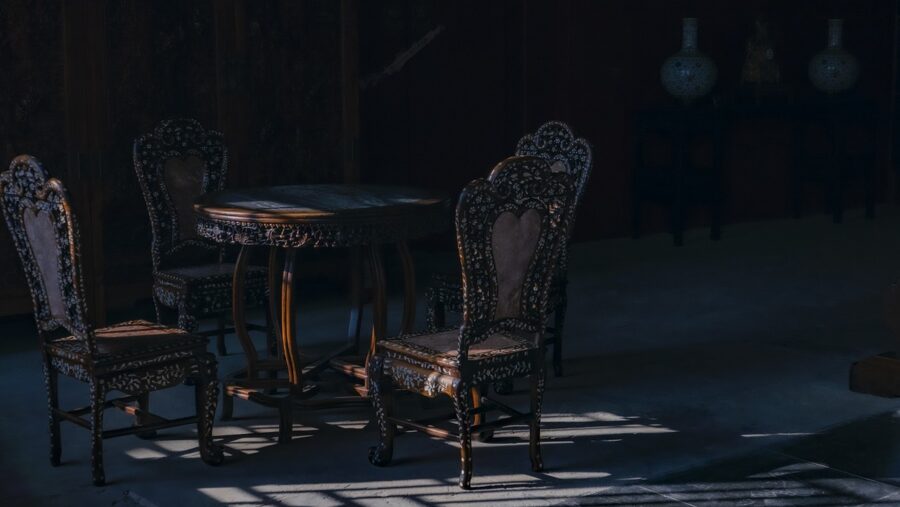
| Inlay | Rare | Jade, enamel, ivory, mother-of-pearl and stone, often several together |
| Chair backs | One curved splat | Flat panels or screen-like backs, often pierced |
| Couch bed rails | Low, flat, on one level | Taller and stepped, in three, five or more panels |
The quickest tell is to step back and see how much air is in the piece. A Ming chair is mostly empty space framed by a few lines, and you can see the wall through it. A Qianlong chair is a solid object.

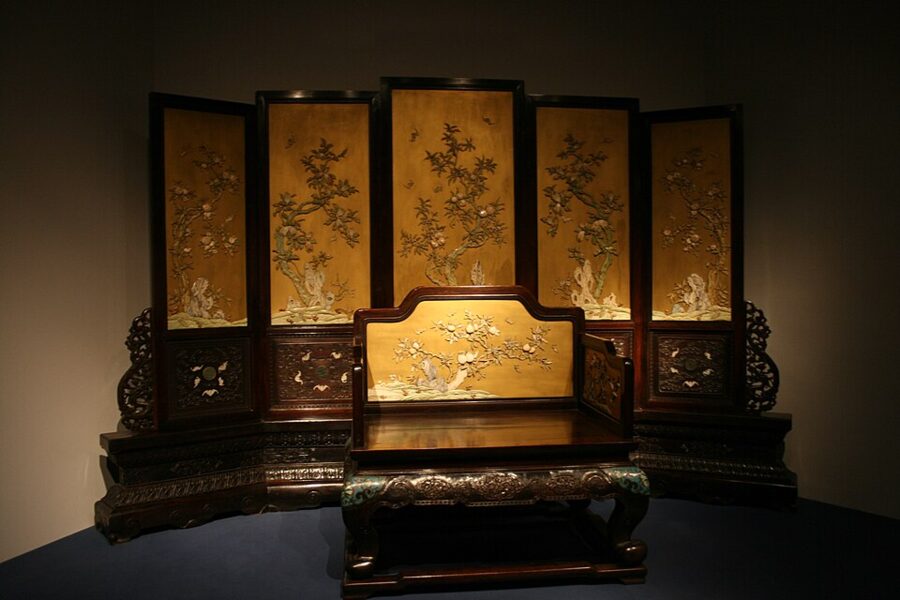
Qing screens carry whole compositions of birds and blossoms set into the wood in jade, ivory and colored stone, flower-and-bird painting translated into hardstone. On the Shanghai Museum’s oval zitan throne, the largest of its kind known, the arms are carved with the acanthus scroll called xifanlian (西番莲), “foreign lotus”, borrowed from the European Rococo. A Ming carver would have left that wood bare.

Where to see the great pieces
In late 2026 the best-known collection in China is shut, the Palace Museum shows mostly Qing, and the places to stand close to good Ming-style furniture are a private museum in Beijing and two museums in Suzhou.
Shanghai Museum: closed for now
The Shanghai Museum’s Ming and Qing furniture gallery, on the fourth floor of the People’s Square building and named for Zhuang Guilun’s father and uncle, has been closed since April 13, 2026 for conservation and a rehang, with no reopening date announced. From July 9, 2026 to November 14, 2027 the whole building is given over to a ticketed exhibition on the ancient Americas.
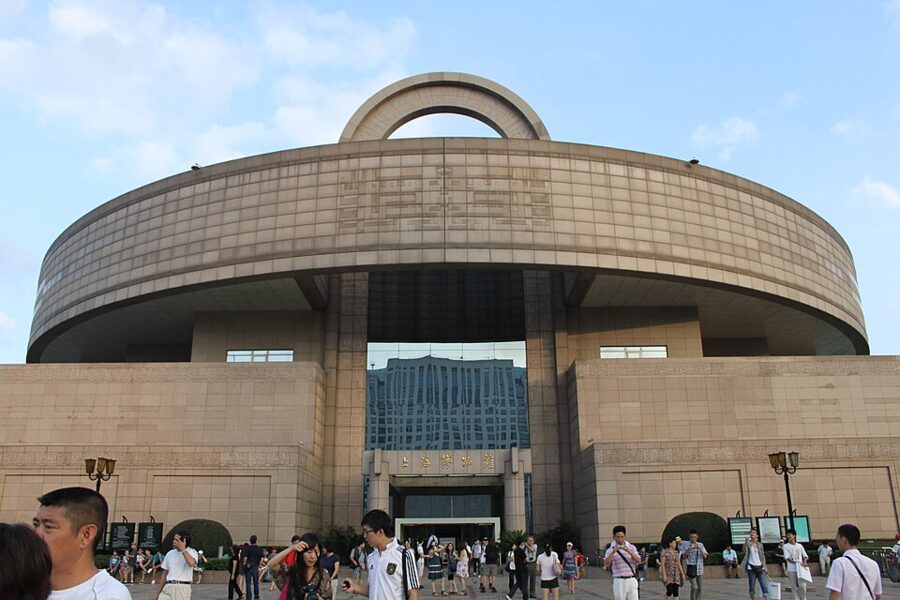
When it reopens, it is the one to see: more than a hundred pieces in about 700 square meters, laid out like a house, with Ming and Qing rooms, a hall, a study and the Pan tomb miniatures. At the center of the Ming room is a huge zitan painting table whose inscription records that it belonged to the Qing official Song Luo and later to the imperial clansman Pu Tong. Nearby stand Wang’s four zitan southern official’s hat chairs, a set he had almost never been able to set out together at home.
Palace Museum, Beijing: the Qing side
The Palace Museum’s furniture gallery opened on September 19, 2018 in the Nandaku, the old storehouses in the southwest corner of the Forbidden City, south of the Hall of Martial Valor (武英殿). More than 300 pieces of Qing palace furniture are racked to the roof as they would be in store, beside thirty-odd Kangxi, Yongzheng and Qianlong pieces set out as rooms, including the Qianlong Emperor’s study rebuilt from a court painting. I’d go for the contrast: after an hour among zitan thrones, any Ming room feels like a deep breath.
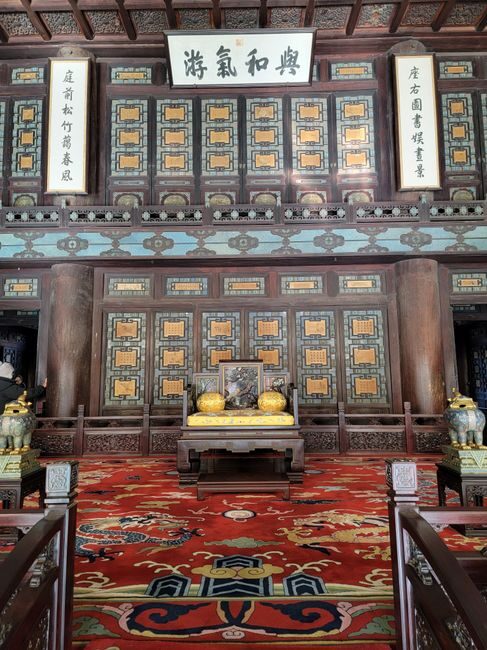
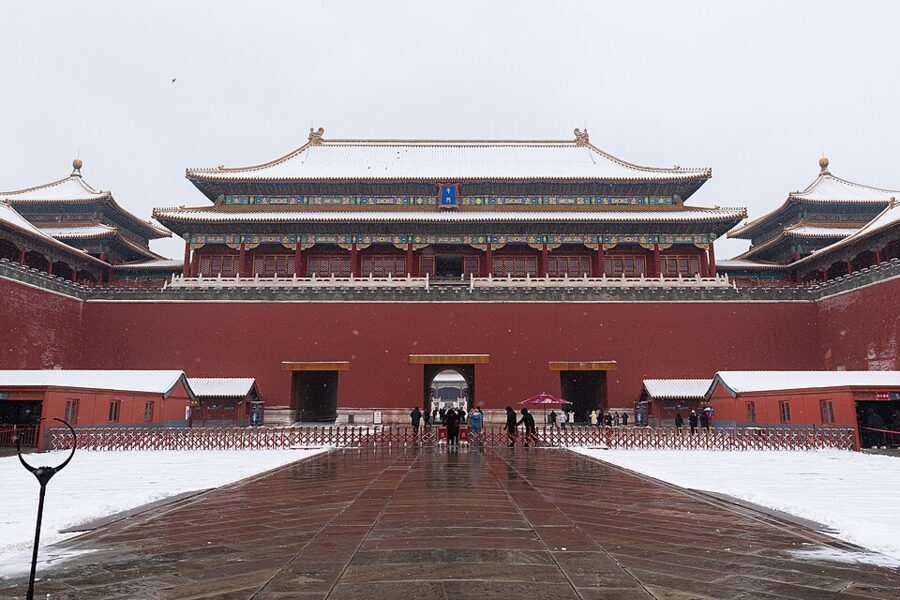
The furniture gallery is free once you are in. Palace Museum tickets cost 60 yuan from April through October and 40 yuan from November through March, go on sale at 20:00 seven days ahead on the official “故宫博物院” mini program, are never sold on the day, and are tied to your passport. Enter by the Meridian Gate (午门) and walk west. The museum closes on Mondays except public holidays.

Guanfu Museum, Beijing: the woods side by side
The Guanfu Museum (观复博物馆), opened in 1997 by the collector and broadcaster Ma Weidu, was the first private museum registered in the People’s Republic. Its furniture hall has six rooms and more than a hundred Ming and Qing pieces arranged by wood, with separate hongmu, zitan, huanghuali and jichimu rooms and a reconstructed study. It is the easiest place in China to learn the woods apart, the displays are open rather than behind glass, and the museum’s cats wander the halls.
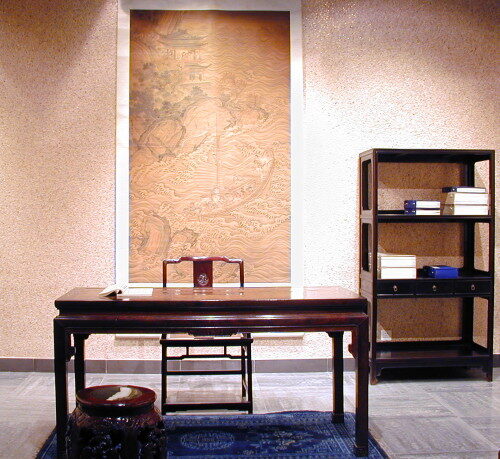

It is at 18 Jinnan Road, Zhangwanfen, in Jinzhan township on the northeastern edge of Chaoyang District. From the bus hub at Dongzhimen (Line 2, exit B) take bus 418 to Jingwang Jiayuan Yiqu (京旺家园一区) and walk about 200 meters east. Tickets are 100 yuan, on site or a day ahead on the museum’s WeChat account. Hours are 09:00–17:00 Tuesday to Sunday (last tickets 16:00) and 09:00–16:00 on Mondays, closed for New Year’s Eve and the first three days of the Spring Festival.
Suzhou: where the style was made
Suzhou is where Fan Lian’s neighbors went shopping. The Suzhou Museum, I.M. Pei’s 2006 building at 204 Dongbei Jie, has a Ming scholar’s study in its “Elegance of Wu” galleries and a room of finds from the tomb of the Wanli-era grand secretary Wang Xijue, excavated at Tiger Hill in 1966. Among them was a set of miniature furniture: an alcove bed 42 centimeters high, a table, a chair, a clothes rack and a basin stand, every joint working.
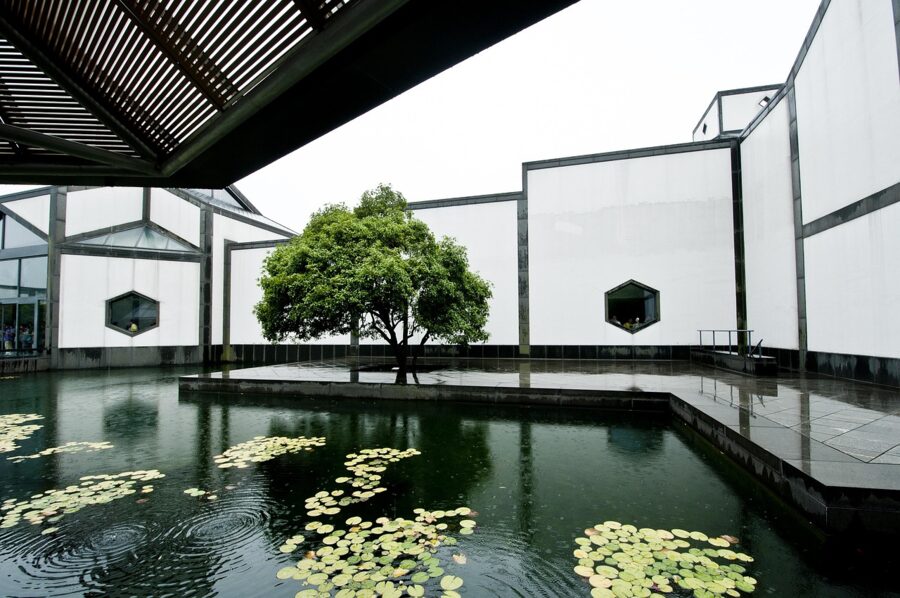
The museum’s West building, opened in 2021 in the high-tech district, has a Suzhou crafts gallery whose furniture stands without glass, and part of the miniature set has been shown there too. Both are free with a timed booking, opened seven days ahead on the museum’s website or the “苏州博物馆全预约” mini program. The main building opens 09:00–17:00, last entry 16:00, closed Mondays.
Beside the Humble Administrator’s Garden, the Suzhou Garden Museum (苏州园林博物馆) at 202 Dongbei Jie holds most of the few genuine Ming pieces left from the gardens: a huanghuali round-corner book cabinet and a huanghuali recessed-leg table that once stood in the Master of the Nets Garden. A furniture historian who examined the table found its single-board top, more than half a meter wide, sawn only six or seven millimeters thick, probably to get more tops from one log. Entry is free, 09:00–16:30 Tuesday to Sunday.
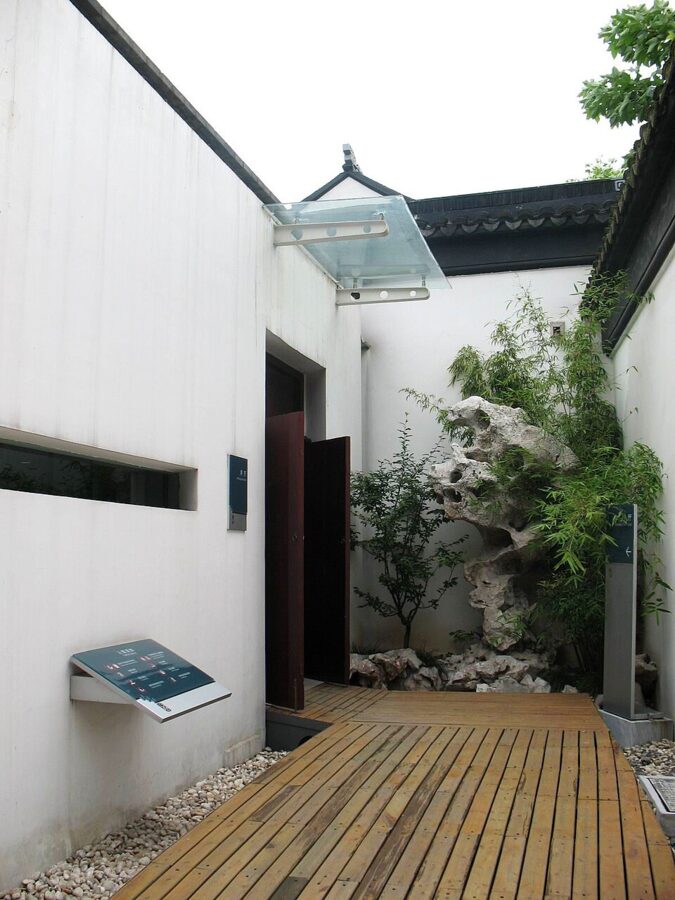

Then the gardens, with adjusted expectations. The halls of the Lingering Garden, the Master of the Nets Garden and the Canglang Pavilion show exactly how a room was arranged, but most of their furniture is late Qing or Republican hongmu, dark and carved. The Ming pieces were sold, broken up or moved to museums long ago.
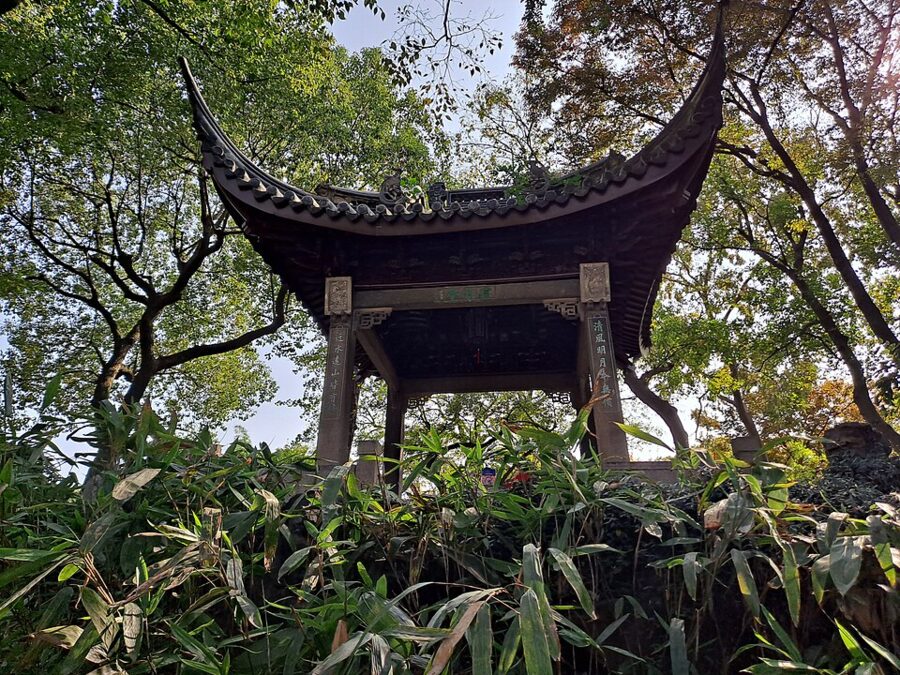

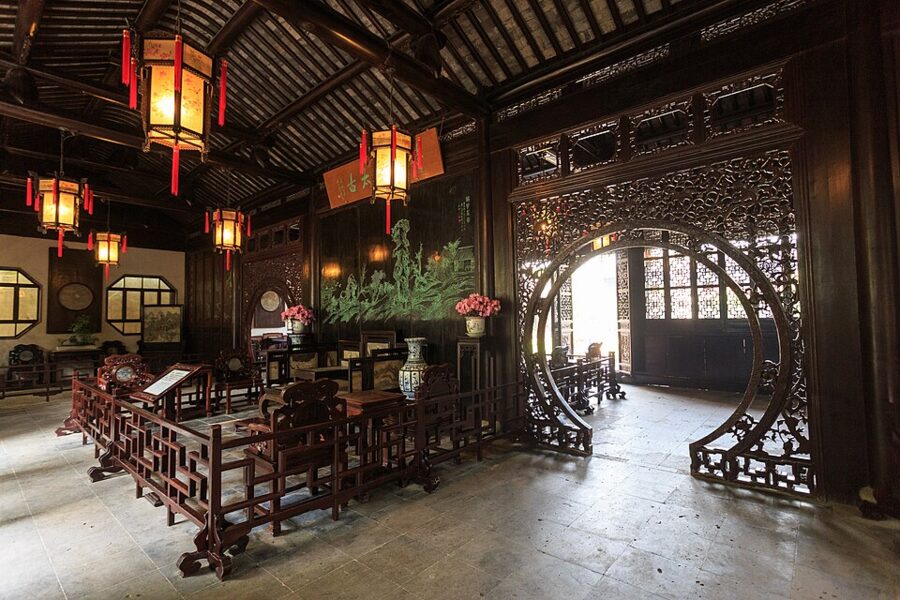

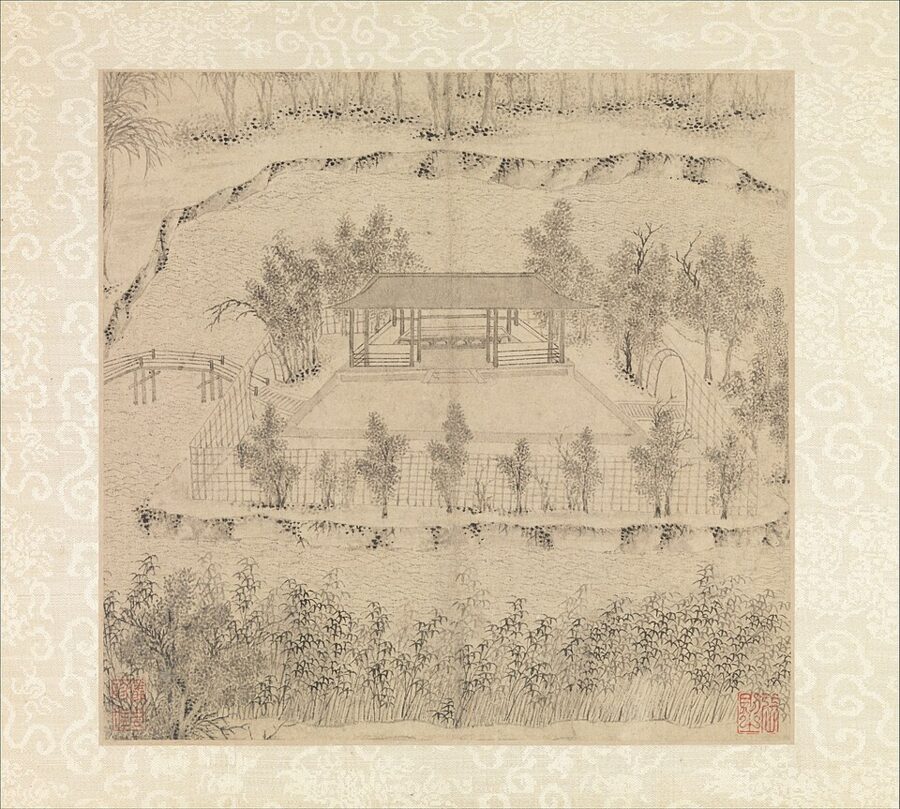
One garden goes the other way. The Garden of Cultivation (艺圃), once home to Wen Zhenheng’s elder brother Wen Zhenmeng, keeps several Ming buildings, and its Boya Hall (博雅堂) is furnished with new reproduction Ming-style pieces. It is the nearest you will get to a room Wen Zhenheng would have approved of, for a 10-yuan ticket.

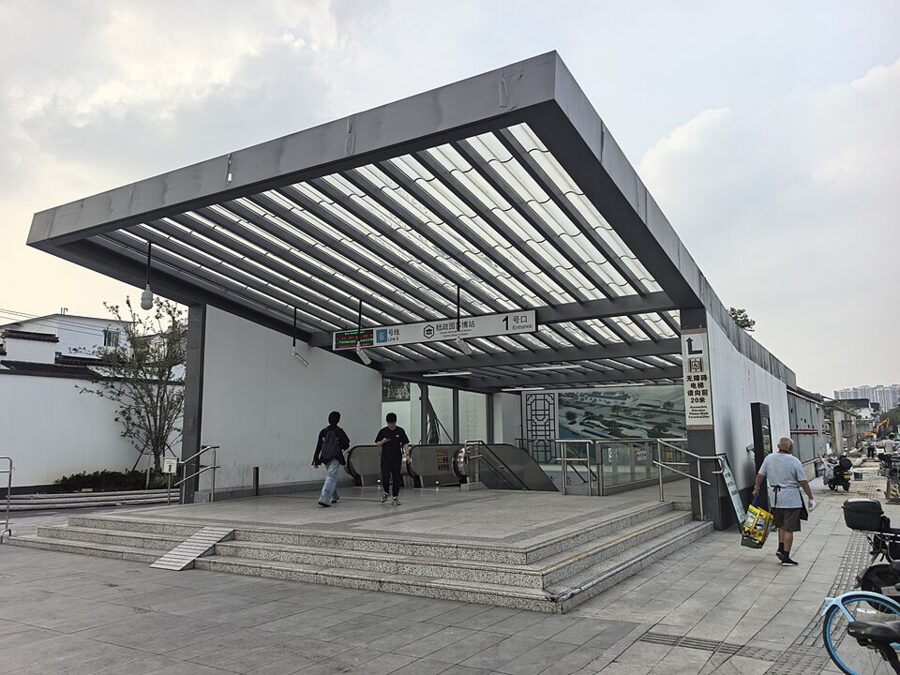
Garden tickets are set by the city: the Humble Administrator’s Garden is 80 yuan in April, May and July through October and 70 yuan in the other months, the Lingering Garden 55 and 45, the Master of the Nets Garden 40 and 30, the Canglang Pavilion 20 and 15. Metro Line 6 stops at Humble Administrator’s Garden–Suzhou Museum station (拙政园苏博站), a short walk from both museums.

Outside China
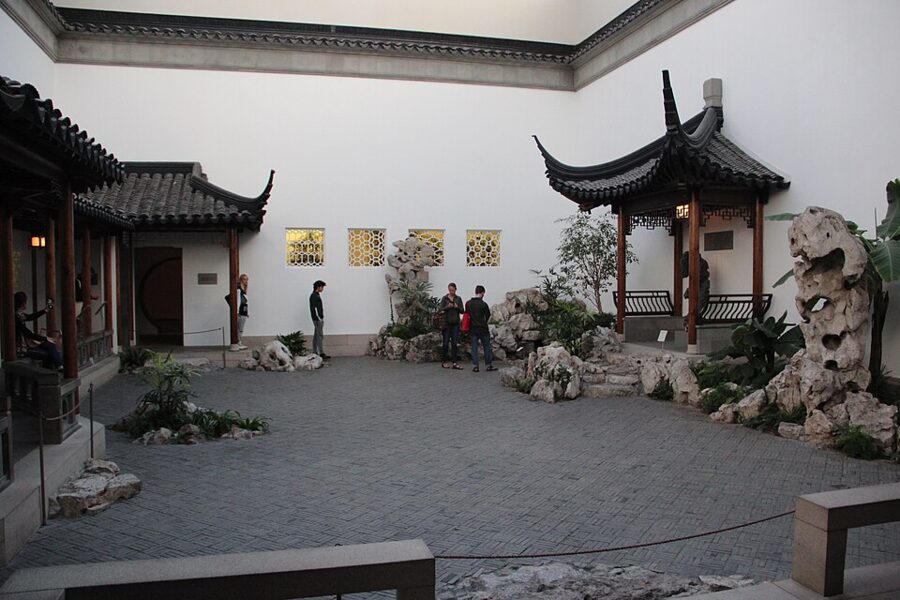
Much of the best Ming furniture left China in the twentieth century. The Metropolitan Museum of Art’s Astor Court was built in 1980 by Suzhou craftsmen on the model of the Late Spring Studio (殿春簃) in the Master of the Nets Garden, with nanmu from Sichuan and tiles from the old imperial kilns near Suzhou, to give Ming furniture a setting it fits. The Minneapolis Institute of Art, the Nelson-Atkins, the Victoria and Albert and the Honolulu Museum of Art all have strong collections.
Fan Lian would have been baffled by all of it: the glass cases, the scholarship, the copies on sale in every Chinese city. To him a huanghuali table meant servants living above their station. Find one in a quiet gallery, step back until you can see the wall through the chair beside it, and you see what Songjiang saw when the first pieces came in from Suzhou: wood, a few lines, and nothing else needed.