
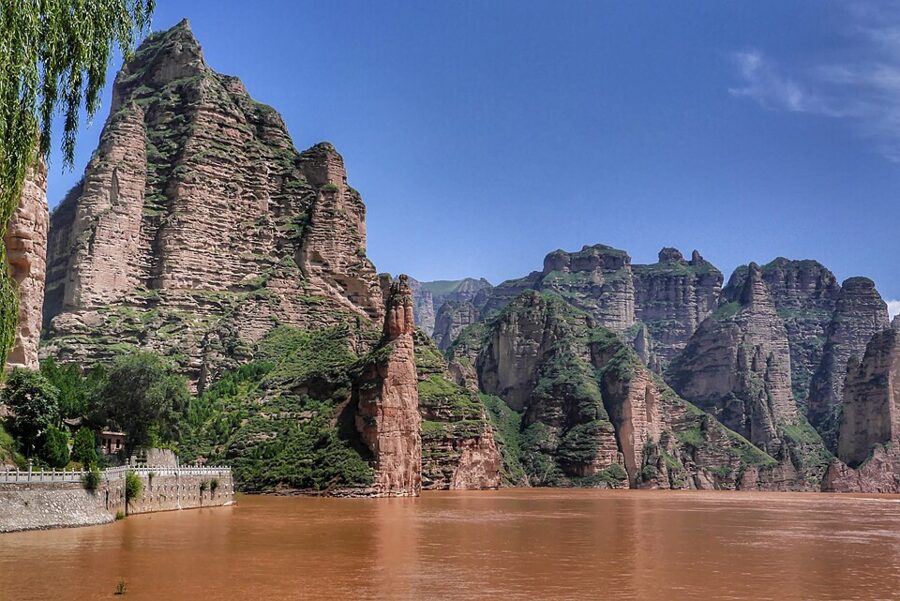

The first two prints had three toes each, and they lay on a small patch of exposed bedrock beside the Yellow River that the locals called Laohukou (老虎口), “Tiger’s Mouth”. A Gansu geological team had spent two months around Yanguoxia finding nothing better than fossil plants, and the prints turned up on the afternoon of August 23, 1999. A meter farther into the hillside a third appeared, and their leader, the paleontologist Li Daqing, knew he had the trackway of a theropod, a meat-eating dinosaur.
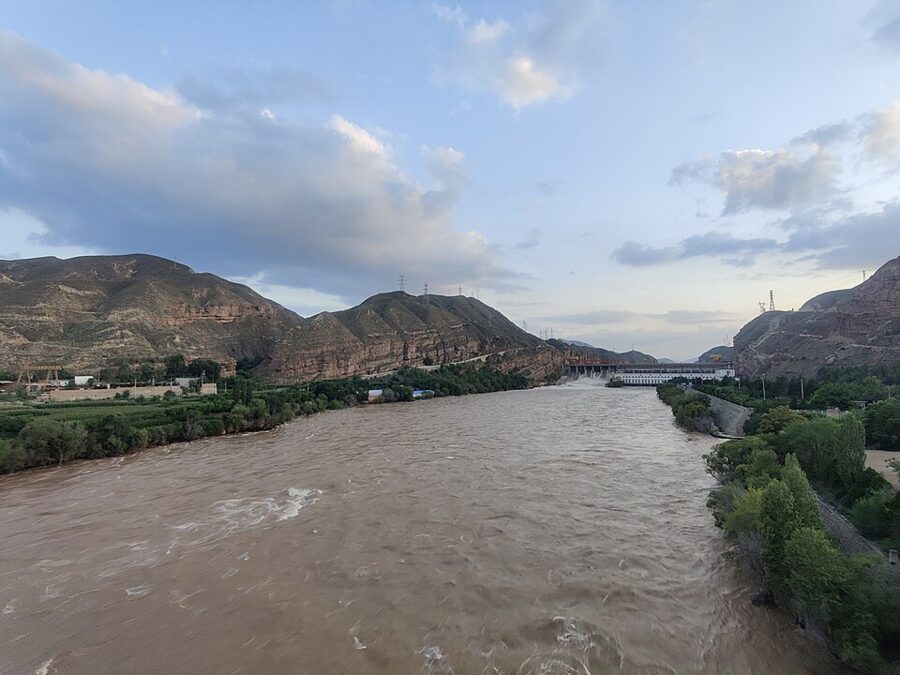

By October 2000 his team had cleared four sites, and the place had a new name, Konglong Wan (恐龙湾), Dinosaur Bay. It is now the Liujiaxia Dinosaur National Geopark (刘家峡恐龙国家地质公园), in Yongjing County (永靖县), under an hour west of Lanzhou. By the park’s count it holds 1,831 footprints in 150 trackways, left by sauropods, theropods, ornithopods, pterosaurs and early birds on the muddy shore of a lake. One sauropod hind print is 1.5 m long, big enough for an adult to lie down in.

The tracks fill a morning. What turns them into a day is the river. Half an hour’s drive upstream, the Yellow River is dammed again at Liujiaxia behind a 147 m wall of concrete, and from a pier just above it boats run 54 km up the reservoir to the Bingling Temple grottoes (炳灵寺石窟), a cliff of Buddhist caves with a dated inscription of 420 and a seated Maitreya 27 m tall. I’d do them in that order, footprints first and Buddha second, and be back in Lanzhou for dinner.
On this page
Tiger’s Mouth: the trackways and what they record
Li Daqing’s team published the site in 2000 and surveyed it in 2002, by which time they had 293 prints at ten spots along the shore; Site 1 alone held 138 prints in seven sauropod trackways and 60 in nine theropod ones. Joint expeditions with Japanese and Korean colleagues followed in 2002 and 2004, and later Canadian and American specialists joined in.
The headline figures come from the park and are not quite stable: official sources give ten or eleven track types, 150 or 172 trackways, and 2,000 or 2,800 square meters exposed, depending on the year. Treat them as orders of magnitude.
The rock and its age
The prints are in the Hekou Group (河口群), red, purple and gray-green sandstones and mudstones laid down in the Lanzhou–Minhe Basin in the Early Cretaceous. The track layer, in the Yanguoxia Formation, is a fine sandstone with mud cracks and ripple marks: a shallow shore that dried out, got walked on, and was drowned again.
How old that shore is depends on whom you read. Stratigraphers place the Yanguoxia Formation between the Hauterivian and Aptian stages, roughly 130 to 115 million years ago, and other official summaries round it to “about a hundred million years”. The figure on many local signs and news stories, 170 million years, would put the tracks in the Jurassic, and it is simply wrong for these rocks.
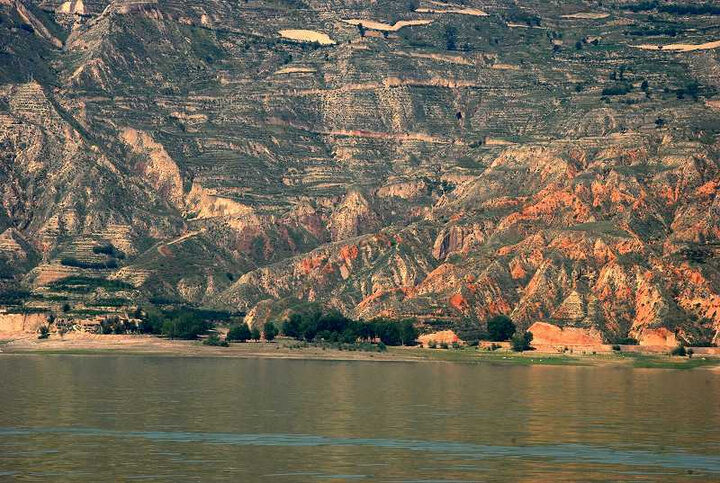

The park’s version is a good one. The lake was low and its beach damp; animals crossed it; the sun baked a crust over their prints; the next season’s water buried the beach under fresh sand. Repeat that and you get stacked trodden surfaces, which is why some sites show two track layers, one above the other, with different animals on each.
The big print, and why it is not quite as big as it looks
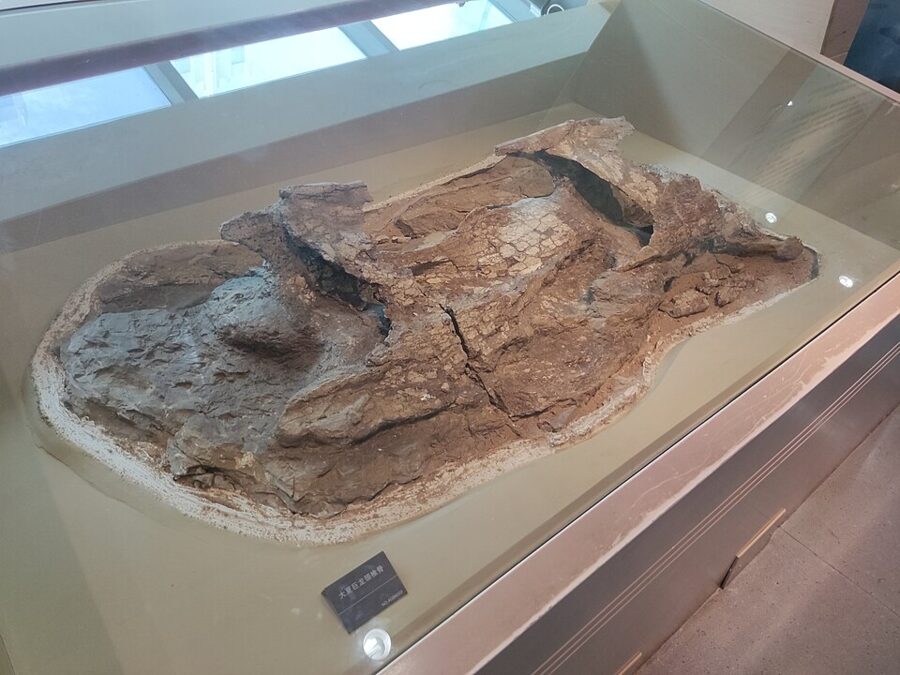
The star of the site is a sauropod hind print 150 cm long and 120 cm wide, paired in front with a smaller forefoot print, in a trackway with a stride of 3.75 m. It was announced as the largest dinosaur footprint known, and the park still says so. The left and right prints are 3.45 m apart at their outer edges, nearly as wide as the stride is long, and the park reckons the animal at more than 20 m and close to 50 tonnes.
Li Daqing himself later added a footnote. The trackway turns left at that point, and as the animal turned, its left hind foot slid about 30 cm forward in the wet sand before it stopped. The part of the print the foot actually pressed down is 1.2 m by 0.9 m: still a very large sauropod, but the giant outline is a skid mark as much as a footprint.

Forefoot and hind foot prints come in regular pairs, the small front print just ahead of the large hind one and partly overlapped by it, a pattern the excavators described as a first. Follow one line across the rock and you are reading a single walk, step by step.
Raptors walking alone
The most cited find came in 2012, when an international team led by Xing Lida described 71 two-toed prints from Sites 1 and 2 as a new kind of track, Dromaeosauripus yongjingensis (永靖驰龙足迹). Two-toed prints come from deinonychosaurs, the raptor group that includes Velociraptor, which held the sickle claw of the second toe off the ground. The Yongjing collection is the largest set of such tracks found in Asia, and the description in Acta Palaeontologica Polonica is open for anyone to read.
Two observations stick. At least two of the six trackways at Site 2 turn without the stride shortening: the animals swung around without slowing. And none run side by side, which suggests the makers walked alone, not in the hunting packs of film.
Pterosaurs, birds, a turtle, and the smallest prints of all
Site 1 also produced the first pterosaur tracks recorded in China, a broad four-footed trackway with asymmetric three-toed hand prints. Small bird tracks, 3–4 cm long, crowd and cross each other the way shorebird prints do on a mudflat today. The title of the 2006 paper by Zhang Jianping, Li Daqing, Martin Lockley and colleagues sums the site up: “diverse dinosaur-, pterosaur-, and bird-track assemblages”.
Two recent finds widen the picture. In August 2024 museum staff found five dinosaur prints only 1–3 cm long on a slab that had flaked away after rain, among the smallest known anywhere. The same year Xing, Li and the museum’s director You Wenze published China’s first turtle trackway, from Kongjiasi elsewhere in the county, where a turtle walked or paddled through shallow water and birds later stamped their prints on top.

The bones from the same rocks
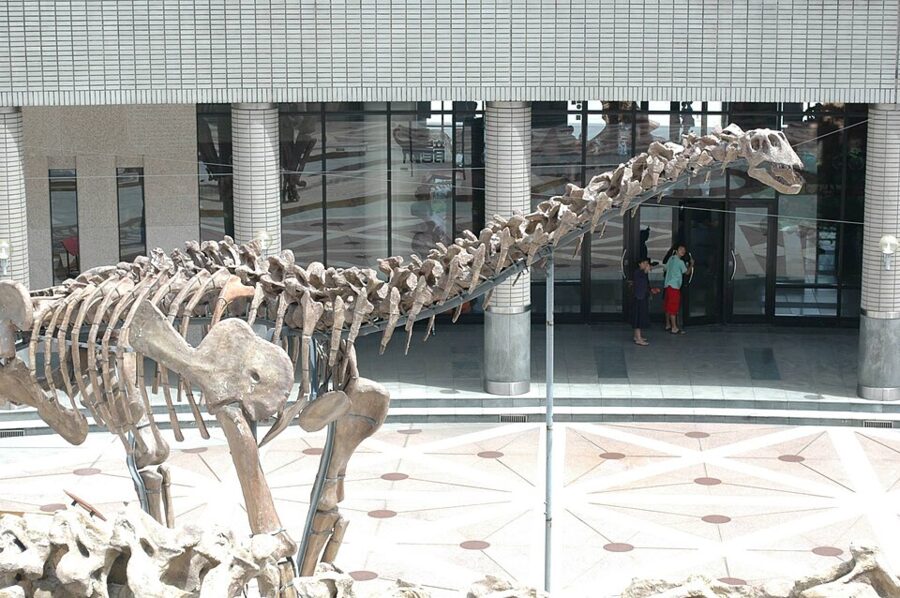
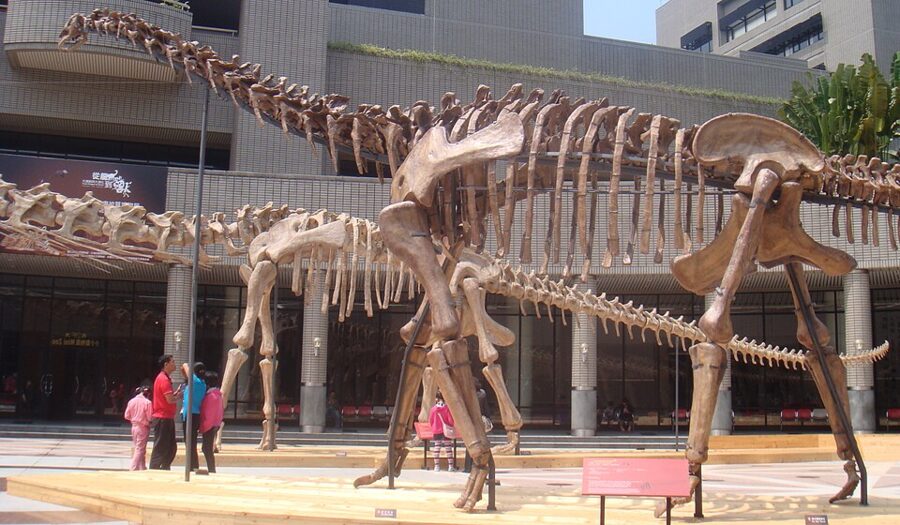
The Hekou Group has given up skeletons too. Huanghetitan liujiaxiaensis (刘家峡黄河巨龙) was dug out in the Liujiaxia area from 2002 and named by You Hailu and colleagues in 2006 from a hip, a shoulder girdle, rib fragments and two tail vertebrae. Its hips are remarkably wide, and the museum bills it as China’s “fattest” sauropod at 18 m and 35 tonnes; published estimates from so few bones run much lower.
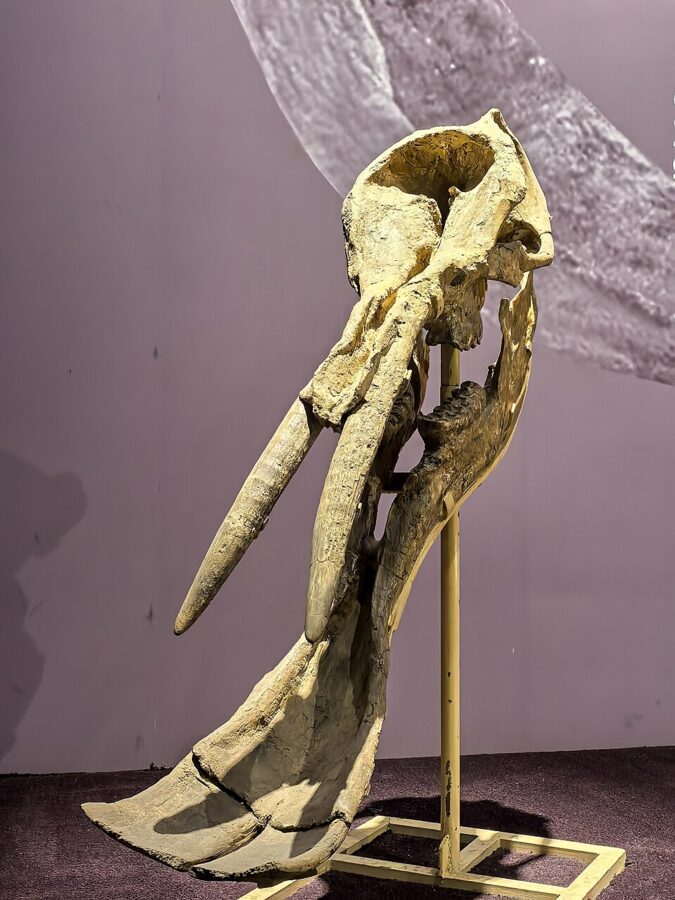
Daxiatitan binglingi (炳灵大夏巨龙), named in 2008, is the bigger animal: a sauropod with a neck around 12 m long and a total length usually given as 23–30 m. It is named for the Daxia River (大夏河), which flows into the reservoir, and for Bingling Temple. The third star, Lanzhousaurus magnidens (巨齿兰州龙), comes from Lintao (临洮) to the southeast, a ten-meter plant-eater whose teeth reach 14 cm long, among the largest of any herbivorous dinosaur.
The geopark on Taiji Lake
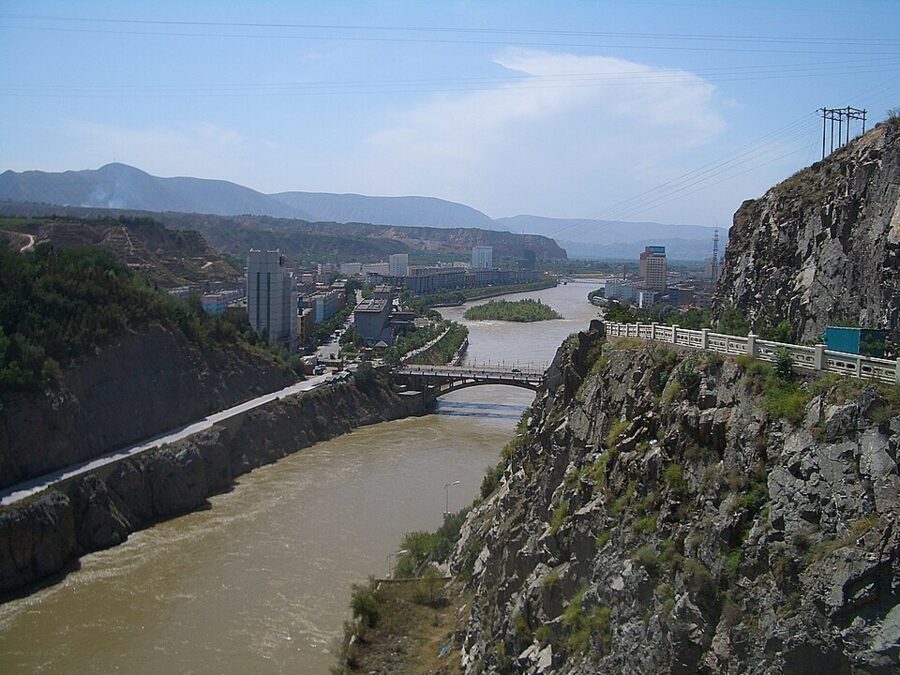
The park covers 15 square kilometers on the north shore of the Yanguoxia reservoir, renamed Taiji Lake (太极湖), about 1 km above the dam. The Yanguoxia station was the first large dam on the Yellow River’s main stream, begun in September 1958 and generating by November 1961.
Protection came quickly: a provincial nature reserve in November 2001, a national geopark that December, and opening in October 2005. Since March 27, 2024, it has been a core site of the Linxia UNESCO Global Geopark, which ties these trackways to the much younger mammal fossils of Hezheng to the south.
Arriving
From Lanzhou the riverside road runs west past the industry of Xigu and about 40 minutes out enters Yanguoxia. Past the Konglong Wan tunnel a sign points right, to a car park, a ticket office and a herd of model dinosaurs; there is no grand gate. A wall of 1:1 footprint casts, the record print among them, sets the scale.
A zigzag brick path climbs the slope, and the cutting beside it is the day’s best free geology lesson: red-brown sandstone, bands of blue-gray and yellow, buff loess on top. Ten minutes up is a blue-roofed building, the Site 1 hall. Go there first, before the museum and before the school groups.

The Site 1 hall
The hall covers about 1,400 square meters of sloping rock with some 300 prints in 23 trackways of four kinds: sauropod, theropod, ornithopod and pterosaur. The record print is here, with its forefoot and its 3.75 m stride, among theropod tracks heading off in other directions.
Read the trackways rather than single prints: follow a line of sauropod pairs and you see where the animal shifted its weight, where a step lengthens. That is what footprints can tell you and bones cannot.
Site 1 is the only track site with a building over it. Site 2, the largest, with 1,383 prints, was reburied under sand and plastic sheeting, still the case when the managers appealed for conservation money in 2014, and is not part of the visit. After heavy rain the outdoor sections can close.
The Liujiaxia Dinosaur Museum
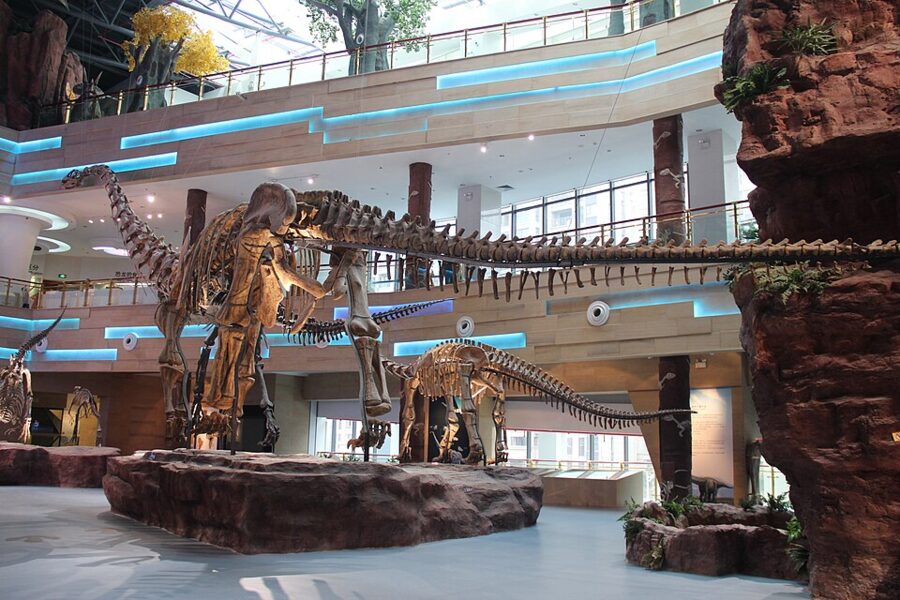
The museum, begun in 2010 and refitted since, has 6,629 square meters of exhibition space. The county’s own description lays it out: the ground floor is the dinosaur hall, split between a footprint gallery and a central skeleton hall; the second floor covers the story of the Earth, the history of life and the regional geology of Gansu, with a 5D cinema; the third is a café and rest area.
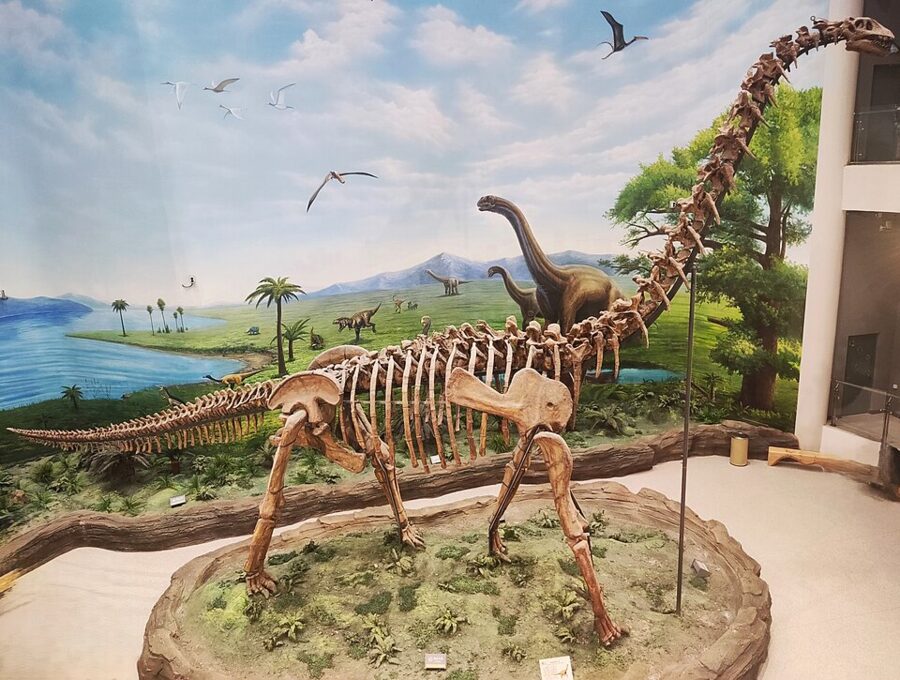

The central hall, with Huanghetitan, Daxiatitan and Lanzhousaurus, is the reason to come in, and the footprint gallery is the place to learn a theropod print (slim toes, sharp claw marks) from an ornithopod one (broad, blunt, rounded). Outside, a giant model of Huanghetitan faces the Site 1 hall.
Upstairs is general earth science for school groups; give it twenty minutes and skip the 5D cinema. Allow an hour and a half for the whole park. The museum is small, but it stands on top of the thing it describes, which most dinosaur museums cannot say.
Tickets and hours
Admission is 40 yuan, covering the museum and the Site 1 hall. Children under 1.2 m enter free and people over 60 with ID pay a reduced rate; carry your passport. Parking at the gate is charged.
Hours are where sources disagree. Current ticket listings give 09:00–16:00 Tuesday to Friday and 09:00–16:30 on Saturday and Sunday, closed Mondays, which fits a winter schedule. A January 2026 notice from the provincial tourism department gives 08:00–18:00, until 18:30 at weekends, which reads like summer. Either way: not Monday, and in the morning.
Liujiaxia: the dam, the reservoir and the clear Yellow River
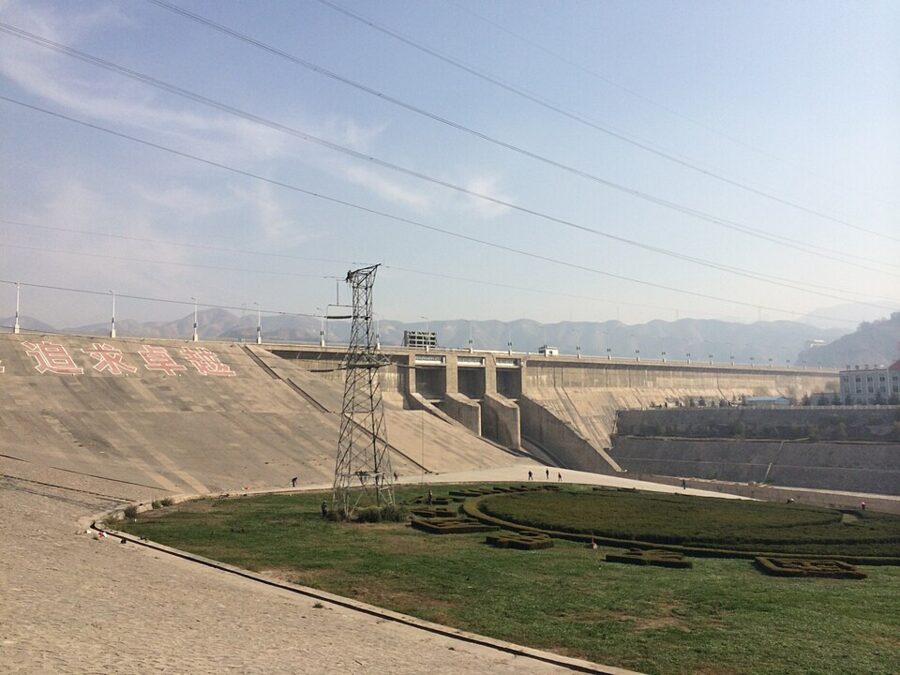
Liujiaxia (刘家峡) means “the Liu family’s gorge”, and in 1958 work started on a dam across it, 147 m high, behind which grew the largest body of water in Gansu. Work stopped in 1961, resumed in 1964, and finished in December 1974, when it was China’s largest hydroelectric plant. One of the young engineers on site from 1968 was Hu Jintao.
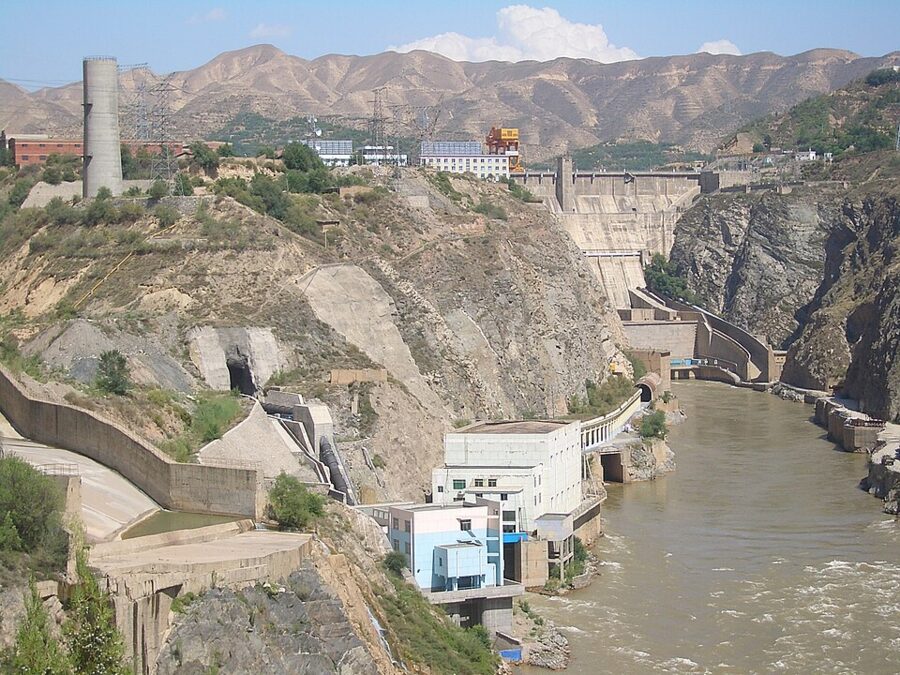

The price was paid upstream: the Liujiaxia, Yanguoxia and Bapanxia reservoirs flooded nearly 8,000 hectares of farmland and moved about 44,000 people, mostly from Yongjing, for small compensation. The county town grew up beside the dam, which is why maps often label Liujiaxia simply “Yongjing”.
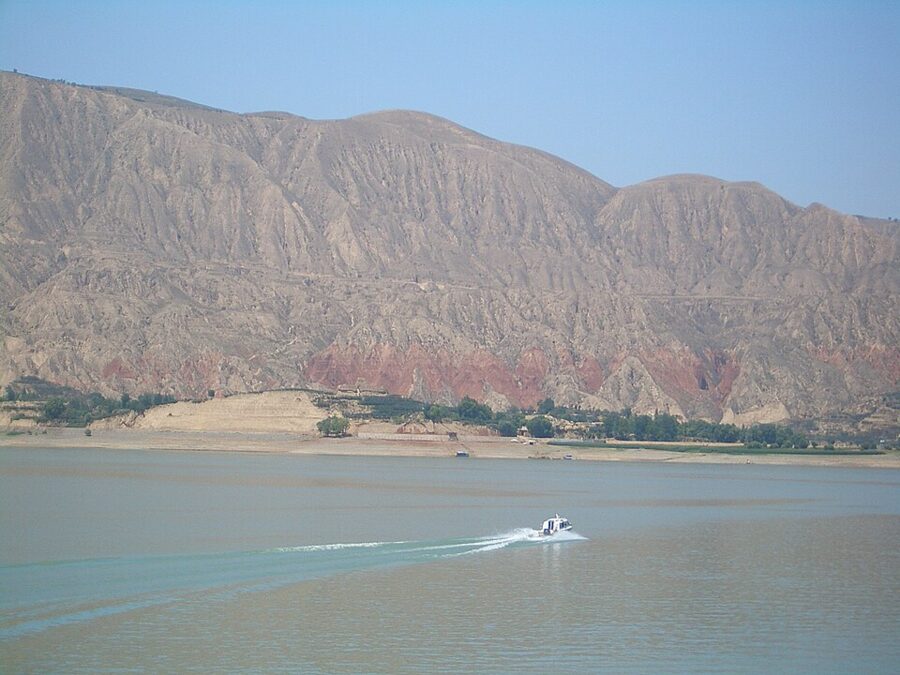
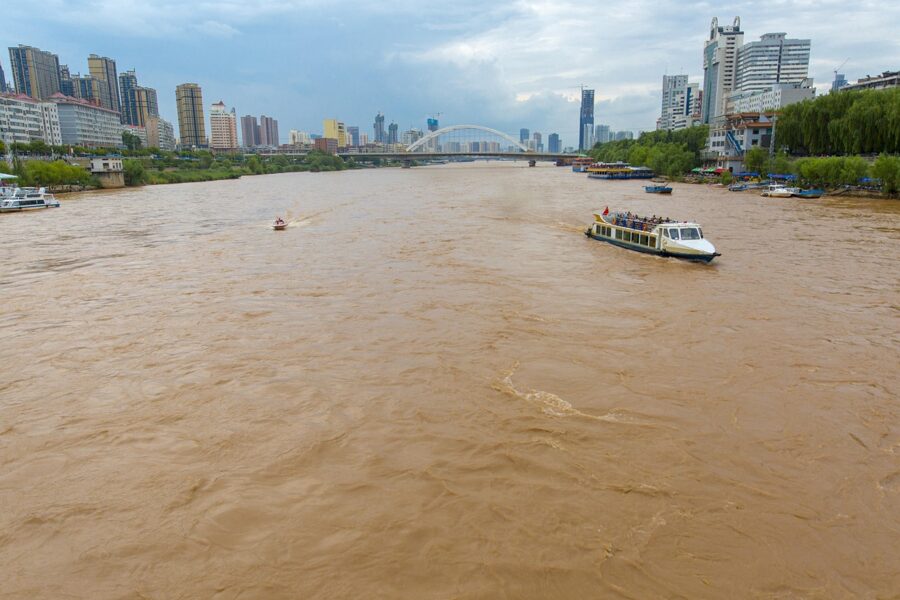
The reservoir runs some 50 km southwest toward Bingling, up to 6 km wide and more than 130 square kilometers in area; locally it is Bingling Lake (炳灵湖). Its most famous sight is just above the dam, where the Tao River (洮河) comes in from the south.

Where the Tao meets the Yellow River
Here the Yellow River is not yellow. Coming down from Qinghai, it slows in the long reservoir and drops its silt, and the water that reaches the dam is clear green. The Tao, off the loess, carries so much sediment that in 2006 the dam’s operators began a tunnel opposite its mouth just to flush its silt through. Where they meet, clear and muddy water run side by side, and the viewpoint above, the Huang–Tao confluence (黄洮交汇), is where every tour stops.
Afternoon light, roughly 15:00–17:00, suits it best, so leave it for the end of the day.


Up the reservoir to Bingling Temple
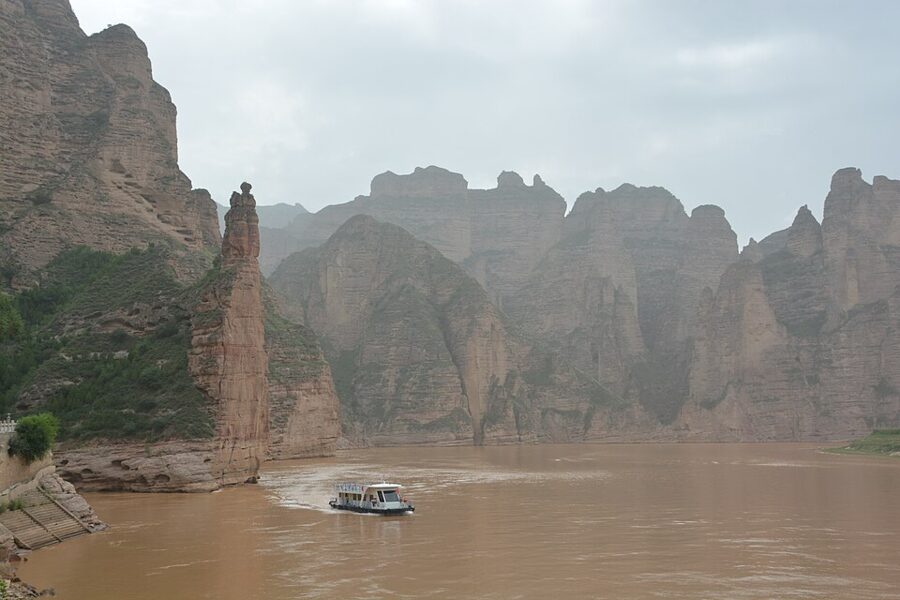
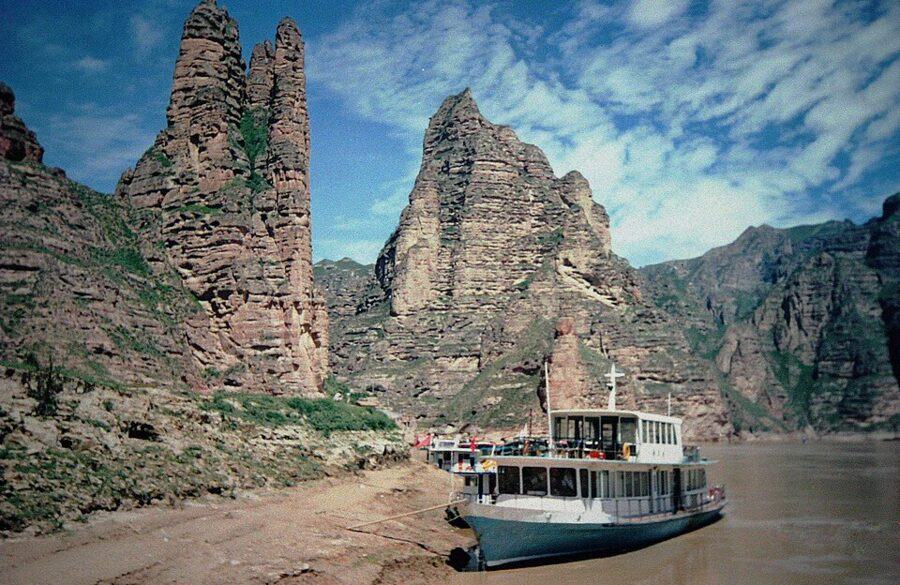
Bingling Temple sits at the head of the reservoir in a side canyon, Dasigou (大寺沟), on the north bank. There is a road, but the classic way, and the better one, is the 54 km boat run up the reservoir.

The boat
The Dunhuang Academy’s page for Bingling lists four routes: by boat from the Dam pier (大坝码头) at Liujiaxia, by boat from the Xiangyang pier (向阳码头), by boat from the Donggan pier on the Linxia side, and by road. Xiangyang speedboats leave on schedule rather than waiting to fill, which on a quiet weekday is worth a lot.
From the Dam pier the county lists 80 yuan return on the big tour boat and 140–160 yuan by speedboat; 160 yuan was still the price there in November 2026. Xiangyang speedboats were about 110 yuan in 2025. A speedboat takes about an hour each way, the big boat two or more.
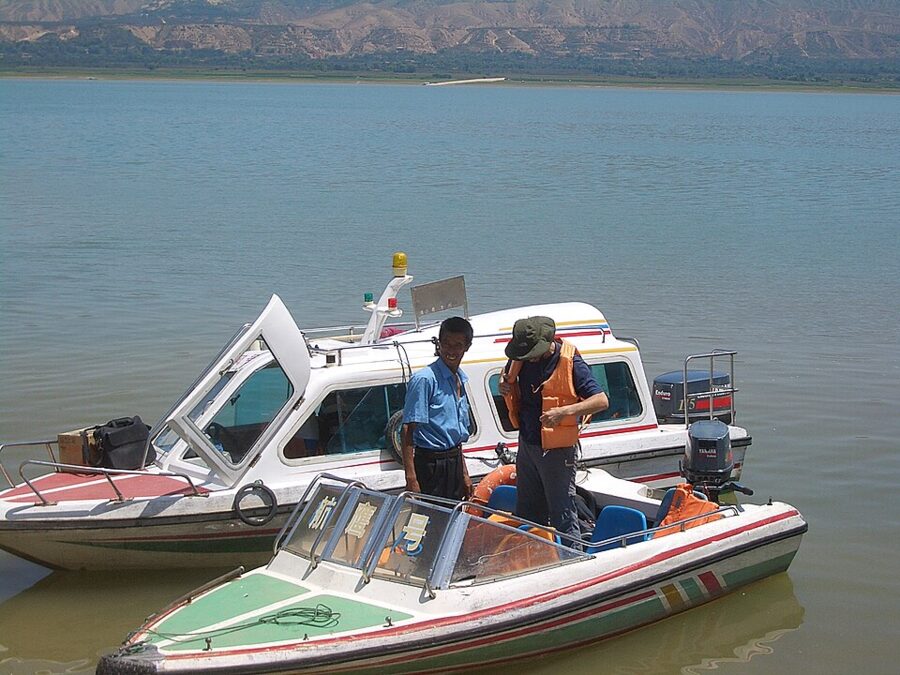

The crew sets the return, typically an hour and a half after landing: enough for the main cliff, not for the special caves, so if you mean to climb to cave 169, agree a later return when you buy the ticket. Out of season boats run less often and can stop in deep winter; the fallback is the winding road, about two and a half hours from Lanzhou.
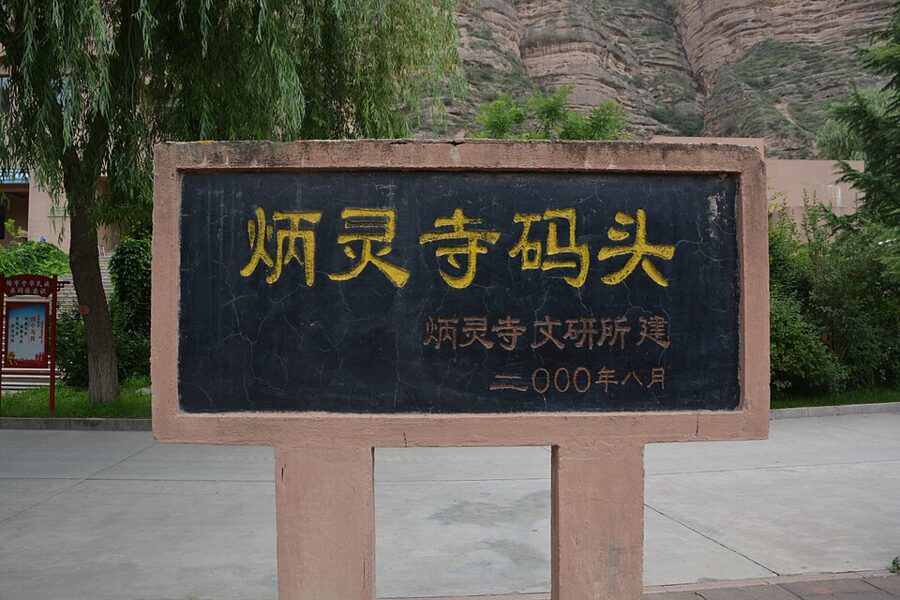

Sixteen centuries on one cliff
The name has changed more often than the cliff: Tangshu (唐述窟), from a Qiang phrase for “ghost caves”, then Longxing Si under the Tang (618–907), Lingyan Si under the Song, and Bingling from the Ming (1368–1644). “Bingling” is usually glossed as Tibetan for “a hundred thousand Buddhas”, though one scholar argues it began as a Tibetan rendering of Fenglin, the district’s Tang name.
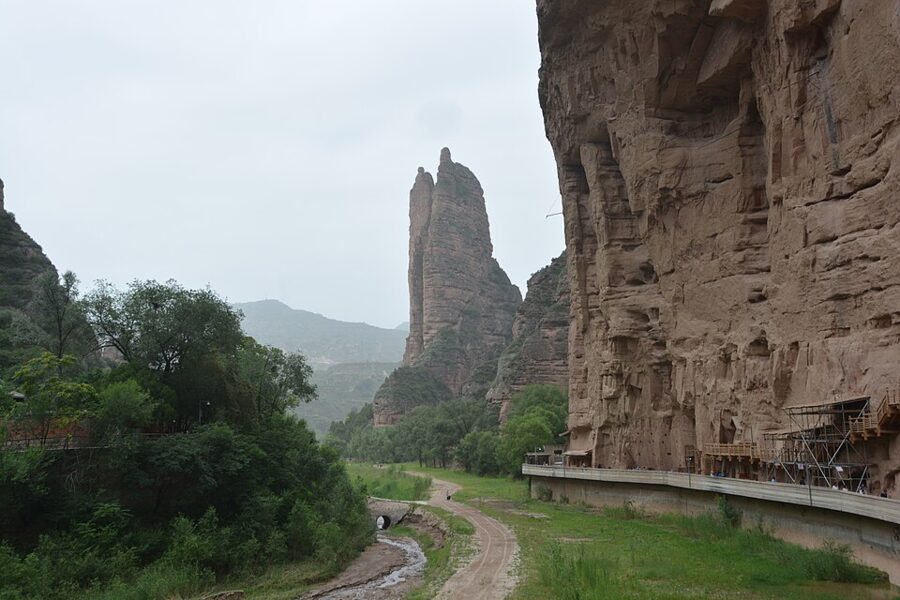
The caves run along about 200 m of the canyon’s west wall, in up to four tiers. The long-standing count is 183 caves and niches with 694 stone figures, 82 clay ones and about 900 square meters of painting; newer counts reach about 216 niches. Carving ran from the Western Qin (385–431) to the Qing, and the Tang left the most.
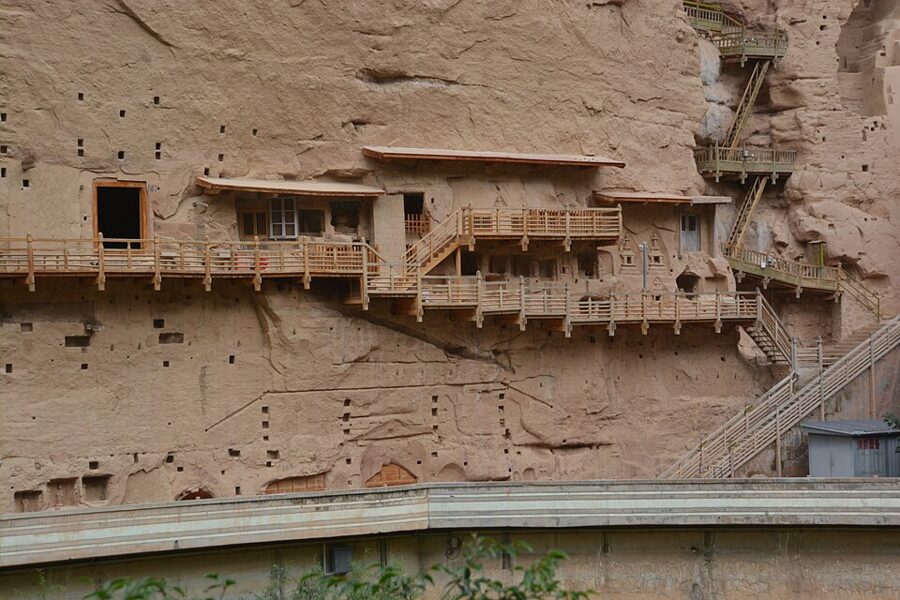

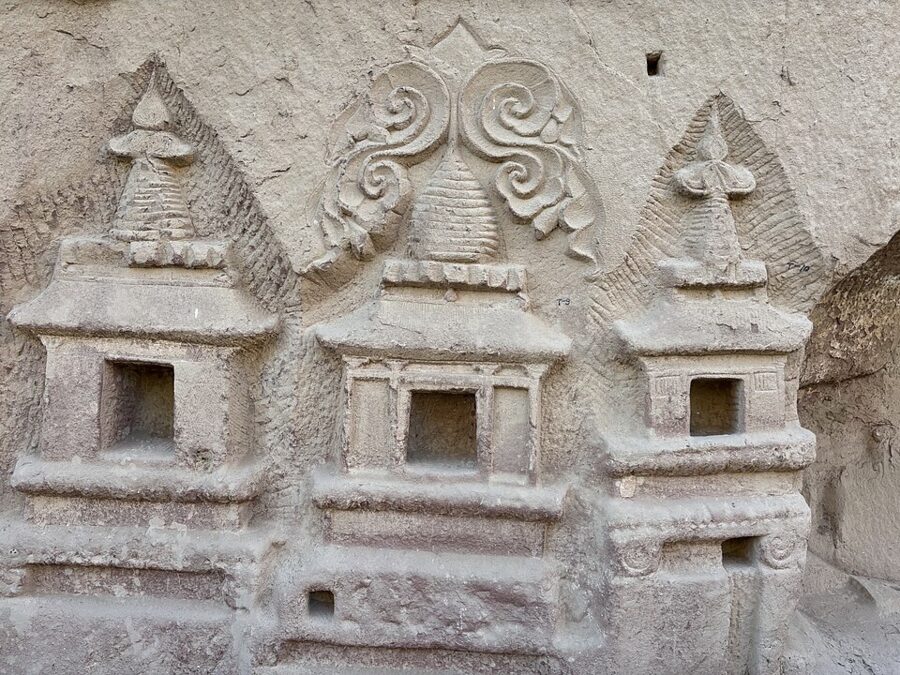
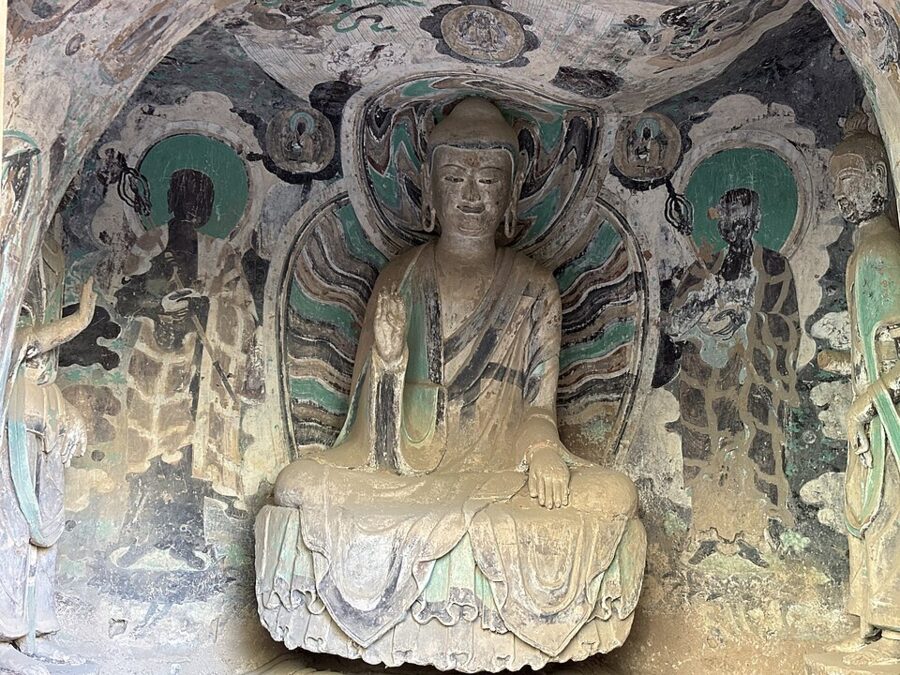
The standard ticket covers the ordinary niches along the boardwalk, behind wooden doors and glass. They repay attention: slender Northern Wei figures, fuller Tang bodies beside them, and many niches carved as stupas, a form rare at other Chinese cave sites. Bingling is one of the 33 sites of the UNESCO Silk Roads listing of 2014.


The Big Buddha
Where the cliff opens out, the Maitreya of cave 171 sits facing the river, 27 m tall and Tang work, the upper body carved from the cliff, the lower body modeled in clay. The best view is from the path a little way back.
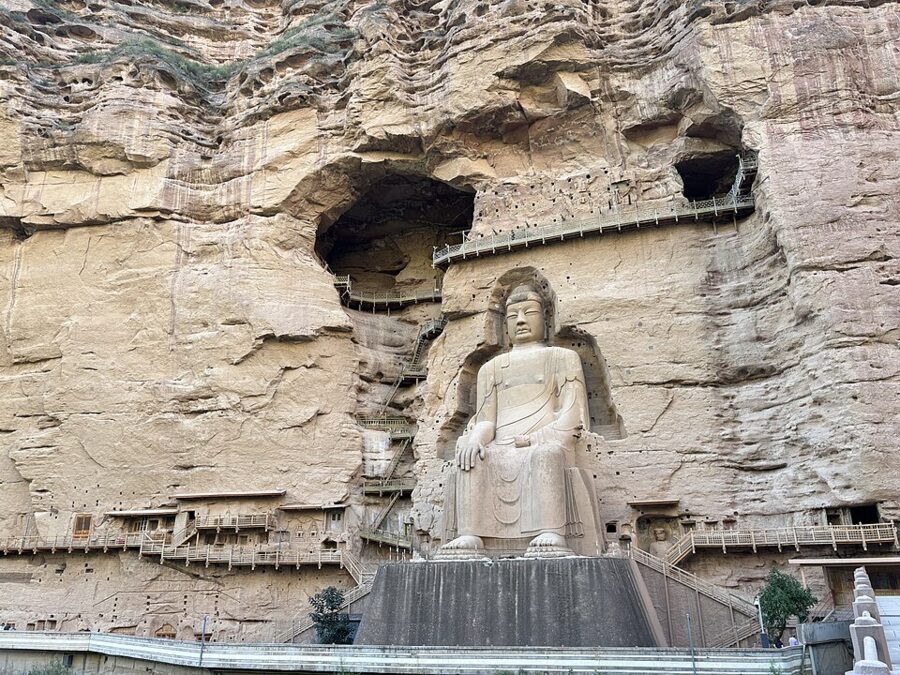

Above his head the cliff is broken by a huge natural cavern with a wooden stair climbing to it. That is cave 169, and it is why scholars come.
Cave 169
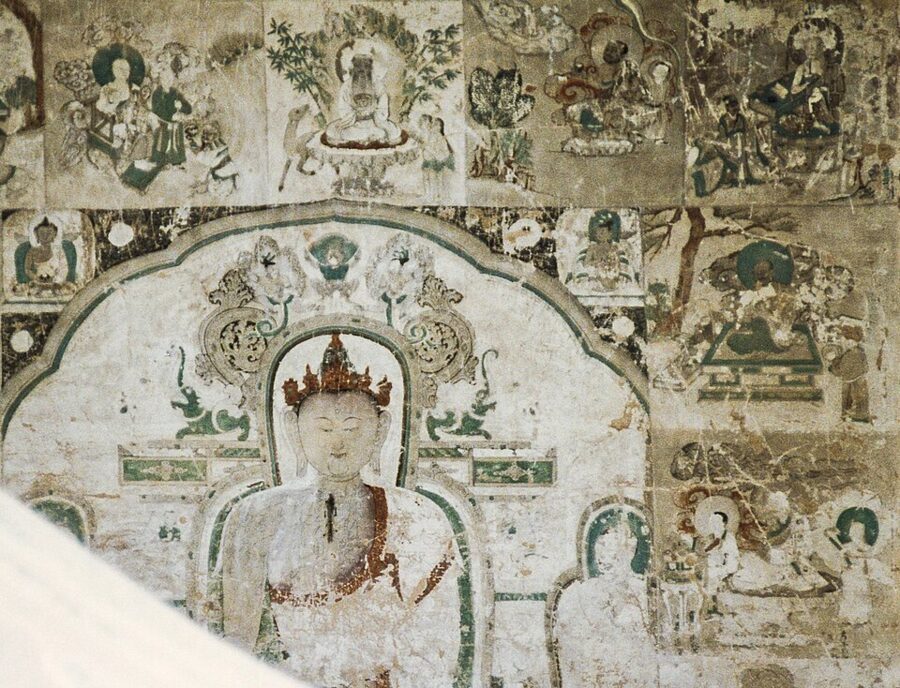
Cave 169 is a set of niches, statues and murals in a natural hollow more than 50 m up. On its north wall an ink inscription is dated the first year of Jianhong (建弘) of the Western Qin, the year 420: the earliest dated inscription in any Chinese cave temple, more than a century before any at the Mogao Caves.
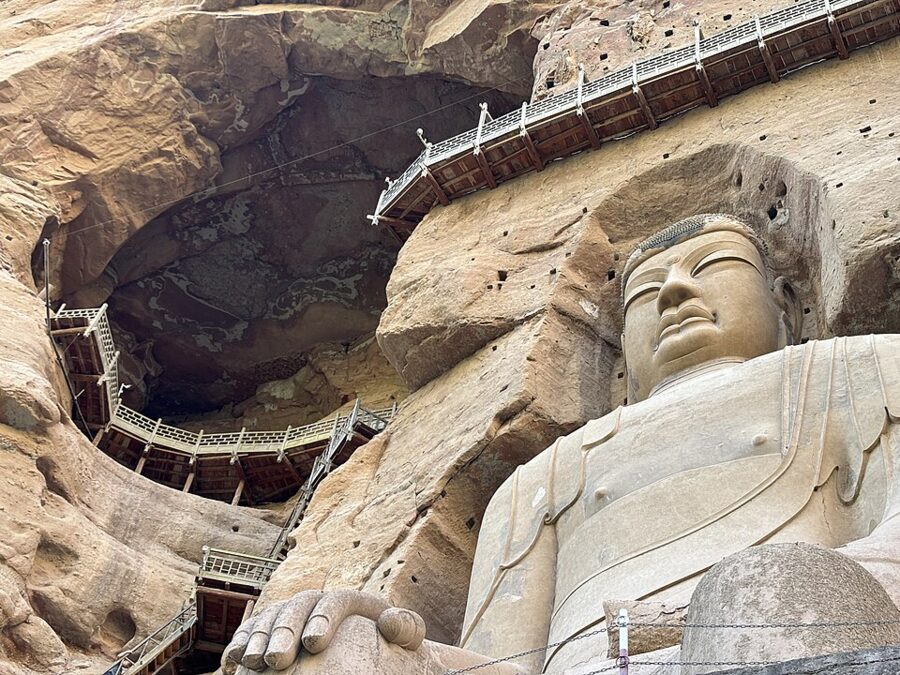

The Buddhas have the broad shoulders and clinging robes of the Gandharan styles that came east along the Silk Road; the painting around them already shows Chinese hands. Cave 169 is sold with cave 172 on a 300-yuan joint ticket with a guide, on top of entry. No cameras go up, and under-16s need a signed waiver.
Is it worth 300 yuan? If you care about early Buddhist art, yes: nowhere else in China has work this early, this securely dated. If you came for the boat and the Big Buddha, the ordinary ticket is plenty.

The reclining Buddha and the upper canyon
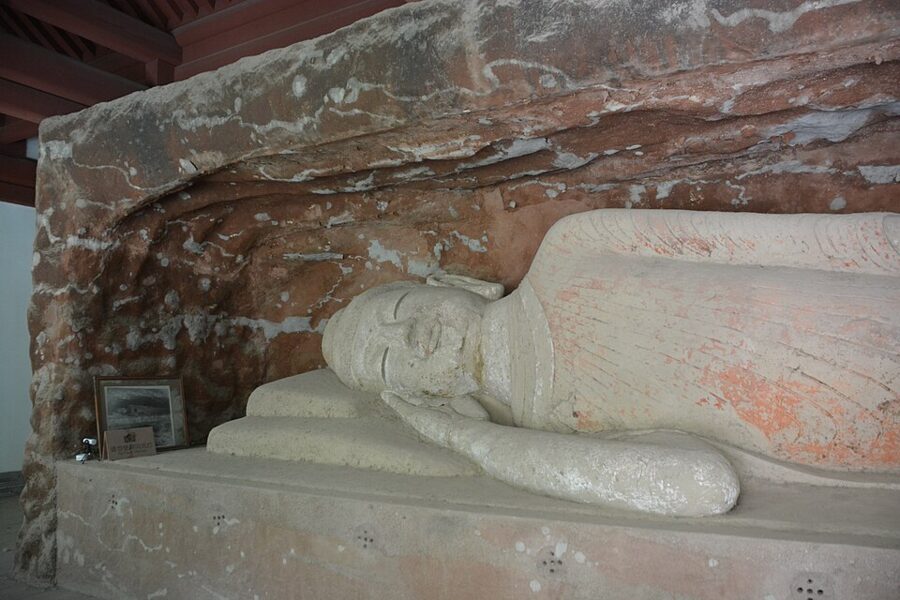
In a hall of its own lies a clay reclining Buddha 8.6 m long, the only Northern Wei (386–534) reclining Buddha known in China. Made for cave 16, it was cut into nine sections by conservators and moved here. The face, eyes nearly closed, shows the Buddha entering nirvana.

Beyond the main cliff lie the Donggou caves and the upper temple, farther up Dasigou; the standard boat schedule leaves no time for them, but a few hundred meters up the valley path gives the view back at the cliff.

Tickets, hours and the rules
Bingling is run by the Dunhuang Academy, which also manages the Mogao Caves. Admission is 50 yuan, or 25 yuan for students, children over 1.2 m, men aged 60–69 and women aged 60–64; tickets are sold on site. A guide costs 100 yuan for up to ten people, an audio guide 20 yuan.
Hours are 08:30–18:00 from April 1 to October 31 and 09:00–17:00 from November through March, with sales ending earlier. The Academy’s rules ask you to leave bags and cameras in free storage at the ticket office, and to touch nothing.

When to go
April to October is the season, and September and early October are the best of it: boats run often and the summer heat has gone. From November the boats thin out, so ask at the pier the day before.
One day from Lanzhou
All of this fits into one day from Lanzhou, but only in one order, and only with your own wheels for the first leg: geopark, Dam pier, boat, Bingling, boat back, confluence, home.
The order that works
07:30, leave Lanzhou. Hire a car and driver for the day, or a ride-hailing car to the geopark: 40–55 km, under an hour. The riverside road is slower than the expressway and far more interesting.
09:00–10:30, the geopark. Site 1 hall, then the museum. Buy food and water here; there is little at the pier and less at Bingling.
11:00, the Dam pier at Liujiaxia. About 30 minutes on. A speedboat has you at Bingling around noon.
12:00–14:00, Bingling Temple. The cliff, the Big Buddha and the reclining Buddha fit the standard hour and a half; add an hour for cave 169, agreed with the crew in advance.
15:00, back at Liujiaxia. The confluence viewpoint is a short drive above the dam; from there it is about an hour and a half to Lanzhou.
By bus
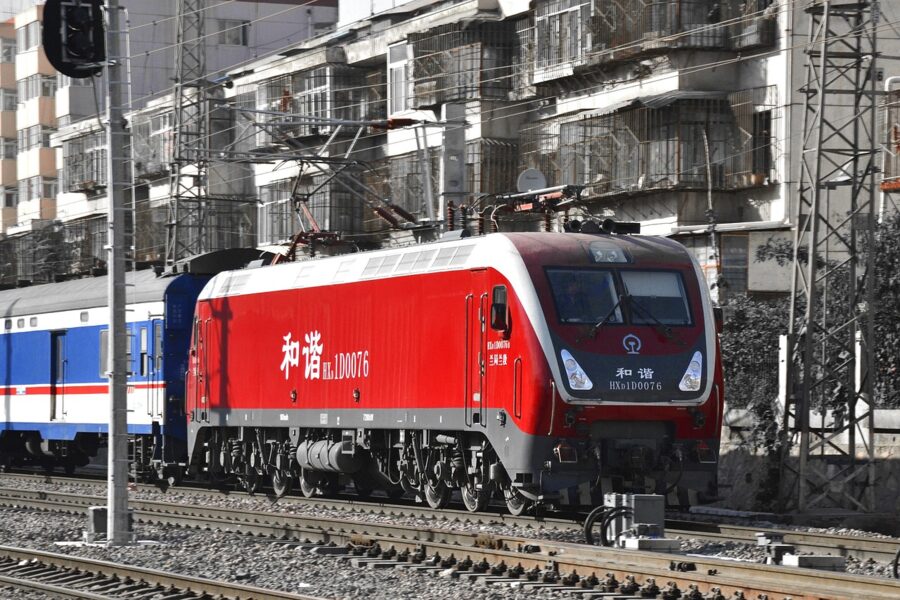
Without a car the geopark is awkward. Buses for Liujiaxia leave Lanzhou West Bus Station (兰州汽车西站) on Xijin East Road through the day, about 20 yuan and one and a half to two hours. Since August 31, 2025, they have used a new Liujiaxia bus station in the new district, about 100 m east of the Dachuan gas station, instead of the old one in the center of town.
From the new station take a taxi to the Dam pier; a taxi back down to the geopark takes about 30 minutes. On a winter weekday, with the geopark closing at 16:00, there is no time for it after Bingling, so drop one or spend the night in Liujiaxia, checking first that your hotel takes foreign passports. The last buses to Lanzhou leave in the late afternoon and go when full, so do not trust the posted time.
Back down the river
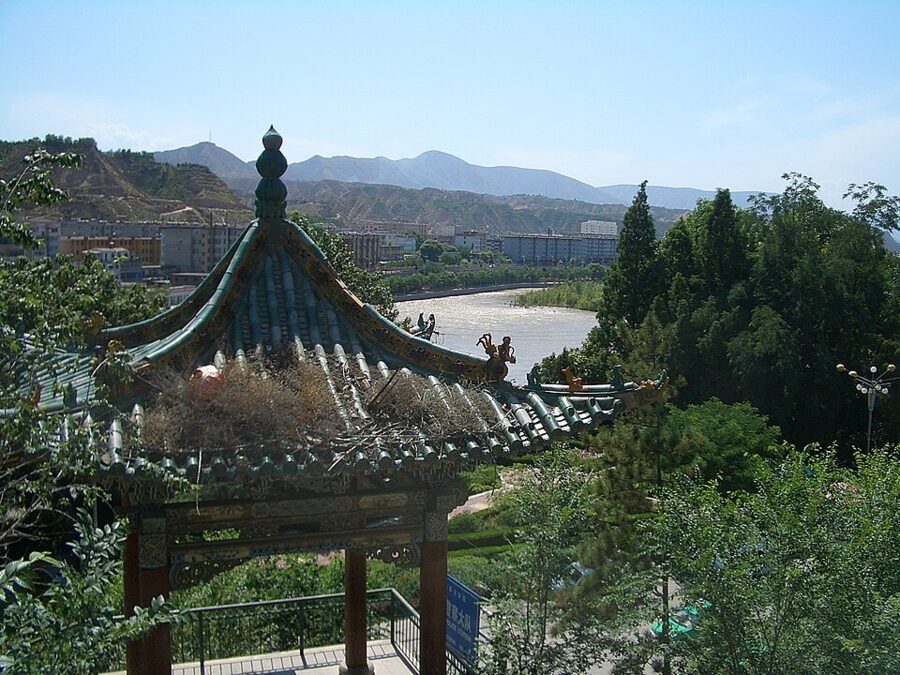
The road back runs east below Liujiaxia and down the green channel to Yanguoxia. Near the Konglong Wan tunnel, look down at the lake, held back by a dam built between 1958 and 1961. On its north shore, a few hundred meters from the road, a sauropod is turning left in wet sand, its hind foot sliding thirty centimeters forward, more than a hundred million years before there was a river here at all.

From there Lanzhou is under an hour by car, or by bus from the new Liujiaxia station to Lanzhou West. By the time the city’s lights come up along the Yellow River, the prints at Tiger’s Mouth have been under their roof for hours.