
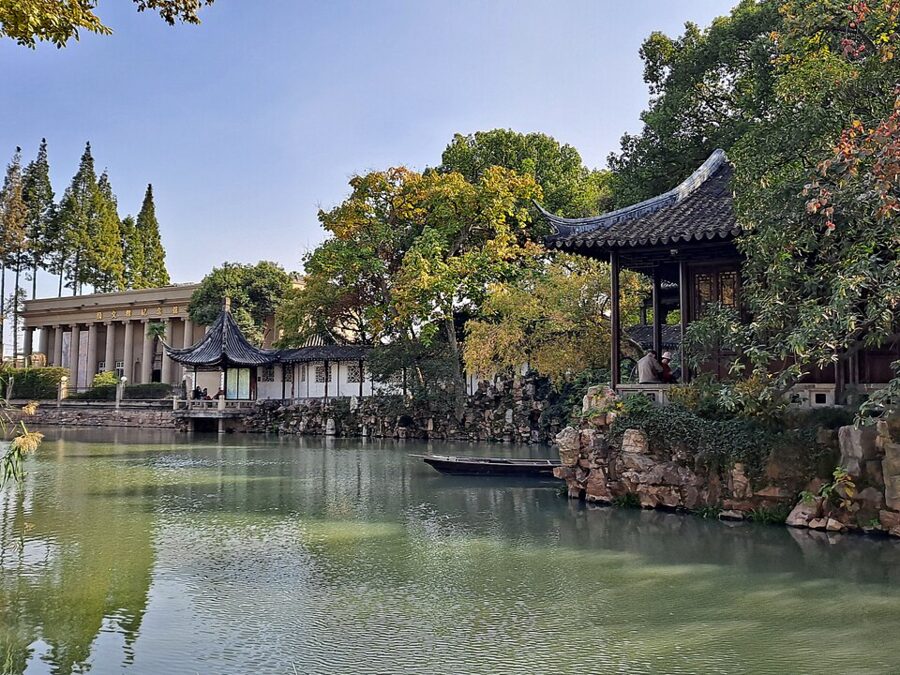

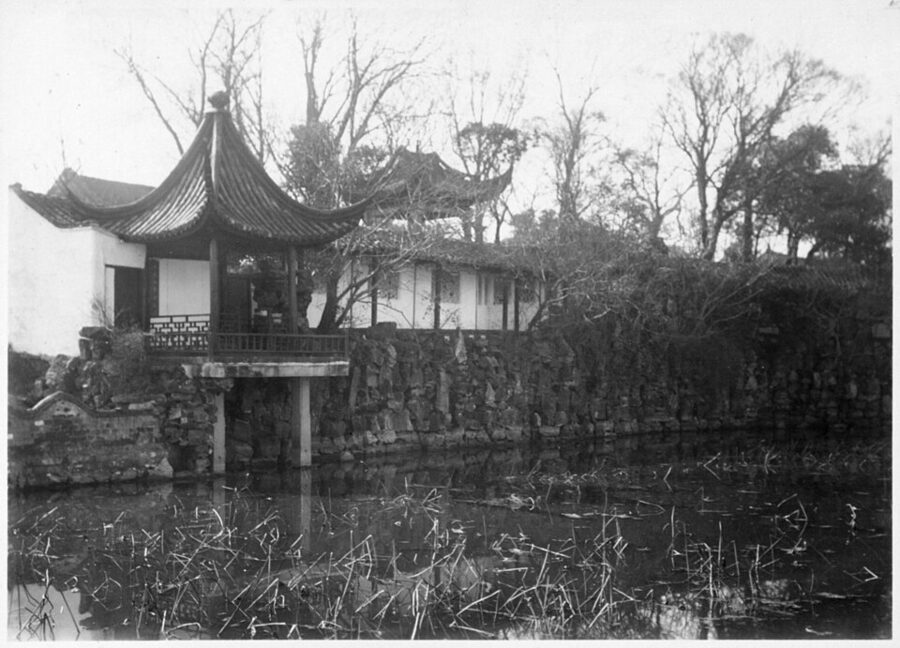
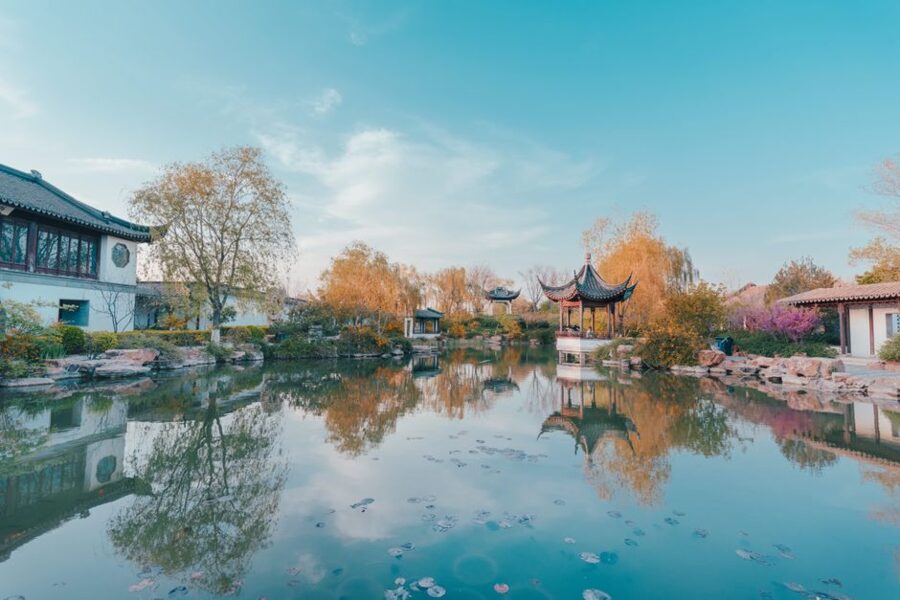
Most of Suzhou’s gardens make you pay before you see any water. This one shows you its water for free. Walk down Canglangting Street in the south of the old city and a green pond opens beside you, with a waterside corridor, a pavilion on stilts and a wooded hill rising behind a white wall, all of it visible from the pavement before you have bought anything.
That pond is why the Canglang Pavilion (沧浪亭, Canglang Ting), the Surging Wave Pavilion in most English guides, feels unlike its neighbors. The other famous gardens of Suzhou wall a pool inside and build around it. Here the water stays outside, the inside is given over to a hill, and the design is about looking from one to the other.

It is also the oldest of them. A dismissed official bought the overgrown plot in the 1040s for forty thousand copper cash, built a pavilion on the bank and wrote an essay about it that Chinese schoolchildren still read. Nearly everything standing is Qing rebuilding, but the name, the hill and the water are his.


On this page
Forty thousand cash for a ruin
Su Shunqin (苏舜钦, 1008–1048) was marked for a career. His grandfather had been a vice chief minister under the second Song emperor, he passed the palace examinations in 1034, and he wrote guwen (古文), the plain, argumentative old-style prose that Ouyang Xiu and his circle were championing against the ornate court writing of the day. Ouyang later admitted that Su had taken it up before he had.
In 1043 Fan Zhongyan, leader of the Qingli reforms, recommended him for a post at the Memorial Office in Kaifeng. In the autumn of 1044 the office held its customary banquet for its patron god, and Su paid for the wine by selling the office’s waste paper, an old and tolerated practice. The censor Wang Gongchen impeached him for theft, a dozen guests were demoted or banished, and Wang reportedly remarked that he had caught the lot “in a single cast of the net”.
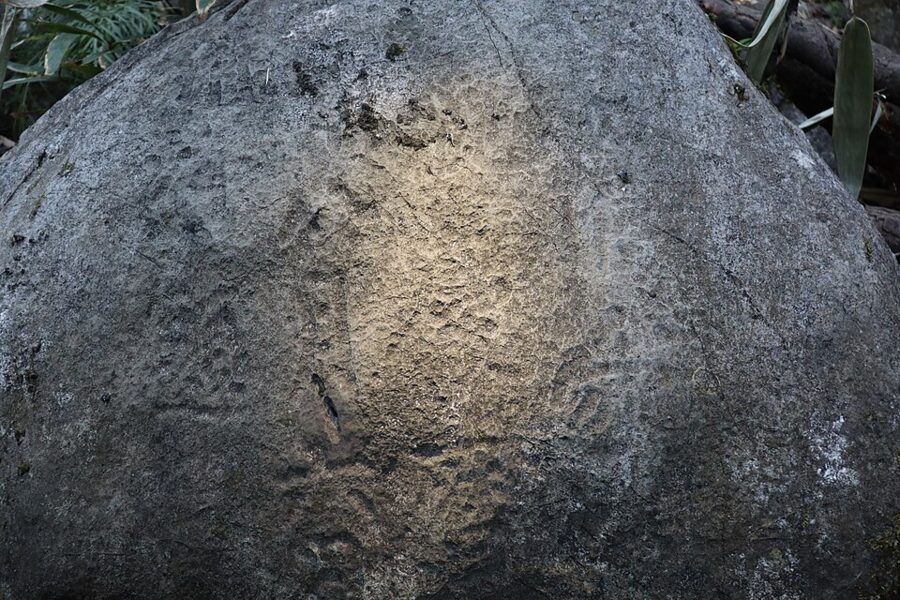

Stripped of rank, Su took a boat south to Suzhou and rented rooms. It was high summer and the city was airless. In the essay he wrote afterward he describes walking past the prefectural school, glancing east and seeing thick trees, high ground and broad water, “unlike anything inside a city”.
Down a narrow path between flowers and bamboo he found an abandoned plot about sixty xun across (a xun was the span of outstretched arms), with water on three sides. Old people told him it had been the pond and lodge of Sun Chengyou, an in-law of the Qian family who ruled the kingdom of Wuyue before the Song. He bought it for forty thousand cash and built a pavilion on the northern bank.
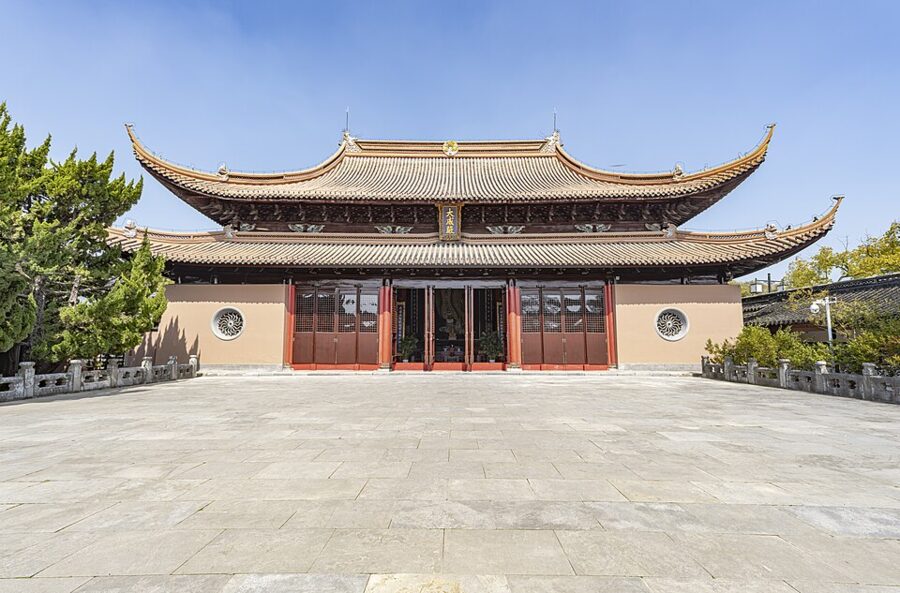
The prefectural school is still there: it is the Confucian temple complex on Renmin Road, a few minutes’ walk west of the gate. The geography of the essay still works, which is more than most garden legends can say.
The record and the fisherman’s song
He named the pavilion Canglang after a song in the Chuci (楚辞), the “Songs of Chu”. In the poem “The Fisherman”, the exiled minister Qu Yuan complains that the whole world is muddy and he alone is clean. A fisherman smiles and sings as he rows away: when the water of the Canglang is clear, I wash my hat-strings in it; when it is muddy, I wash my feet.
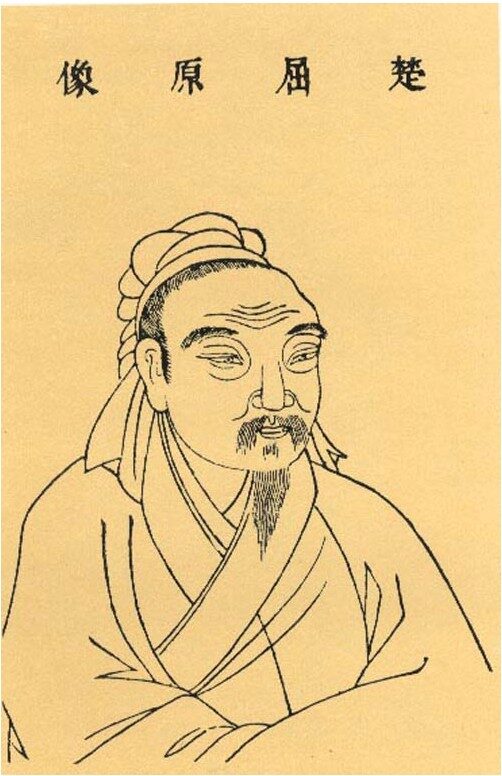
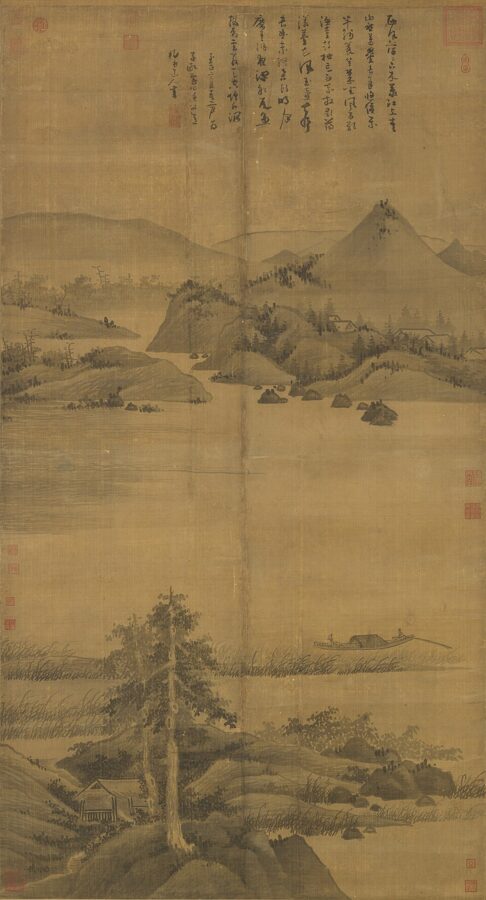
The song is about bending to the times rather than drowning in principle, and by Su’s day the fisherman was the patron figure of officials who had left, or been thrown out of, public life. Su called himself the Old Man of Canglang. The name was an argument: I am out, and I am fine.
His “Record of the Canglang Pavilion” (《沧浪亭记》), written around 1045, runs to under four hundred characters. He describes bamboo in front and water behind, “light and shadow meeting between window and door, especially suited to wind and moonlight”. He rowed there in a soft cap, drank, sang and whistled at the sky: “no old rustics came; the fish and birds shared my pleasure.”
Then the essay turns, as Song prose likes to, from scene to argument. “When the body is at ease, the spirit is untroubled; when seeing and hearing are free of falsehood, the Way becomes clear.” Of all the things that drown a man, he writes, office drowns him deepest. It reads like a man talking himself into a calm he has not quite reached.
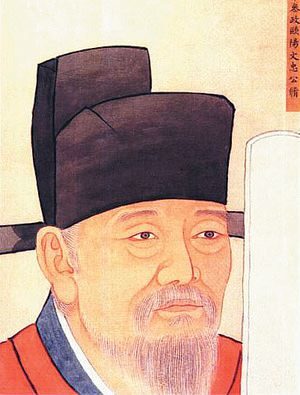
Ouyang Xiu replied to Su’s poems with a long poem of his own, written, as far as anyone can tell, without having seen the place, and its sly line about the breeze and the moon going cheap stuck to the garden for good. Su did not enjoy his bargain long. He was restored to a minor post in 1048 and died that year, aged about forty.
Generals, monks and governors
In the first years of the Southern Song the garden became the residence of Han Shizhong, one of the generals who held the line against the Jin, and Suzhou called it the Han Garden. He threw a bridge called Feihong, “Flying Rainbow”, between two hills. Under the Yuan (1271–1368) it passed to Buddhist monks as the Miaoyin and Dayun hermitages.
In 1546 a bookish monk named Wenying dug the old pavilion out of the ruins, rebuilt it and asked the essayist Gui Youguang for a new record. The princes of Wuyue, Gui wrote, had built palaces and parks at the height of their wealth and none survived; yet one disgraced official’s pavilion was still honored by a monk five centuries on.
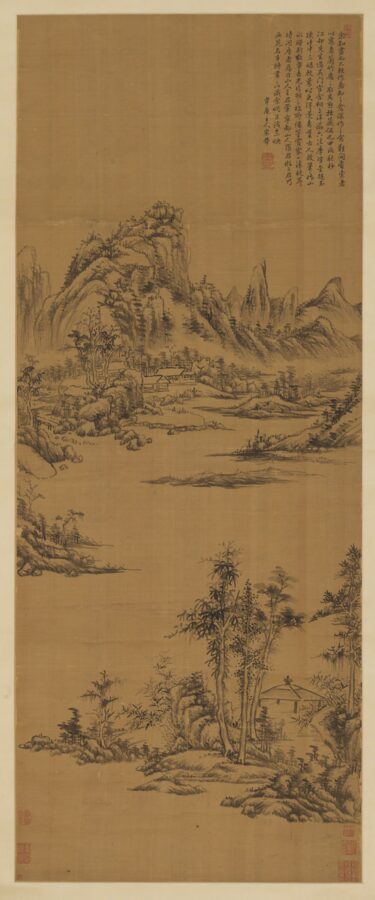
The garden you walk through took its shape in 1696, when Song Luo, governor of Jiangsu and a painter himself, rebuilt it and moved the pavilion from the waterside to the top of the mound. Sources disagree about the name plaque now on it: some say Song assembled it from Wen Zhengming’s clerical script, others credit the late Qing scholar Yu Yue.
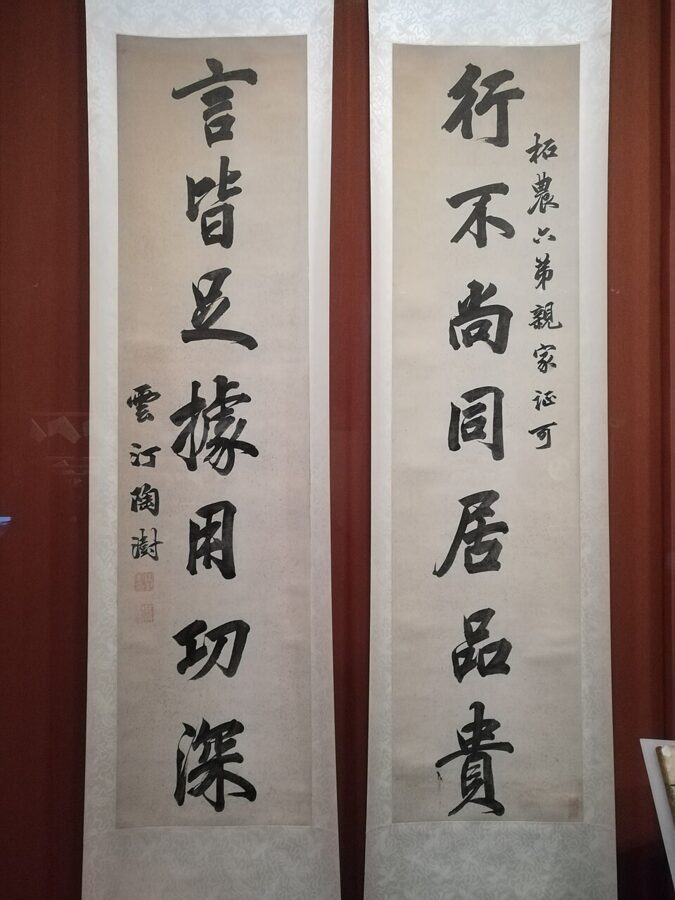
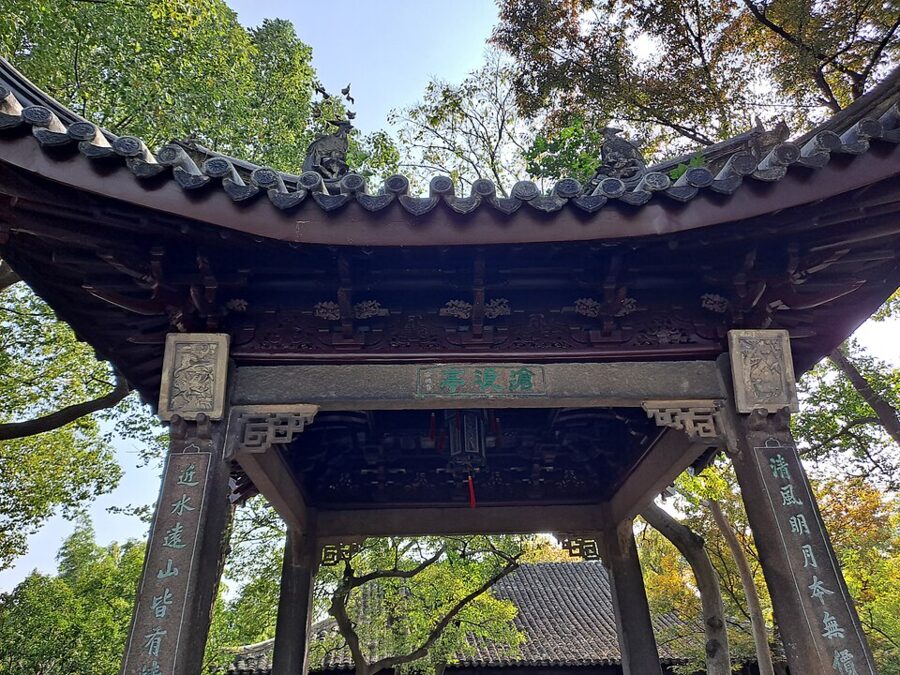
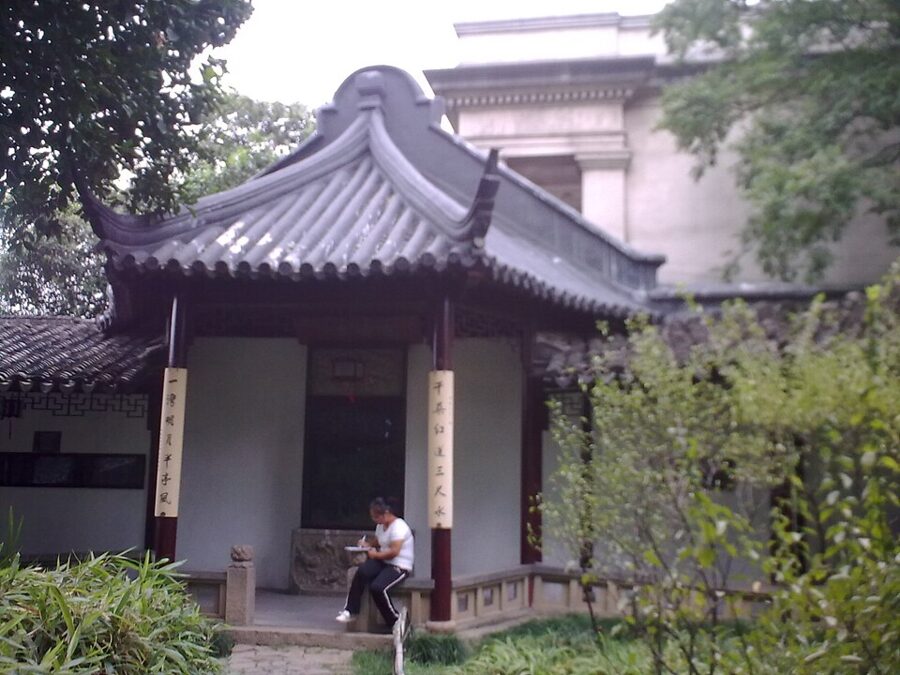
In 1827 another governor, Tao Shu, and the treasurer Liang Zhangju restored the garden again. Liang hung a couplet on the hilltop pavilion stitched together from two poets: Ouyang Xiu’s breeze-and-moon line and a line from Su Shunqin’s poem “Passing Suzhou”. In full: “The fresh breeze and bright moon are priceless; near waters and far hills all have feeling.”
The wars of the 1860s burned most of the garden, and in 1873 the governor Zhang Shusheng rebuilt it; most halls date from then. Before all that, in 1780, the writer Shen Fu lived with his wife Chen Yun just west of the wall, and his memoir “Six Records of a Floating Life” describes them carrying wine up to the hilltop pavilion to watch the Mid-Autumn moon.
In 1927 the garden was handed to the painter Yan Wenliang’s Suzhou art school, which opened a gallery inside and in 1932 built itself a three-story block with fourteen Ionic columns east of the pond. The school left in 1952. The garden opened to the public in the mid-1950s (sources give 1954 and 1955).
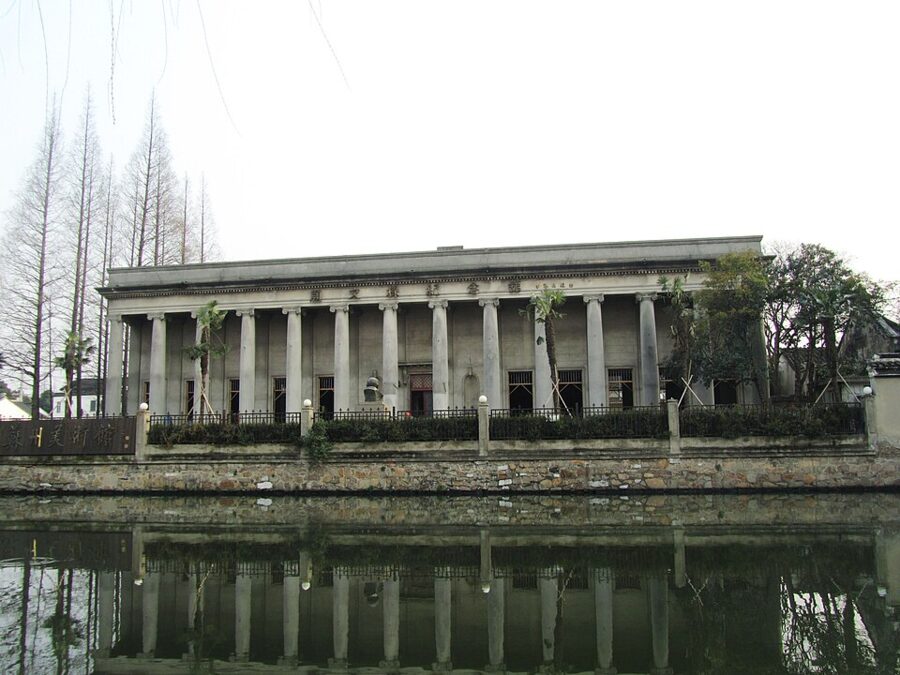

The water outside the wall
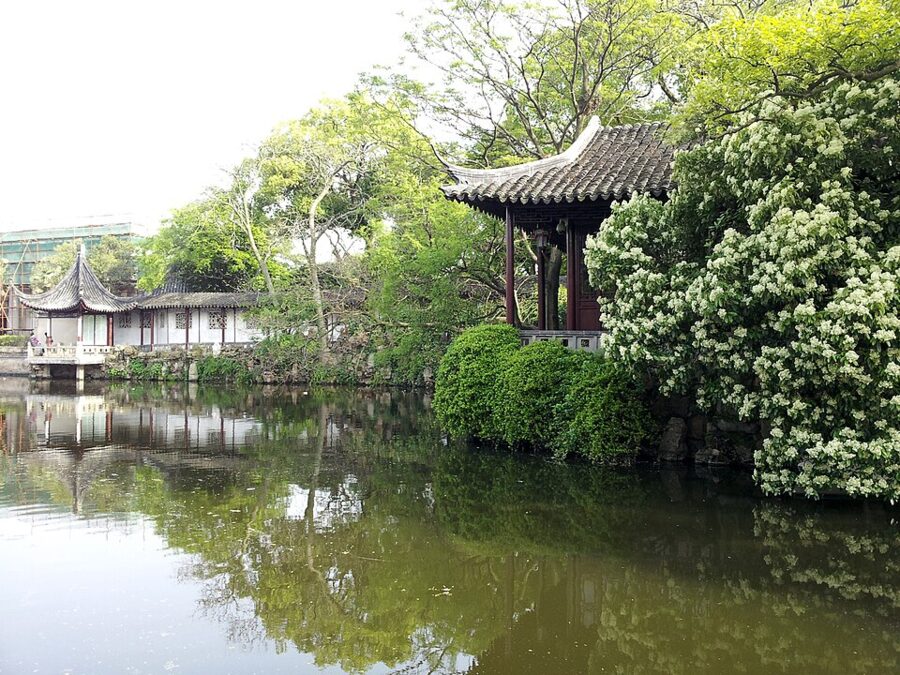
Start on the north bank, before you cross. The garden is meant to be read from here first: the corridor along the far shore, two small buildings reaching over the water, the hill behind. Chinese garden writers call this jiejing (借景), “borrowed scenery”, usually meaning a distant pagoda framed by a gate. Here the borrowing runs the other way: the garden lends its view to the street.
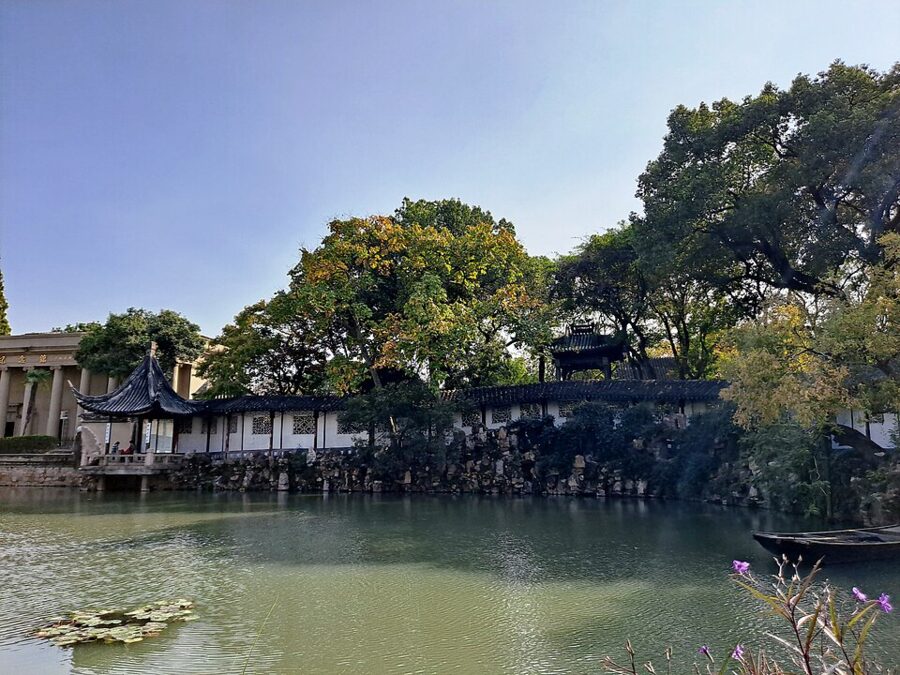

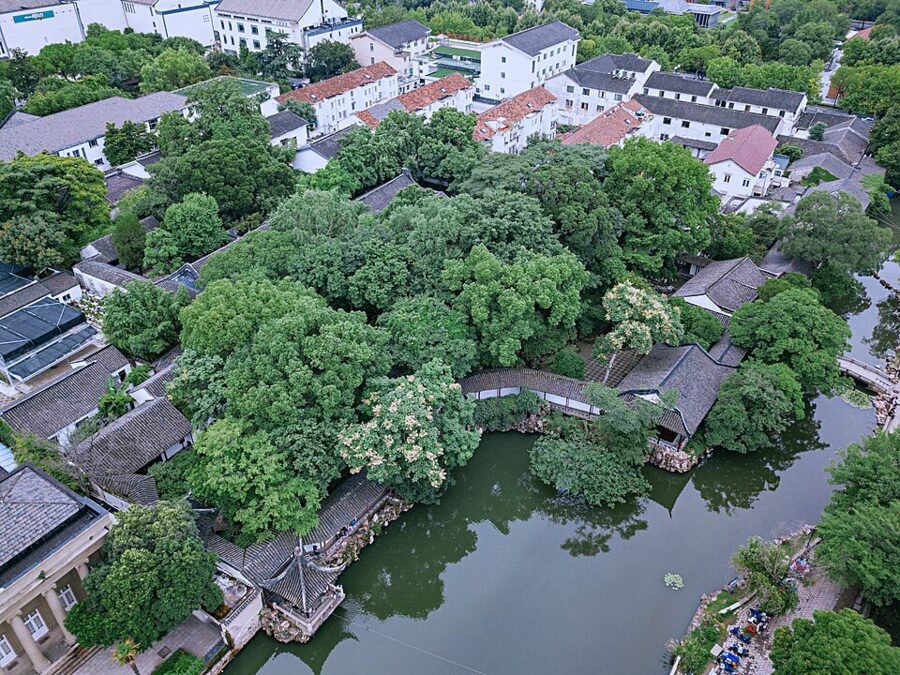
The pond is part of the Fengxi, a stream that ran through the south of the walled city. Su Shunqin found water on three sides, and every later builder kept it where he found it, arranging the garden so that someone inside always knows it is there.
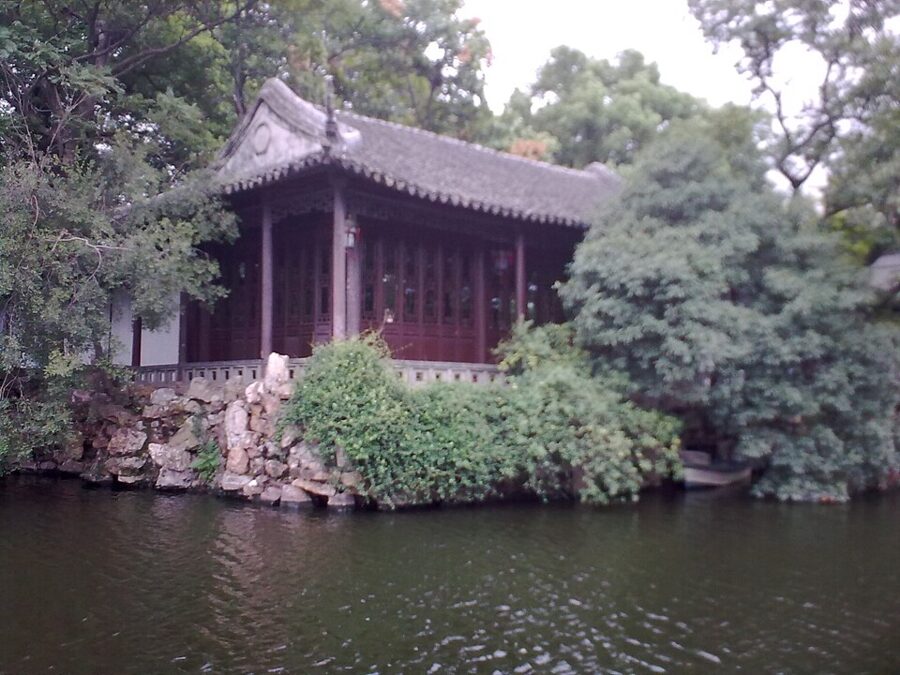

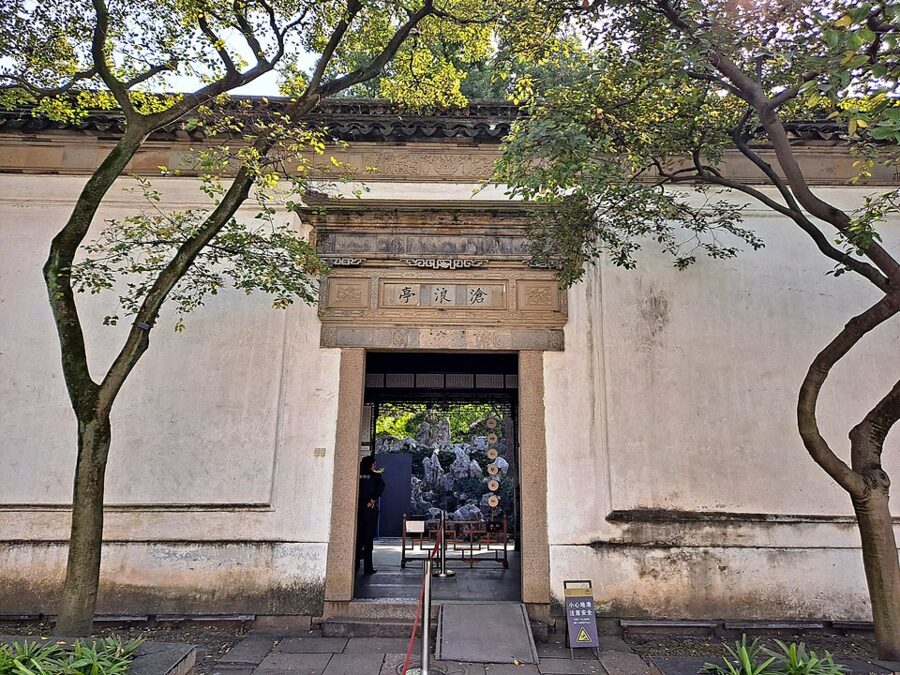
Cross the stone bridge to the gate. Along the waterfront to the left, the Mianshui Xuan (面水轩), the Facing the Water Pavilion, is an open-sided hall looking straight out over the pond. It had begun to sink, and the recent restoration lifted the whole building on micro-piles without disturbing the old trees beside it.
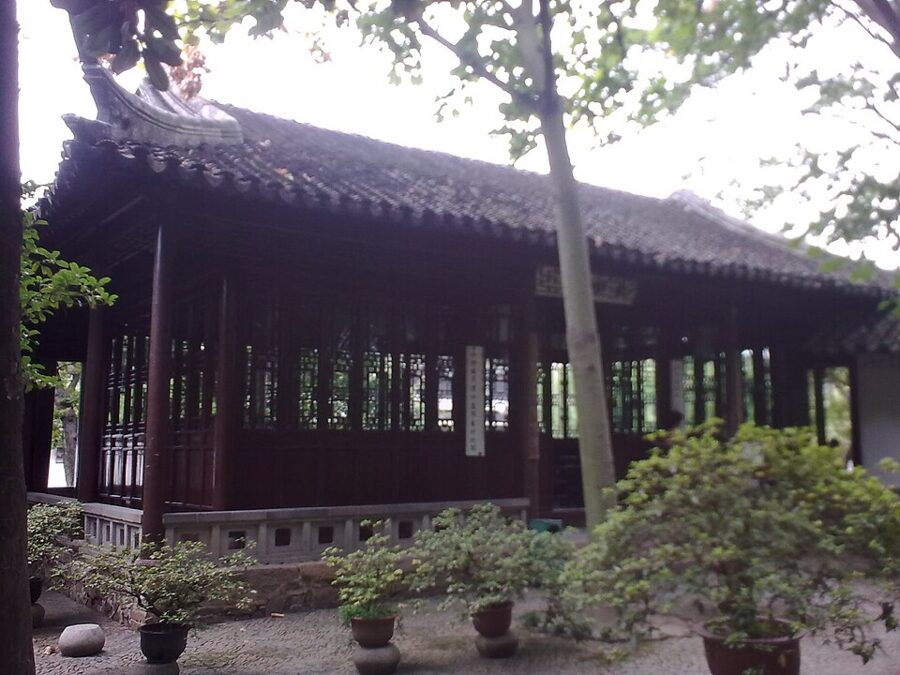

Further along, the Fish Watching Place (观鱼处) stands on stone legs over the water. Su Shunqin wrote of fish tumbling and chasing in the clear waves, and the restorers planted water plants here to bring the fish back. It is the best seat for the view you saw from the street, reversed.
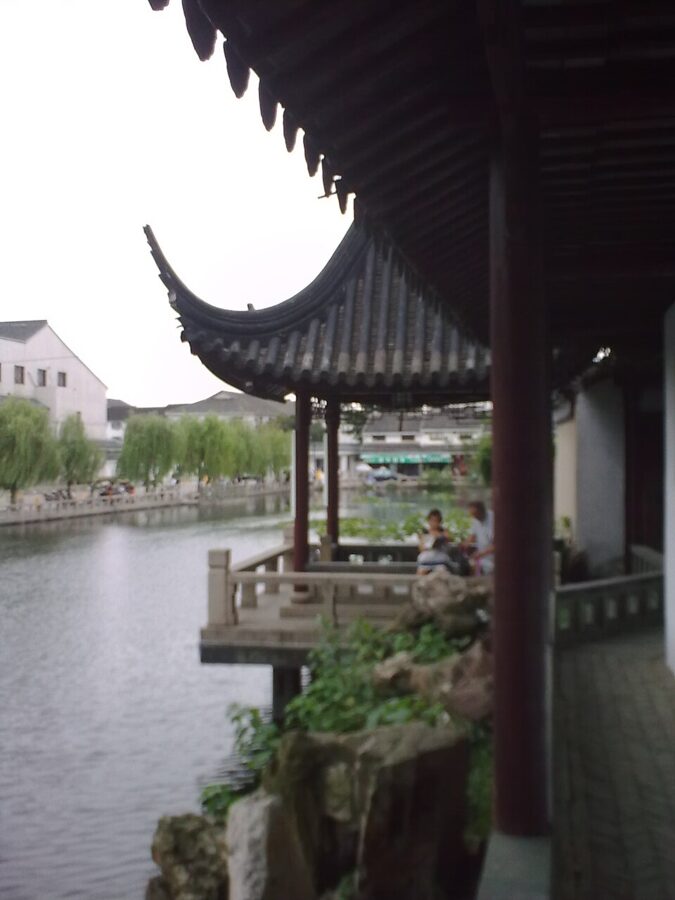

The double corridor
Linking these buildings is the garden’s famous fulang (复廊), or double corridor: one covered walkway split lengthwise by a wall. On the outer side you walk along the pond, on the inner side along the foot of the hill, and lattice windows in the wall keep giving each side glimpses of the other.
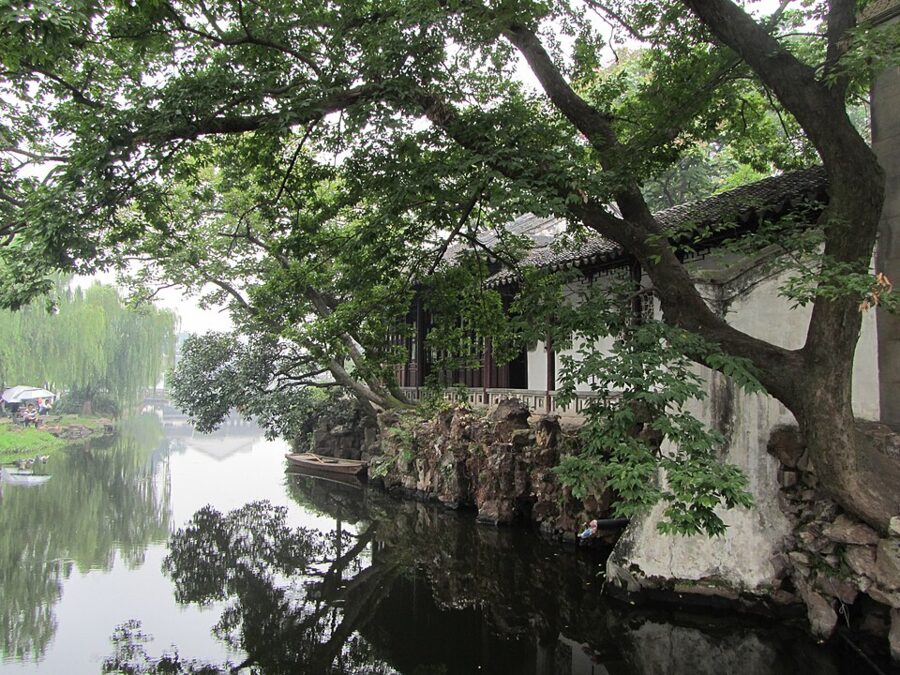

Because the corridor is open on its pond side, the roofline carries the eye from the hill out to the water and back, and a garden with no water of its own feels built around a lake. Suzhou writers count it among the three finest corridors in the city’s gardens. Walk it twice, once on each side.
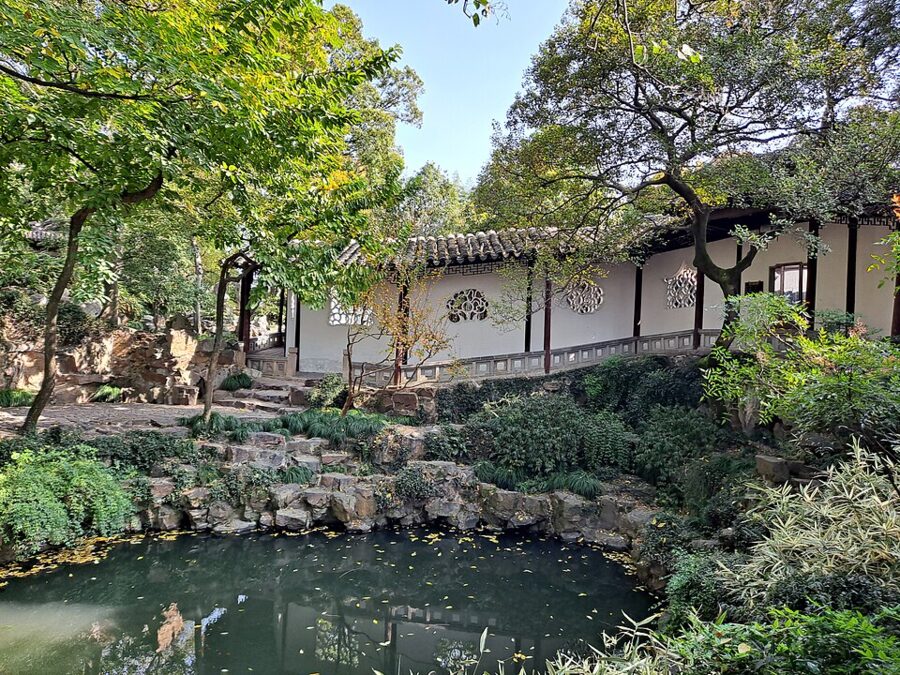

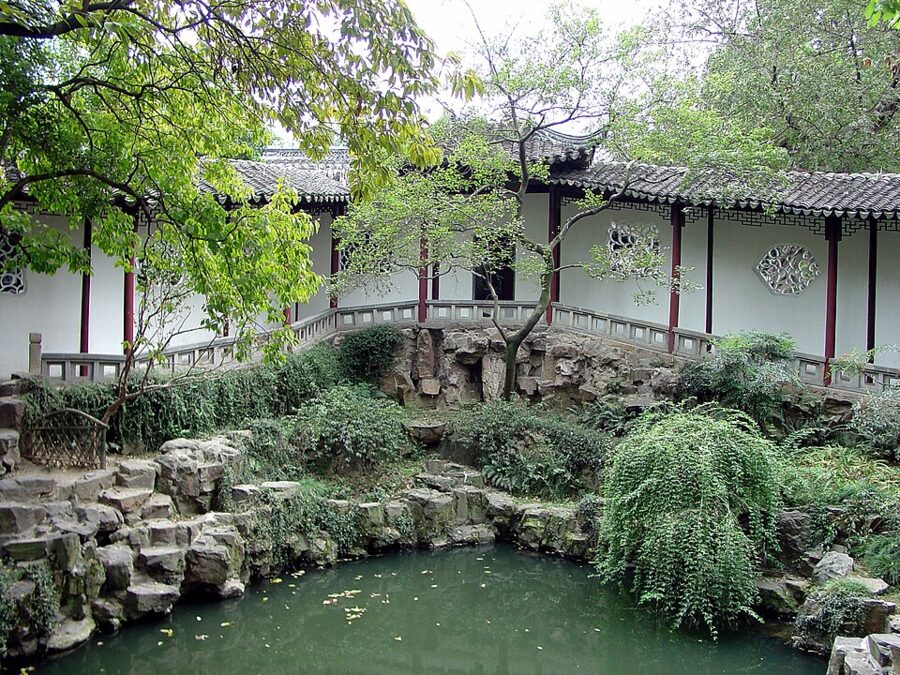

The hill and the pavilion on top
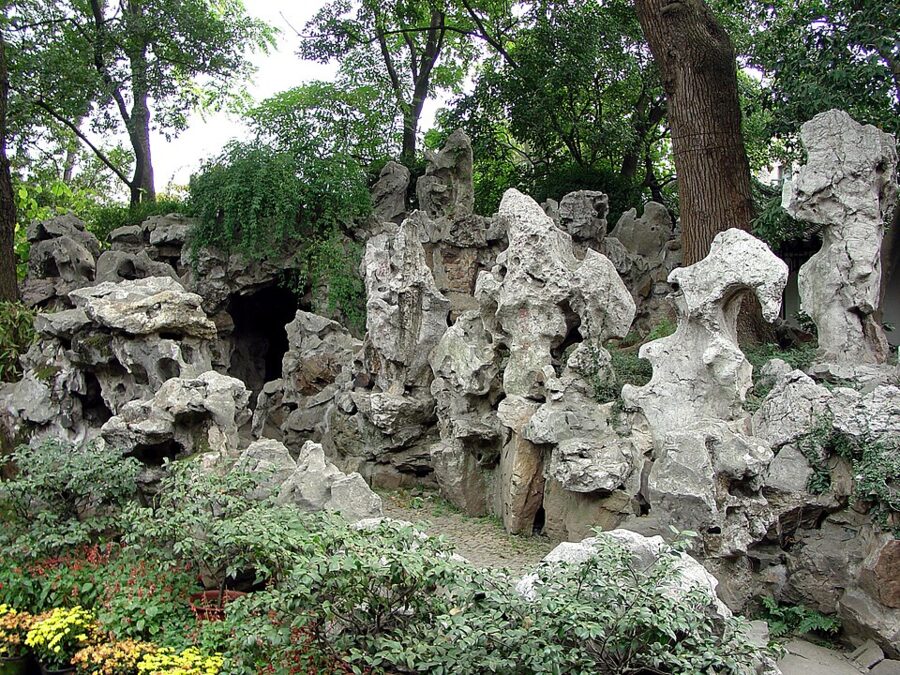
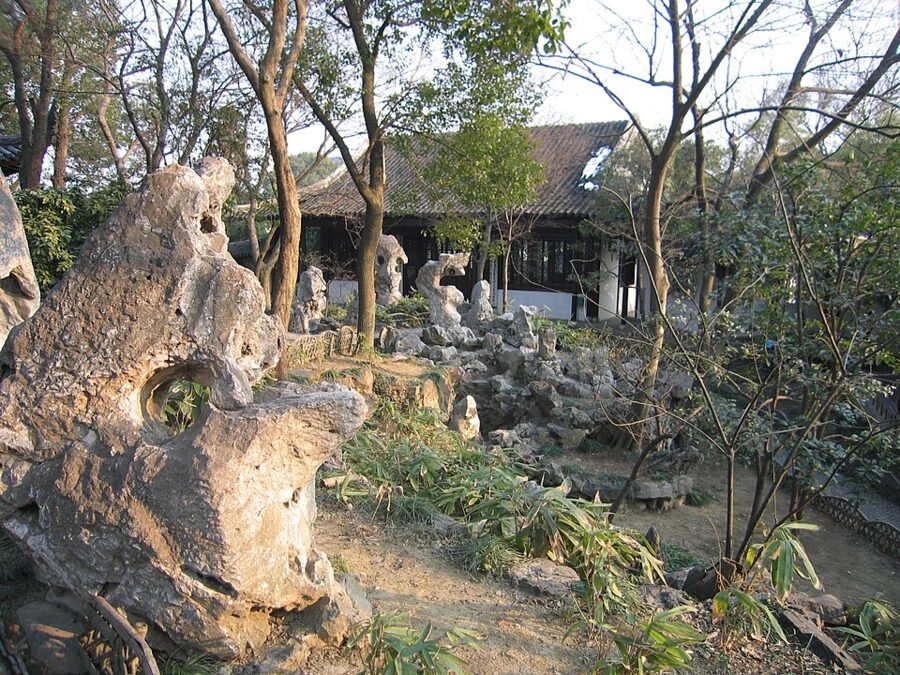
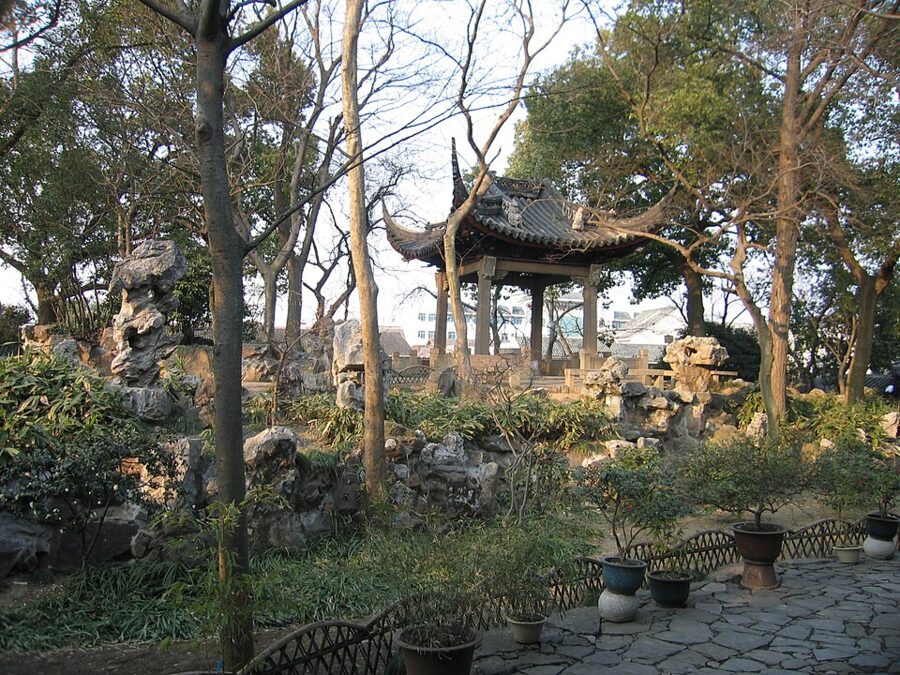
Inside the gate, the hill fills the view. It runs east to west through the middle of the garden, earth faced with rock, planted with old trees and thick with dwarf bamboo. Yellowstone in heavy blocks mixes with the pitted grey limestone Suzhou gardens favor, and there is a well on the summit and another in a small cave below.


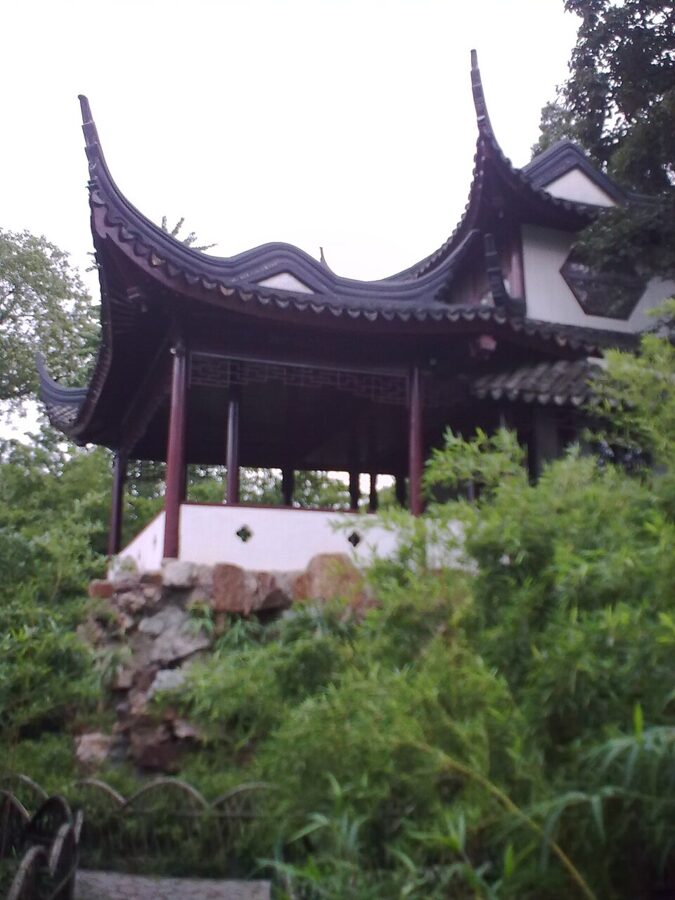
The path brings you to the Canglang Pavilion itself: square, open, built of stone, with sweeping eaves. Look at the columns and railings, carved with immortal children, birds, beasts and flowering trees. Liang Zhangju’s couplet is cut into the columns.
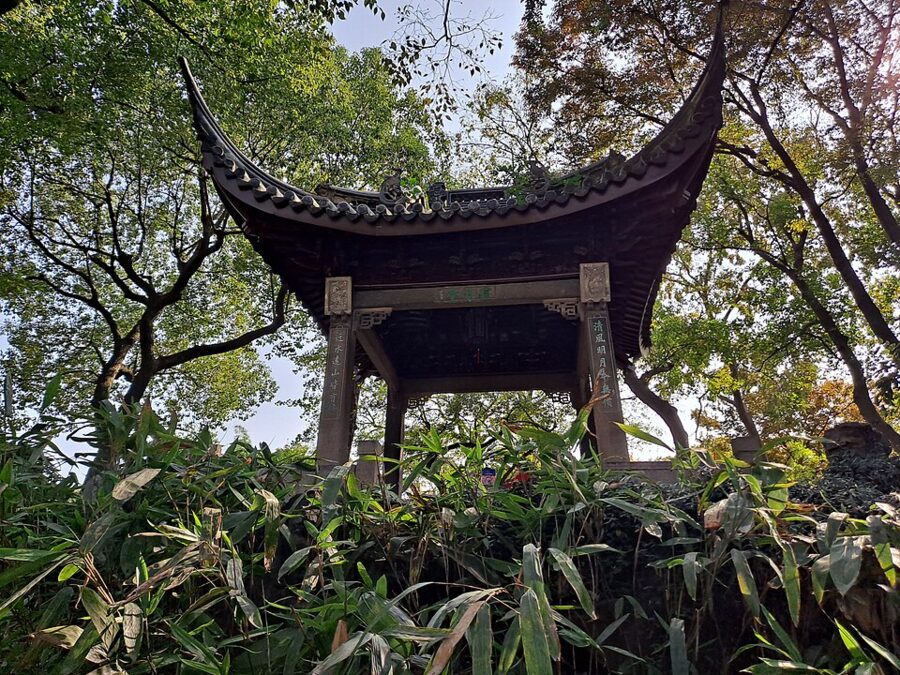


This is where Song Luo’s change matters. Su’s pavilion stood on the bank, a place to drink and watch water. Song’s stands on a peak, a place to survey everything, and his own record of the rebuilding gave the garden a more upright, scholarly tone. Both moods survive, one on the waterfront and one on the hill.

Halls, bamboo and a tower on the south side
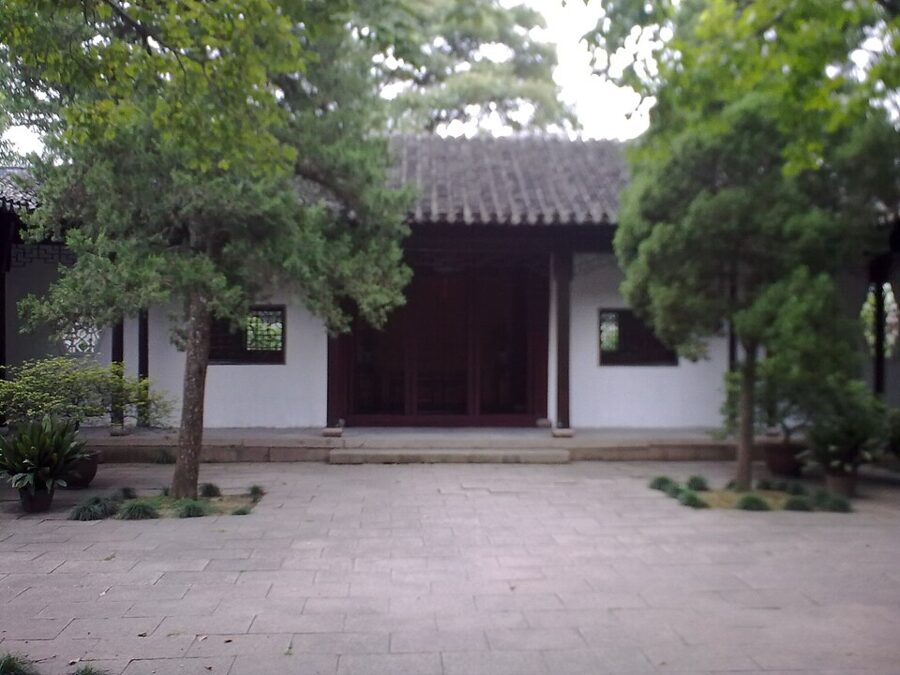
Come down the far side of the hill and the mood turns formal. The buildings cluster south of the mound, facing it. The largest is Mingdao Hall (明道堂), used in the Qing for lectures and literary gatherings; its name echoes Su’s line about the Way becoming clear.
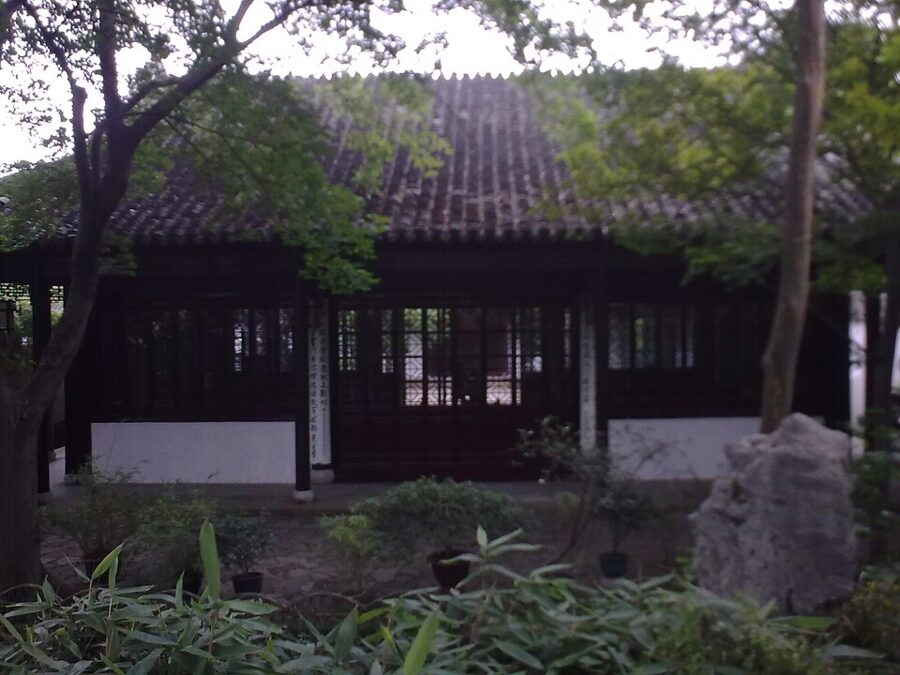

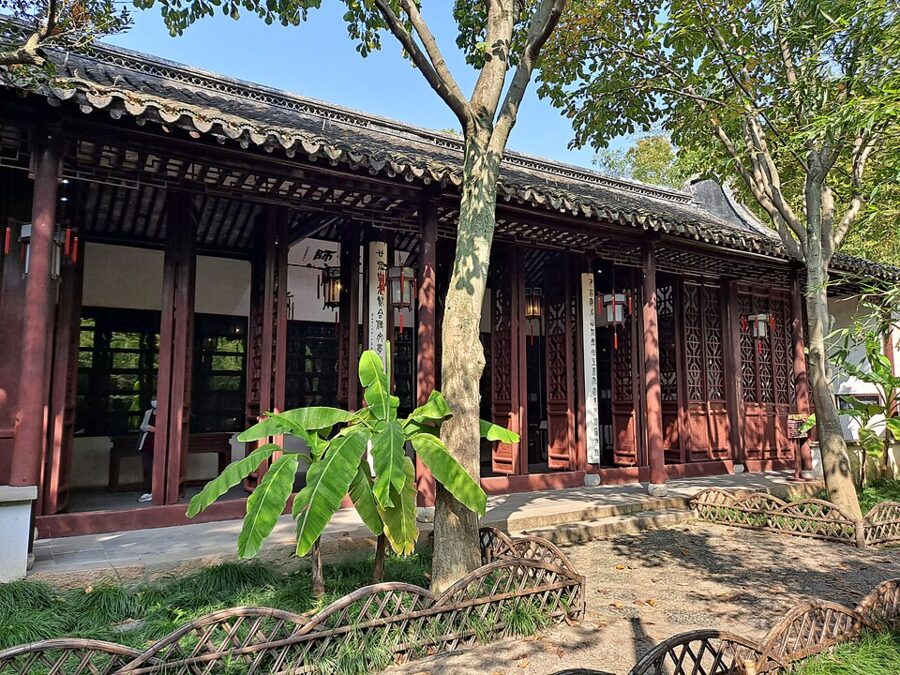

Behind it lie a courtyard called the Realm of Yaohua (瑶华境界) and, to the southwest, the Mountain-Viewing Tower (看山楼), raised over a grotto-like room called the Yinxin Stone House (印心石屋). That name comes from a plaque the Daoguang Emperor wrote for Tao Shu in 1835, recalling the rock in a Hunan river beside which he had studied as a boy. The tower once looked over the city wall to the hills southwest of Suzhou; now it is mostly rooftops, but the climb is short.


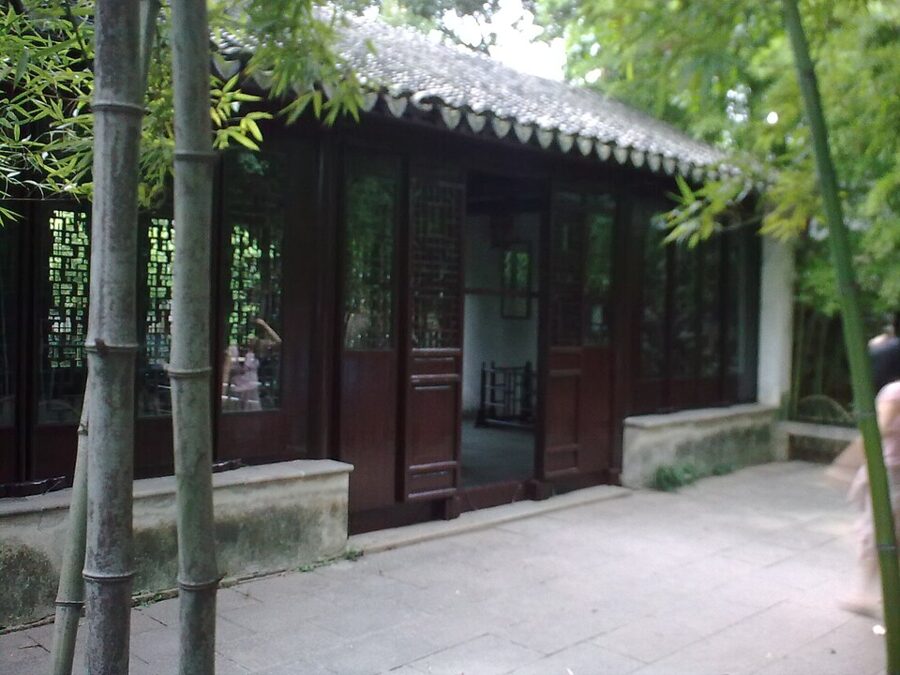
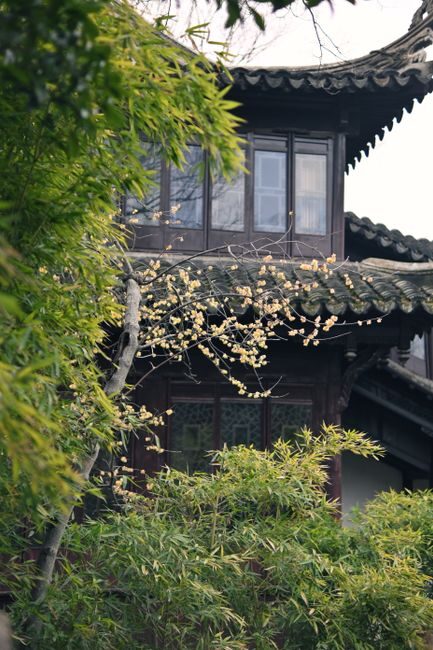
West of the tower, the Cuilinglong (翠玲珑) is a run of small linked rooms in a bamboo grove, named from a line of Su Shunqin’s about sunlight coming green through bamboo. On a bright day the whole room turns green. If you have time to sit anywhere, I would save it for this corner.

Details worth stopping for
One hundred and eight windows
The figure usually given is 108 lattice window patterns, no two alike, set into the double corridor and the walls throughout. The Chinese term is louchuang (漏窗), “leaking windows”: they let through air, light and part of a view, never the whole picture.
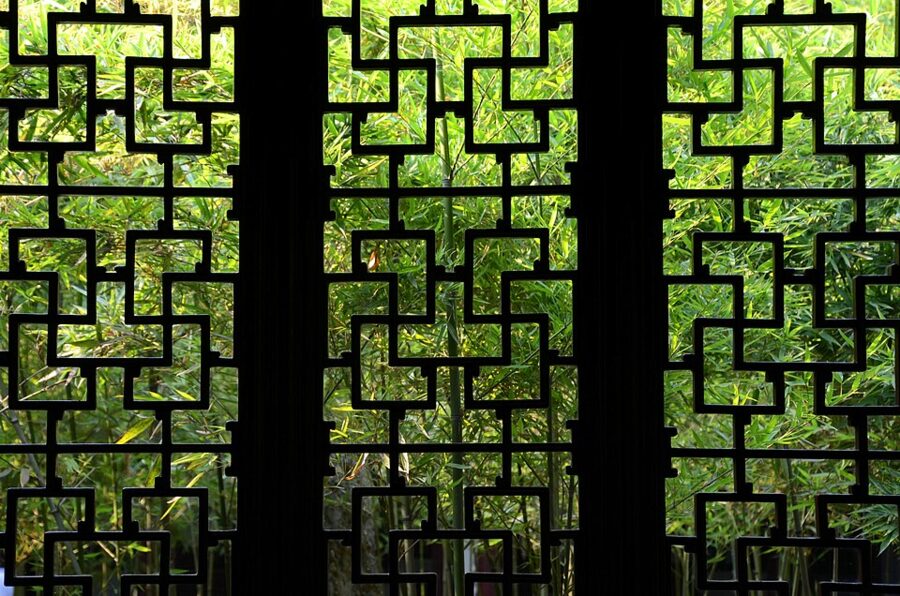

Most frames are square or polygonal, but there are circles, fans, crab-apple blossoms, vases, pomegranates, autumn leaves and peaches too. A hundred and eight is a lucky number, and some local writers suspect a tidy figure rather than a census, though nobody has published a different count.
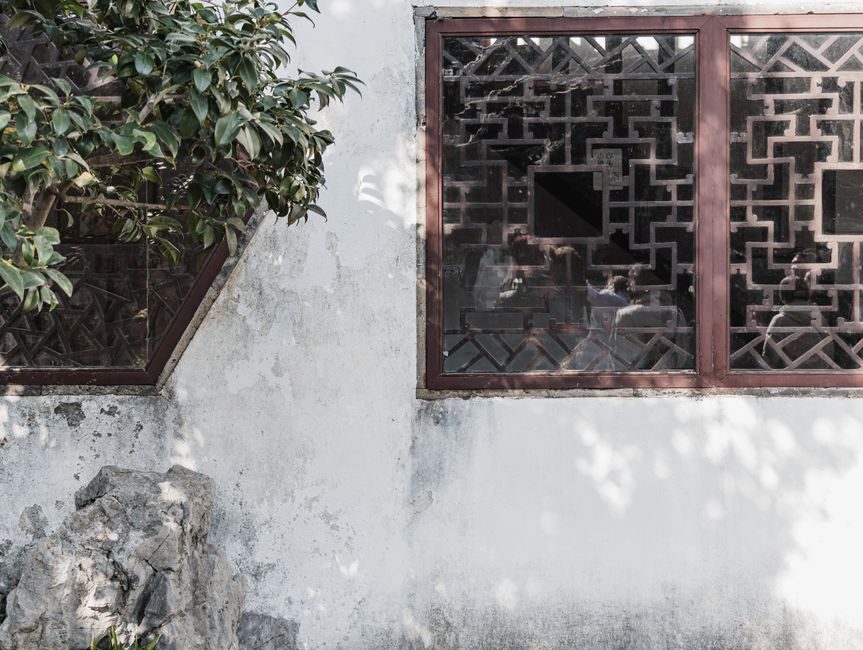
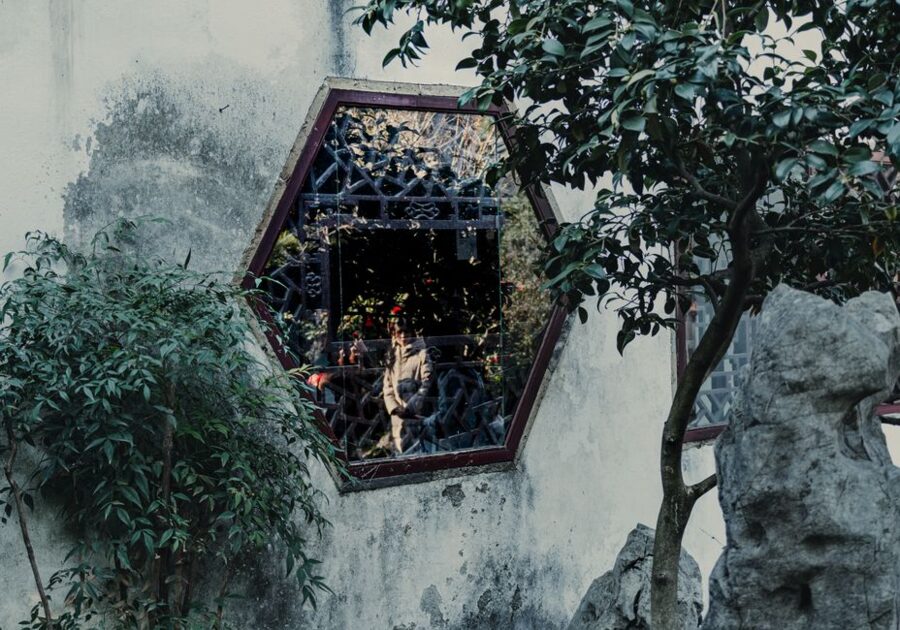
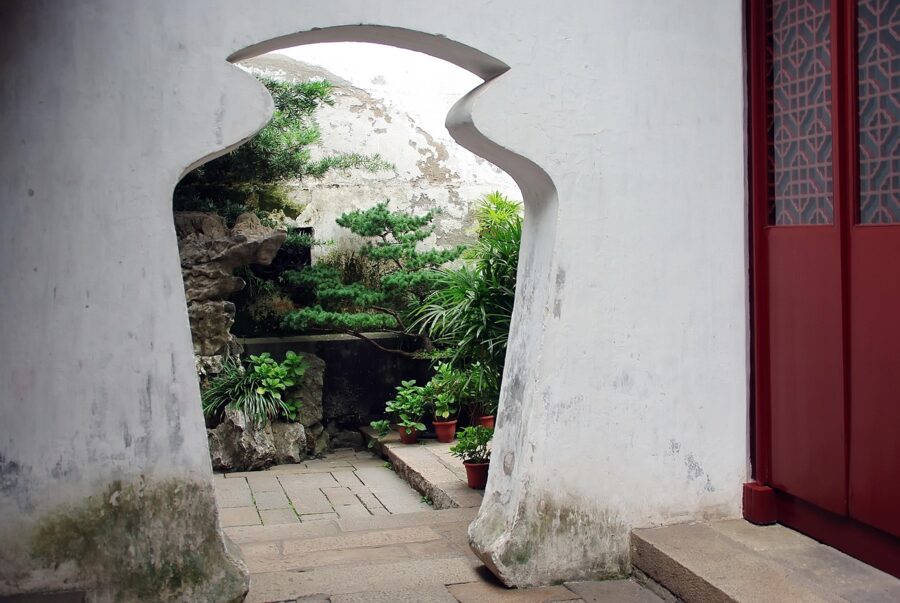
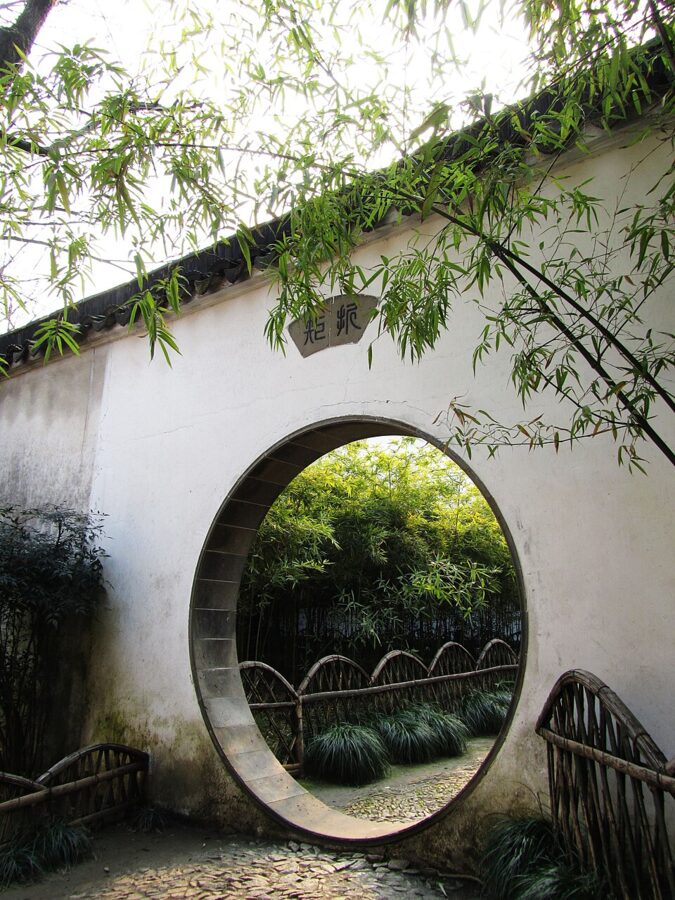
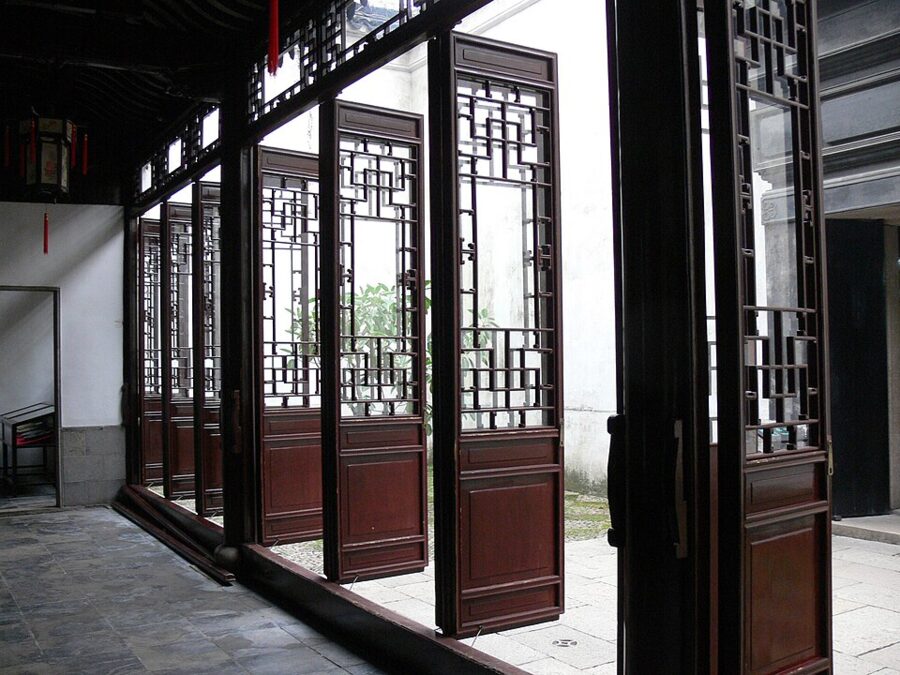
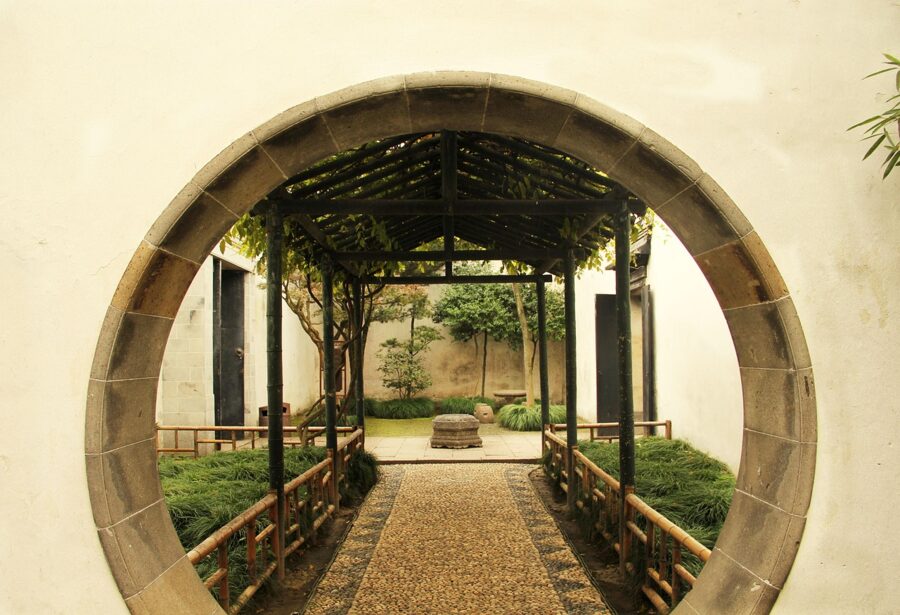
Doors play the same game at a larger scale. Watch for the moon gates, which frame bamboo the way the windows frame rock, and for the lattice doors along the halls, which fold back to open a room onto its courtyard.


The Hall of Five Hundred Sages
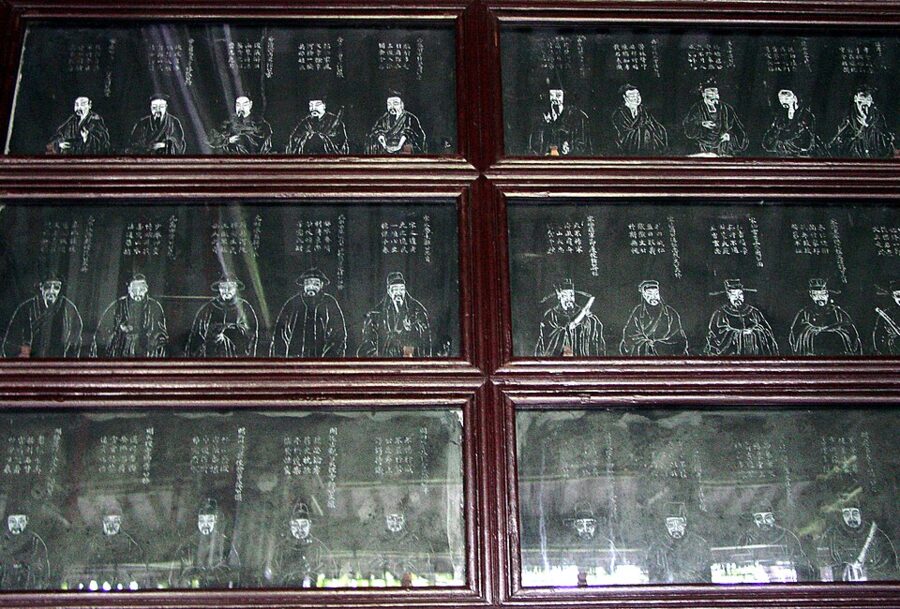
In the northwest corner is the building most people pass too quickly. The Hall of Five Hundred Sages (五百名贤祠) was Tao Shu’s project: in 1827 he saw over three hundred portraits of famous men of the region in the collection of Gu Yuan, enlarged the set to five hundred and had the painter Kong Jiyao redraw them for engraving on stone.
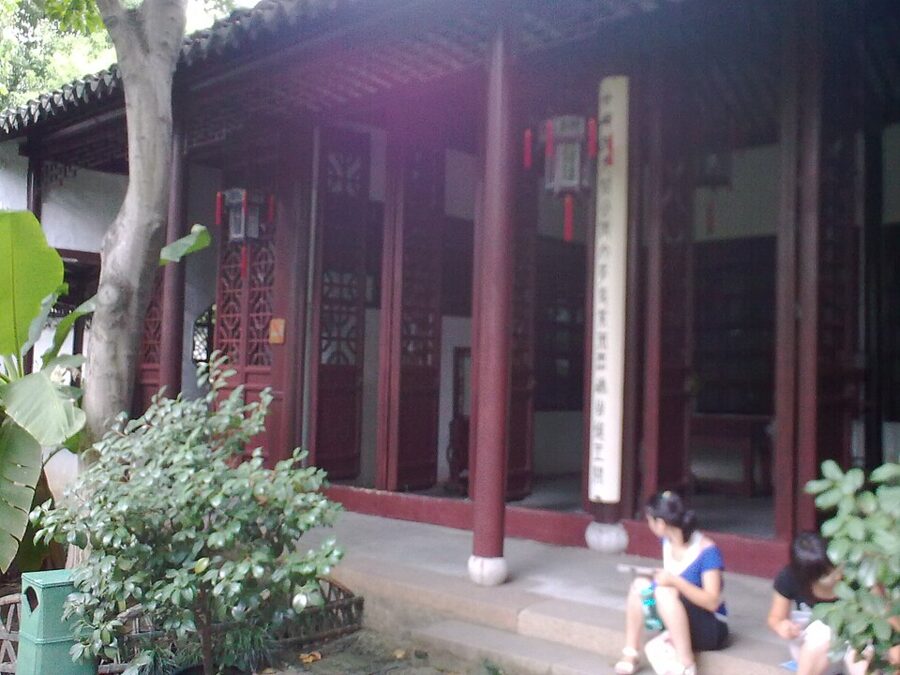

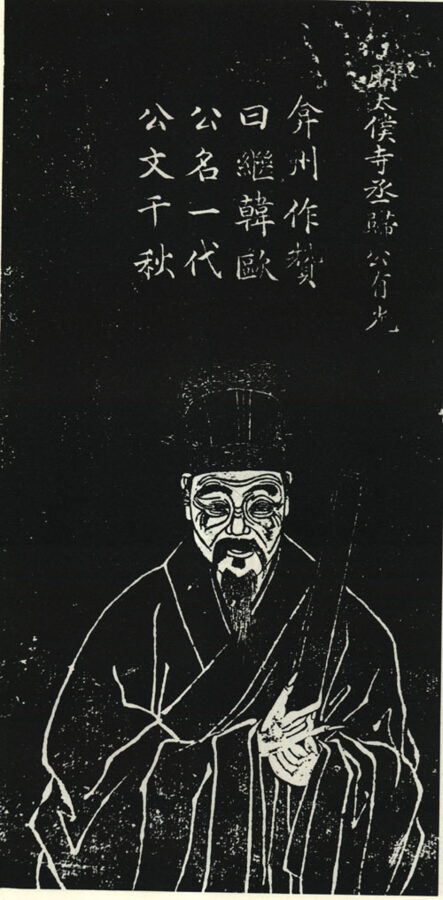
The hall opened in 1828, burned in 1860 and was rebuilt in 1873, when the set grew to 594 portraits, though the name stayed at five hundred. Set into three walls, they run from the Spring and Autumn period to the Qing: native sons, governors, scholars, generals, anyone with a claim on Suzhou. Each carries a short engraved eulogy.

Look for Gui Youguang among them. The essayist who wrote the garden’s second record in 1546 ended up on its walls three centuries later, the kind of closed circle Suzhou enjoys.
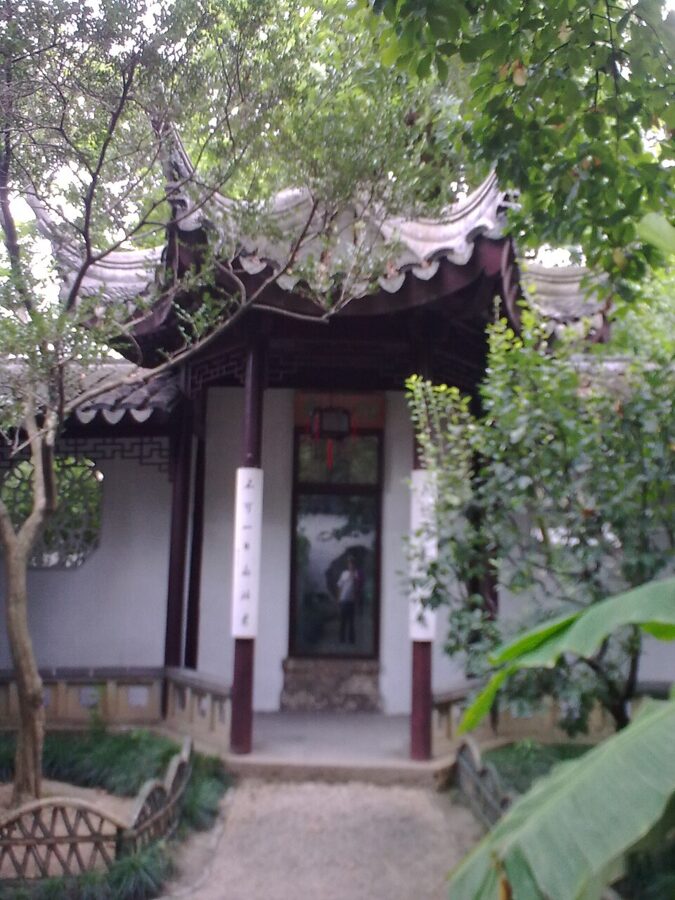
Beside the hall stands the little Yangzhi Pavilion (仰止亭), named for the Book of Songs line about gazing up at a high mountain. You leave the portraits and look up.

The Pavilion of Pure Fragrance and the plum room
Two buildings are named for scent. The Qingxiang Guan (清香馆), the Pavilion of Pure Fragrance, faces a courtyard of osmanthus, which flowers in late September and October. Near the hill, the Wenmiaoxiang Room (闻妙香室) takes its name from a line of Du Fu about smelling a wondrous fragrance when the mind is clear, and was the garden’s place for plum blossom.
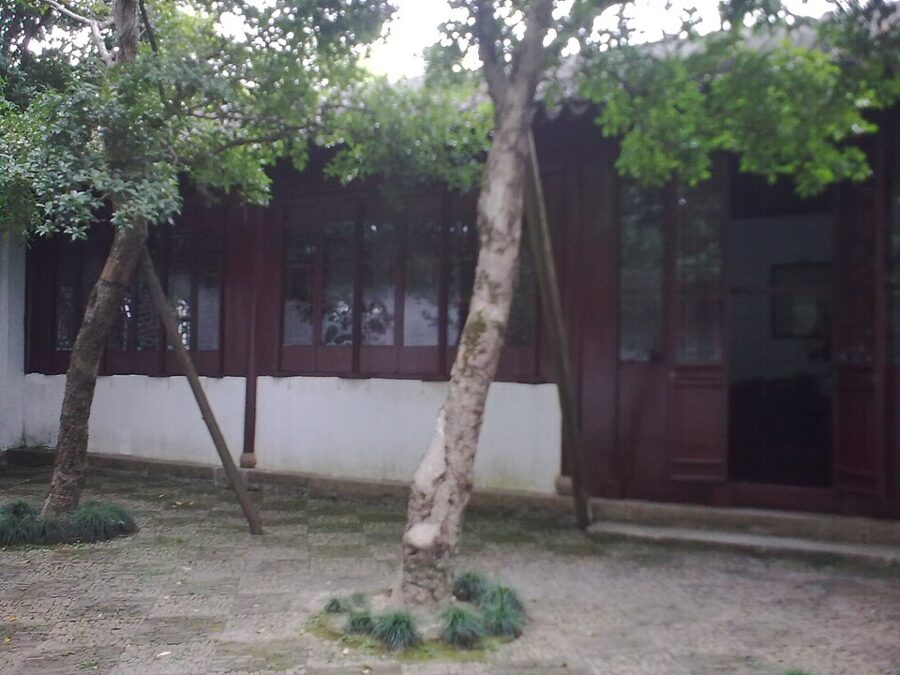

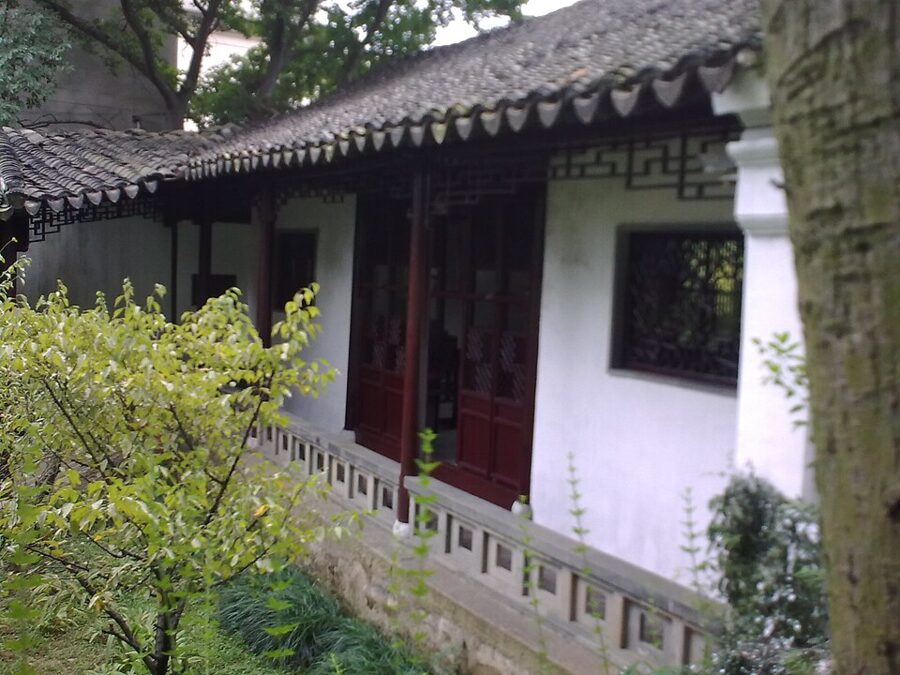

Three more stops repay a few minutes. The Imperial Stele Pavilion keeps inscriptions of the Kangxi and Qianlong emperors. The little Xianyin Pavilion, “for idle chanting”, stands between the Fish Watching Place and the climb, and the Lotus Water Pavilion sits by the water on the way out.
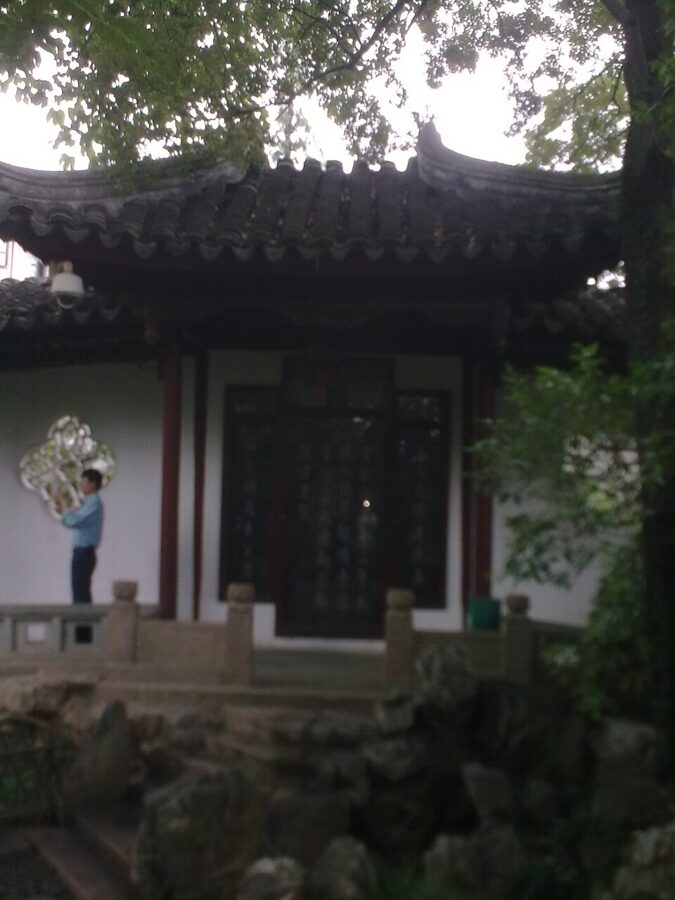

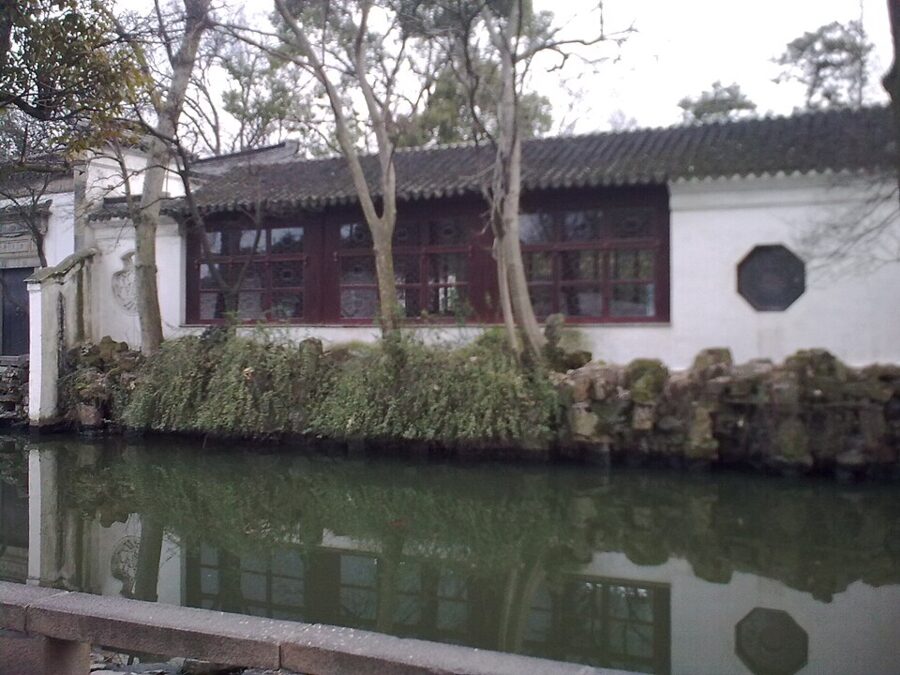


One of nine: the UNESCO listing
The Classical Gardens of Suzhou entered the World Heritage List in 1997 with four gardens: the Humble Administrator’s Garden, the Lingering Garden, the Master of the Nets Garden and the Mountain Villa with Embracing Beauty. In 2000 the listing grew to nine, adding the Canglang Pavilion, the Lion Grove Garden, the Garden of Cultivation, the Couple’s Retreat Garden and the Retreat and Reflection Garden.
UNESCO’s description of the Suzhou gardens names the Canglang Pavilion as the earliest, built in the early eleventh century on the site of an earlier garden. Suzhou puts it more simply: the Canglang Pavilion, the Lion Grove, the Humble Administrator’s Garden and the Lingering Garden are the “four great gardens”, one each for the Song, Yuan, Ming and Qing.
The Song label needs a footnote. The site descends from Su Shunqin’s, but the buildings are Qing and the plan is Song Luo’s. What survives from the Song is an idea: a hill, a pond, and a man explaining in prose why he would rather sit by them than hold office.
Kunqu in the garden at night
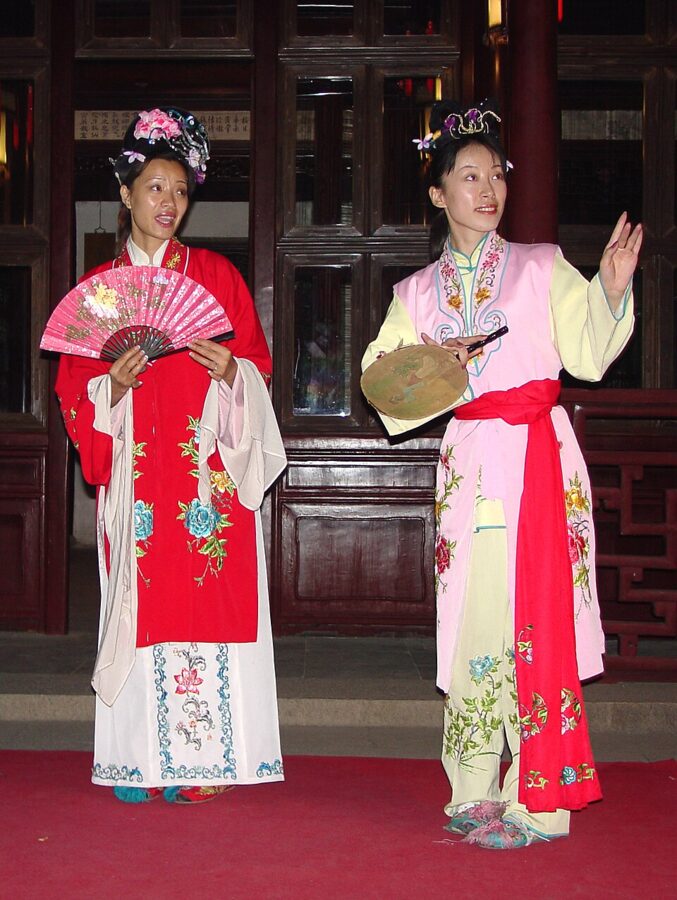
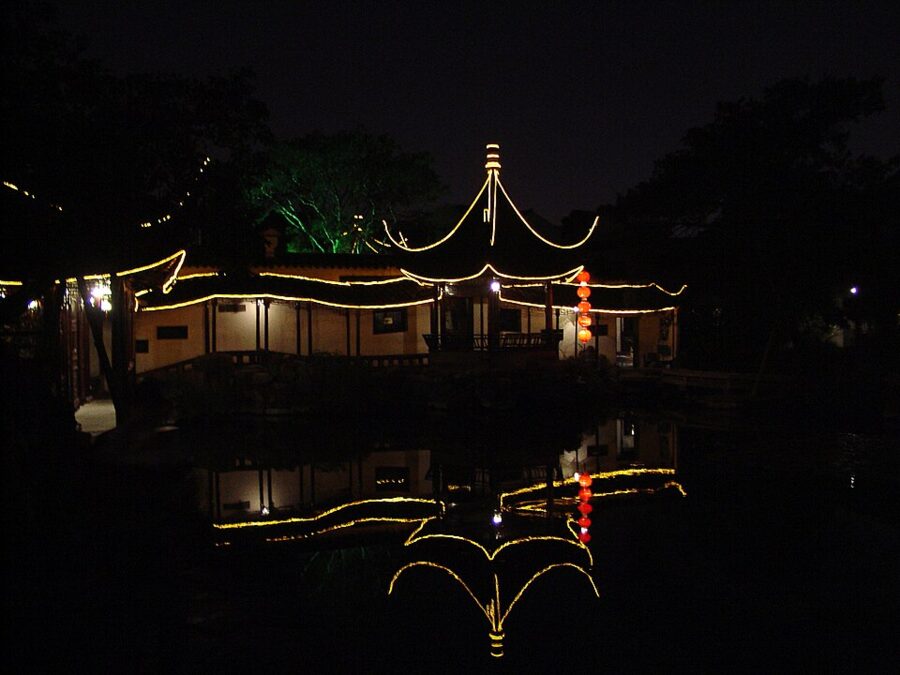
On selected evenings the garden becomes a stage. The Jiangsu Suzhou Kunqu Opera Theater performs a garden version of “Six Records of a Floating Life”, staged since 2017, in which the audience walks the garden with the actors. It opens with Shen Fu arriving by boat on the outer pond, and scenes play in the Facing the Water Pavilion, the Fish Watching Place, the Cuilinglong and the Wenmiaoxiang Room.
It is still running. The Suzhou culture bureau’s performance notice for June 2026 listed a 19:30 show here on June 6, and current listings show the next on November 28, 2026, 19:00–21:30. Earlier seasons began with an hour of tea and music in the Ke Garden across the street.
The 2026 price is not published. It has always been priced as theater, not as a garden ticket: in 2021 it was listed at 1,880 yuan, or 1,580 yuan early. For Kunqu at an everyday price, the Master of the Nets Garden’s night program, below, is the alternative.

Tickets, hours and the quiet hours
The garden is at 3 Canglangting Street, Gusu District. The Suzhou gardens bureau’s opening-hours table gives 07:30–17:30 in March–October (last entry 17:00) and 07:30–17:00 in November–February (last entry 16:30). In summer 2026 it also opened 17:30–21:00 from July 1 to August 31.

Admission is about 20 yuan in the high season and 15 yuan in the low season, so 15 yuan in late November 2026. Most sources put the high season at March–October, though a few count June as low season too. Children aged 6–18, full-time students and visitors aged 60–69 pay half; children under 6 or under 1.4 meters and visitors over 70 enter free with ID.
Tickets are real-name and sold in time slots through the Suzhou Gardens Tourism (苏州园林旅游) WeChat official account, which sells the other city-run gardens too. There is a ticket category for visitors without a mainland ID card: book with your passport number and show the passport at the gate. A joint ticket with the Ke Garden costs about 40 yuan, against 25 for the Ke Garden alone.
Allow an hour and a half to two hours. The first hour after 07:30 is the quiet one, weekdays are calmer, and the outer pond is best in morning light. Typhoons can close the gardens at short notice: they shut during Typhoon Bavi in July 2026, and the city announced their reopening at noon on July 13.
Getting there
The nearest metro station is Sanyuanfang on Line 4, about eight minutes’ walk from Exit 2. Zhuhuiqiao on Line 3 (Exit 1, about 600 meters) and Nanmen on Lines 4 and 5 (Exit 2, about 800 meters) also work, and several buses stop at Canglangting.
The Ke Garden across the street
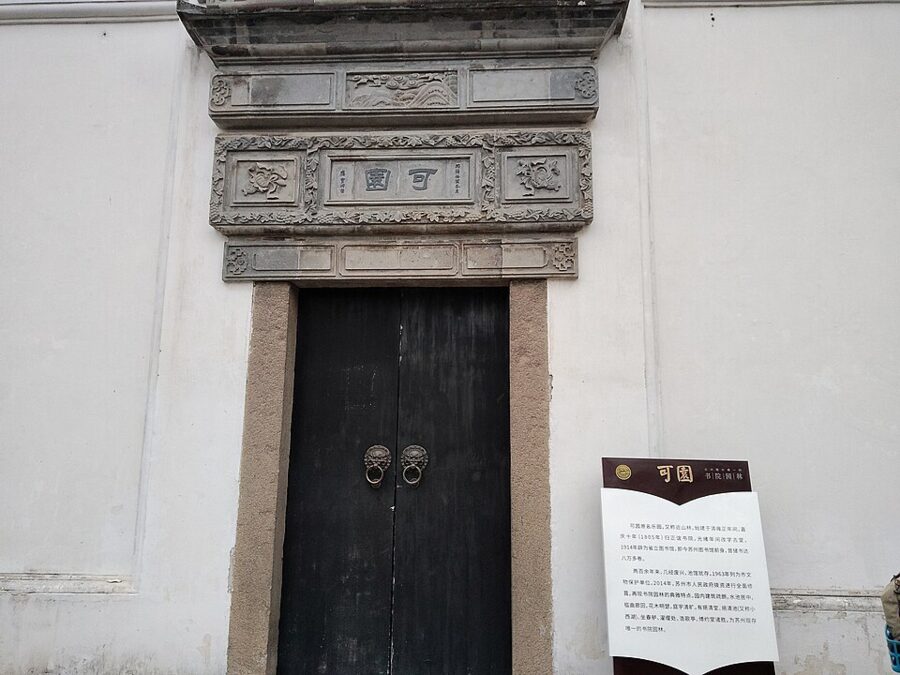
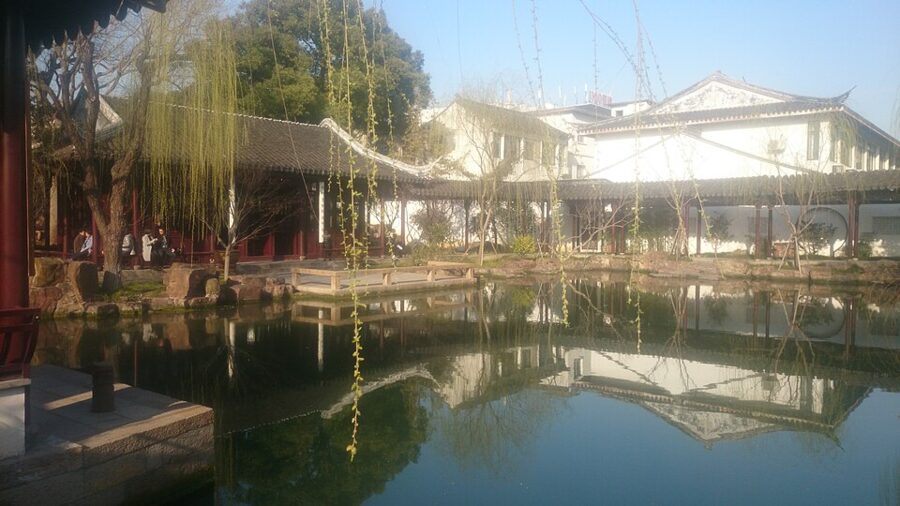
Directly opposite the gate, the Ke Garden (可园) was once part of the same estate and later housed the Zhengyi Academy, making it Suzhou’s only academy garden. It is smaller and plainer, built around a willow pond, and the joint ticket covers both in two hours. Where the Canglang Pavilion is a hermit’s garden, this one was built for students.

With the Master of the Nets Garden
The Master of the Nets Garden (网师园) is about a kilometer east, a fifteen-minute walk along Shiquan Street, and the two make the best half-day pairing in Suzhou. They share a theme. The Master of the Nets began in the Southern Song as a retreat called Yuyin, “the fisherman in hiding”, and when Song Zongyuan rebuilt it in the Qianlong era he renamed it with the local word for a fisherman. Both gardens are named for the man in the boat.
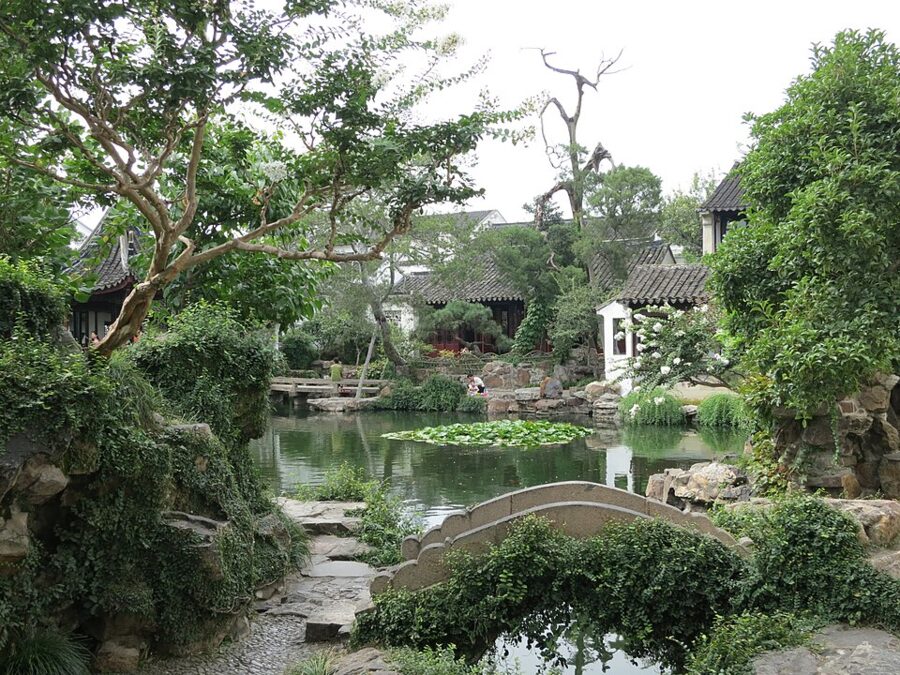

The Master of the Nets covers about 0.54 hectares, half the size of the Canglang Pavilion, and puts its water at the center. Connoisseurs rank its handling of scale above any other, and a courtyard at the Metropolitan Museum of Art in New York was modeled on one of its studios.
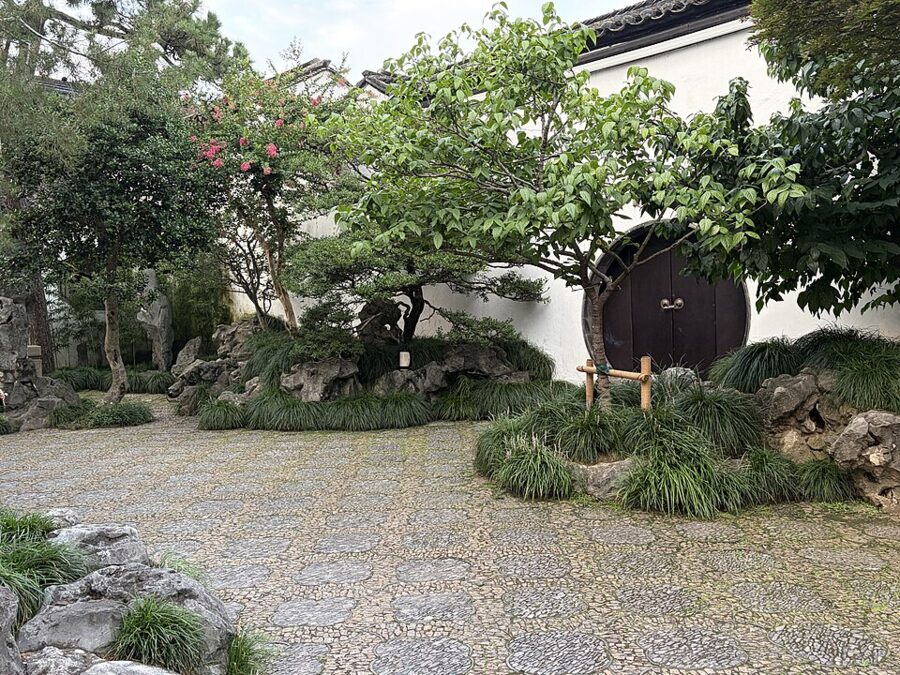
Its entrance is on Kuojiatou Lane, and its daytime hours follow the same table, under the same management office. Tickets are about 30 yuan in winter and 40 yuan in the main season, though sources split on which months count as which; book on the same WeChat account.
Its night garden, running since 1990, sets short performances of Kunqu, pingtan storytelling and instrumental music in different corners. The 2026 program was contracted for six nights over the Spring Festival, then March 6 to November 15, with three more on January 1–3, 2027, according to the city’s procurement notice. Tickets were 120 yuan in 2026.

My order for the day: be at the Canglang Pavilion at 07:30, walk the outer bank first, then the double corridor on both sides and the hill. Cross to the Ke Garden around 09:30, walk east along Shiquan Street for lunch, and do the Master of the Nets in the early afternoon.
Before you leave, go back to the north bank and look across once more. The water is still outside the wall, the breeze is still free, and the moon on a clear night costs nothing. Su Shunqin paid forty thousand cash to sit beside them, and nearly a thousand years later the price of looking has come down to 15 yuan.