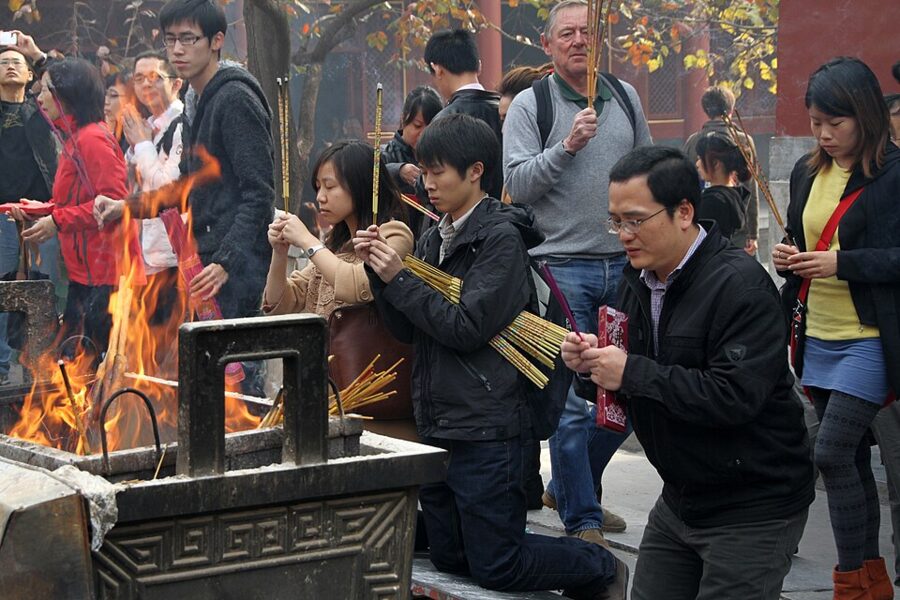

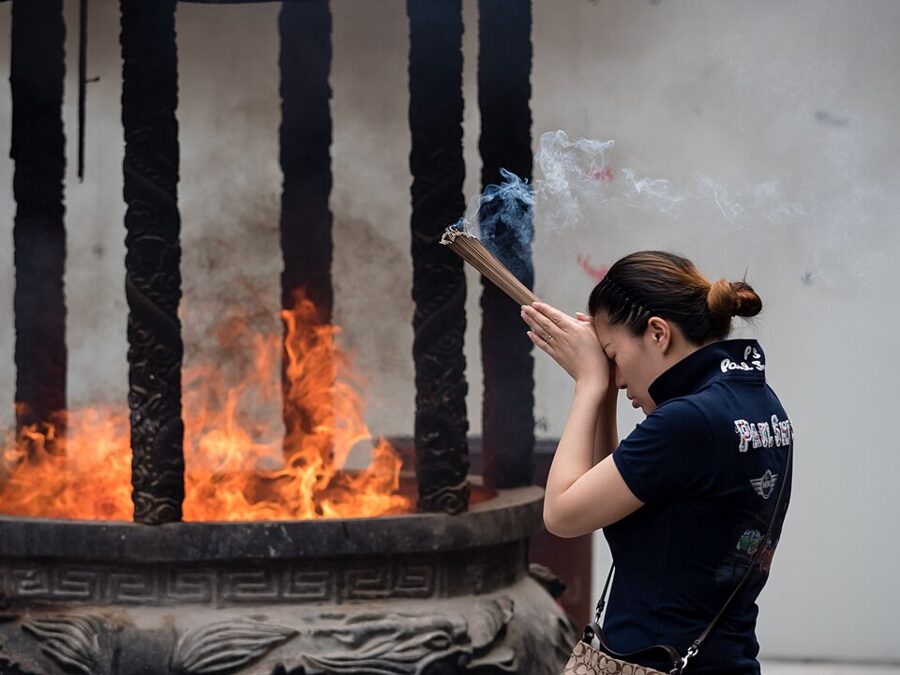
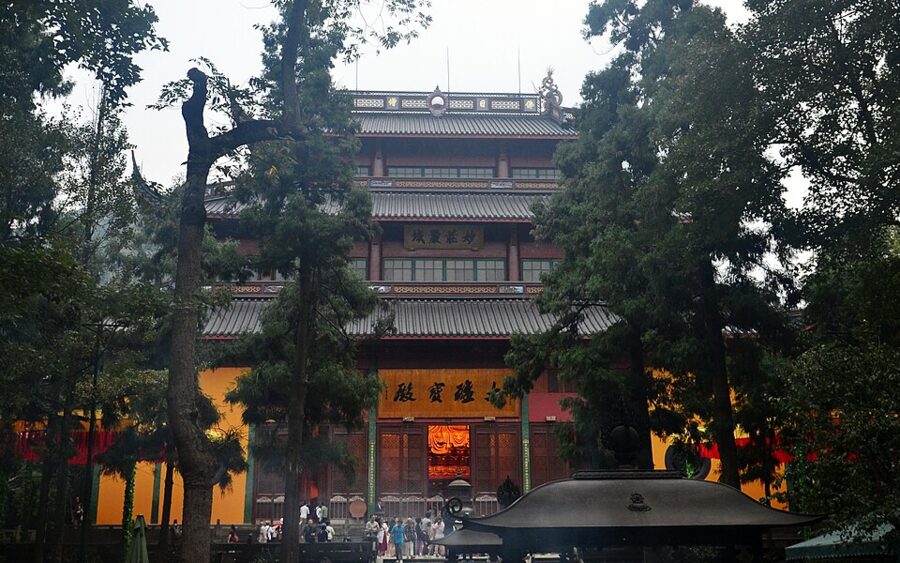
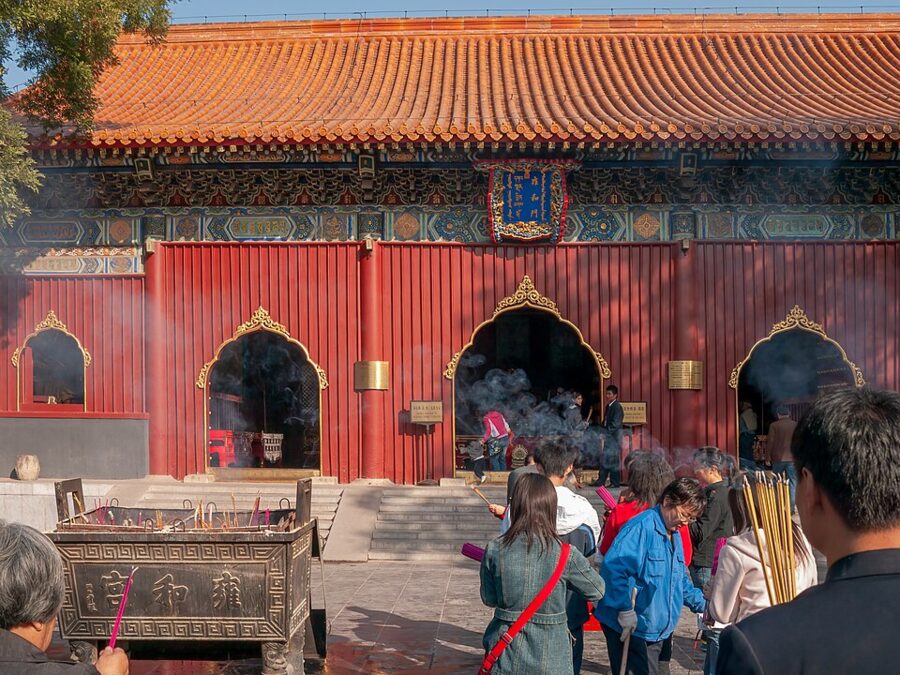
On the first morning of the Year of the Horse, February 17, 2026, the Lama Temple in Beijing opened at 07:00, two hours earlier than usual, with 40,000 tickets on sale for the day in timed slots. The 25-yuan ticket includes incense, handed out free inside the gate. The point of the queue is the bronze censer in each courtyard: light the sticks, raise them to the forehead, bow toward the hall, and ask for a good year.
Ask the same crowd whether they have a religion and most will say no. In the 2018 Chinese General Social Survey (CGSS), one of two national academic surveys that still ask, 10 percent of adults named one. Yet a quarter of adults burn incense to the Buddha or other gods at least a few times a year, a third say they believe in the Buddha or a bodhisattva, and three in four had visited a family grave in the previous twelve months.

Both answers are true. The gap between them explains most of what you see in a Chinese temple, mosque or church: who is praying there, why the state counts them the way it does, and what is expected of you at the door.


On this page
- Two hundred million, or one in ten?
- Buddhism in three canons
- Daoism, the faith that began at home
- Ancestors, city gods and Mazu
- Islam among the Hui, the Uyghurs and eight other peoples
- Christianity, registered and not
- Five religions, and what the rules mean for you
- At the door
- Where to see each tradition well
Two hundred million, or one in ten?
What the state counts
Officially, China has “nearly 200 million” religious believers. The figure comes from the State Council’s 2018 white paper on religious freedom, which also counts about 144,000 registered places of worship and more than 380,000 clergy, and official sources still repeat it. Its 1997 predecessor gave “more than 100 million” believers and 85,000 venues.
Look inside the total and it is three different kinds of number added together. Catholics (6 million) and Protestants (38 million) are counted as members of churches. Muslims are counted by ethnicity: the ten peoples who are mostly Muslim, more than 20 million people in all, are assumed to be Muslim to a person. Buddhists and Daoists are not counted at all, because, in the white paper’s words, their ordinary believers follow no set procedure for joining, so the larger part of the 200 million rests on no published count.
What the surveys count
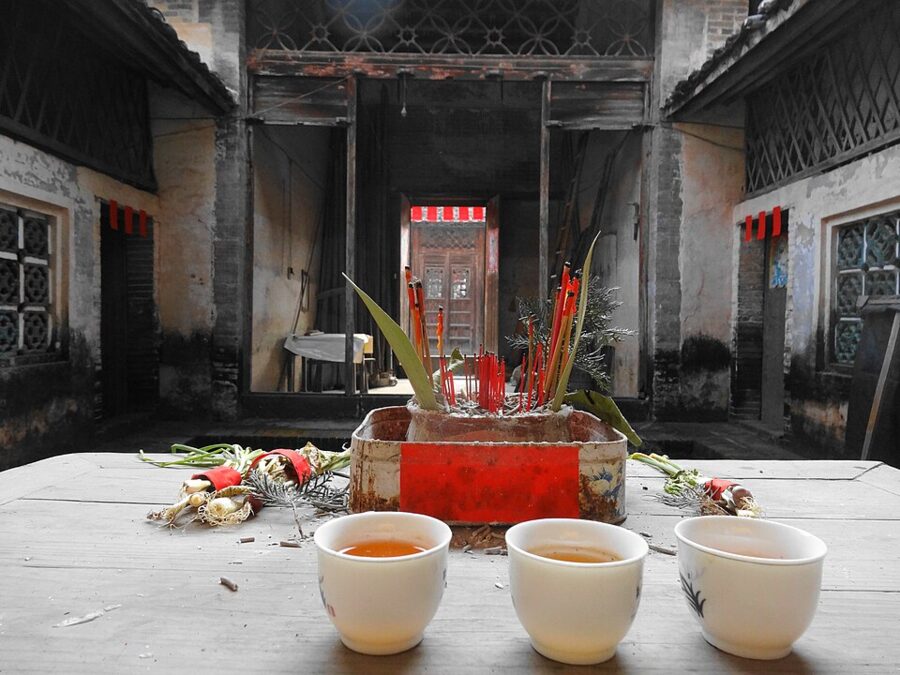
Academic surveys ask people directly, and the answer depends on the word. The usual Chinese term for religion, zongjiao (宗教), was adopted in the early twentieth century to translate the Western idea of an organized faith with clergy and members. Burning incense at New Year, sweeping a grave at Qingming or hiring a fengshui master falls under xisu (习俗), custom, or less kindly under mixin (迷信), superstition. Asked “What is your religious belief?”, most people who do all three say they have none.

So the figures swing widely with the question. In the 2018 CGSS, 4 percent of adults called themselves Buddhist; in the 2018 China Family Panel Studies (CFPS), 33 percent said they believe in the Buddha or a bodhisattva. In the 2018 World Values Survey, 3 percent of mainland adults said religion is very important in their lives, the lowest share of 32 large countries and territories. In the 2021 CGSS, which reached only 19 provinces, 7 percent named a religion.
| Source | Year | What it measures | Result |
|---|---|---|---|
| State Council white paper | 2018 | Believers in the five recognized religions | Nearly 200 million |
| CGSS | 2018 | Adults naming any religion | 10% |
| CGSS | 2018 | Adults who visited a family grave in the past year | About 75% |
| CFPS | 2018 | Adults who believe in the Buddha or a bodhisattva | 33% |
| CFPS | 2016 | Adults burning incense to deities a few times a year or more | 26% |
| CFPS | 2018 | Adults who believe in fengshui | 47% |
| World Values Survey | 2018 | Adults calling religion very important | 3% |
Two more things push the survey answers down. Communist Party members may not hold a religion, and Christians in unregistered churches have reasons to keep quiet with a stranger holding a questionnaire. Pew Research Center, which cannot survey in China itself, worked through all of this in 2023 and concluded that, depending on the measure, anywhere from under 10 to over 50 percent of Chinese adults are religious in some way.
Buddhism in three canons
Buddhism is the largest of the five recognized religions on any measure, with 33,500 registered temples and about 222,000 monks and nuns in 2018. It reached China from India and Central Asia under the Han (206 BC–AD 220), and the state still sorts it by the language of its scriptures. Han Buddhism, with 28,000 temples, reads the Chinese canon; Tibetan Buddhism, with 3,800, the Tibetan; and Theravada, with 1,700 temples among the Dai and their neighbors in Yunnan, the Pali.
Reading a Han temple
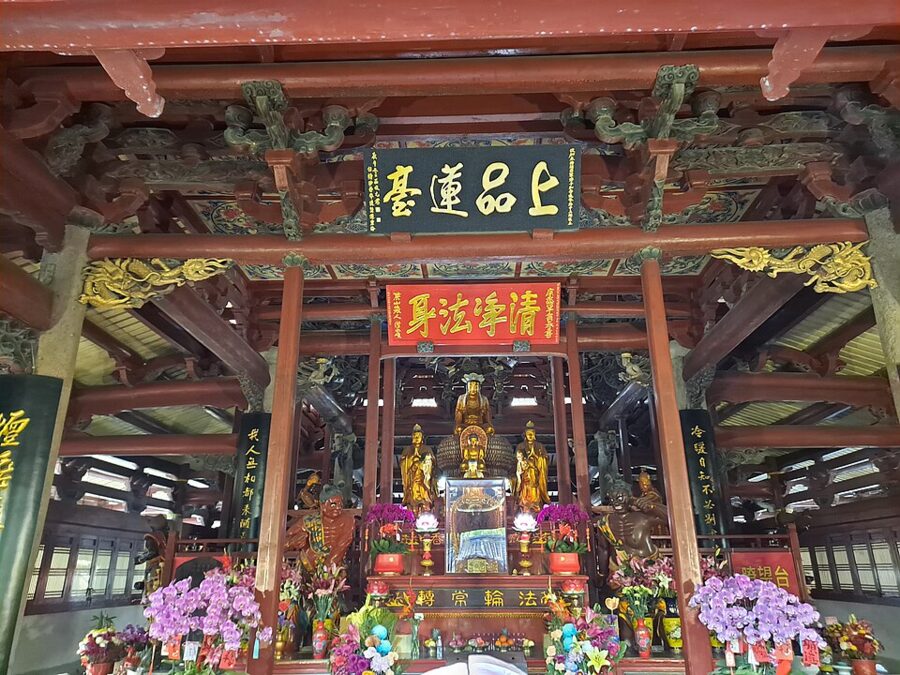
A Han temple is laid out like a house of rank, on a south-facing axis, and the order of its halls rarely changes. Inside the gate is the Hall of the Heavenly Kings: a laughing, pot-bellied Maitreya faces you, the four guardian kings of the directions stand two on each side, and the armored protector Weituo stands behind, facing the main hall. That main hall, the Mahavira Hall (大雄宝殿, Daxiong Baodian), holds the Buddha Shakyamuni, often with other Buddhas or two disciples beside him. Further back come a hall for Guanyin (观音), the bodhisattva of compassion, a sutra library and the monks’ quarters.

Tibetan Buddhism, from Beijing to Kumbum
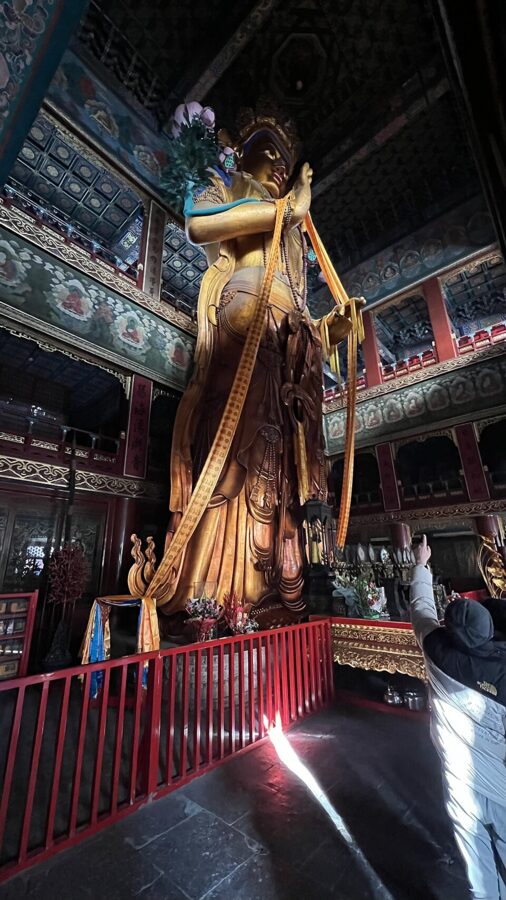
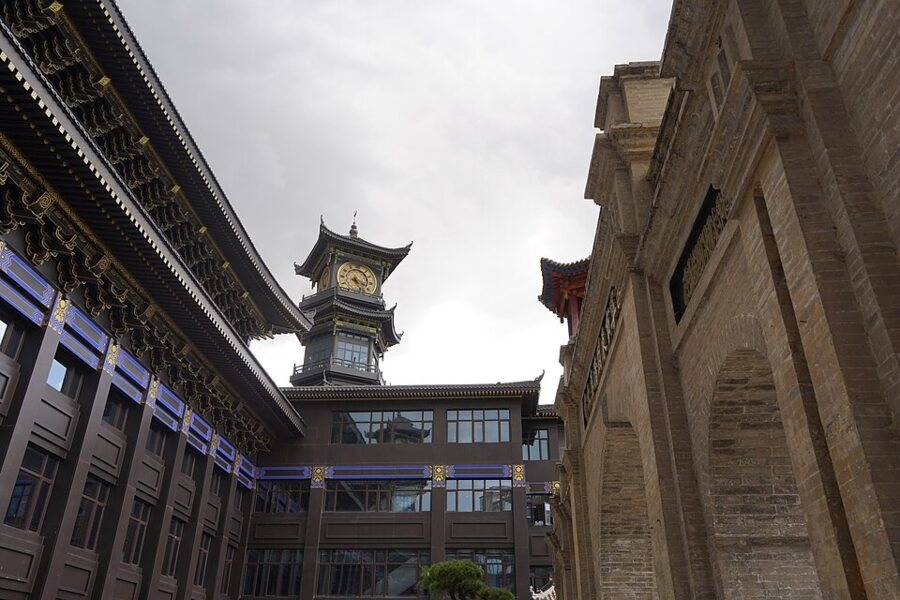
Tibetan Buddhism spread east with imperial patronage under the Yuan (1271–1368) and the Qing (1644–1912), which is why Beijing’s best-known Buddhist temple is a Tibetan one. The Lama Temple (雍和宫, Yonghegong) began in 1694 as the mansion of the prince who became the Yongzheng Emperor. His son, the Qianlong Emperor, was born there and turned it into a lamasery in 1744. Its last great hall holds a standing Maitreya about 18 meters tall, carved from a single sandalwood trunk.

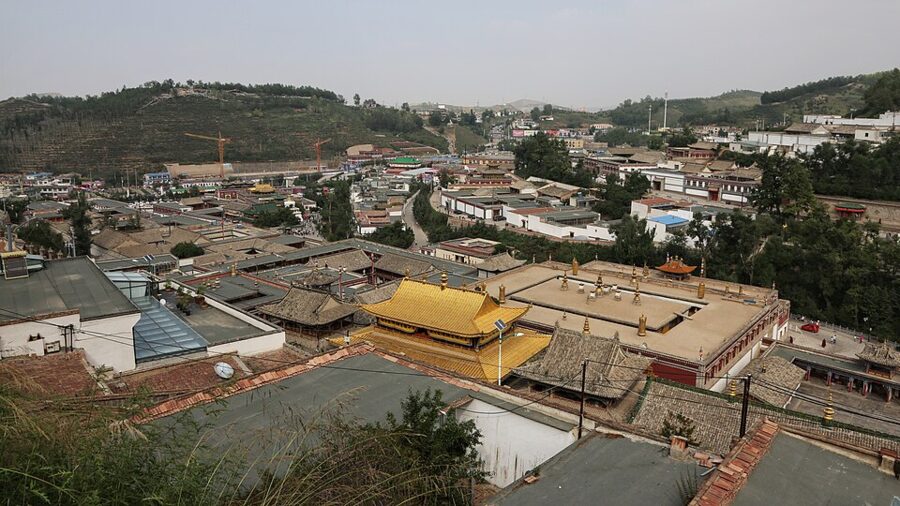
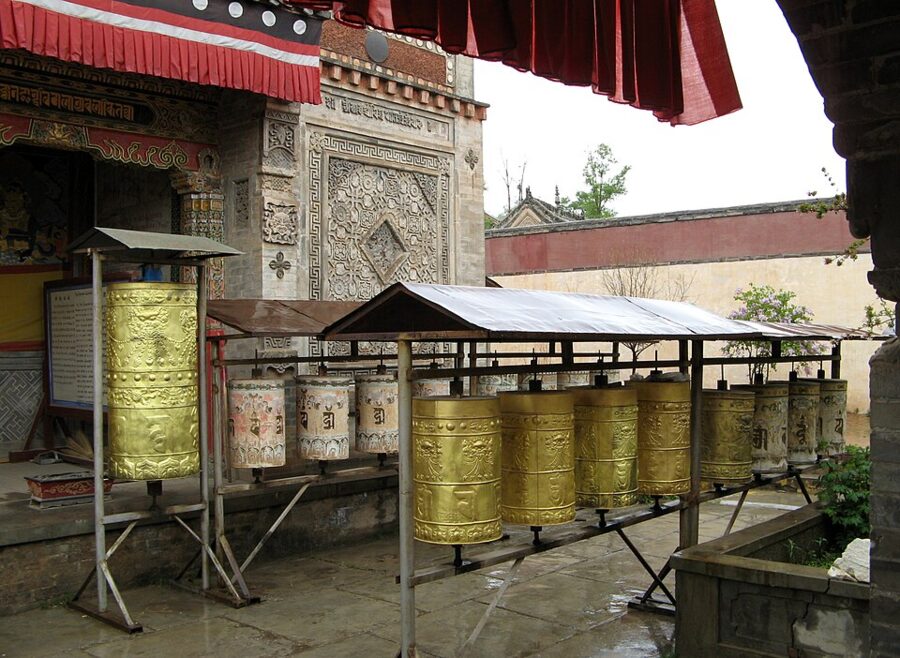
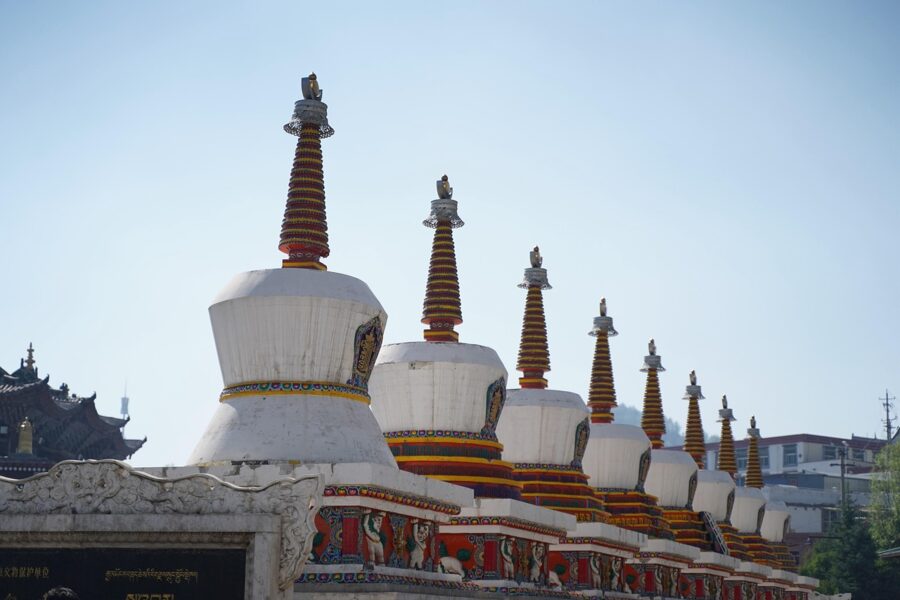
In Tibetan regions the monasteries are towns. Kumbum (塔尔寺, Ta’er Si) in Qinghai grew around a stupa built in 1379 at the birthplace of Tsongkhapa (1357–1419), the founder of the Gelug school, and counts as one of the Gelug’s six great monasteries. It lies 26 km southwest of Xining, and pilgrims walk it clockwise, turning the prayer wheels with the right hand. Since the 1990s images of the Dalai Lama, the Gelug’s senior figure, in exile since 1959, have been effectively banned in Tibetan areas, so you will not see his photograph on an altar.


Theravada in Xishuangbanna
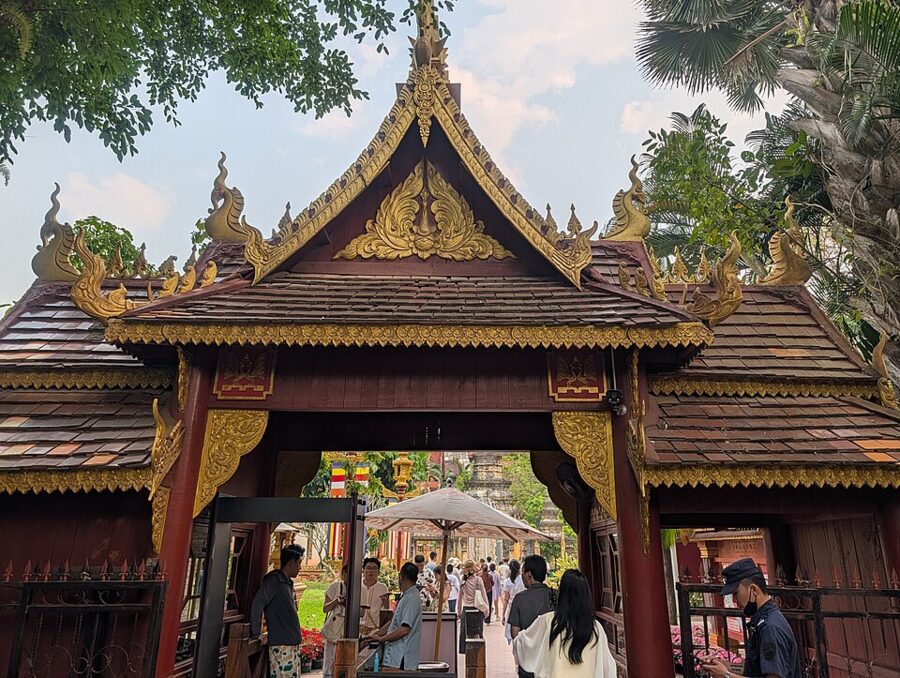
In the far south of Yunnan, the Dai practice the Buddhism of Thailand and Myanmar, with saffron robes, morning alms and temples under steep, stacked roofs. Xishuangbanna’s head temple, the Zongfo Si (总佛寺) in Jinghong, traces itself to 615 and presides over nearly 600 village temples; its present buildings went up between 2009 and 2012. Boys traditionally spent a spell as novices, a custom now squeezed by the limits on religious teaching for minors.

Daoism, the faith that began at home
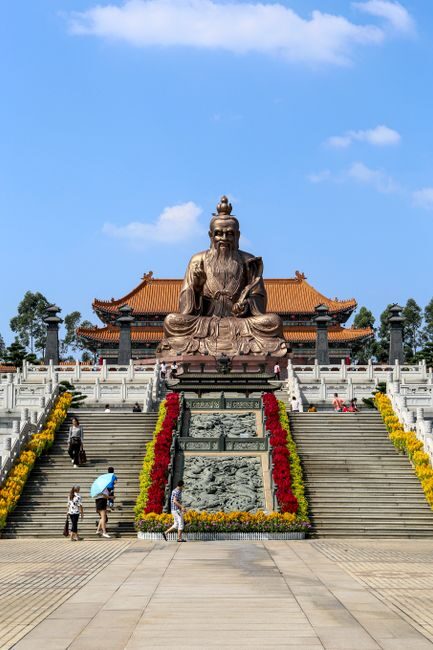
Daoism is the only one of the five that started in China. As an organized religion it dates from the second century AD, when Zhang Daoling founded the movement later called the Celestial Masters; its philosophy is older and credited to Laozi and the Daodejing. Today it has about 9,000 registered temples and 40,000 priests, yet fewer than one adult in 200 calls himself or herself a Daoist.
Two orders divide the priesthood. Quanzhen (全真, Complete Perfection) priests are monastic, keep their hair in a topknot, eat no meat and live in temples, and they dominate the north. Zhengyi (正一, Orthodox Unity) priests may marry and live at home, and are commoner in the south. By the official count Zhengyi has slightly more temples, 4,338 to 4,011.
Beijing’s White Cloud Temple (白云观, Baiyun Guan), founded in 739 under the Tang, is the head temple of the Longmen branch of Quanzhen and was long the seat of the national Daoist bodies. Its busiest hall is a folk one in all but name: a gallery of the sixty Tai Sui (太岁), the year gods of the sixty-year calendar cycle, where people find the god of their birth year and bow to him. Plan to go during the Spring Festival temple fair, when crowds throw coins at the bronze coin and bell hung under its Wofeng Bridge, or on an ordinary morning, when it is quiet.
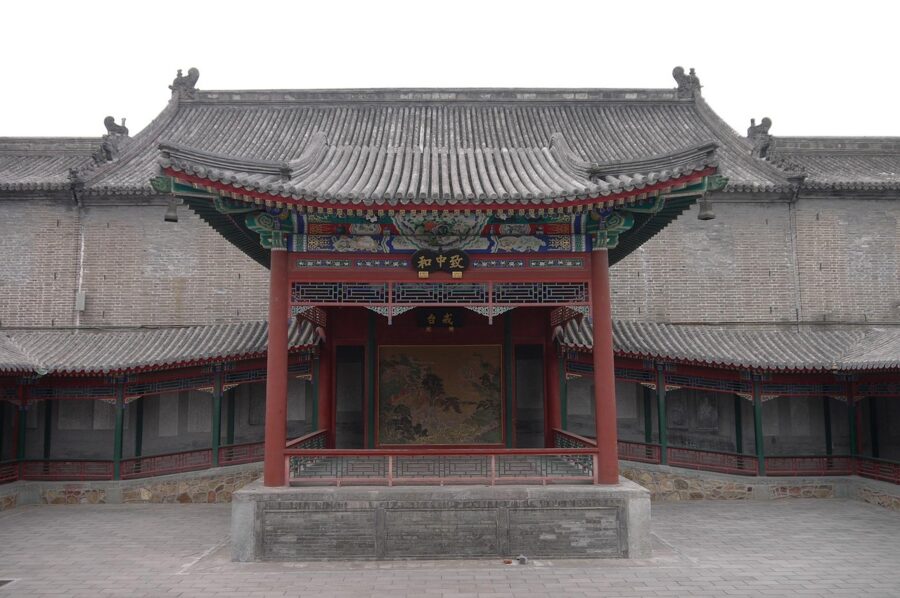
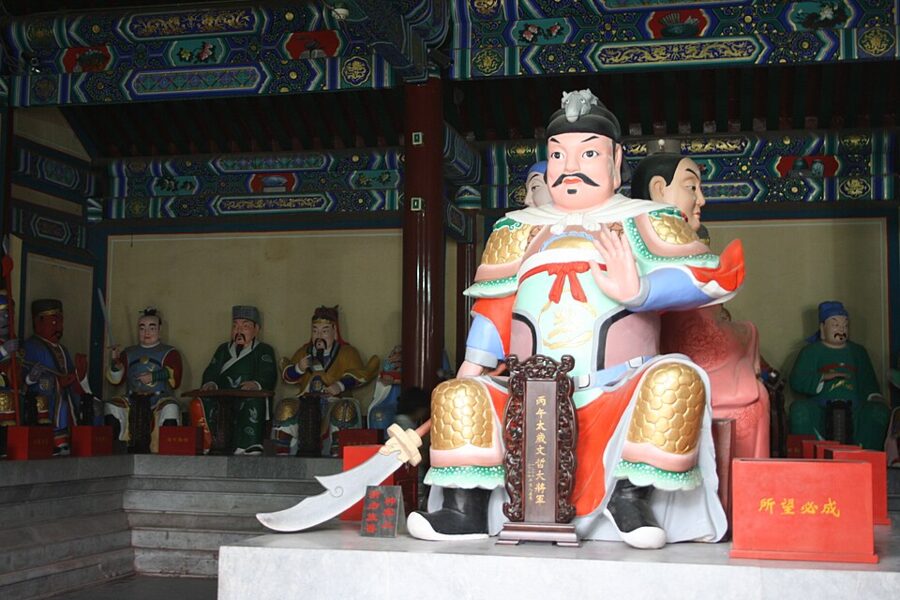
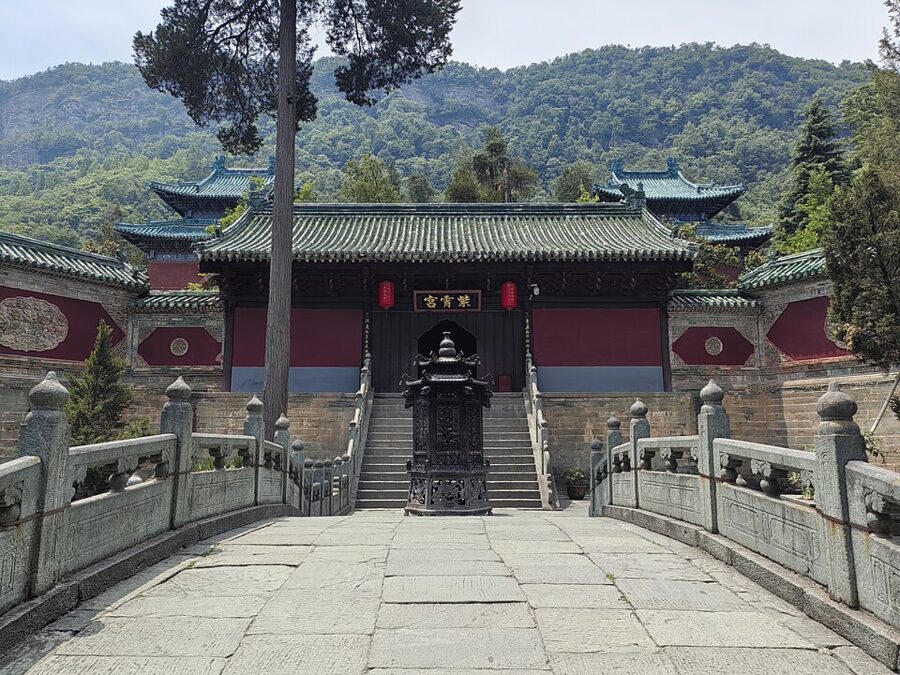
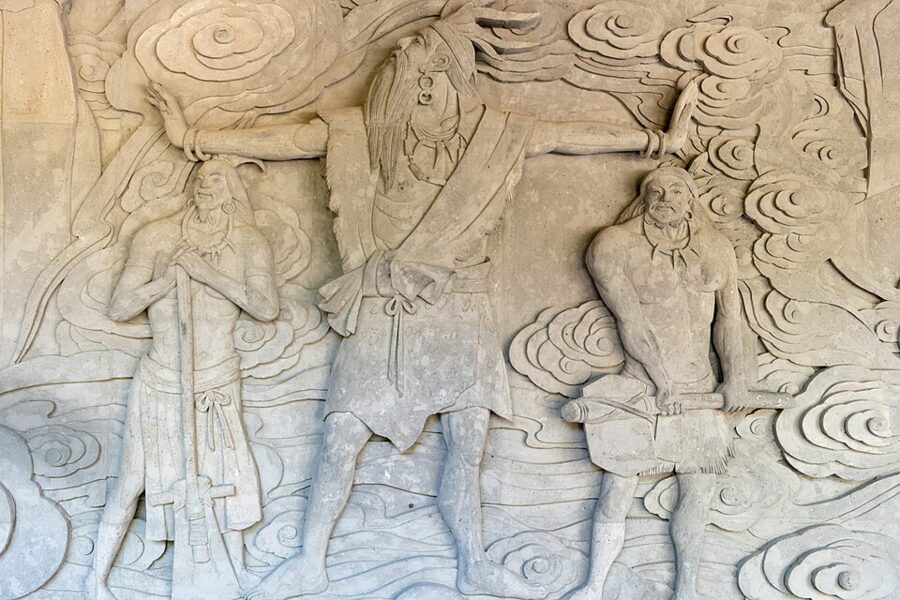
The great Daoist mountains are Wudang in Hubei, whose Ming palaces were built for the warrior god Zhenwu, Longhu Shan in Jiangxi, the old seat of the Celestial Masters, and Qingcheng outside Chengdu. On Mount Wuyi, the Wuyi Palace (武夷宫) at the first bend of the Nine Bend Stream was a Daoist temple long before Zhu Xi taught Neo-Confucianism at the fifth.


Ancestors, city gods and Mazu
The religion most Chinese practice has no church, no creed and, officially, no name. Scholars call it folk religion, minjian xinyang (民间信仰); the people who practice it rarely call it anything. Only about 3 percent of adults named it as their religion in the 2018 CGSS, the one national survey that offers it as a choice, with the sea goddess Mazu and Guan Gong given as examples.
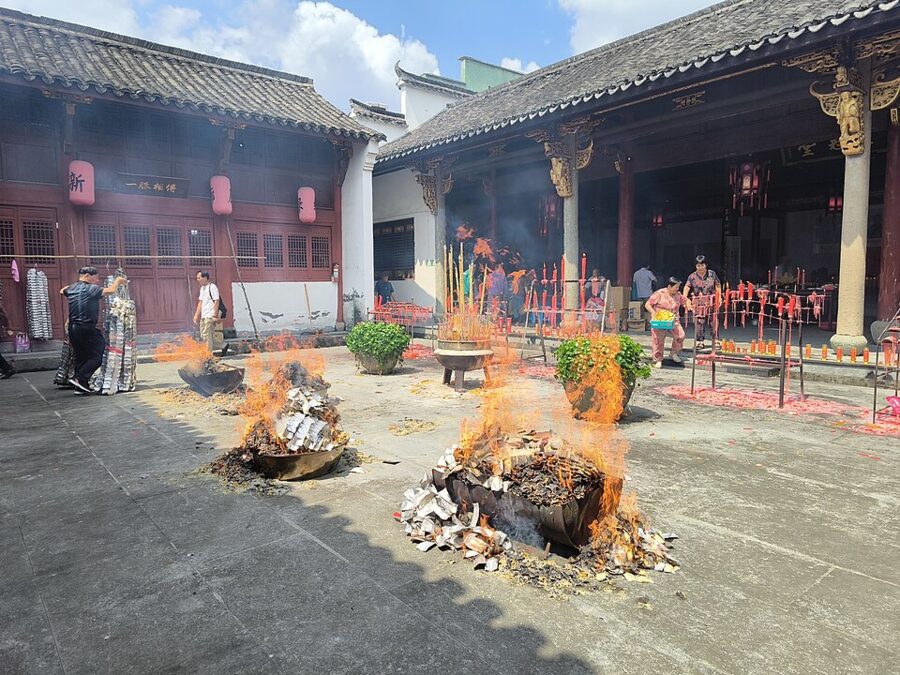
Its core is the family. The ancestors are fed, informed and asked for help at the home altar, in the village lineage hall and at the grave, above all at Qingming in April, when graves are swept and paper money is burned. On the fifteenth day of the seventh lunar month, the Ghost Festival feeds the dead who have no family to do it; Daoists keep the same night as Zhongyuan, one of three yuan festivals, the first of which gives the Lantern Festival its full moon. A national survey of 2014 suggests China has more than 102,000 lineage halls (祠堂, citang).
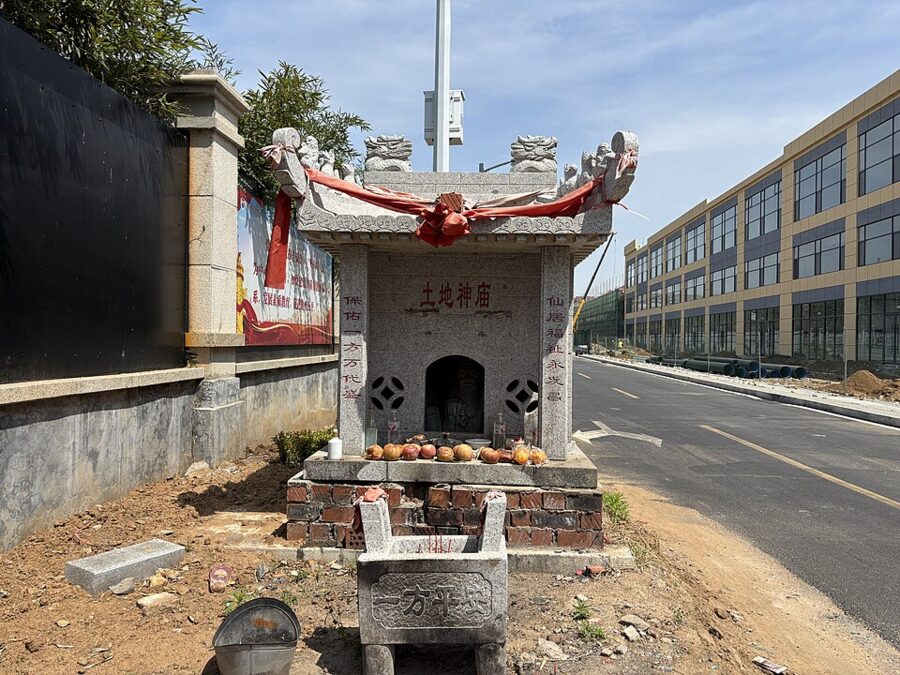
Then come the gods of place and trade. Every walled town had a City God (城隍, Chenghuang), an official of the underworld who mirrors the magistrate, usually a local worthy promoted after death, and villages and street corners have an Earth God (土地公) in a shrine the size of a cupboard. The coast of Fujian and Guangdong worships Mazu (妈祖), a tenth-century girl from Meizhou Island deified as the protector of seafarers, and merchants everywhere burn incense to Guan Yu (160–220), a general of the Three Kingdoms raised into a god of loyalty and of wealth.
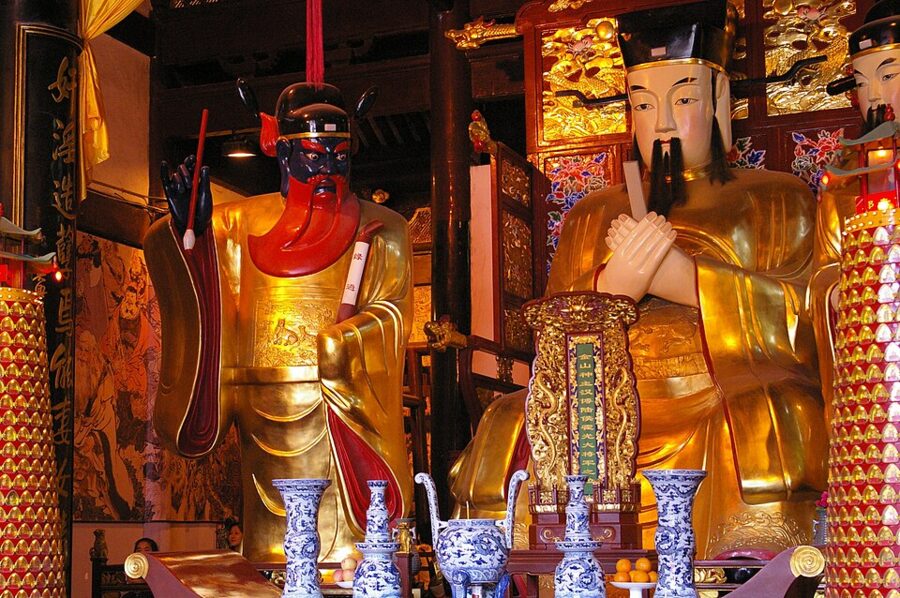

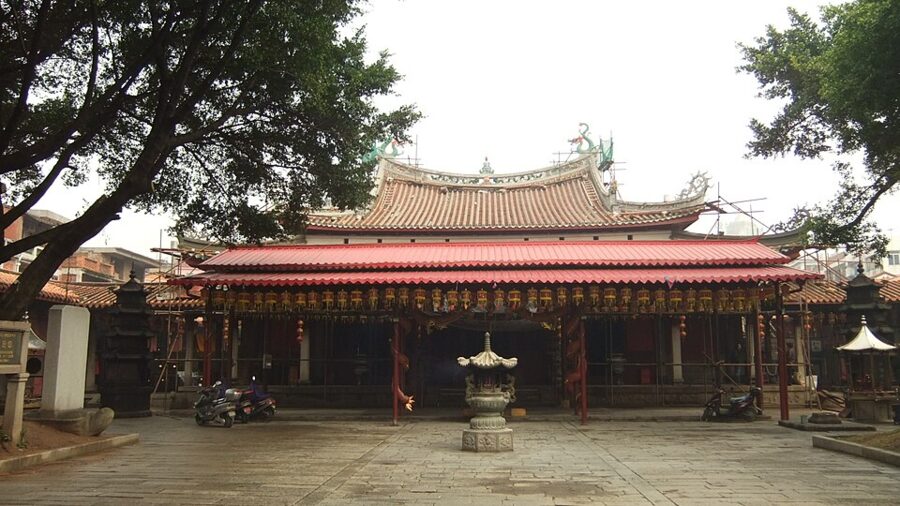

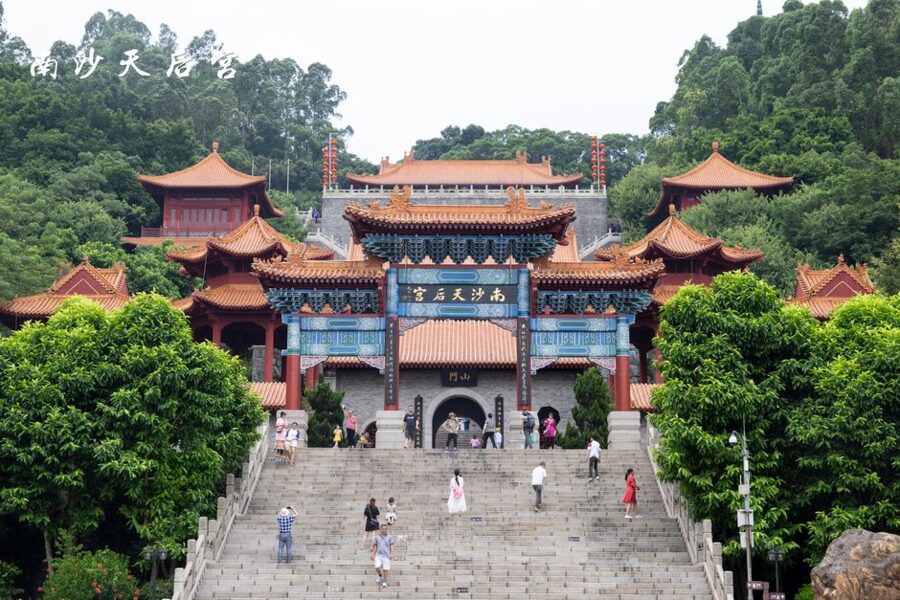
Minorities add their own. The Manchus brought shamanism into the Forbidden City, where the Qing court kept up its rites in the Palace of Earthly Tranquility until the dynasty fell. In the twentieth century this side of Chinese religion was hit hardest, by Republican campaigns against superstition in the 1920s and by the Cultural Revolution (1966–1976), and it is still the least protected. In Zhejiang the count of folk temples fell from 35,000 in 2013 to 17,000 in 2020, as unregistered sites were closed, demolished or turned to other uses.
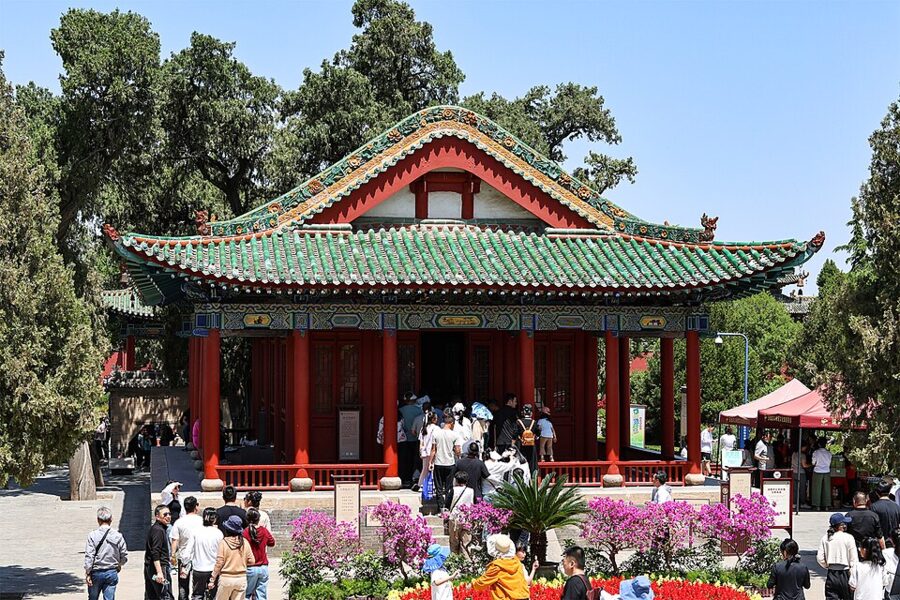


Three teachings under one roof
Asking which religion a Chinese temple belongs to often has no clean answer. Guanyin began as the Indian bodhisattva Avalokiteshvara and is prayed to as a goddess who grants sons; Guan Yu stands in Buddhist temples as a protector and in Daoist ones as a god; and the Buddhist Ullambana festival and the Daoist Zhongyuan fall on the same night. People take what they need from each.
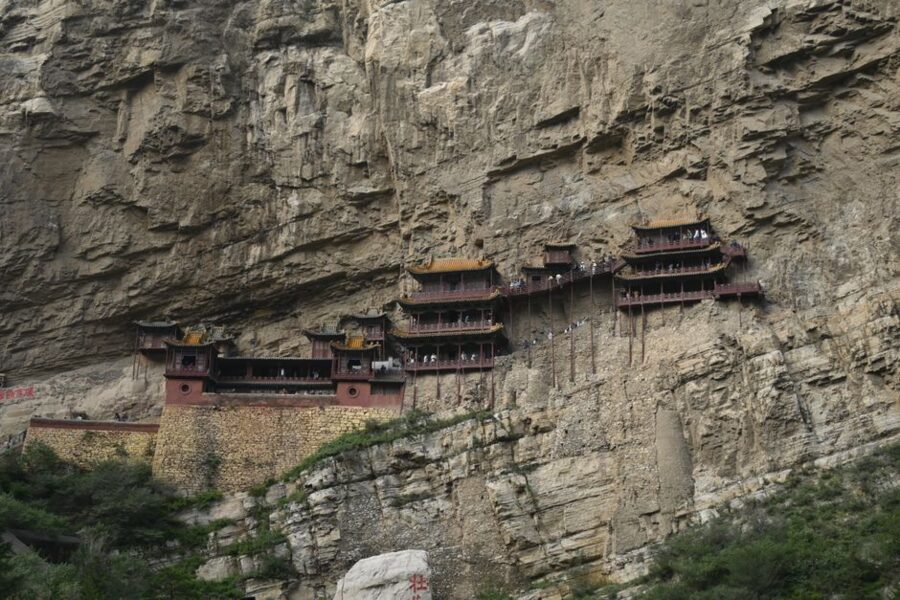
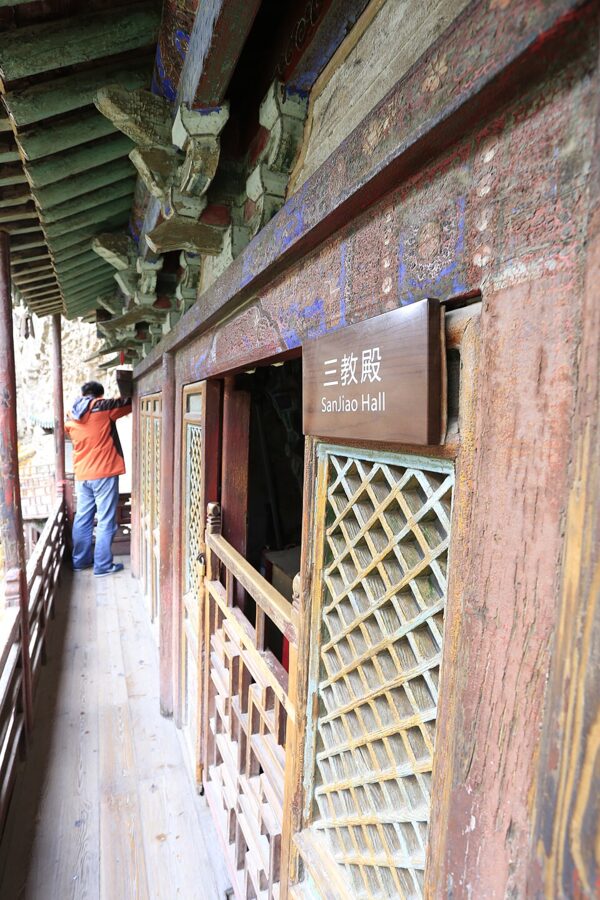
The Hanging Temple (悬空寺, Xuankong Si) near Datong makes the point in timber. Pinned to a cliff 58 meters above the valley floor, on a site that tradition dates to 491, it saves its highest hall, the Hall of the Three Teachings (三教殿), for the Buddha in the middle, Confucius on one side and Laozi on the other. Confucius has 1,600 temples of his own by official count, led by the one in his hometown of Qufu, though the state does not count Confucianism as a religion.

Islam among the Hui, the Uyghurs and eight other peoples
Islam arrived in the seventh century with Arab and Persian merchants in the southeastern ports, and spread inland after the Mongol conquests brought settlers from Central Asia. Its followers belong mainly to ten ethnic groups and live mostly in the northwest, in Ningxia, Gansu, Qinghai and Xinjiang. The state counts 35,000 mosques.
Because Muslims are counted by ethnicity, the official “more than 20 million” is really the population of those ten groups. Pew’s demographers adjusted it for the roughly one Hui adult in fourteen who does not identify as Muslim and for Han converts, and arrived at about 17 million Muslim adults. Of the adults in the ten groups, about 8.3 million are Hui and 7.7 million Uyghur; Kazakhs, Dongxiang, Kyrgyz, Salar, Tajiks, Bonan, Uzbeks and Tatars make up the rest.
The Hui speak Chinese, carry Chinese surnames and live all over the country, often in a quarter around a mosque, which is why Beijing, Xi’an and Xining each have a Muslim district close to the center. The Uyghurs speak a Turkic language and live overwhelmingly in Xinjiang. Since 2017 Xinjiang has seen mass detentions of Uyghurs and other Muslims, which the United States calls genocide and which the UN human rights office said may amount to crimes against humanity; China rejects both and describes its policy as counter-terrorism and education.
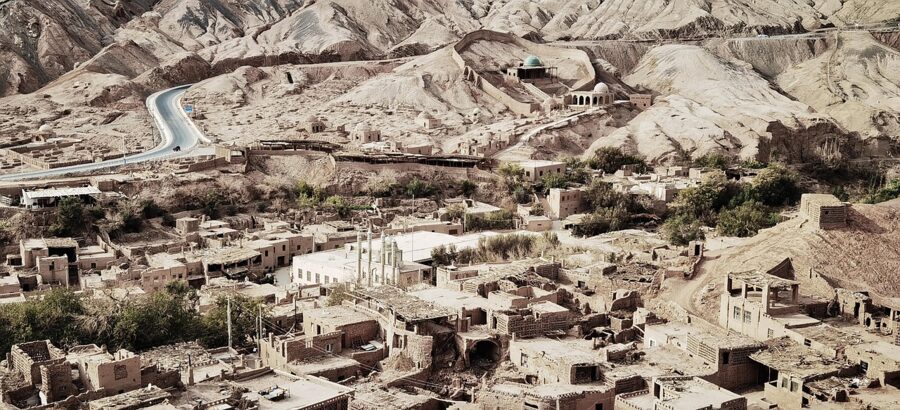
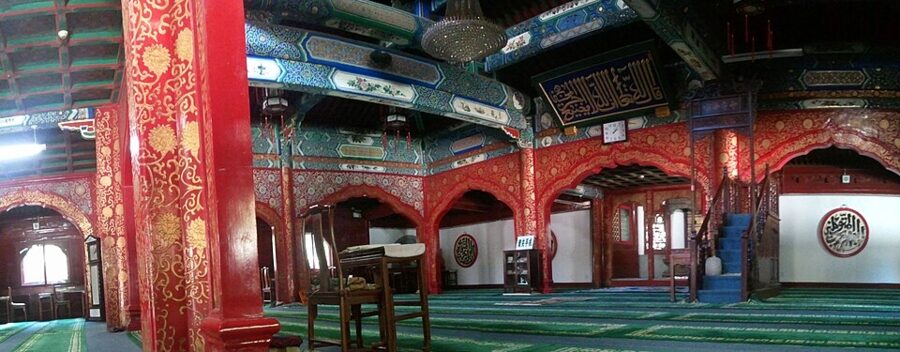
Elsewhere, a national drive to make religion “Chinese in orientation” has stripped Middle Eastern domes and minarets from many mosques, Xining’s Dongguan Mosque among them in 2021. The oldest mosques never had them. The Great Mosque of Xi’an (化觉巷清真大寺), in a lane behind the Drum Tower, is a run of five courtyards on an east–west axis, with timber gateways, a pagoda-like minaret and Arabic carved into Chinese woodwork. Tradition dates it to 742; the present buildings are early Ming, and the prayer hall at the west end faces Mecca.
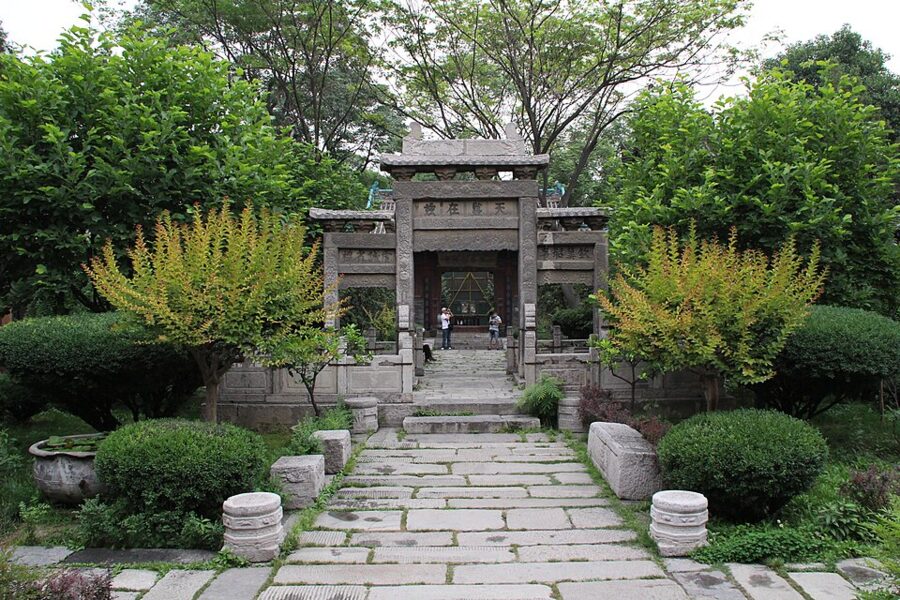

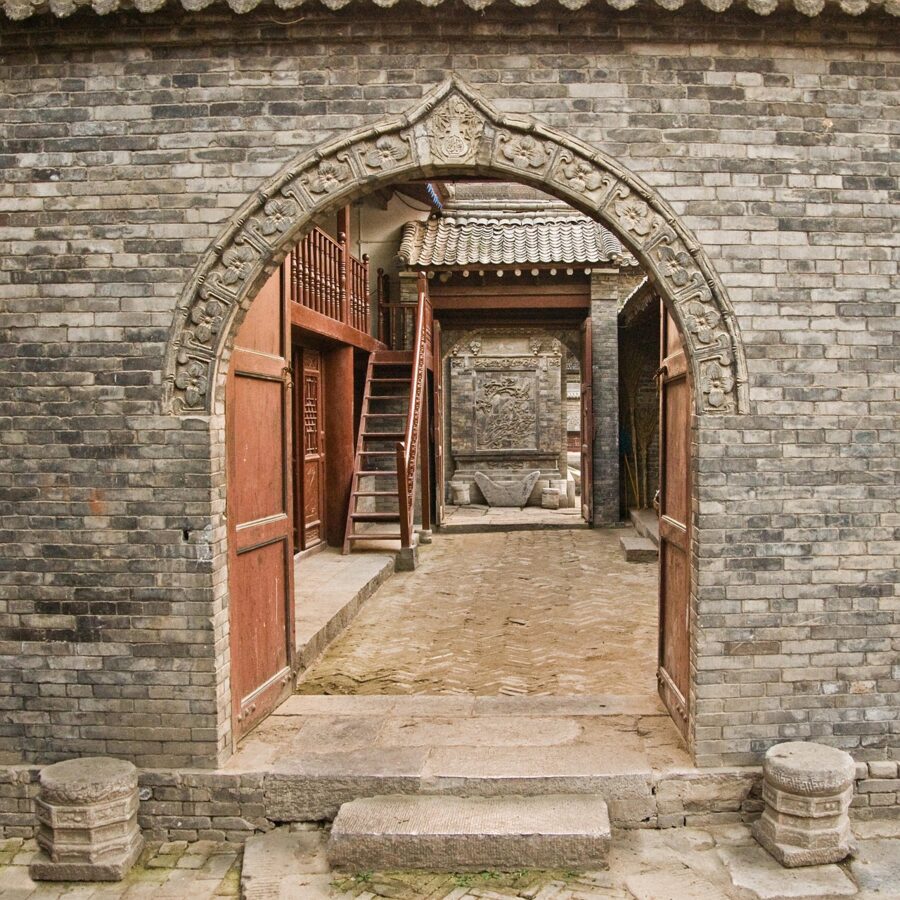
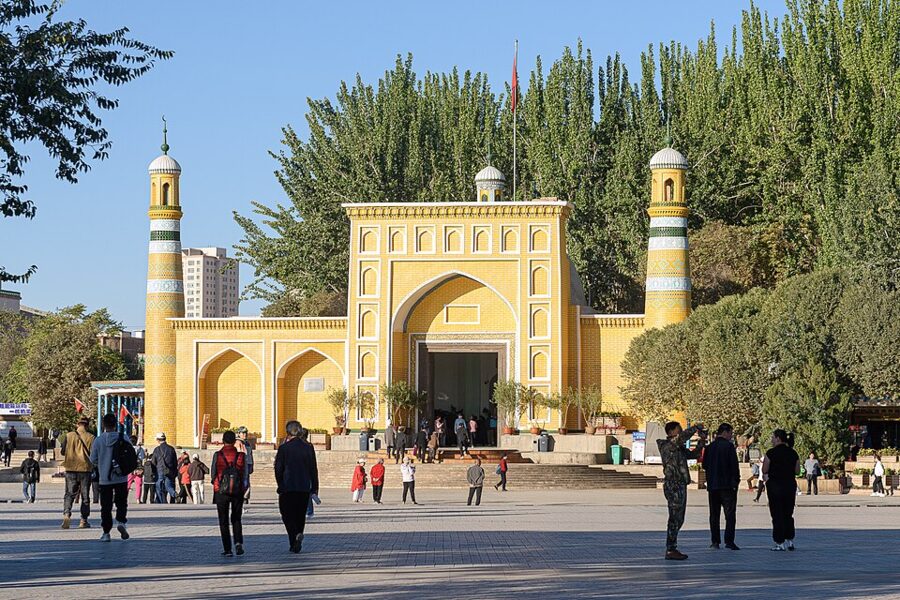
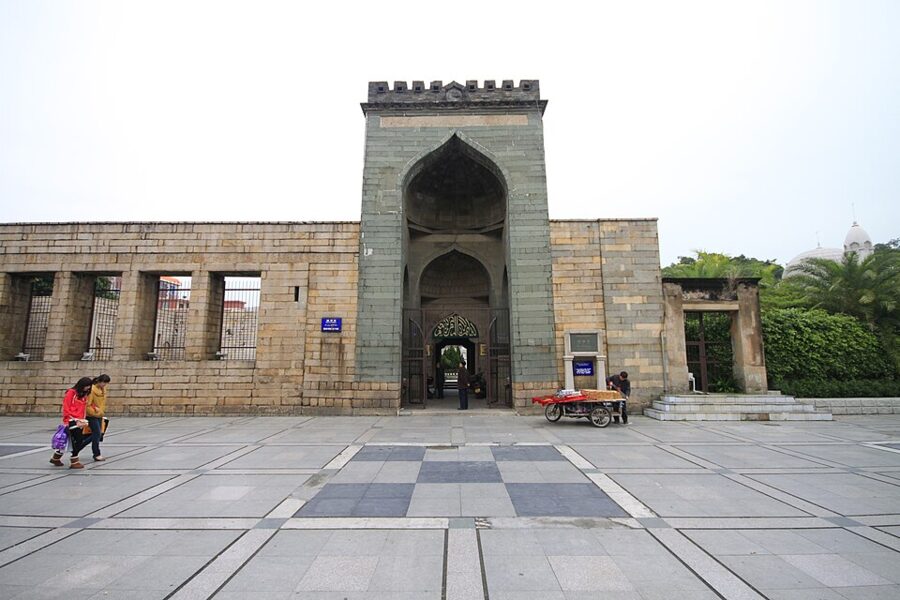
Beijing’s Niujie Mosque, founded in 996 by tradition and rebuilt under the Ming, follows the same plan. Id Kah in Kashgar, dated by tradition to 1442, is the great exception, a yellow-tiled gate between two minarets in the Central Asian manner, and now works mainly as a monument. On the coast, Quanzhou’s Qingjing Mosque (清净寺), founded in 1009 by Arab merchants, is one of the oldest mosques in China.



Christianity, registered and not
China counts Christianity as two religions: Catholicism (天主教, Tianzhujiao, the teaching of the Lord of Heaven) and Protestantism (基督教, Jidujiao), each with its own state-approved bodies. Jesuits reached the Ming court in Beijing in 1601, Protestant missions arrived in the early 1800s and grew with the treaty ports, and every church was closed during the Cultural Revolution.
Official figures give 38 million Protestants and 6 million Catholics, in about 60,000 Protestant churches and meeting points and 6,000 Catholic churches in 98 dioceses. Surveys find fewer: about 2 percent of adults, roughly 20 million, called themselves Christian in the 2018 CGSS, nine in ten of them Protestant. Yet 7 percent, about 81 million, told the 2018 CFPS they believe in Jesus or in Tianzhu, and Christian groups abroad put Protestants alone above 100 million.

Much of the gap is the house churches (家庭教会), Protestant congregations that meet outside the state’s Three-Self Patriotic Movement, and the Catholics loyal to Rome who stay outside the Catholic Patriotic Association. Under a 2018 agreement, Beijing chooses Catholic bishops and the pope can veto them, and pressure on unregistered congregations has grown since revised Regulations on Religious Affairs took effect the same year. A Catholic study center in Hong Kong puts all Catholics, registered or not, at 10 million in 2020, down from 12 million in 2005.
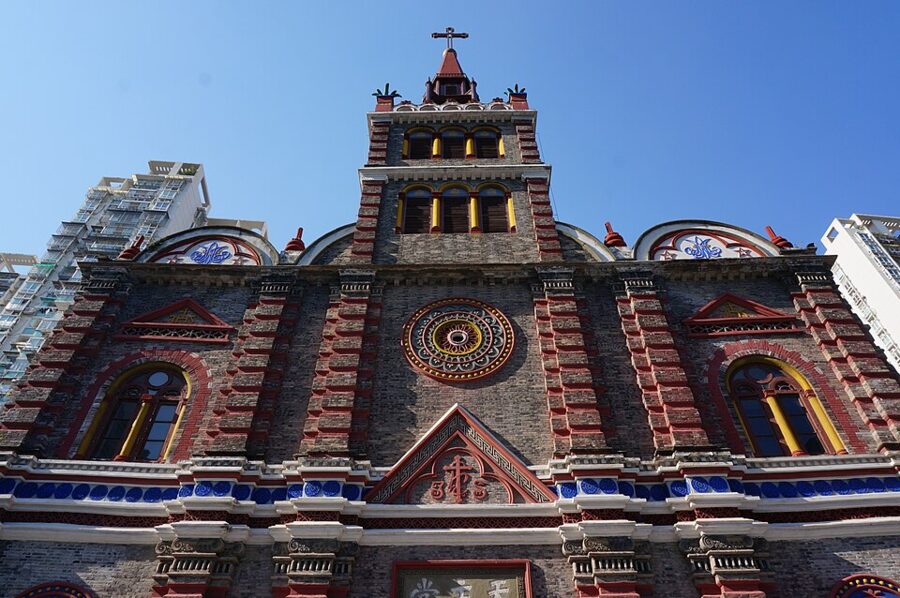
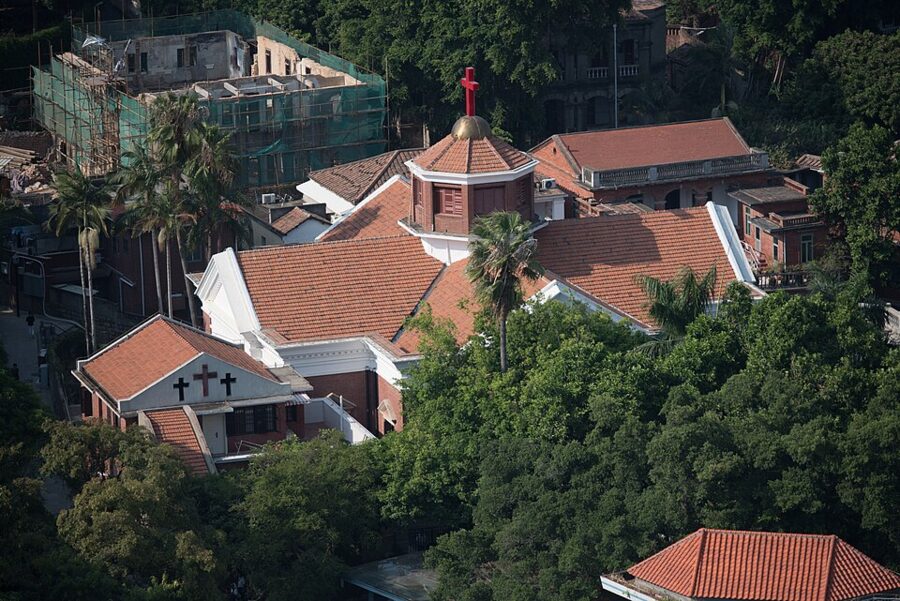
Christians cluster near the coast, where the missions landed. Wenzhou in Zhejiang is often called China’s most Christian city, Zhejiang has more registered Christian venues than any other province, and about a quarter of all Catholics live in Hebei, many in whole Catholic villages. After 2013 a Zhejiang campaign against “illegal structures” took down crosses and some churches. On Gulangyu, off Xiamen, three churches survive from its years as an international settlement.


Five religions, and what the rules mean for you
The state recognizes Buddhism, Daoism, Islam, Catholicism and Protestantism, each run through national associations that answer to the government: seven in all, because Catholics and Protestants have two each. Only venues registered with them may hold services. Article 36 of the Constitution protects “normal religious activities” and bars religious bodies from foreign control.
The rules have tightened since 2012, and again after the 2018 regulations. Party members may not hold a religion, organized religious teaching for children such as Sunday schools is banned, preaching outside registered venues is illegal, and the drive to make religions Chinese has changed the look of mosques and churches. Groups the state labels xiejiao (邪教), “heterodox teachings”, Falun Gong the best known, are banned outright.
Very little of this touches a traveler. The rules for foreigners, revised in 2025, let you attend services at any registered temple, mosque or church; foreigners may hold their own services at approved venues, and foreign clergy may preach only when invited by a Chinese religious body. You may bring religious books and objects for your own use, not to hand out. Big temples increasingly want a real-name booking with your passport number, so carry it.
At the door
Incense
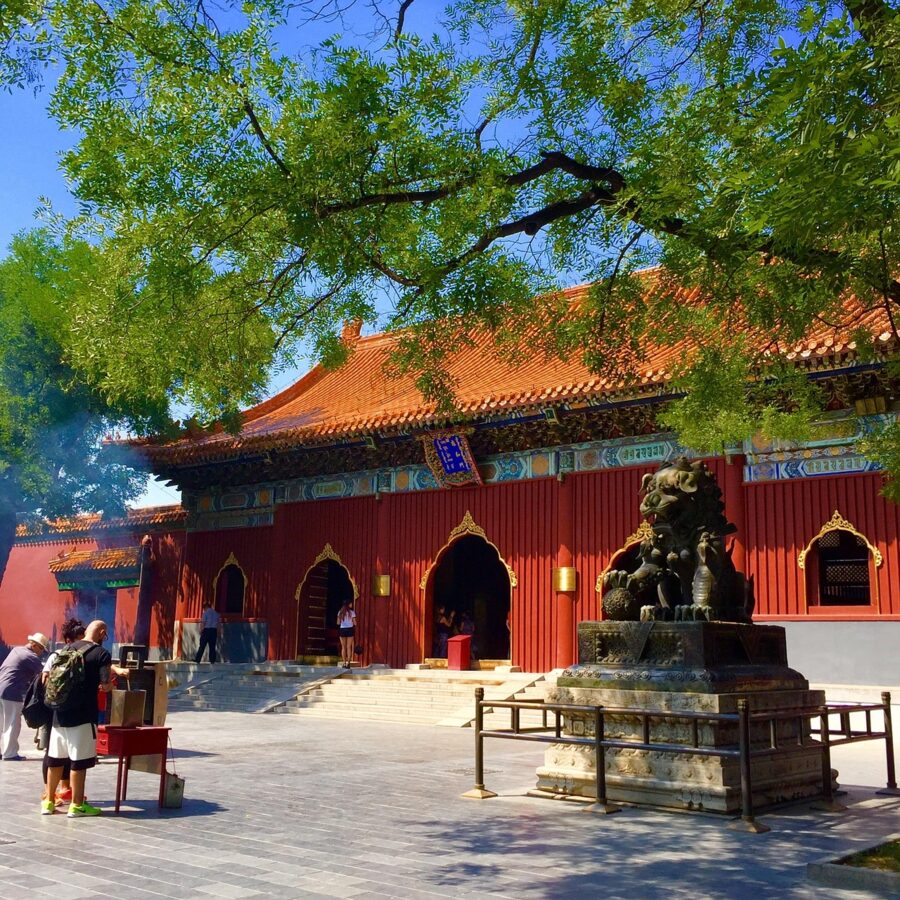
More and more temples give incense away, and the number is three. The Lama Temple’s ticket includes a bundle, and since August 12, 2026, the temples of Nanyue in Hunan hand out three sticks free, limit anyone bringing their own to one box of three, and forbid paying someone to burn “tall incense” on your behalf. Light the sticks from the candles provided, hold them in both hands at the forehead, bow three times toward the hall and plant them in the censer.
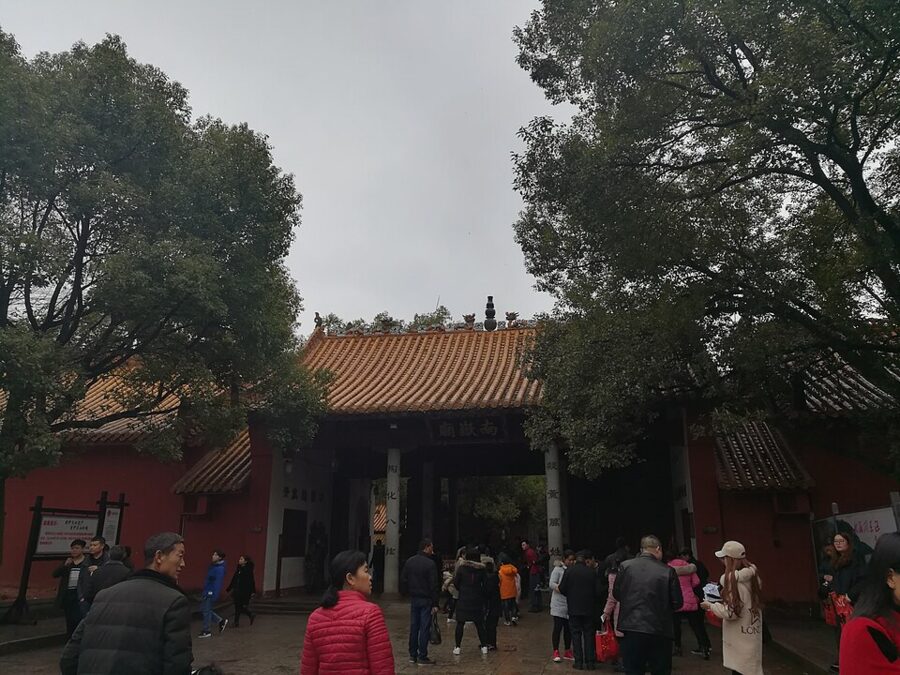
Never burn incense inside a hall, and at the Lama Temple incense stops altogether when the wind is strong. You need not burn any at all. Nobody expects a foreigner to, and standing quietly to one side is never wrong.
Inside the halls
Step over the raised wooden threshold, not on it. The cushions in front of the altar are for kneeling, not sitting, and if someone is bowing, wait or pass behind them. Many halls ban photographs of the images inside, the Lama Temple’s among them, and monks and nuns would rather be asked before a camera comes close.
Dress as for a church in southern Europe: shoulders and knees covered works everywhere and matters most at mosques and Tibetan monasteries. In Tibetan temples, walk clockwise around halls, stupas and prayer wheels, and take your hat off inside.
Mosques
Mosques open to sightseers outside prayer times. Expect long trousers and covered arms for everyone and a headscarf for women, often lent at the gate; take shoes off before any prayer hall, and in many mosques do not enter the prayer hall at all unless you are Muslim. Keep out of the way at Friday midday prayers and at the two Eids, al-Fitr on or about March 10, 2027, and al-Adha about seventy days later.
Churches
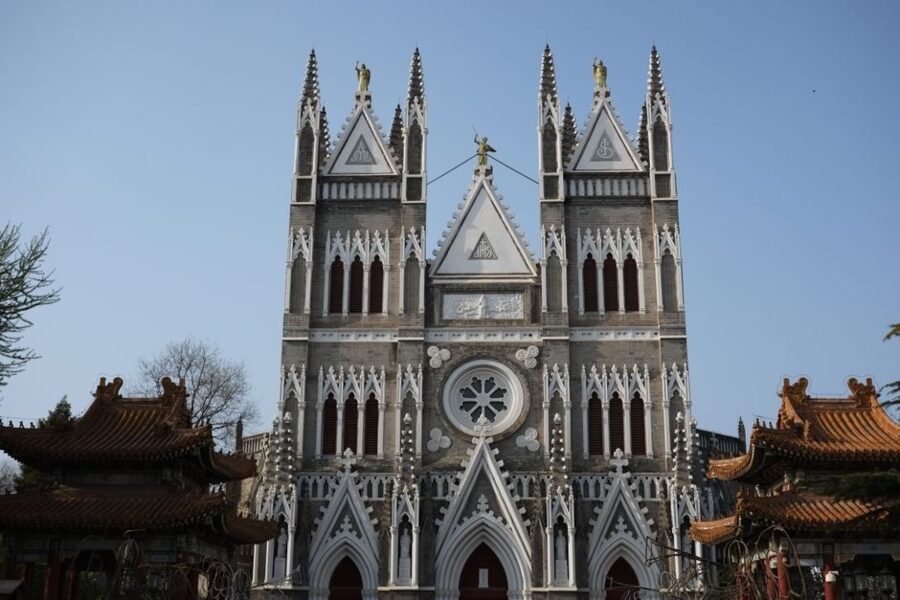
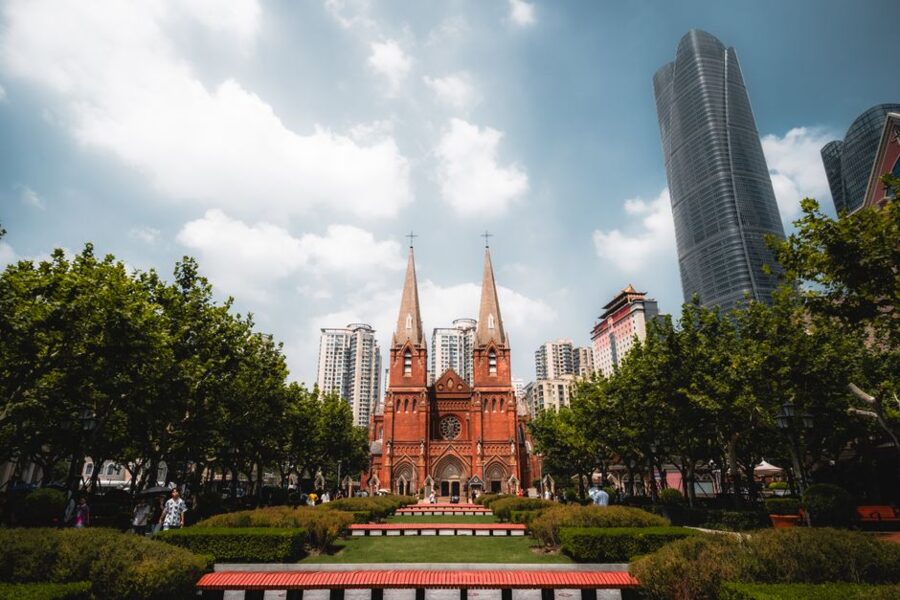
Registered churches welcome anyone to Sunday services, and the big city cathedrals also keep visiting hours. Published hours for the Xujiahui cathedral in Shanghai disagree: the city’s tourism listing gives Tuesday to Saturday, 09:00–16:00, last entry 15:30, while local guides give weekend afternoons only, so check at the gate on Puxi Road before planning around it.
Money
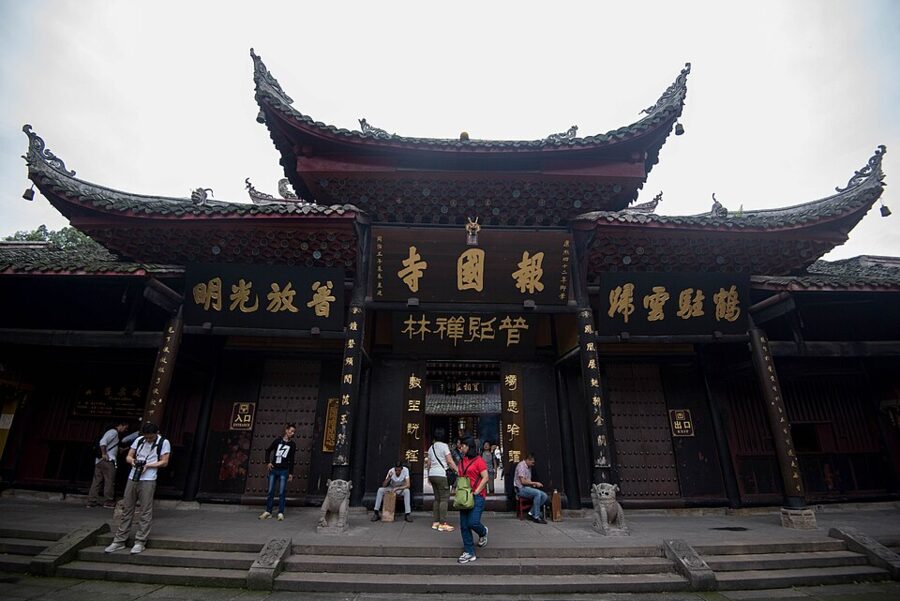
Admission is going the way of the incense. The Jade Buddha Temple in Shanghai stopped charging in June 2023, except on New Year’s Eve and the first fifteen days of the lunar year, Lingyin dropped its combined 75-yuan ticket on December 1, 2025, and more than twenty temples on Mount Emei went free on January 1, 2026, though the mountain still charges for entry. Donations go in the merit boxes (功德箱) or to the payment code beside them. Anyone who stops you outside the gate to sell incense, read your fortune or bless you for a fee is not working for the temple.

Where to see each tradition well
Beijing in one long day
Start at the Lama Temple (Yonghegong Lama Temple station, Lines 2 and 5) when it opens at 09:00; it closes at 16:30 from November through March and at 17:00 from April through October. Tickets are sold through the temple’s official WeChat account, 雍和宫游客信众服务, in morning and afternoon slots, and the form has an option for foreign passports. Reports differ on whether every passport goes through; on quiet days the window at the gate has sold same-day tickets.
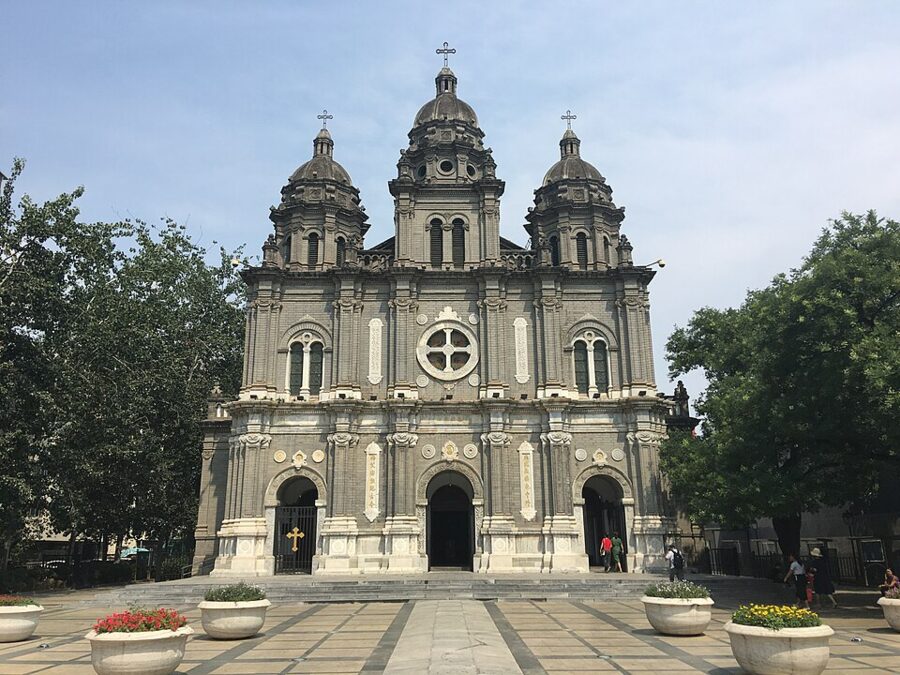
Then cross town to the White Cloud Temple outside Xibianmen for Daoism, and to the Niujie Mosque in the Hui quarter to the southeast. End at St. Joseph’s on Wangfujing at dusk, when the square fills up.
Hangzhou: Lingyin and Feilaifeng
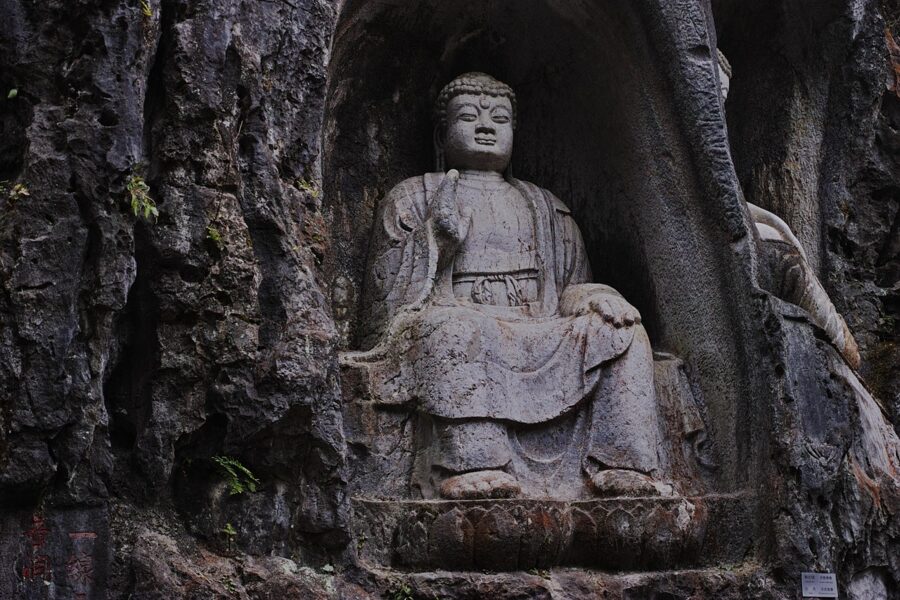
Lingyin is free but booked by real name on the 杭州灵隐飞来峰 mini program in WeChat or Alipay, at least one day and up to seven days ahead, with no same-day bookings. Morning slots run 07:30–12:00 and afternoon slots 12:00–17:00. The Feilaifeng cliffs opposite the temple are carved with Buddhist figures from the tenth to the fourteenth centuries.
Xi’an, Xining and Kumbum
In Xi’an, walk from the Drum Tower into the Muslim Quarter for the Great Mosque; the ticket is about 25 yuan, and the courtyards are quietest in the morning. Kumbum’s ticket prices are 70 yuan from April through October and 40 yuan from November through March. Pair it with Xining’s Dongguan Mosque, where the gilded vases on the prayer hall’s ridge were gifts from Kumbum and Labrang.
Quanzhou, every faith in one walk
No city shows the traditions side by side better. The Kaiyuan Temple has been free since 2015, the Qingjing Mosque costs 3 yuan, and the Tianhou Gong for Mazu is free, all within a walk of each other in the old city. In 2021 they were inscribed with 19 other places as the World Heritage site of Song and Yuan Quanzhou, the “emporium of the world”.
The Hanging Temple
The Hanging Temple stands in a gorge 4 km southeast of Hunyuan town. Under the Hengshan scenic area’s ticket rules, all tickets are sold at the Hengshan visitor center, where a shuttle bus leaves for the temple; the 15-yuan entry lets you look from below, and the 100-yuan climbing ticket, limited to one order per account per day, takes you onto the walkways.
The 2027 calendar
The year’s biggest temple crowds follow the lunar calendar. The Spring Festival falls on February 6, 2027, with the public holiday running February 5–13; temples open early on the first morning. The Lantern Festival follows on February 20, Guanyin’s birthday on the nineteenth day of the second month (March 26), Qingming on April 5 and the Ghost Festival on August 16.
Go to the Lama Temple on an ordinary weekday instead and the courtyards are half empty, but the bronze censers are still smoking, fed three sticks at a time by people who would tell a survey they have no religion and are, in the way that counts here, keeping the gods informed.