

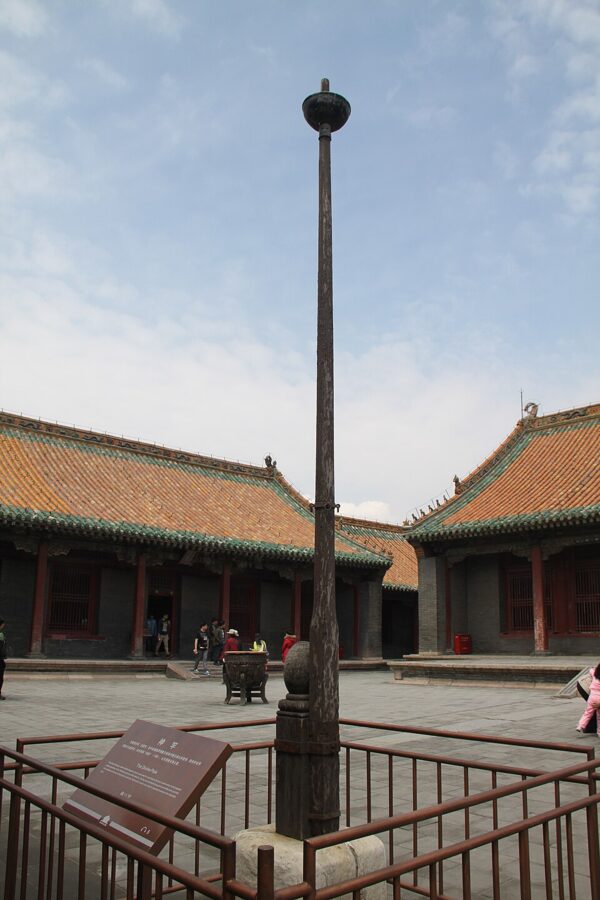
In a courtyard of the old palace in Shenyang stands a bare pine pole about six meters tall with a small tin bowl fixed near the top. On the day after the evening rites, chopped pork and grain went into the bowl, and the crows came down to eat what had been offered to heaven. The pole is called a suolun gan (索伦杆), a spirit pole, and Manchu households once kept one in a corner of the yard.
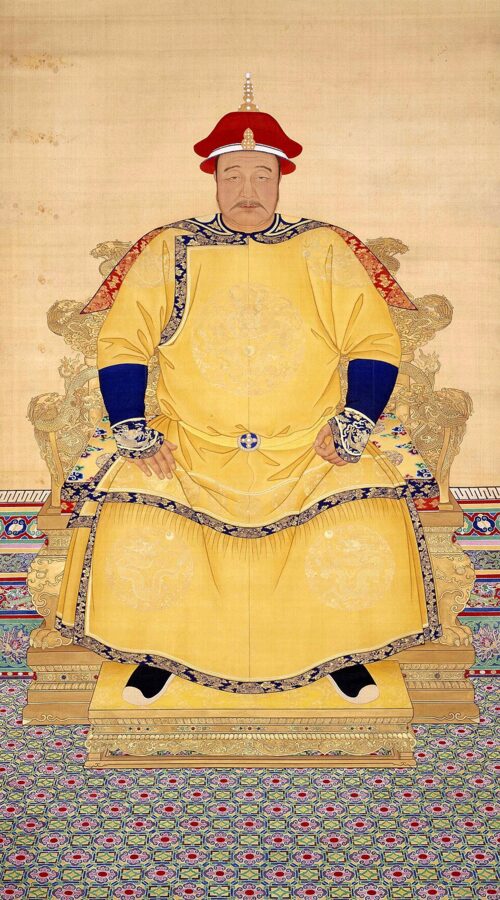
The palace around it is where the Manchus got their name. In 1635 Hong Taiji (皇太极), the second ruler of a young state in the northeast, issued an order that his people would no longer be called Jurchen. From then on they were Manchu (满族, Manzu), and the year after that their state became the Qing. Nine years later Manchu armies were in Beijing, and a people from the forests beyond the Great Wall ran China until 1912.
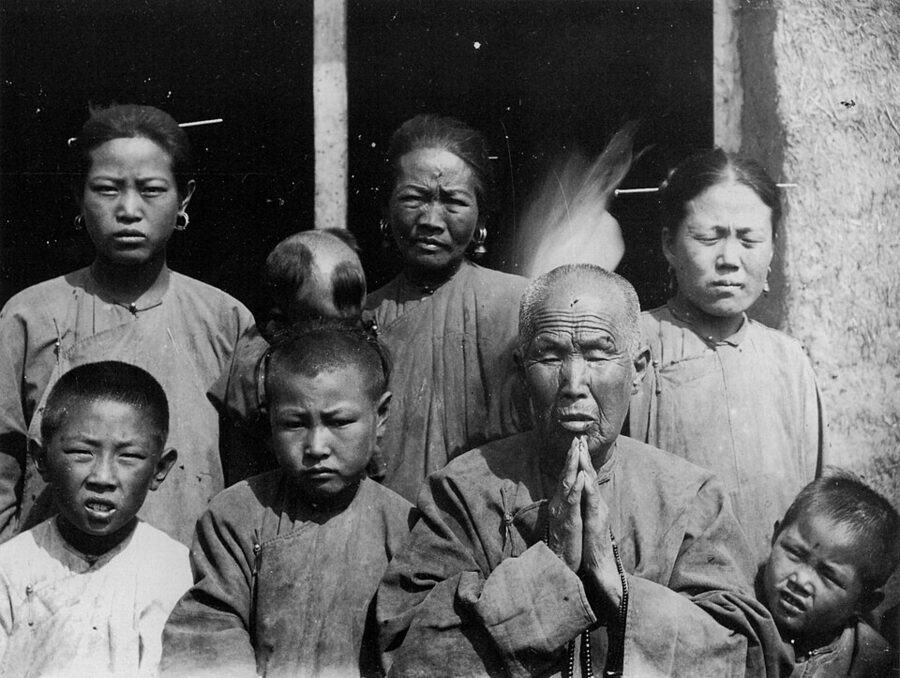
Today there are more than ten million Manchus, almost all of whom speak only Mandarin, and the language of the empire’s secret memorials survives in conversation among fewer than twenty elderly villagers. What survives in stone and timber is easier to find, from a hilltop town east of Shenyang to the palaces of Shenyang, Beijing and Chengde, and it explains a surprising amount of what you see in all of them.
On this page
Ten million people and a name from 1635
The 2020 census counted 10,423,303 Manchus, which makes them the sixth-largest of China’s 56 recognized nationalities. More than half live in Liaoning. The rest are spread through Hebei, Jilin, Heilongjiang, Inner Mongolia and Beijing, with old garrison communities in Xi’an, Chengdu, Guangzhou, Fuzhou and Lanzhou, where Manchu banner troops were posted for two centuries.
There are eleven Manchu autonomous counties, in Liaoning, Hebei and Jilin, plus two county-level cities with the same status and some three hundred Manchu townships. In most of them you would not know it from the street: the differences are in a surname, a family genealogy, a dish at New Year.
The number itself has a history. In 1982 the census found about 4.3 million Manchus; eight years later it found 9.8 million. Nobody was born that fast. After 1911, when being a bannerman could cost you a job or worse, families quietly registered as Han and took Chinese surnames, and in the 1980s, with ethnic policy relaxed and minority status carrying some advantages, many of them registered back.
What Hong Taiji renamed
The order is dated to the thirteenth day of the tenth lunar month of 1635. Its operative line says, roughly, that the state’s name is Manchu, handed down through the generations, and that from now on everyone must use that original name and stop calling it by the wrong one. The wrong one was Jurchen (女真, Nüzhen), the name under which their ancestors had founded an empire in the twelfth century and under which the Ming had filed them as frontier tribes.
Where “Manchu” comes from is still argued. The court’s own eighteenth-century history derived it from Manjushri, the bodhisattva of wisdom; other scholars trace it to a title used by Jurchen chiefs, or to an old Tungusic word for the lower Amur. The Qing had good reasons to prefer the bodhisattva.
The banners: an army that became a nationality
To understand why the name stuck, look at the banners. In 1601 Nurhaci (努尔哈赤) organized his followers into four companies under yellow, white, red and blue flags; in 1615 he added four more with borders, and the Eight Banners (八旗, Baqi) were complete. Every household belonged to a company, every company to a banner. In wartime the men were soldiers and in peacetime farmers, and the banner, not the clan, became the unit that fed, taxed and promoted you.
Hong Taiji then built parallel banners for the Mongols who joined him (eight of them by 1635) and for Han Chinese soldiers, the “Han martial” banners, complete by 1642. A bannerman of any origin had a status that a Han civilian did not: a stipend, a garrison quarter, a separate legal track. Over two centuries “Manchu” came to mean bannerman nearly as much as it meant a line of descent, and by the end of the Qing many Han bannermen’s families counted as Manchu.
The banners still turn up in daily life in the northeast. At Spring Festival some Manchu families paste paper cut-outs above the door in their banner’s color: red, yellow, blue or white. The Bordered Yellow, Plain Yellow and Plain White banners were the “upper three” that belonged directly to the emperor; the other five were held by princes.
From the Jurchen Jin to Nurhaci’s Later Jin
The Manchus’ own histories reach back to the Sushen, a northeastern people who, according to the classics, sent stone-tipped arrows as tribute to the legendary emperor Shun. Under other names (the Yilou, the Wuji, the Mohe) the same forest peoples run through Chinese records for two thousand years. Some of the Mohe founded the kingdom of Bohai in 698, and by the tenth century their northern relatives were known as Jurchen.
In 1115 the Jurchen chief Wanyan Aguda declared himself emperor of the Jin (金, “gold”), after the river of his homeland, whose Jurchen name meant gold. Within twelve years the Jin had destroyed the Liao, taken the Northern Song capital at Kaifeng and carried off two Song emperors. They ruled northern China until the Mongols ended them in 1234, and by then the Jurchen who had moved south were largely indistinguishable from their Han neighbors.
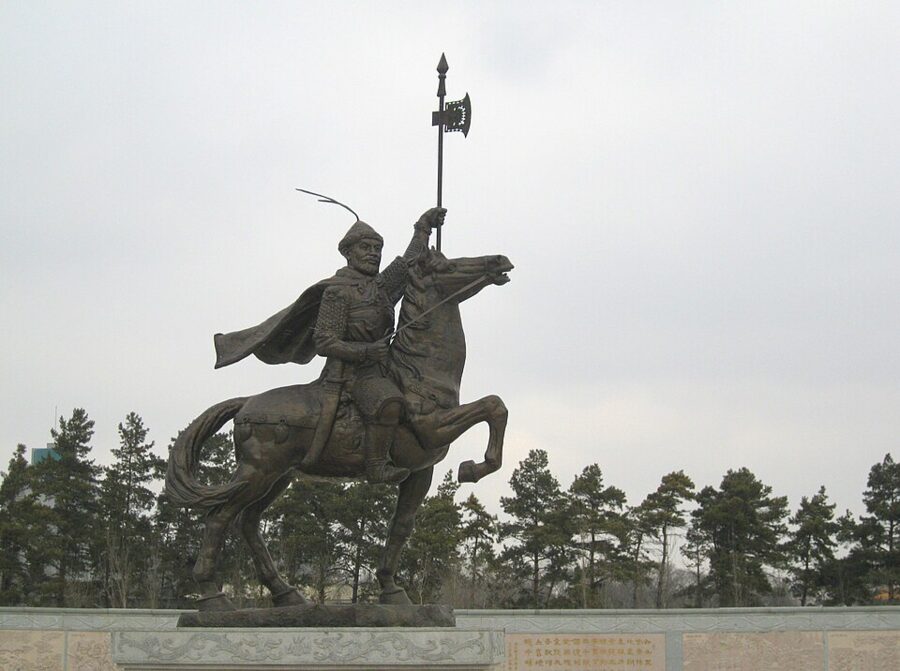

The Jurchen who stayed in the northeast lived under Ming supervision, organized into commanderies with hereditary chiefs who brought horses, furs and ginseng to the border markets. One of those chiefs was Nurhaci, born in 1559 into the Aisin Gioro clan of the Jianzhou Jurchen. In 1583 his grandfather and father were killed by Ming forces in a raid they had been helping. Nurhaci rose against the chief he blamed, with, by tradition, thirteen suits of armor inherited from his father.
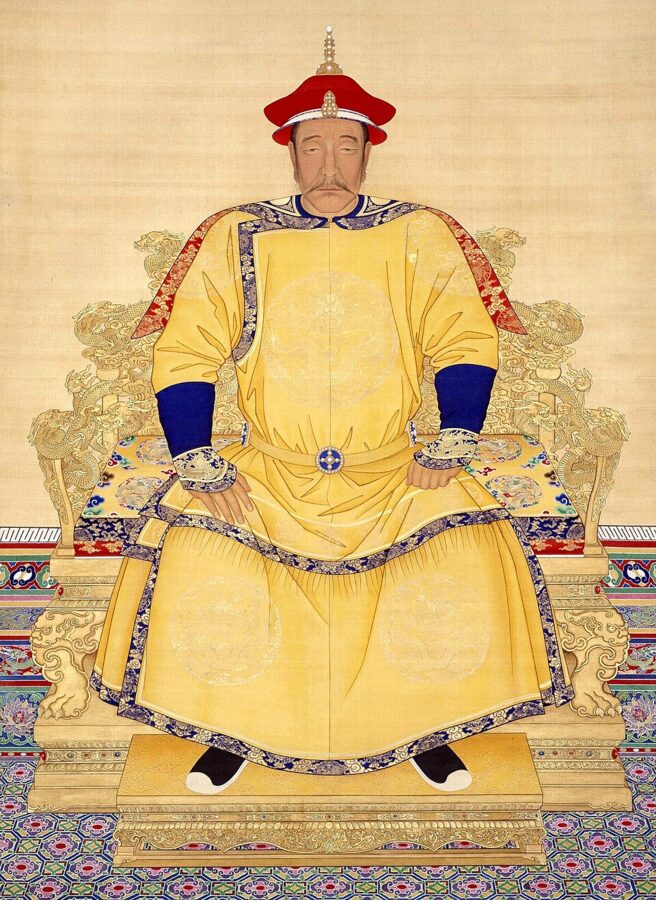
Over the next thirty years he absorbed or defeated the other Jurchen confederations. In 1603 he built a walled town on a flat-topped ridge above the Suzi River, east of present-day Fushun, and called it Hetu Ala (赫图阿拉), “the flat ridge”. On the first day of the first lunar month of 1616 he proclaimed himself khan there and named his state Jin, which history calls the Later Jin. In 1618 he published the Seven Grievances against the Ming, and in 1619 his banners destroyed a much larger Ming army at Sarhu, between his capital and the Ming frontier.
Mukden, and the jump through the wall
Nurhaci moved his capital west to Liaoyang in 1621 and then to Shenyang in 1625, where work started on the palace. He died in 1626 of wounds or illness after his only serious defeat, at the Ming fortress of Ningyuan. Hong Taiji succeeded him, renamed the city Shengjing in 1634 (Mukden in Manchu), renamed the people in 1635, and in 1636 took the title of emperor of the Great Qing.
Hong Taiji died in 1643. The next spring the rebel Li Zicheng took Beijing, the last Ming emperor hanged himself, and the Ming general Wu Sangui, holding Shanhai Pass at the end of the Great Wall, let the Manchu regent Dorgon through to fight the rebels. By autumn the six-year-old Shunzhi Emperor had been installed in the Forbidden City. In 1645 every Han man was ordered to shave his forehead and wear his hair in the Manchu queue, on pain of death.

How a small people held China for 268 years
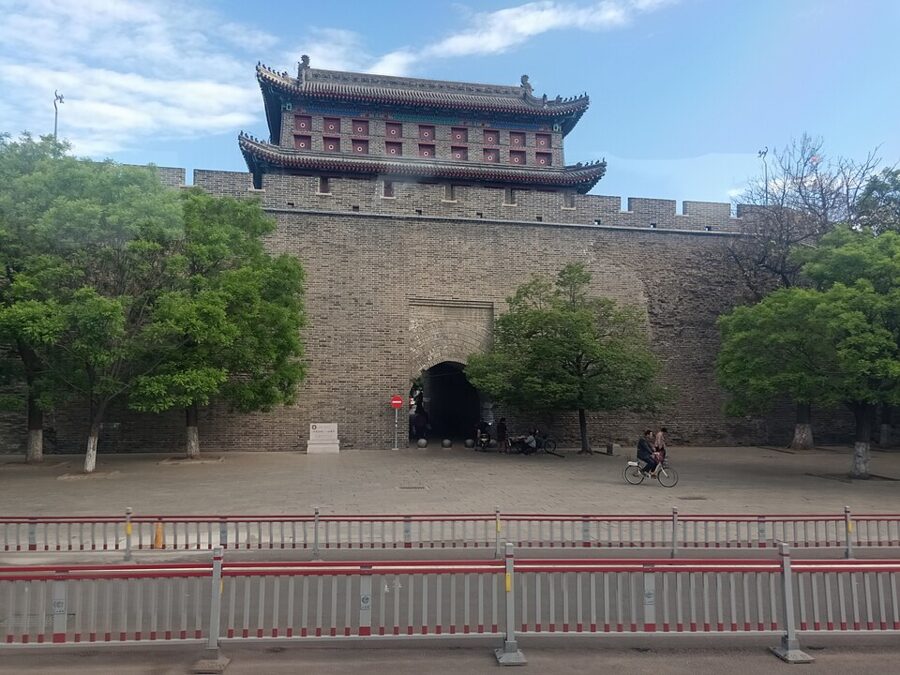
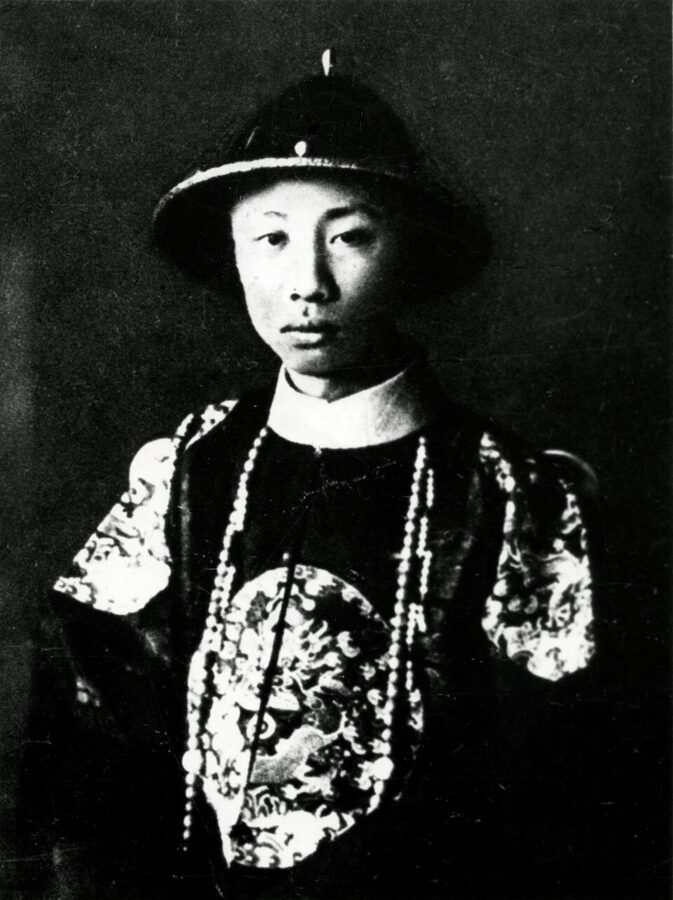
The Qing ruled from 1644 to the abdication of the last emperor, Puyi, on February 12, 1912. Part of the answer to how they lasted is the banners: garrisons in Beijing and in walled Manchu quarters of the major cities, kept apart from the Han and paid by the state. Part is that they ruled through the Ming bureaucracy rather than against it, with Manchu and Han officials paired in the top posts. And part is three long, capable reigns: Kangxi (1661–1722), Yongzheng (1722–1735) and Qianlong (1735–1796).
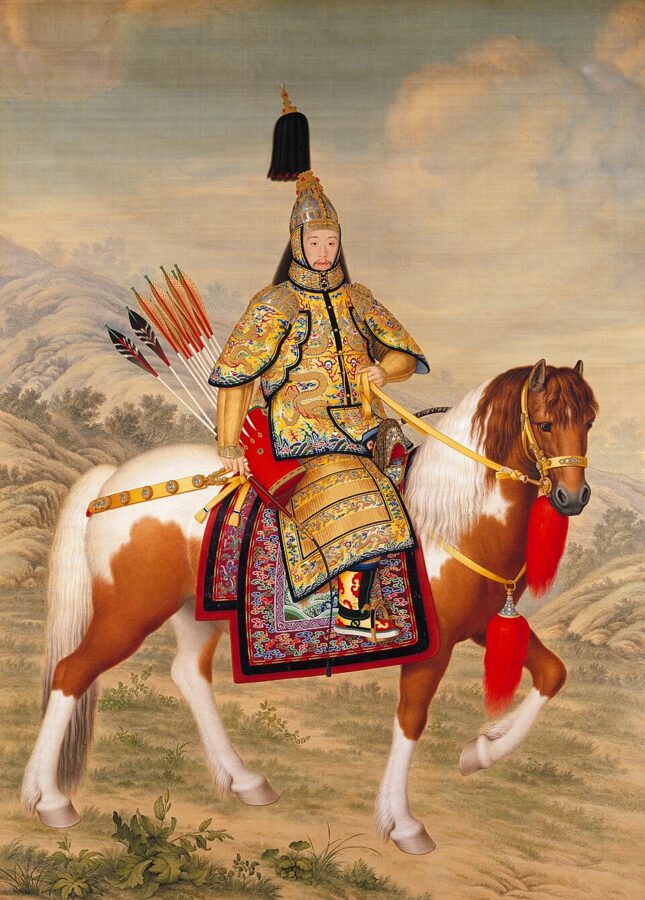
The success had a cost that the emperors saw coming. Bannermen garrisoned in Chinese cities for generations spoke Chinese and lived on stipends that did not grow with their families. In 1741 Qianlong complained in an edict that princes, officers and guards no longer practiced archery or studied Manchu, and that in government offices everyone spoke Chinese.
He ordered the language standardized and threatened clan heads with punishment if their young men did not learn it. It made very little difference.
The northeast homeland was officially closed to Han settlement for most of the dynasty. In the late nineteenth century, under pressure from Russia, the court reversed that, and millions of Han farmers from Shandong and Hebei moved north. Han settlers soon far outnumbered the bannermen in the homeland, and the revolution of 1911 came with anti-Manchu violence in several garrison cities. Families changed their names: Guwalgiya became Guan, Niohuru became Lang or Niu, and a dozen clans ended up as Zhang.
Manchu script: Mongol letters, written down the page
The Jurchen of the Jin had a script of their own, but by Nurhaci’s time it was forgotten and his chancery wrote in Mongolian. In 1599 he ordered two scholars, Erdeni and Gagai, to adapt the Mongol alphabet to the Manchu language. In 1632 Hong Taiji had the scholar Dahai add dots and circles beside the letters to separate sounds the Mongol letters ran together, and that “script with circles and dots” is what you see on every Qing plaque.
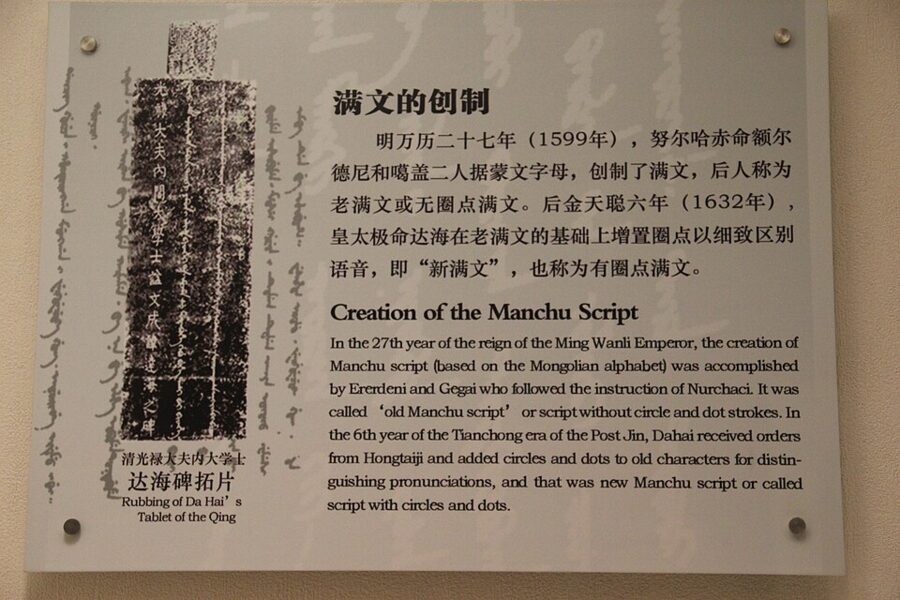
It is written in vertical columns that run from top to bottom and are read from left to right, the opposite direction to vertical Chinese. Letters change shape depending on whether they come at the start, middle or end of a word, as in Arabic. Learners in the Qing memorized the syllables in twelve tables, and the classic count runs to more than 1,400 basic syllables.
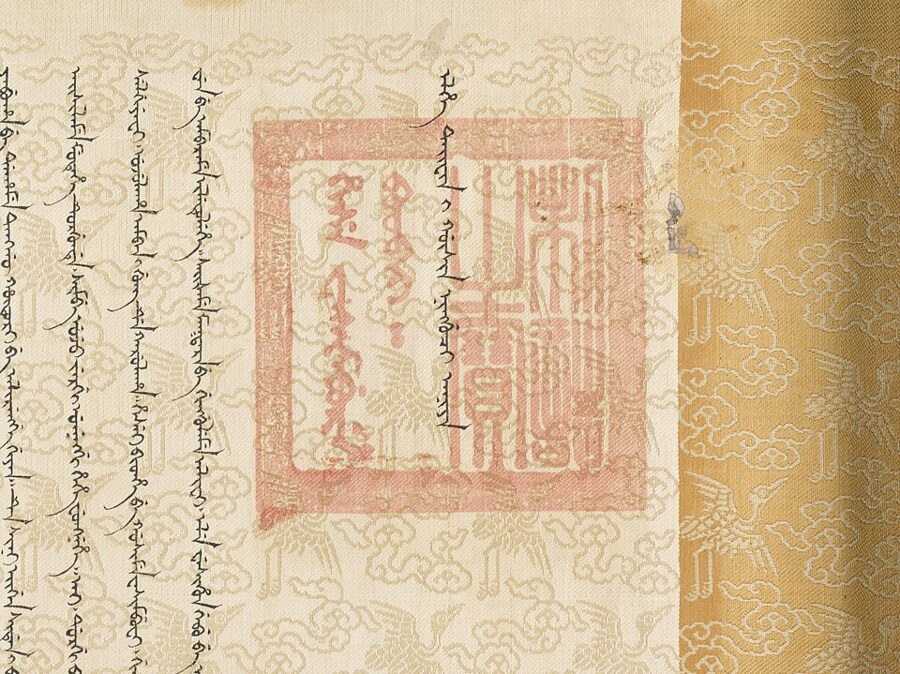
Manchu became one of the state’s official languages. Edicts and appointments went out in Manchu and Chinese, and documents on frontier, military and banner affairs were often in Manchu alone. The Treaty of Nerchinsk with Russia in 1689 was drawn up in Manchu, Russian and Latin, with Latin as the authoritative text and no official Chinese version at all.

Reading the bilingual plaques
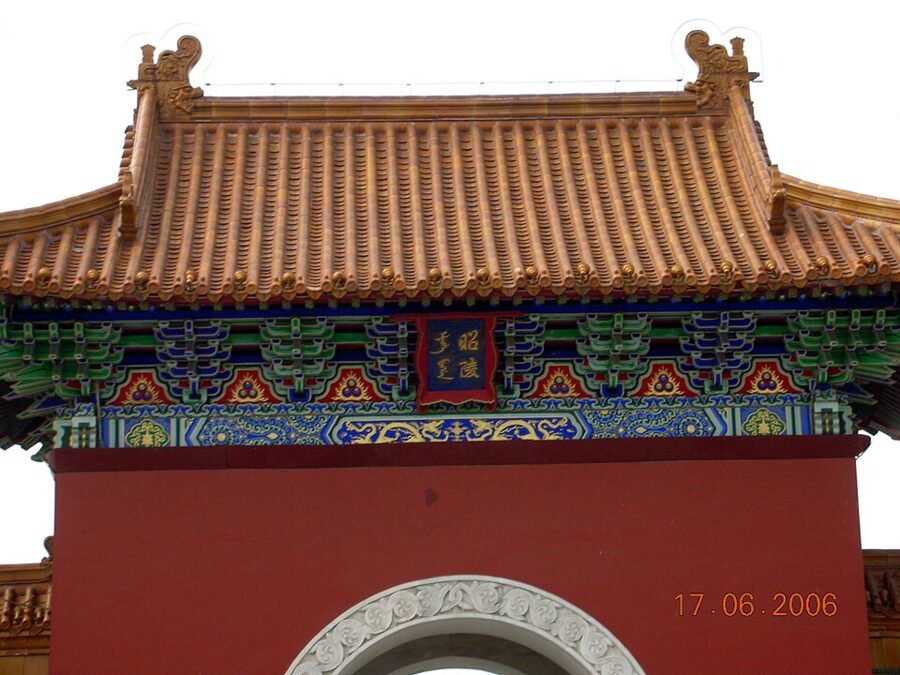
The easiest Manchu to see in China is overhead. Name plaques on Qing buildings carry the Chinese name and the Manchu name side by side, and on some of the grander buildings Mongolian and Tibetan as well. At the Zhaoling tomb in Shenyang the plaque over the Red Gate is in Chinese and Manchu; at the Palace of Heavenly Purity in Beijing, the emperor’s residence, the plaque is the same.
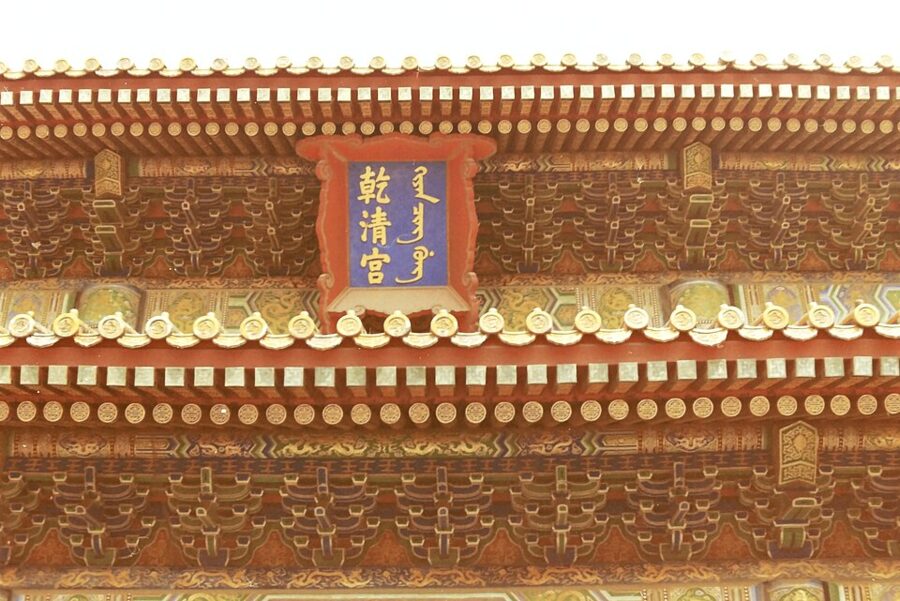

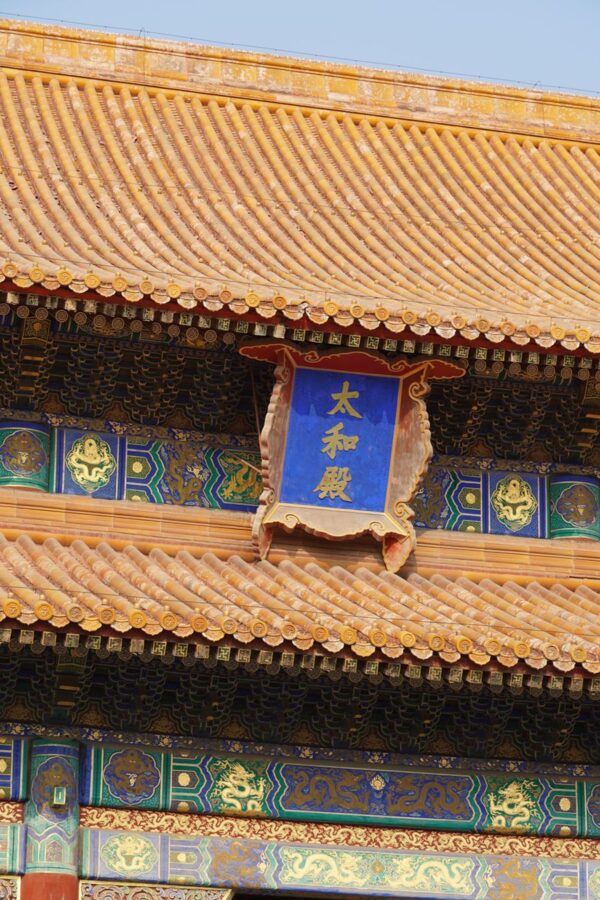
Then walk south into the outer court and look up at the Hall of Supreme Harmony. Its plaque is in Chinese only. In 1915, preparing to make himself emperor, Yuan Shikai had the Manchu removed from the plaques of the outer court’s halls and gates, the part of the palace he controlled, and the Chinese moved to the center. The inner court, where the abdicated Puyi was still living, kept its bilingual plaques, and the line between the two is still visible on the buildings.
The last native speakers
Spoken Manchu was already in retreat in Beijing by the middle of the eighteenth century. The Empress Dowager Cixi did not read it, and Puyi learned only a little. Where it held on was in the northeast countryside, in garrison villages along the Nen and the Amur, away from Han settlers.
The best known is Sanjiazi (三家子), on the east bank of the Nen River about 20 km from Fuyu county town, in Heilongjiang’s Qiqihar prefecture. It was settled in 1689 by three families, Ji, Meng and Tao, soldiers of the river flotilla that had fought the Russians at Albazin, and its Manchu name, Ilan Boo, means “three households”. In 1961 a survey team led by the historian Jin Qicong spent a month there and found that nearly all of the village’s 80 Manchu households spoke the language, the old people better than they spoke Chinese.
Forty years later the picture had reversed. A 2002 survey by researchers from Heilongjiang University and the Chinese Academy of Social Sciences found that only about one in ten villagers aged 7 to 20 could follow simple everyday phrases. National press reports in 2026 put the number of people anywhere who can hold a conversation in Manchu at fewer than twenty, all elderly, all in a handful of Heilongjiang villages.
The village has a Manchu-language primary school, a museum of household objects collected from villagers, and since 2021 a cultural center built for about 4.86 million yuan, where 31 villagers with the best spoken Manchu were certified as tradition-bearers. Their oral folk tales have been on Heilongjiang’s provincial intangible heritage list since 2013. Sanjiazi is a working farm village, not a scenic area: the county describes it as mainly receiving researchers and official delegations, and it publishes no visiting hours.
Archives, classrooms and a sister language
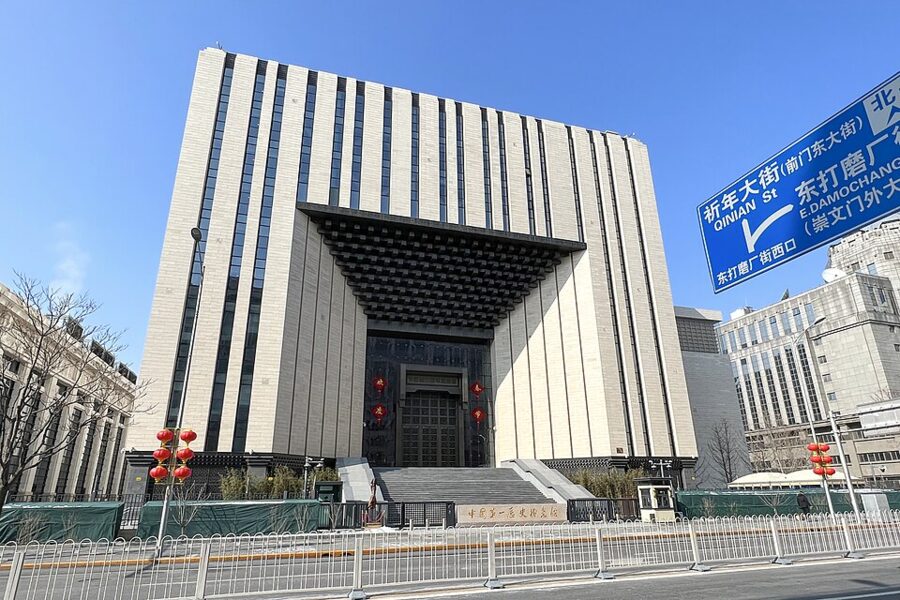
Written Manchu has a much healthier afterlife, because historians cannot do without it. The First Historical Archives of China in Beijing hold more than two million Manchu documents, about two-thirds of all that survive in the country, and by 2025 more than 400,000 had been catalogued and opened. Its Manchu department is eighteen people. Heilongjiang University’s Manchu studies institute in Harbin is the only place in China that teaches the language from the bachelor’s degree through the doctorate, and its graduates staff archives like these.

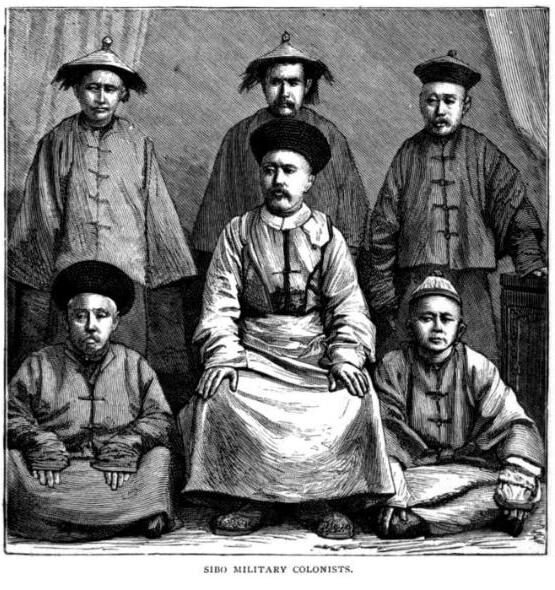
The language’s closest living relative is Xibe. In 1764 the Qianlong court moved Xibe banner soldiers and their families from the northeast to garrison the Ili valley on the Kazakh frontier, and their descendants in Qapqal county in Xinjiang still speak a language that is, in effect, a dialect of Manchu, written in a lightly reformed version of the same script. If you want to hear something close to the Qing court’s spoken language today, Qapqal is the place, not Shenyang.
Customs you meet without knowing they are Manchu
In language and most daily habits the Manchus are fully assimilated, but a good deal of what China now thinks of as simply Chinese arrived with them.
The qipao’s ancestry
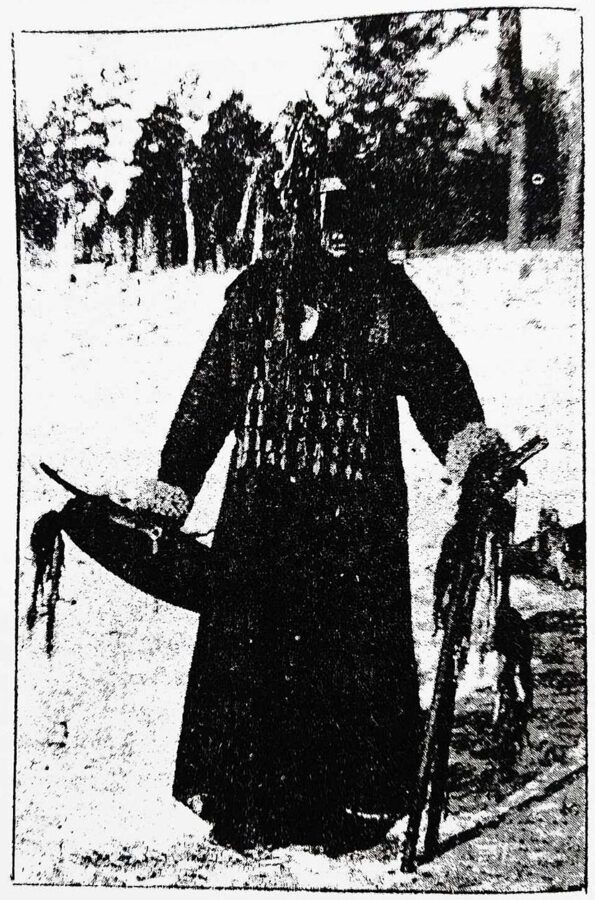
Manchu dress was cut for riding. Men wore long robes split at the sides, belted at the waist, with cuffs that flared over the back of the hand like a horse’s hoof (马蹄袖, matixiu): folded back in ordinary use, turned down to cover the hands when hunting in winter, and later flicked down as a gesture of court etiquette. Over the robe went the short riding jacket, the magua, which became standard men’s wear across China.
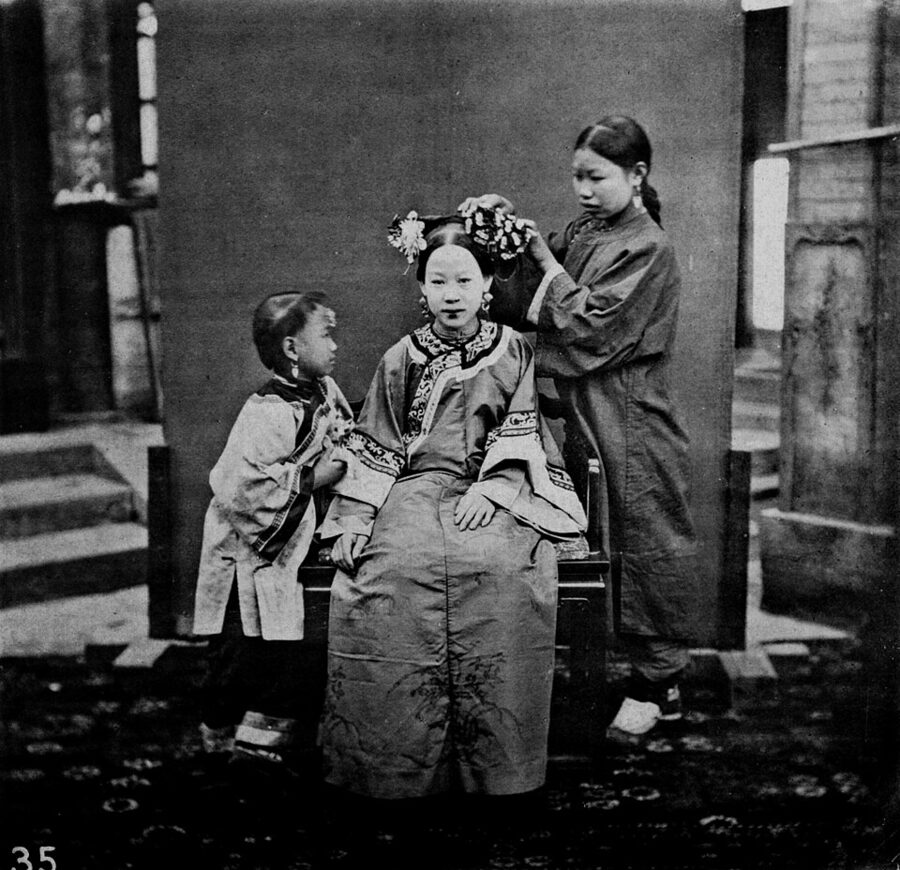
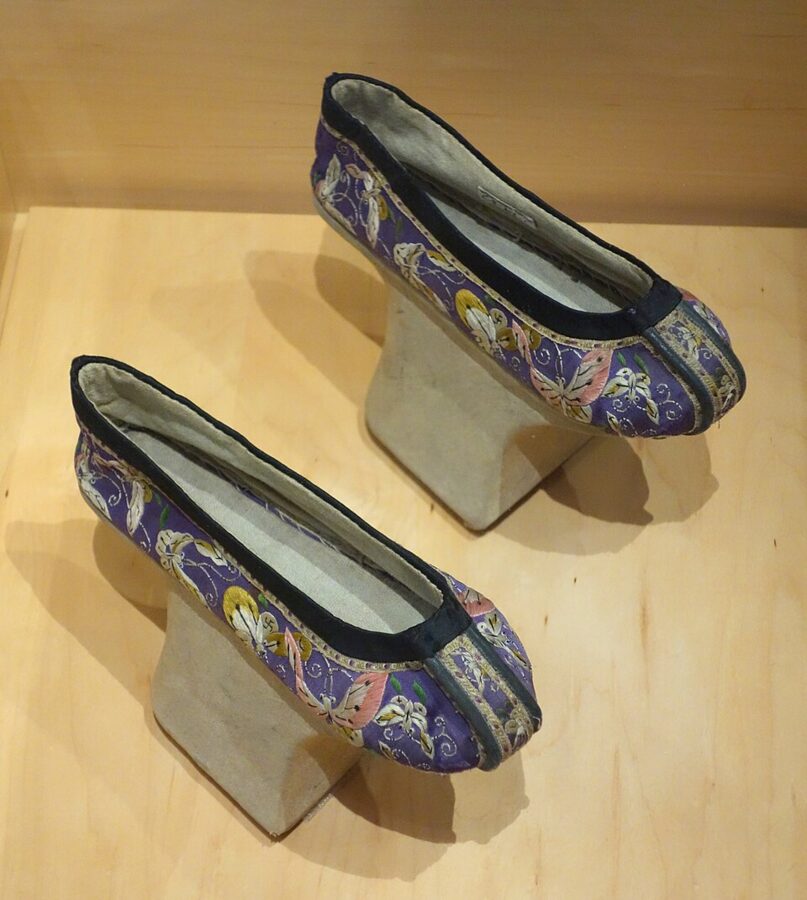
Women wore a straight, loose robe to the ankle, with a high collar and a fastening across the right side of the chest. Manchu women never bound their feet. Those of rank wore shoes on a wooden platform set in the middle of the sole, three or four inches high and later more, which left a print like a hoof; girls began wearing them at thirteen or fourteen, and the style faded out after the fall of the Qing.
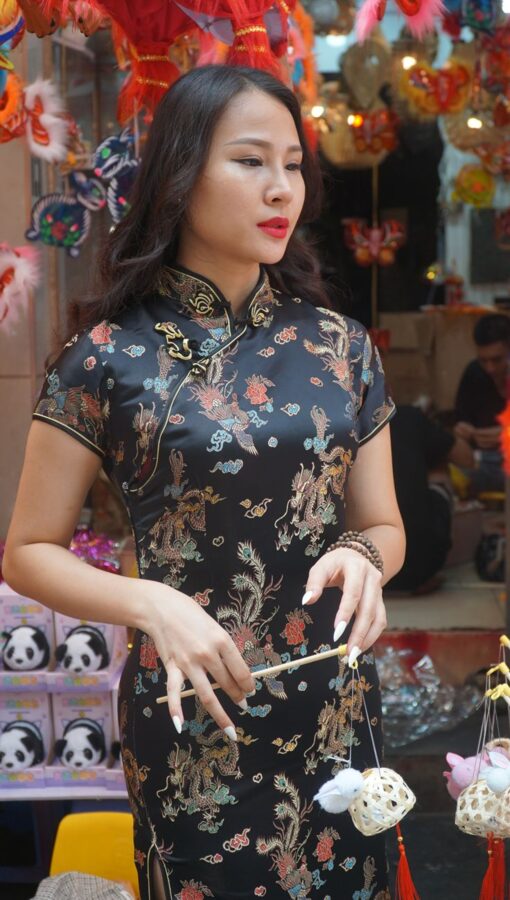
The name tells the story. Qipao (旗袍) means “banner robe”, the dress of the banner people. The fitted version that spread from Shanghai in the 1920s and 1930s, and that the rest of the world knows by its Cantonese name, cheongsam, is a long way from a Qing robe, but its collar and its curved opening across the chest are Manchu.
Houses built around a heated bed
A traditional Manchu house faces south, with the door set off-center in the east bay so the main room runs west from the entrance like the inside of a sack: northeasterners call it a “pocket house”. Inside, a heated brick bed, the kang, runs around three walls, south, west and north. The west kang is the place of honor, under the shelf for the ancestor tablets, and nobody sits there casually or piles things on it.
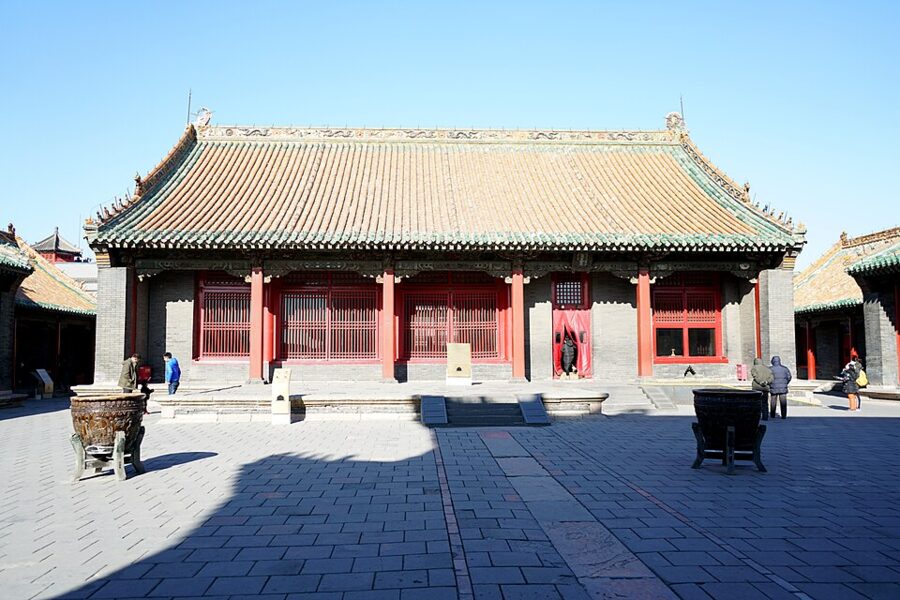

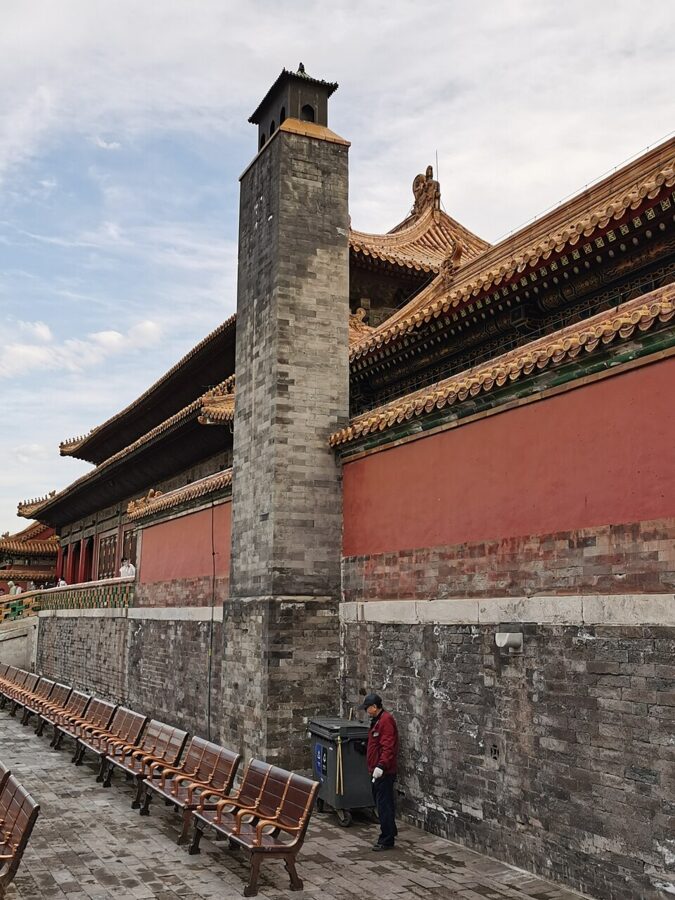
The flues under the kang need a chimney, and Manchu chimneys stand on the ground beside the house rather than rising through the roof. You can see one beside the Palace of Earthly Tranquility in the Forbidden City, which is the clearest sign of what the Qing did to that building.

Shamans, crows and the pig in the cauldron
The Manchu religion was shamanic, centered on household rites for ancestors and spirits and on the sky offering at the spirit pole. At a great family sacrifice a black pig was chosen and wine poured into its ear; if the pig shook its head, the spirits had accepted it. The meat was boiled without seasoning, offered before the ancestor tablets on the west wall, then eaten by the whole family with salt, and any guest who walked in could kowtow three times to the ancestors and sit down to eat without being asked.
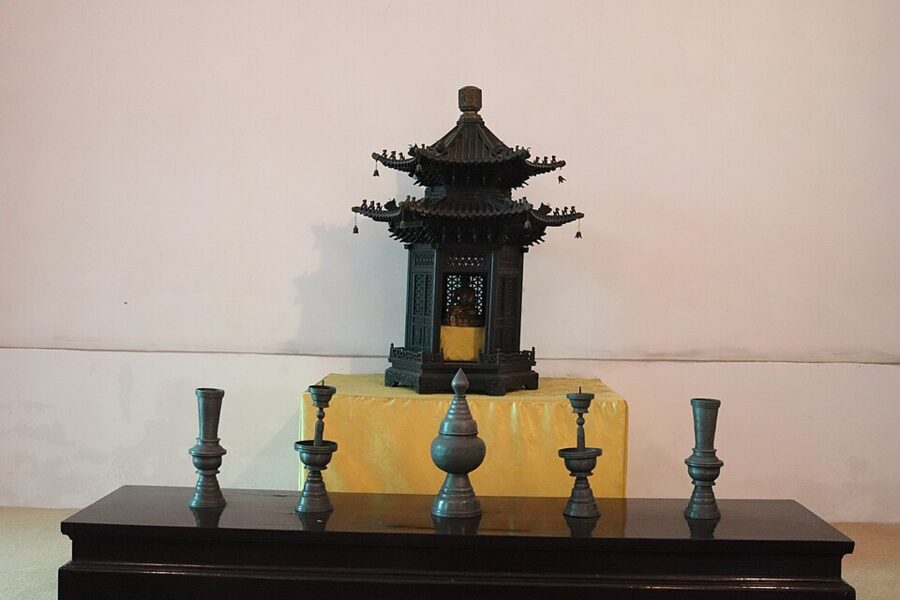

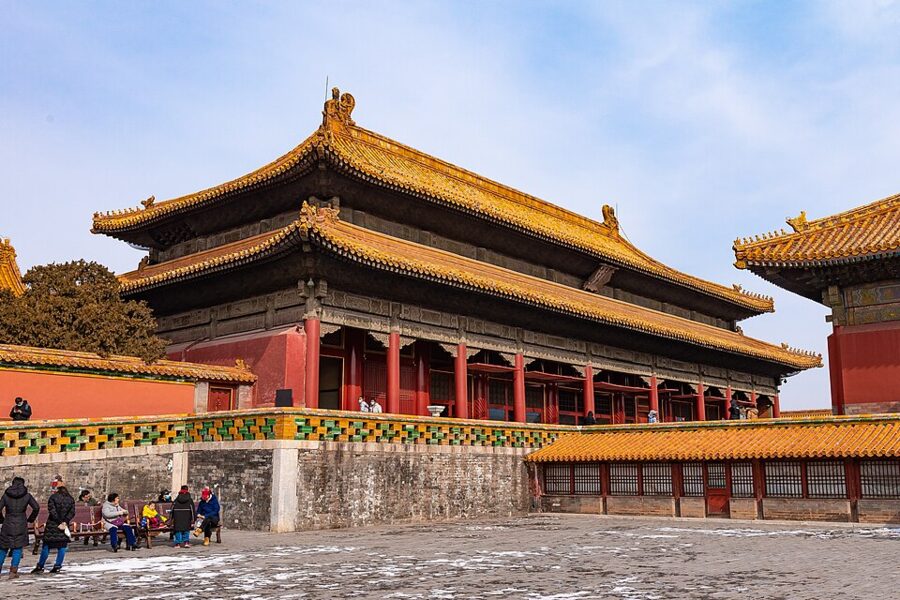
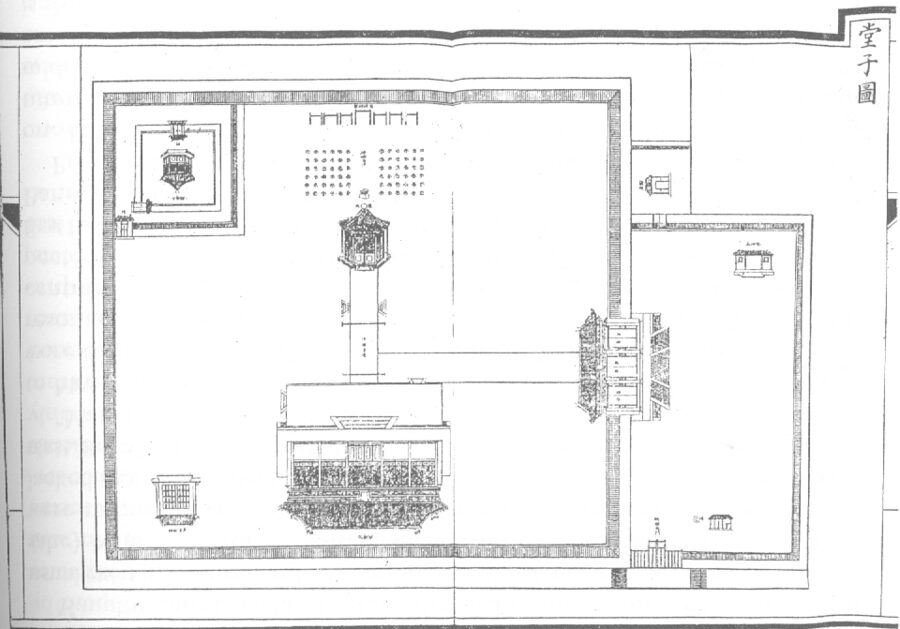
The Qing took this into the palace. In Shenyang the west room of Qingning Palace was the shrine for morning and evening rites. In Beijing they rebuilt the Ming empresses’ Palace of Earthly Tranquility (坤宁宫, Kunninggong) on the Shenyang model, with kang, cauldrons and the door moved off-center, and the court held shamanic rites there until the end of the dynasty. Outside the palace they built a separate imperial shrine for the state rites, the tangse (堂子, tangzi), which was cleared after 1900.

Two other old beliefs are still remembered. Many Manchus will not eat dog meat or wear a dog-fur hat, and the crow is a bird to be fed, not chased: a legend has a dog and a flock of crows saving the young Nurhaci from his pursuers, a story that may well have been fitted to the older customs after the fact.
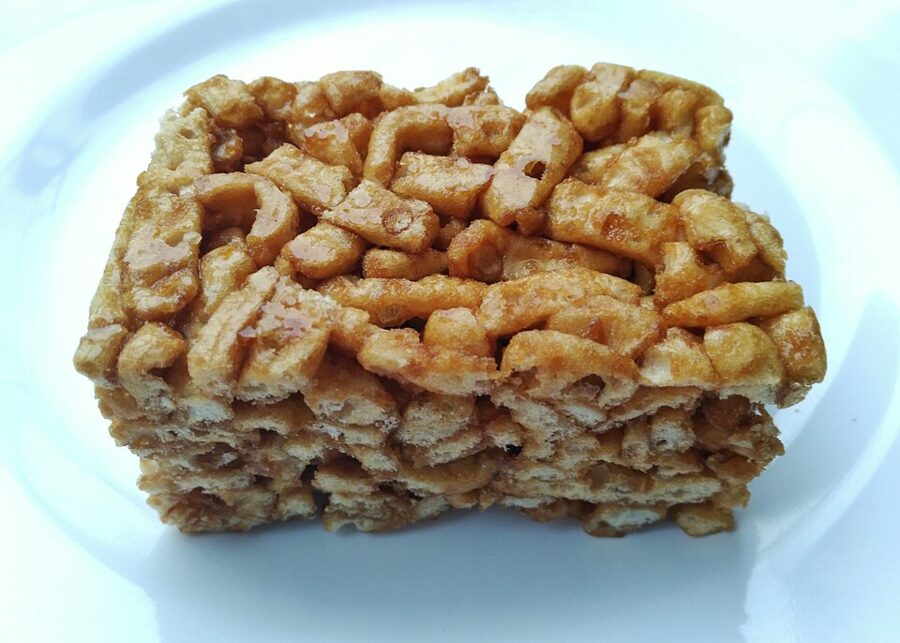
Sachima, hotpot and the banquet that never was
The one Manchu food everyone in China eats is sachima (萨其马), the sticky slab of fried batter strands bound with syrup that comes wrapped in cellophane in every corner shop. The name is Manchu, sacima, and the eighteenth-century Qing dictionary glossed it as a sugar-coated sweet. It began as an offering at the imperial tombs in the northeast and became one of Beijing’s standard pastries after the conquest.

The everyday Manchu table in the northeast is heavier and plainer. Boiled pork, blood sausage and pickled cabbage (酸菜白肉, suancai bairou) is the winter dish of the region, along with sticky-millet buns filled with bean paste and a sour fermented corn noodle called suantangzi in Xiuyan. Northeastern cooks also like to claim that the copper hotpot is Manchu, from Jurchen hunters boiling game in a pot over a fire to the hotpots at the Qianlong Emperor’s banquet for thousands of elders in 1785. The Mongols tell the same story about themselves, and both have a case.
The Manchu-Han Imperial Feast (满汉全席, Man Han quanxi) is a harder claim. The phrase first appears in a book about eighteenth-century Yangzhou, where officials laid on enormous banquets mixing Manchu roasts with southern Han dishes to entertain visiting dignitaries. The version with 108 dishes eaten over three days, which restaurants now sell, is a later assembly. Treat any menu that offers it as theater.
The Banjin festival
Since 1989 Manchu communities have marked the anniversary of Hong Taiji’s renaming as Banjin Day (颁金节, Banjinjie), from the Manchu banjin inenggi, “day of birth”. It falls on the thirteenth day of the tenth lunar month, which was November 21, 2026 and will be November 10, 2027. Some accounts of the 1989 conference give a fixed date of December 3 instead; in practice celebrations fall on a weekend near the lunar date, in Manchu museums and village halls across the northeast.
Where the Qing still stands
Manchu heritage is mostly imperial heritage, which makes it easy to see and a little misleading: the people who farmed at Sanjiazi do not appear in it. Go to the big sites for the history, and to the northeast for the scale of what the Manchus started from.
Shenyang: the palace and two tombs
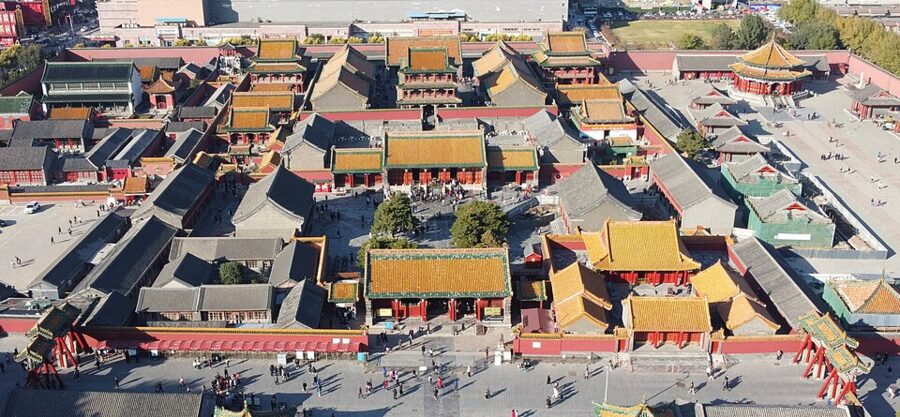
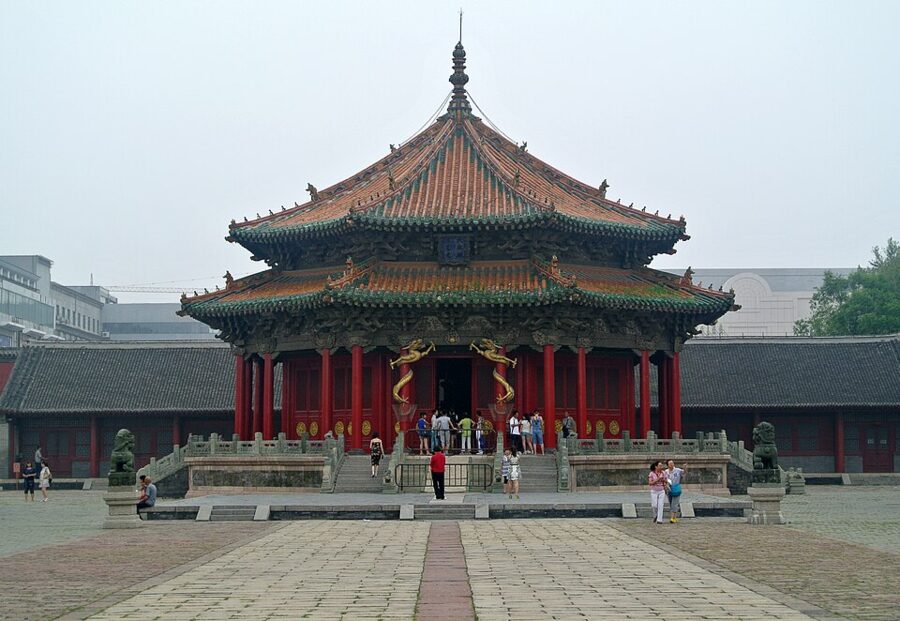
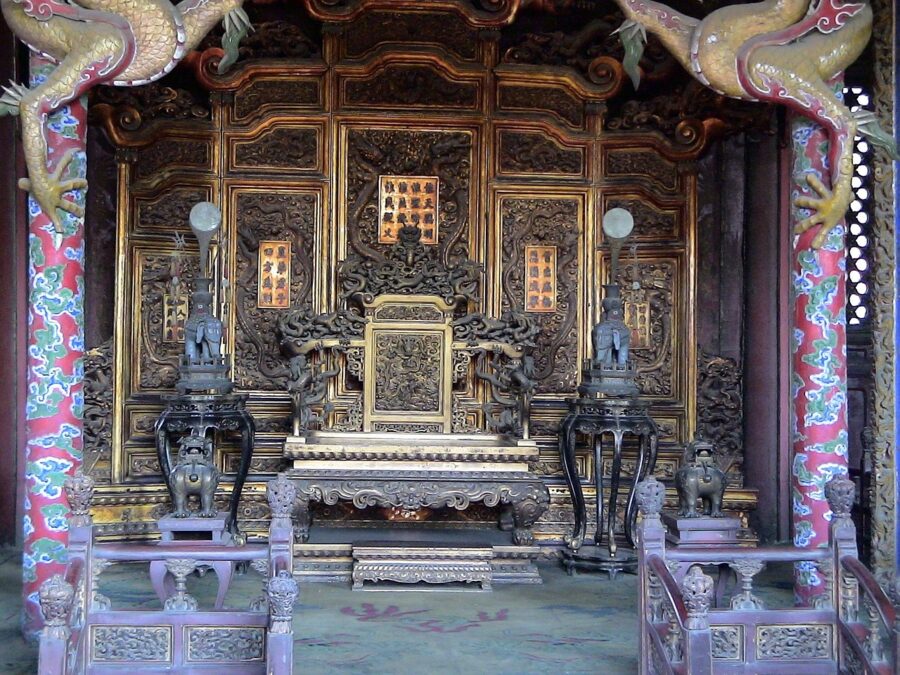
The Shenyang Imperial Palace (沈阳故宫, Shenyang Gugong) is the first place to go and the one that explains the rest. It was built in three stages: the eastern section with Dazheng Hall and the Ten Kings Pavilions under Nurhaci, the central section with the throne hall, the Phoenix Tower and Qingning Palace under Hong Taiji, and the western section with the library under Qianlong. Four Qing emperors stayed here on ten tours back to the homeland. In 2004 it was added to the Forbidden City’s World Heritage listing.
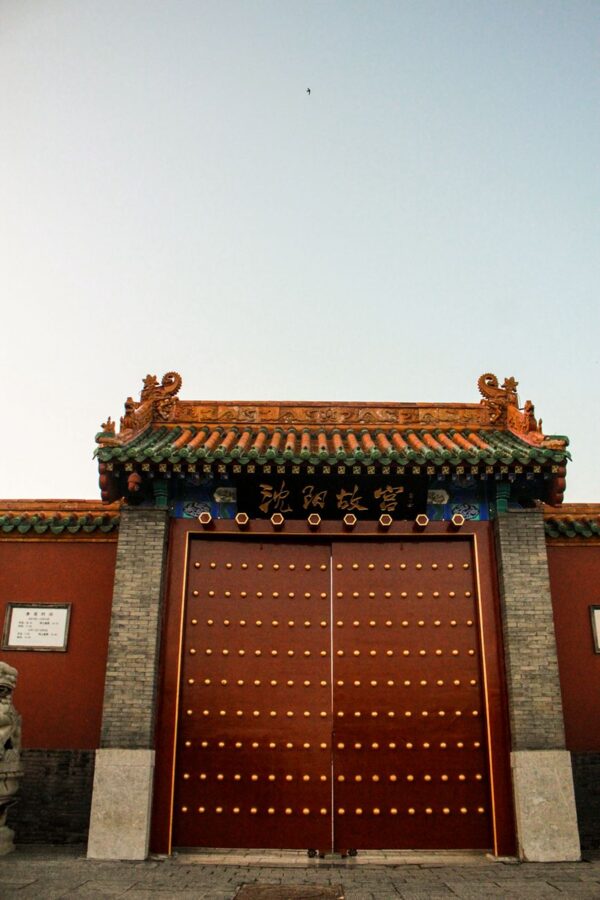
Walk it in the order it was built: Dazheng Hall first, the banner system made into a courtyard, then the central section to the high platform at the back, where Qingning Palace and its spirit pole stand above the throne hall. The Manchu household sits, literally, above the state. Look for the two carved dragons coiled around the columns at Dazheng Hall’s door.
The palace is open Tuesday to Sunday, 08:30–17:00 from April 10 to October 10 (last entry 16:15) and 09:00–16:30 from October 11 to April 9 (last entry 15:45), and closed on Mondays except public holidays. Admission is 50 yuan. Since June 15, 2025 every visitor has to book a named ticket in advance and show the same ID at the gate; foreign visitors book with a passport. The museum’s real-name booking rules list the official channels, the museum’s website and its WeChat account, and in 2026 the museum is marking its hundredth year with an exhibition of a hundred objects at its separate culture museum on Chaoyang Street.
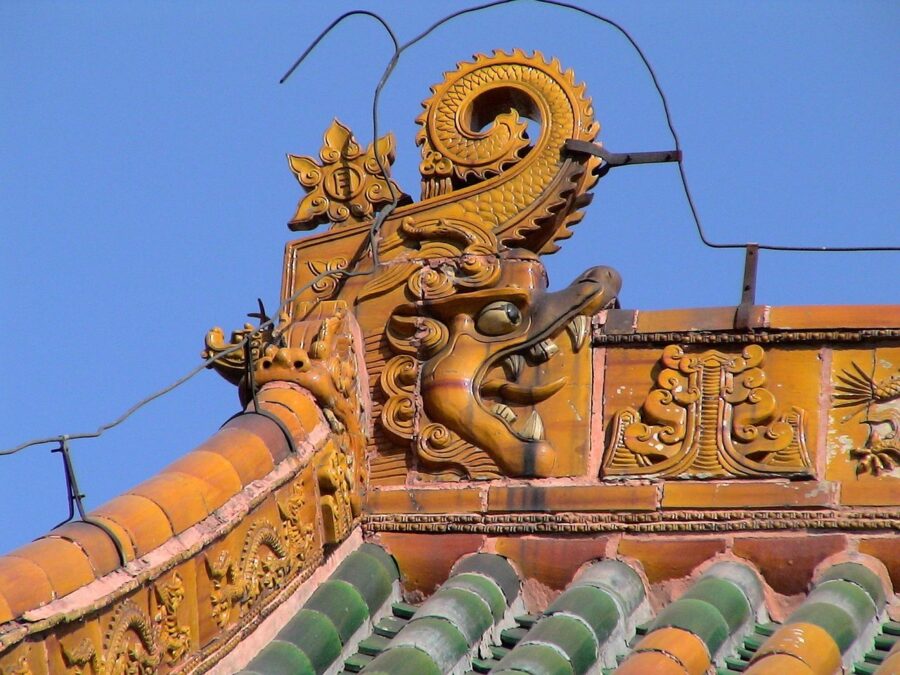
Shenyang has two of the three imperial tombs from before the conquest, and both are worth the trip. Fuling (福陵), the East Tomb, holds Nurhaci and his empress Yehe Nara; it was begun in 1629, finished in 1651, and climbs Tianzhu Hill above the Hun River in the eastern suburbs. It sits inside Dongling Park, which is open 08:00–17:00. Ticket prices quoted in 2025 range from about 30 yuan to 50 yuan for the tomb enclosure; check at the gate.
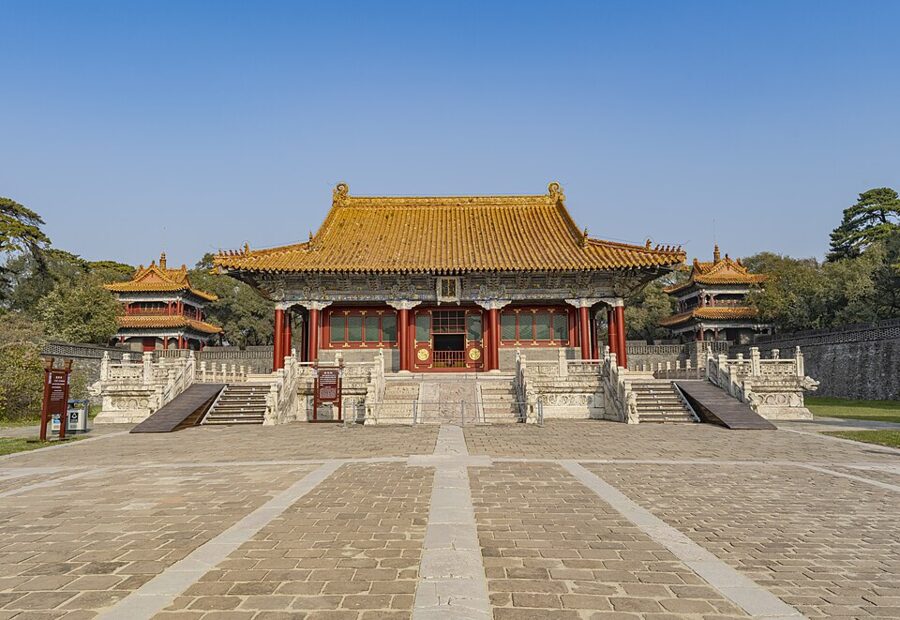

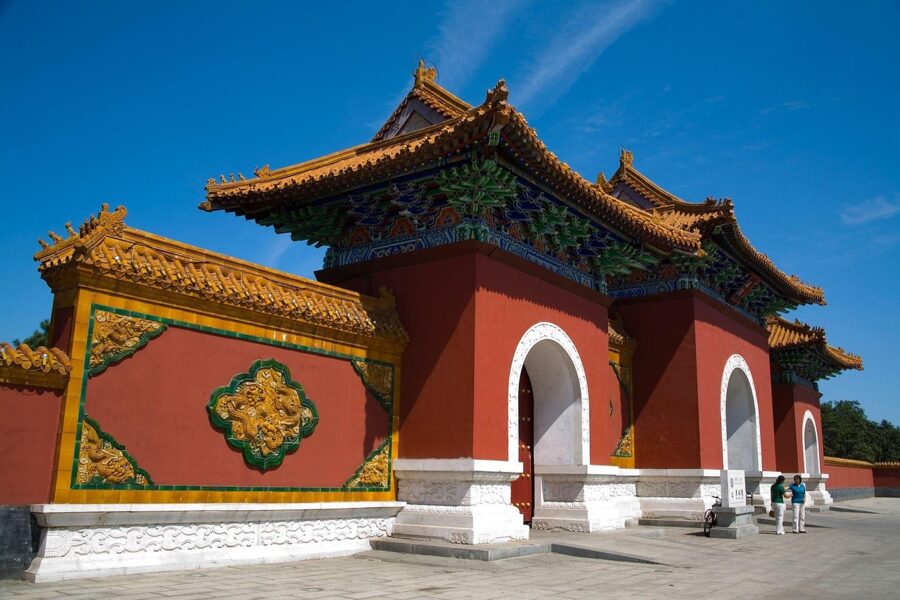
Zhaoling (昭陵), the North Tomb, holds Hong Taiji and his empress; it was begun in 1643 and is now the center of Beiling Park in Huanggu district, at 12 Taishan Road. The park ticket is 5 yuan and the tomb enclosure about 40 yuan from April to October and 20 yuan in winter. Look up at the Red Gate as you go in: the plaque is in Chinese and Manchu.

Beijing and Chengde
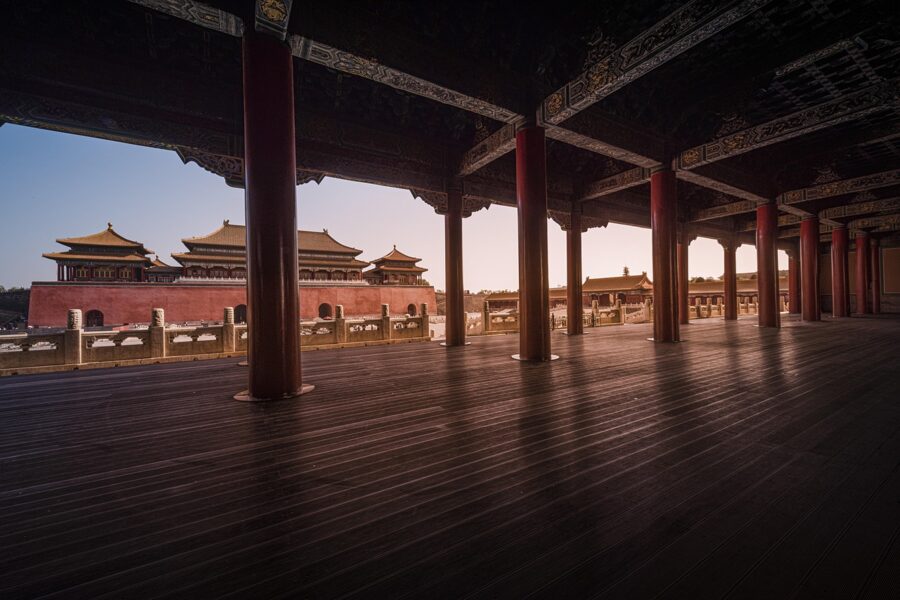
In the Forbidden City the Manchu story is in the inner court: read the bilingual plaques from the Gate of Heavenly Purity northward, and finish at the Palace of Earthly Tranquility for the shrine and the chimney.
Admission is 60 yuan from April to October and 40 yuan from November to March; there are no same-day tickets, and the Palace Museum’s booking page opens each date seven days ahead at 20:00, with a passport for foreign visitors and entry only by the Meridian Gate. It is closed on Mondays except public holidays.
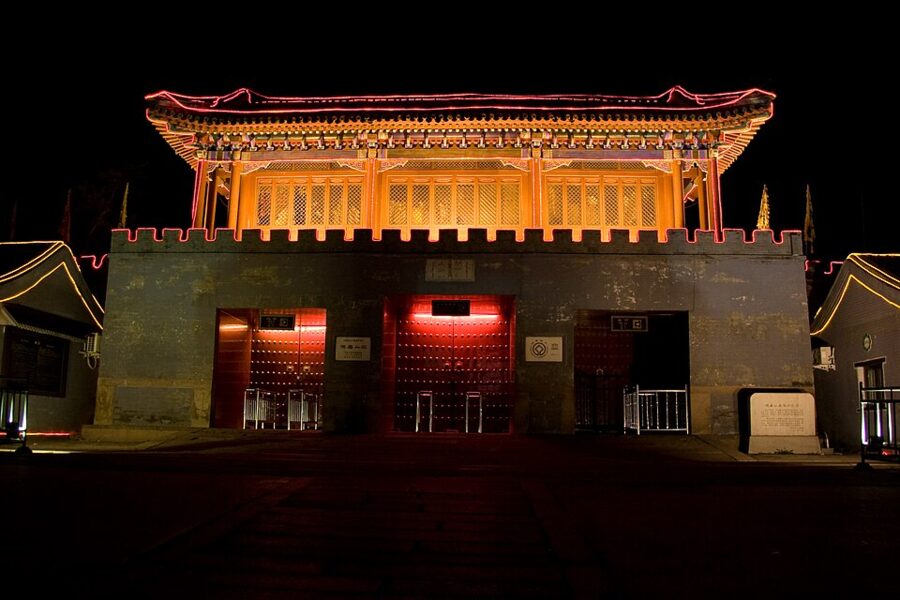
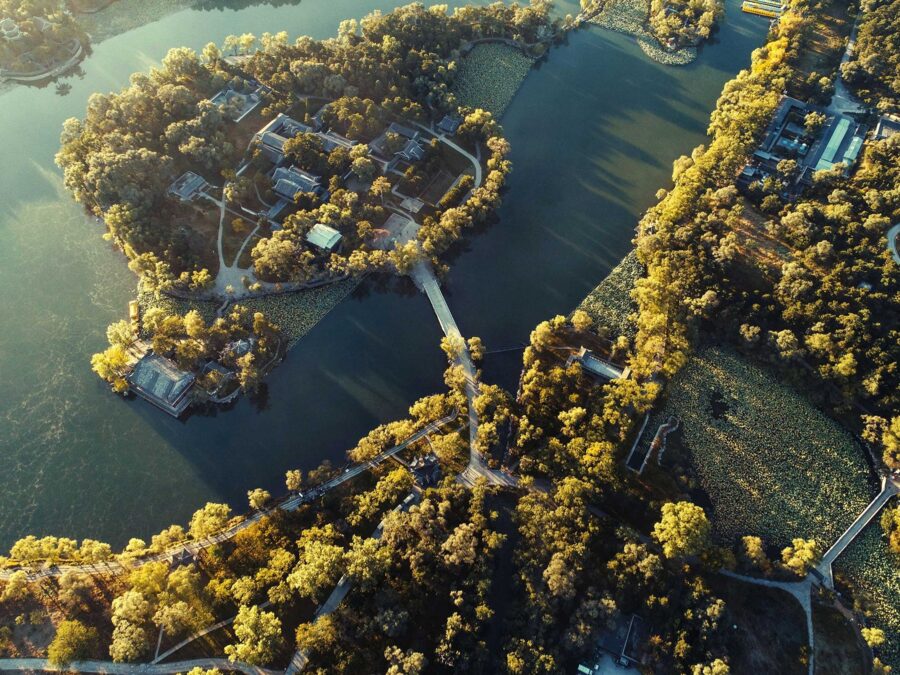
Chengde, northeast of Beijing and linked to it by high-speed rail, is where the Qing emperors went in summer to hunt and to receive the Mongol, Tibetan and Central Asian princes they ruled. The Mountain Resort was begun by Kangxi in 1703. Its main gate, Lizhengmen, carries a stone plaque of 1754 in five scripts, Manchu, Tibetan, Chinese, Uyghur and Mongolian, which is the empire’s own statement of whom it governed.

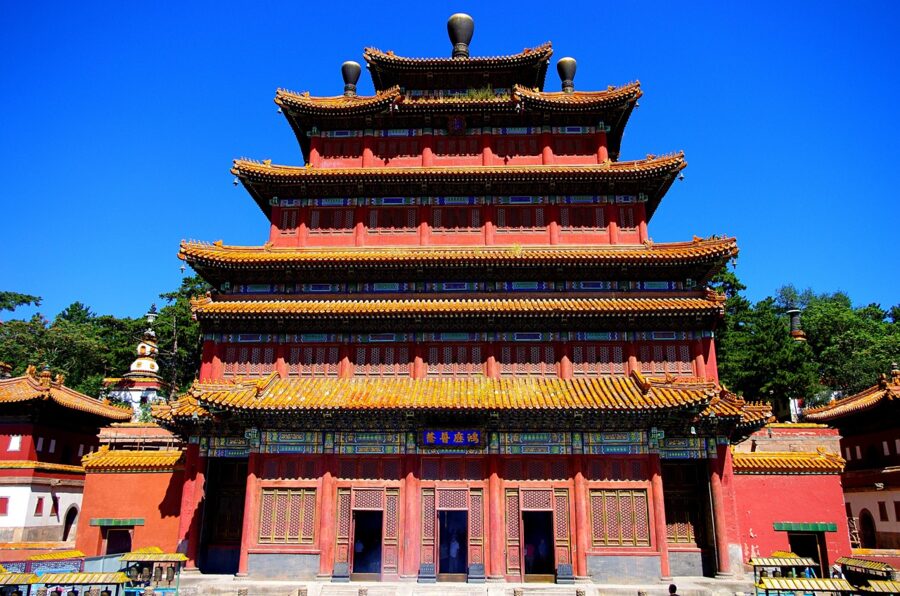
The temples outside the walls were built for the same audience, and their steles are mostly in Manchu, Mongolian, Chinese and Tibetan. Puning Temple (1755) houses a wooden Guanyin more than 22 meters tall. The Mountain Resort’s ticket notice sets the full price at 90 yuan from November to March; in 2026 it is 130 yuan from April to October.
The Eastern and Western Qing Tombs
After the conquest the emperors were buried in two valleys in Hebei. The Eastern Qing Tombs, near Zunhua east of Beijing, hold the Shunzhi, Kangxi, Qianlong, Xianfeng and Tongzhi emperors and the Empress Dowager Cixi. Qianlong’s tomb, Yuling, has an underground palace carved with Buddhist scriptures in Tibetan and Sanskrit that you can walk into. The Western Qing Tombs near Yixian, southwest of Beijing, hold Yongzheng, Jiaqing, Daoguang and Guangxu, and are quieter and greener.
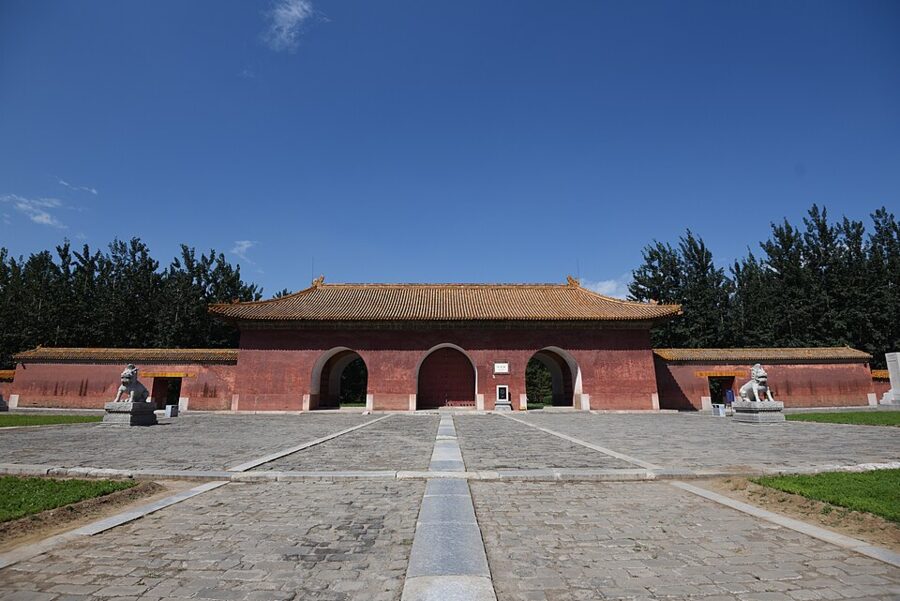

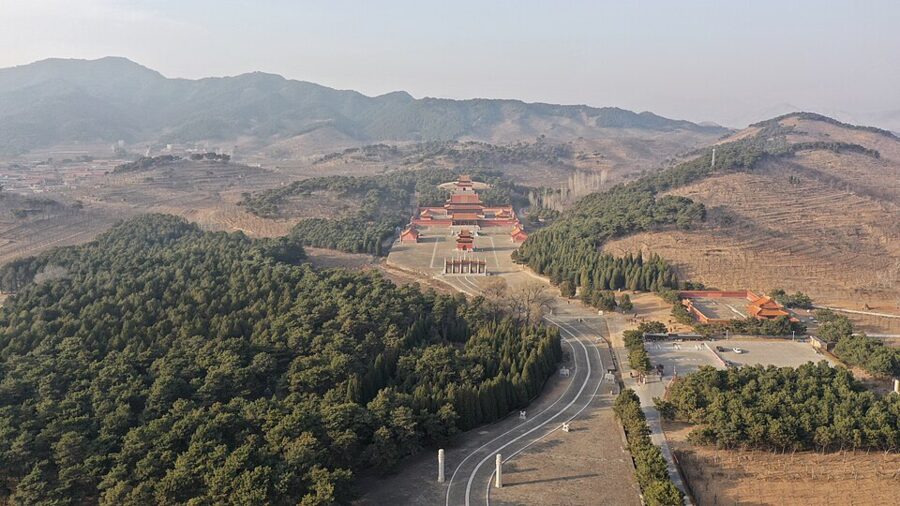

Both are long day trips from Beijing by car. The Eastern Qing Tombs are listed at 152 yuan in peak season with the site shuttle included; the Western Qing Tombs’ combined ticket is 108 yuan from April to October. They are imperial tombs on the Chinese model, and if you have only one day, Shenyang’s two tombs say more about the Manchus.
Living Manchu places
For the people rather than the dynasty, go to the northeast. In Jilin, the Manchu township of Wulajie, north of Jilin city, was the seat of the Ula confederacy that Nurhaci conquered and later of the Qing office that gathered freshwater pearls, sturgeon and pine nuts for the court; its three Qing mansions reopened after restoration in 2024, and its Manchu yangge dance is on the national intangible heritage list. In Jilin city itself, the Jilin Manchu Museum held its Banjin Day celebration on November 30, 2025.
In Xinbin county, where everything began, the scenic area at Hetu Ala stages Manchu song and dance and a shamanic water-spirit rite in the old town in the mornings, and the Yongling tomb has staged a re-enactment of a Qing ancestral sacrifice on weekend mornings. Both are performances staged for visitors, and as close to a Manchu rite as you are likely to get. Sanjiazi is real, but it is a village going about its business, and I would not go there without an introduction.
Hetu Ala, where the name began
End where Nurhaci began. Hetu Ala sits on a broad ridge where the Suzi and Erdao rivers meet, in Yongling town in Xinbin Manchu Autonomous County, with hills on three sides. The inner town, where Nurhaci’s family lived, is about 2 km around; the outer wall of earth, stone and timber, where his soldiers lived, is about 5.2 km around. Outside the gates there were workshops for armor and for bows and arrows, and granaries to the east.
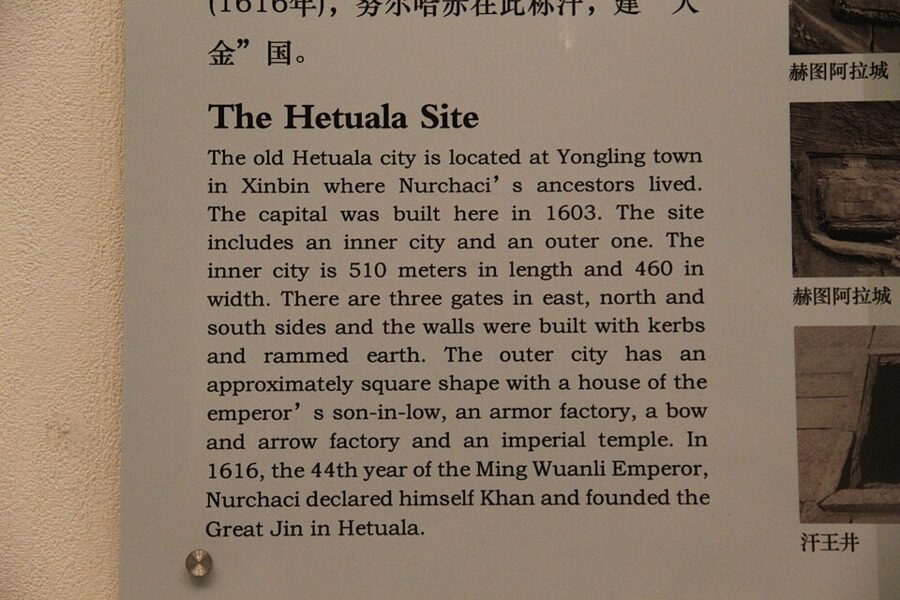
It was renamed Xingjing in 1634 and became a site of pilgrimage: Kangxi, Qianlong, Jiaqing and Daoguang came seven times between them to burn incense at its temples. It was badly damaged in the early twentieth century, and the octagonal Khan’s Hall where Nurhaci proclaimed the Later Jin was gone by 1949. The hall you see now is a rebuild on the site. The earthen walls, the ridge and the Khan’s Well, the only well inside the inner town, are the parts Nurhaci would know.
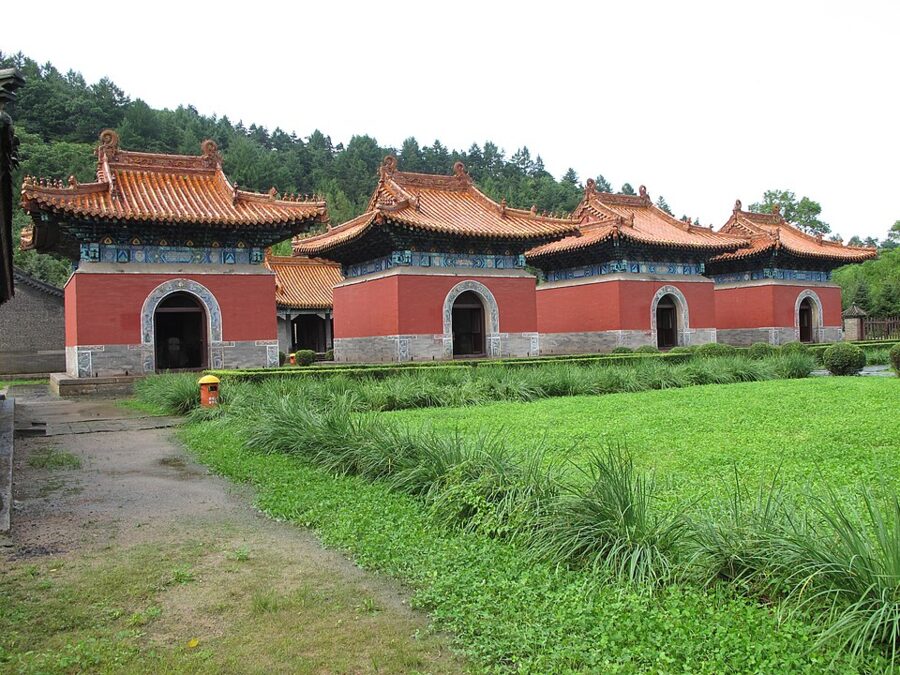
Five kilometers west is the Yongling tomb (永陵), the first of the three imperial tombs, where Nurhaci’s father, grandfather, great-grandfather and sixth-generation ancestor are buried under the Qiyun hill. Its four stele pavilions stand in a row in front of the hall, and its gate is still the plain wooden-fenced type of the old Jurchen chiefs rather than an imperial portal. It was added to the World Heritage list with the Shenyang tombs in 2004.

Getting there is easier than it was. Since September 28, 2025 the Shenyang to Changbaishan high-speed line has stopped at Xinbin, a new station in the county town designed after an eight-sided Manchu hall. The fastest trains from Shenyang North take about 55 minutes; second-class fares run about 75–90 yuan depending on the train, and tickets are sold on 12306. A shuttle bus from the station to Hetu Ala and Yongling ran only in the first weeks after the line opened, and in April 2026 the county said there were no plans to run it again, so plan on a taxi for the roughly 20 km west to Yongling town.
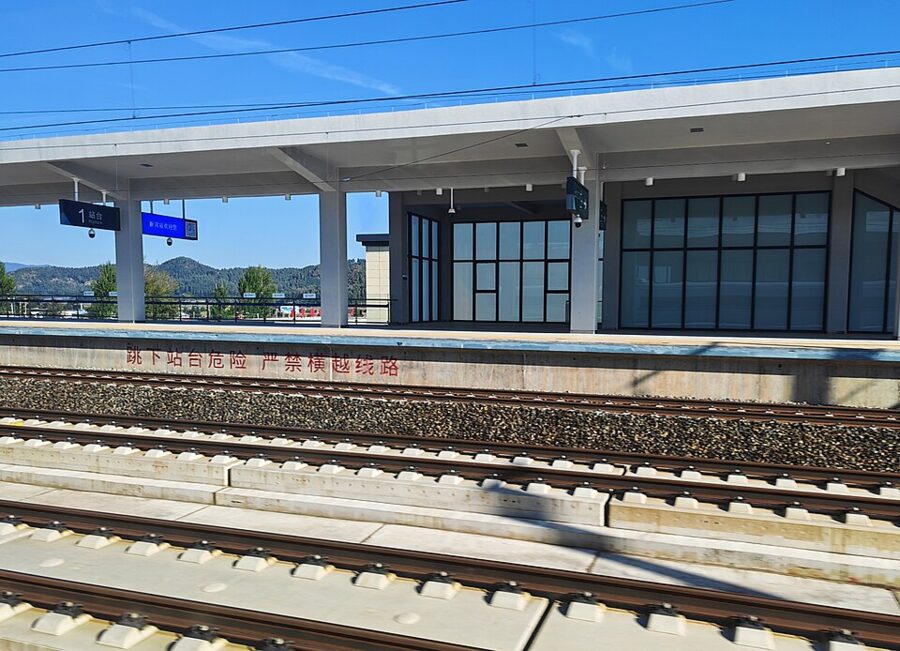

The slower way is by bus from Fushun’s coach stations to Yongling town, then a short taxi ride to the old town. Hetu Ala’s scenic area charges 60 yuan, free for children under six or 1.3 meters and for those over 70; it opens about 08:00–17:00 from April to October and keeps shorter hours in winter. Yongling charges 50 yuan and opens about 08:00–16:30. Leave a full day for both, and go between May and October: Xinbin winters are long, and on a January afternoon the ridge is a cold place to stand.
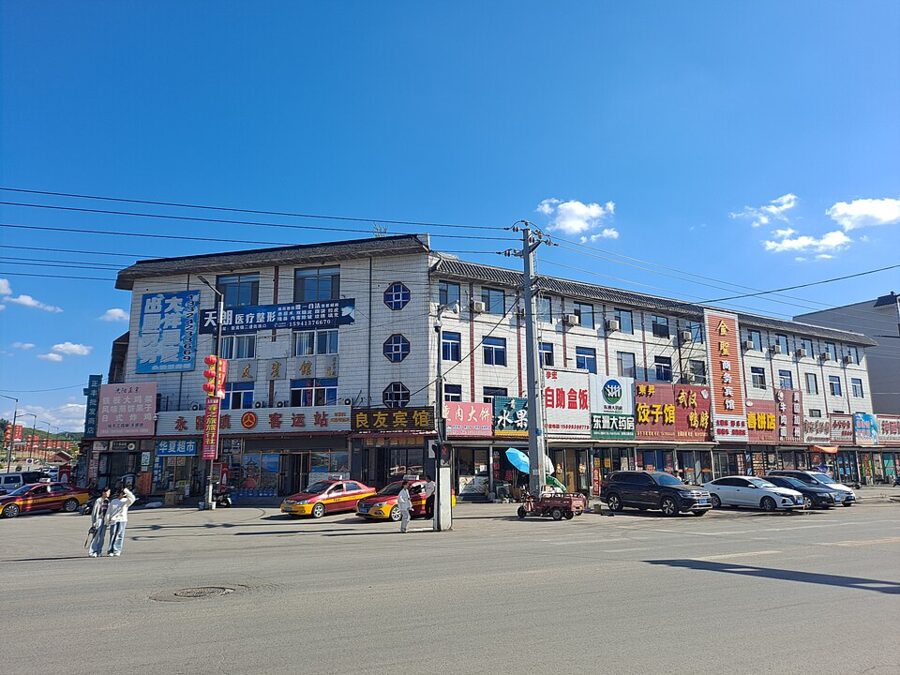
Climb to the inner town in the late afternoon and walk to the edge of the ridge above the river. Below you is the valley that fed, by a Ming report, some twenty thousand households, the Yongling hill to the west where the ancestors lie, and the road east toward the Changbai mountains, where the Manchus said their first ancestor was born. From here a khan’s state reached Shenyang in 22 years and Beijing in 41. If crows are wheeling over the ridge as you leave, you know why nobody here chases them away.