
Late in the sixth century a Sui censor named Liu Yu (柳彧) wrote to his emperor about one night of the year. On the fifteenth of the first month, he complained, the people of the capital and the provinces filled every street, beat drums loud enough to deafen heaven and lit torches until the ground shone. Men wore animal masks and dressed as women, families spent their savings in a single night, and men and women, monks and laymen, rich and poor all mixed together in the road.
The emperor agreed and banned it. Within a generation his son was staging the same night at Luoyang on a stage four kilometers long, and the ban has been a footnote ever since.
The night Liu Yu wanted stopped is Yuanxiao (元宵), the Lantern Festival, kept on the fifteenth day of the first lunar month: the first full moon of the Chinese year and the last night of the New Year season. Yuan means first, xiao means night. In 2027 it falls on Saturday, February 20, and the lantern shows in Nanjing, Zigong, Xi’an and Shanghai that peak that night open weeks before it.
The stories told about how the festival began and the lines the old texts actually record do not say the same thing. The gap between them is where its history starts.

On this page
- Three origin stories and one line of record
- Sui and Tang: the night the curfew lifted
- Song lantern mountains and the Ming capital’s ten nights
- The customs and what they mean
- Nanjing: the Qinhuai lantern fair
- Zigong: lanterns made of china plates and silk cocoons
- City walls, gardens and temple fairs
- Beyond the mainland
- The 2027 date, and how to handle the crowd
- Where to stand on the night: Wende Bridge, Nanjing
Three origin stories and one line of record
Ask in China where the Lantern Festival came from and you will hear three answers, often in the same breath. None says quite what it is taken to say.
The emperor who beat the Lü clan
The most repeated story makes the festival a victory party. After the death of Empress Lü in 180 BCE her clan was destroyed in a palace coup, and the throne went to Liu Heng, Emperor Wen of Han. The coup, the story goes, fell on the fifteenth of the first month, so Emperor Wen went out among the people that night every year.
The Records of the Grand Historian (史记), written less than a century after the event, give the dates, and they do not fit. The empress was dying in the seventh month, the Lü were cut down after a gengshen day in the eighth, and the new emperor reached Chang’an on the last day of an intercalary ninth month. The legend needs a spring coup that happened in autumn.
Taiyi at Ganquan
The firmer thread runs through Emperor Wu of Han (r. 141–87 BCE), who made Taiyi (太一), the Great One, the highest god of the state and built an altar for him at Ganquan Palace, in the hills northwest of Chang’an. The same Records of the Grand Historian, in its treatise on music, describe the rite: the Han house worshipped Taiyi at Ganquan on the first xin day of the first month, starting at dusk and going on until dawn, with seventy boys and girls singing. Meteors were often seen crossing the altar.
That is a night-long state rite with fire in the first month, but not on the fifteenth: a xin day comes round every ten days, so the first one always falls in the first ten days of the month. Later retellings moved it to the full moon. The record supports a Han first-month night rite to the highest god; it does not support a Han lantern festival on the fifteenth.
Emperor Ming’s lamps for the Buddha
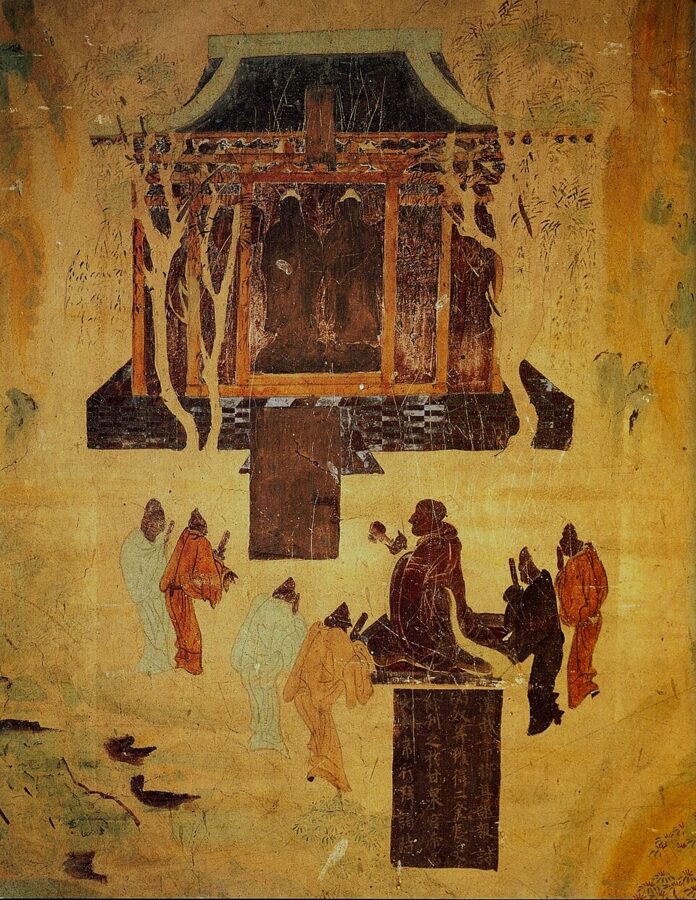
The Buddhist version credits Emperor Ming of the Eastern Han (r. 57–75), the ruler said to have welcomed the first monks to Luoyang. Having heard that in India monks gathered to venerate the Buddha’s relics on the fifteenth of the first month, he ordered lamps lit in the palace and the temples that night “to show the Buddha”, and the custom spread.
The story is told in the Brief History of the Sangha (大宋僧史略), compiled by the monk Zanning at the end of the tenth century, which sets it after a contest of powers between Buddhist monks and Daoists that historians regard as legend. The same book adds a detail that is far more useful: in 713 a monk from the Western Regions asked the Tang court to light lamps on the fifteenth of the first month. That is the very year the court built its giant lamp wheel in Chang’an.
The Three Officials
Daoism gave the night its other name. In the Daoist calendar the year has three yuan days, each the fifteenth of a month: Shangyuan (上元) in the first month for the Official of Heaven, Zhongyuan in the seventh for the Official of Earth, Xiayuan in the tenth for the Official of Water. The Official of Heaven bestows blessings, so on his birthday lamps are lit. That calendar took shape well after the Han, but the Tang court made formal offerings on Shangyuan, and it stayed the festival’s formal name for centuries.
Put together, the sources suggest a plainer story. A Han state rite gave the first month its night of fire, Buddhist and Daoist lamp-lighting settled on the full moon, and by the Sui the fifteenth was a public night out. The legends came afterward, each from a group that wanted the festival to be its own.
Sui and Tang: the night the curfew lifted
Liu Yu lost his argument within a generation. The Book of Sui (隋书) records that when the envoys of foreign states came to court in the first month, Emperor Yang kept them until the fifteenth and laid on a theater outside the Duan Gate that ran for eight li, about four kilometers, with tens of thousands of performers playing from dusk until dawn. The grandest of these, at Luoyang in 610, went on all month.
Under the Tang (618–907) the festival took the shape it has kept. Chang’an was a city of walled wards. When the drums sounded at dusk the ward gates shut, and anyone caught in the main streets at night could be flogged by the patrols of the Jinwu (金吾) guard. For the fourteenth, fifteenth and sixteenth nights of the first month the curfew was lifted and the gates stayed open.
Su Weidao, a chief minister under Empress Wu Zetian, wrote the lines everybody still quotes. “Fire trees and silver flowers join; the star bridge’s iron locks open. Dark dust follows the horses; the bright moon follows the people.” The poem ends with the line that names the reason for the party: jinwu bu jin ye (金吾不禁夜), the Jinwu do not forbid the night.
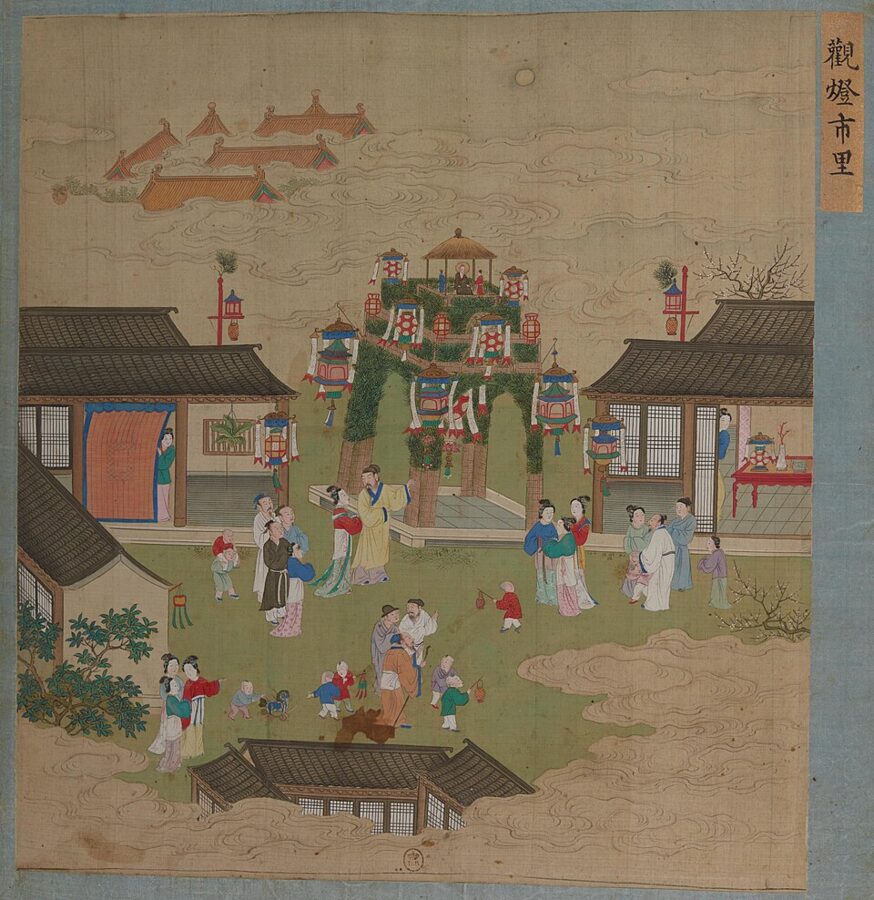
The court then out-built the city. In the first month of 713, according to the Tang notebook Chaoye qianzai (朝野佥载), a lamp wheel twenty zhang high, roughly 60 meters, went up outside the Anfu Gate of Chang’an, dressed in brocade and gold and carrying fifty thousand lamps. More than a thousand young women from the city’s two counties danced beneath it for three days and nights. The writer says the joy had never been matched.
For women the open nights mattered most. A Tang household kept its daughters indoors most of the year; on these three nights they walked the streets in company, which is exactly what had worried Liu Yu.
Song lantern mountains and the Ming capital’s ten nights
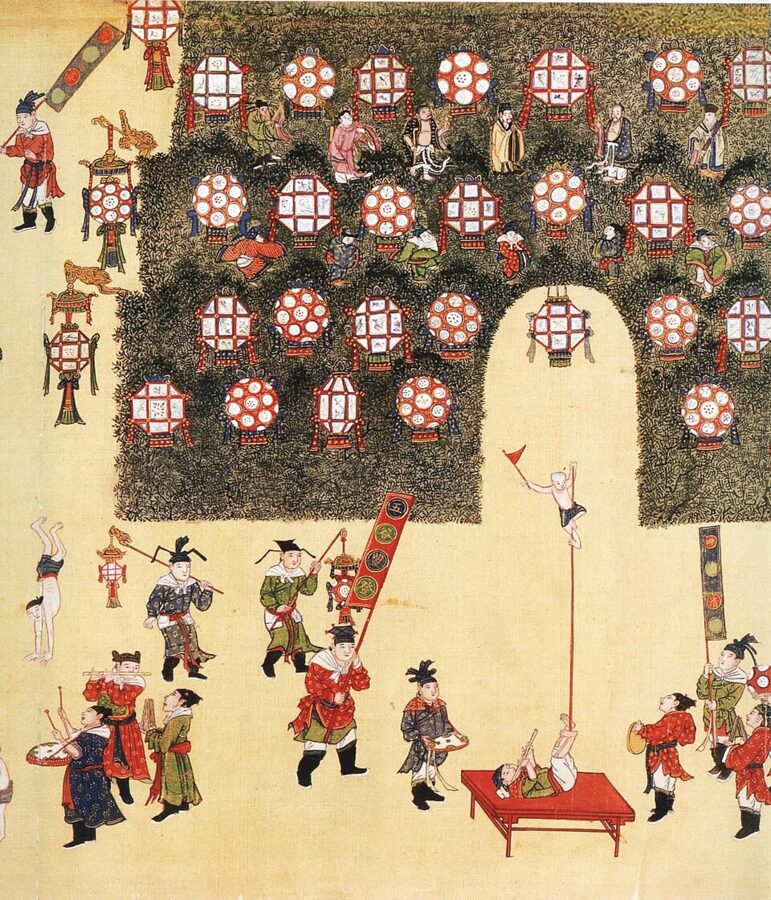
The Song (960–1279) turned the festival into a market. The first Song emperor added two more nights, making five, and the capital at Kaifeng built its showpiece in front of the palace. Meng Yuanlao, who wrote down his memories of the city after the Jin took it in 1127, describes a lantern mountain (灯山) going up opposite the Xuande Tower from the winter solstice onward, with acrobats, sword-swallowers, puppeteers and storytellers working the imperial avenue below it.
His details are better than any reconstruction. Figures of the bodhisattvas Wenshu and Puxian rode a lion and a white elephant, five streams of water spouting from their fingers. A windlass hauled water to the top of the lantern mountain, where a wooden tank let it down at intervals like a waterfall. On the gates to either side, two dragons of bundled straw carried tens of thousands of lamps, so that from a distance they seemed to fly.
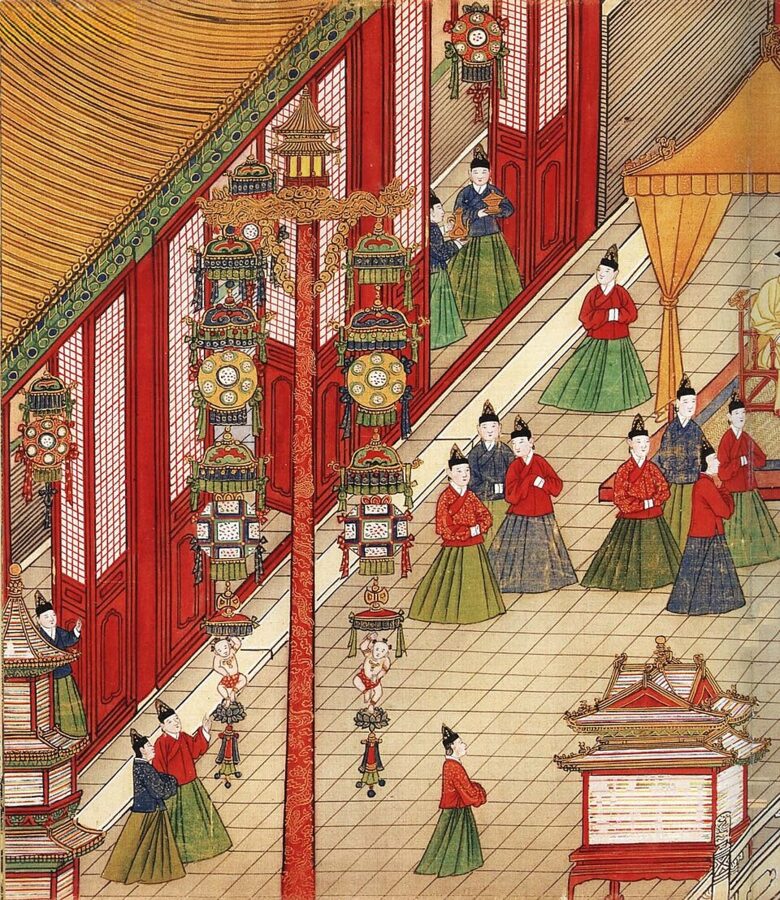
In Hangzhou, the Southern Song capital, Zhou Mi’s Old Affairs of Wulin (武林旧事) lists the lanterns by type: pearl lanterns netted in five colors, sheepskin lanterns cut and dyed like shadow puppets, gauze lanterns called “ten thousand eyes”, and lamps whose paper horsemen spun “as if flying”. It also records silk lanterns written with poems, jokes, hidden-head phrases and old-capital slang to tease passers-by, one of the earliest clear accounts of riddles hung on lanterns.
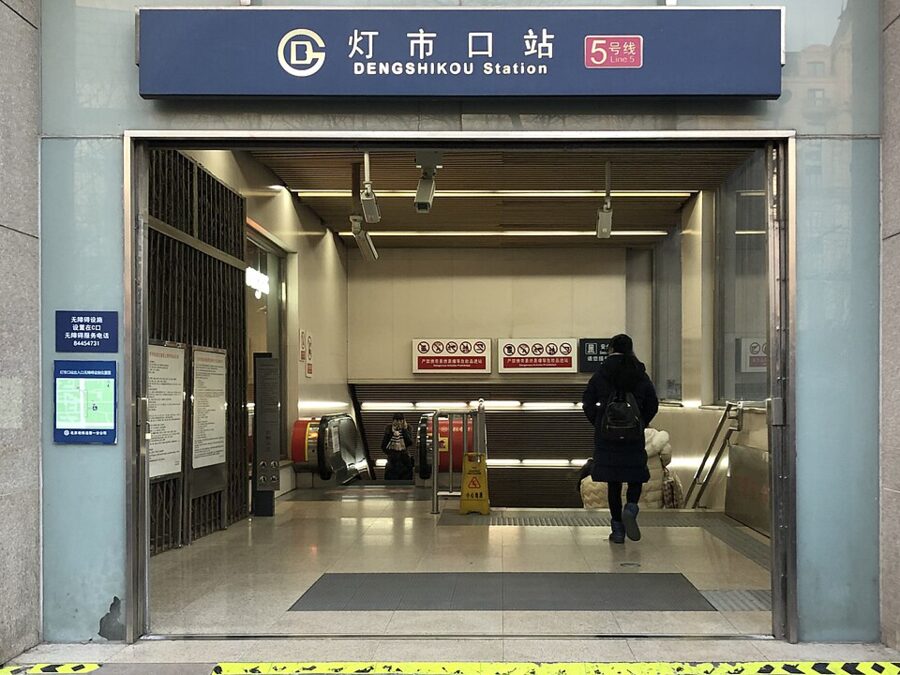
The Ming (1368–1644) made the festival longest. Zhu Yuanzhang, the founding emperor, ruled from Nanjing and stretched the lantern days to ten, from the eighth of the first month to the seventeenth; in 1372, the local histories say, he had ten thousand water lanterns floated on the Qinhuai River. His son the Yongle Emperor gave officials ten days’ leave for the festival in 1409. When the court moved north, Beijing held a lantern market from the eighth to the eighteenth on a street east of the palace that is still called Dengshikou (灯市口), Lantern Market Mouth.

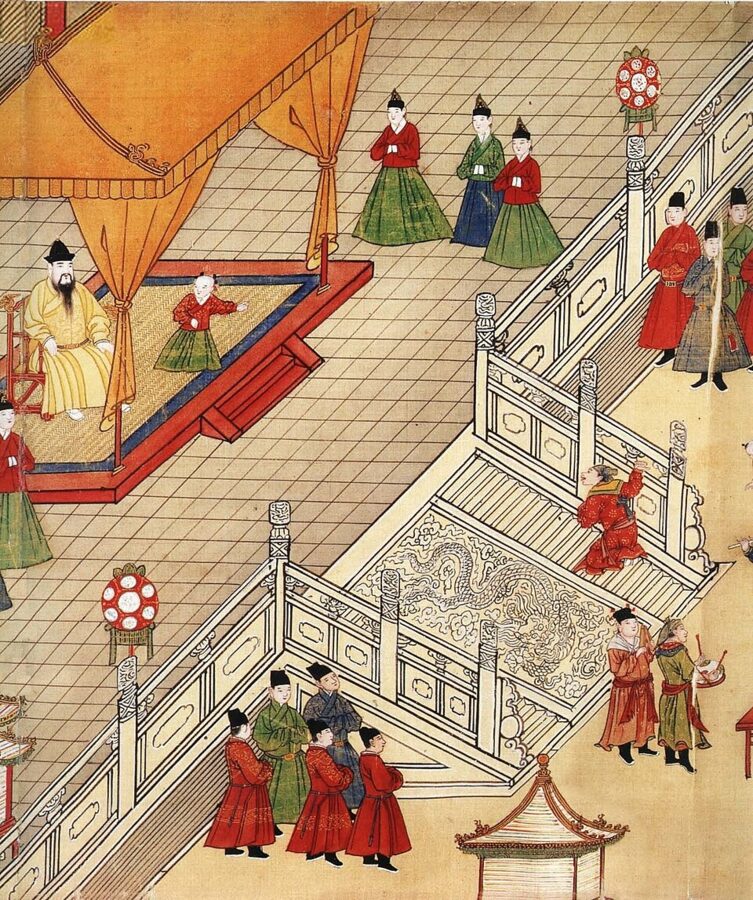
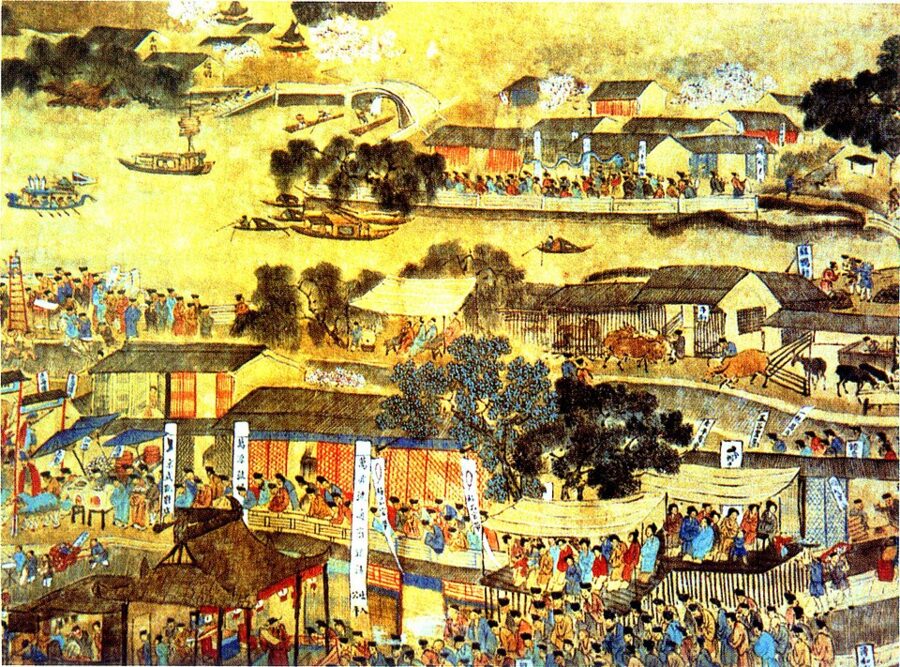
The Qing (1644–1912) cut the holiday back. Sources disagree on how far: some give three days, others four or five, and in practice it varied by place and reign. The city fairs carried on regardless. The Qinhuai fair in Nanjing ran under Qing rule until the city was sacked at the end of the Taiping war in 1864, and was revived the next year when Zeng Guofan had the river dredged and the temple partly rebuilt.
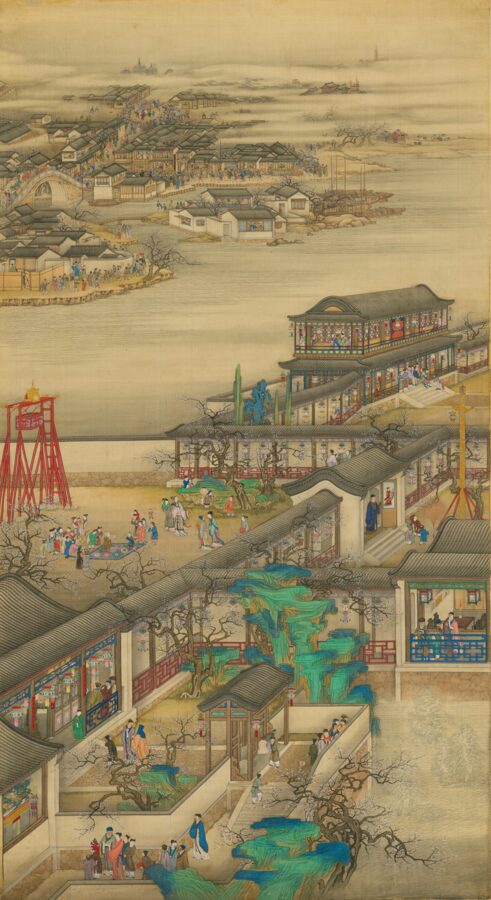
The poems people still quote
Three poems do most of the work on Chinese lantern signs and greeting cards. The first is Su Weidao’s, above. The second is a short lyric to the tune “Shengchazi”, usually credited to Ouyang Xiu and sometimes to the woman poet Zhu Shuzhen.
“Last year on the Lantern night, the flower market’s lamps were bright as day; the moon rose to the willow tops, and someone kept a date after dusk. This year the moon and lamps are as before, but last year’s person is not here, and tears wet the sleeves of my spring gown.”
The third is Xin Qiji’s “Qingyu’an: Lantern Night”, written in the 1170s, which starts with the east wind making a thousand trees flower in the dark and blowing down stars like rain. It ends with the most quoted lines on the subject: “In the crowd I searched for her a thousand times; turning suddenly, there she was, where the lantern light was dim.” For a festival of light, its best-known poem is about the edge of it.
The painter Tang Yin, writing in Suzhou around 1500, gave the night its proverb: a lantern without a moon gives no joy, and a moon without a lantern is not spring.
The customs and what they mean
Lanterns, and the pun on a son
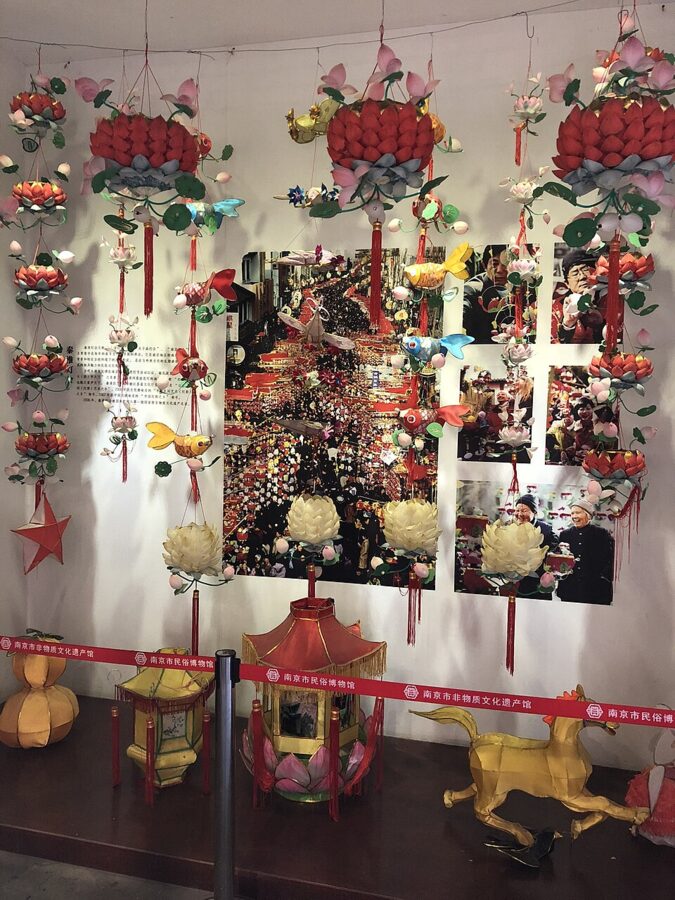
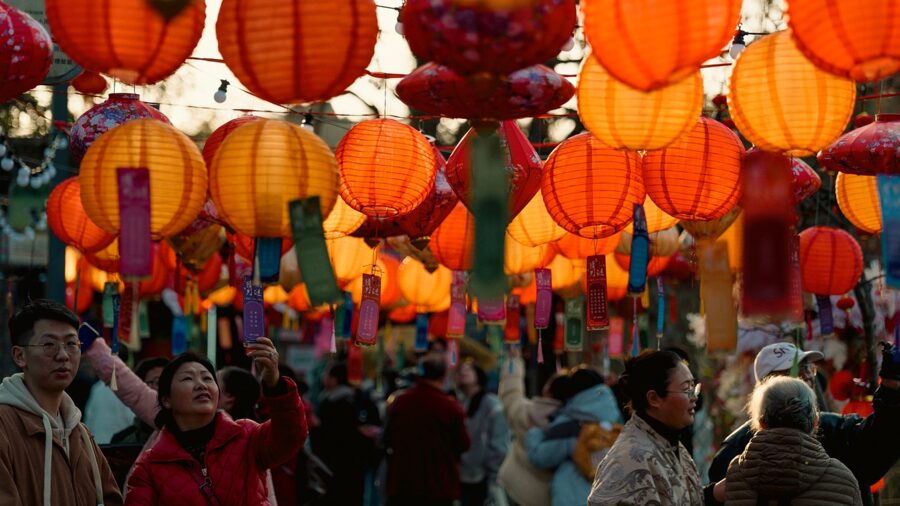
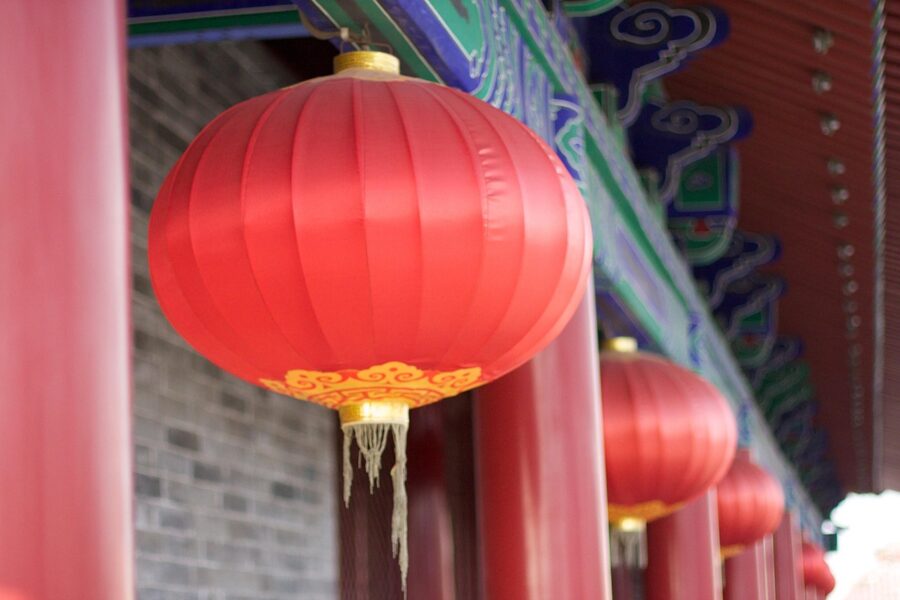
The classic shapes are the six- or eight-sided palace lantern (宫灯) with a carved wooden frame and painted silk panels; the lotus lantern, Nanjing’s signature; animal lanterns, from Shanghai’s rabbit lanterns pulled along on wheels by children to the zodiac animal of the year; and the trotting-horse lantern (走马灯), in which the heat of a candle turns a paper vane so that cut-out horsemen chase each other round the shade.
In the Min, Hakka and Cantonese languages of the south, the word for lantern sounds like ding (丁), a male heir. That pun runs through southern custom. In Fuzhou grandparents send lanterns to their daughter’s children every year until the child turns sixteen, and a couple still waiting for a child might receive a lantern from the wife’s brother. In Taiwan and Guangdong women once walked under the temple lanterns hoping to conceive.

Riddles: shooting the lantern tiger
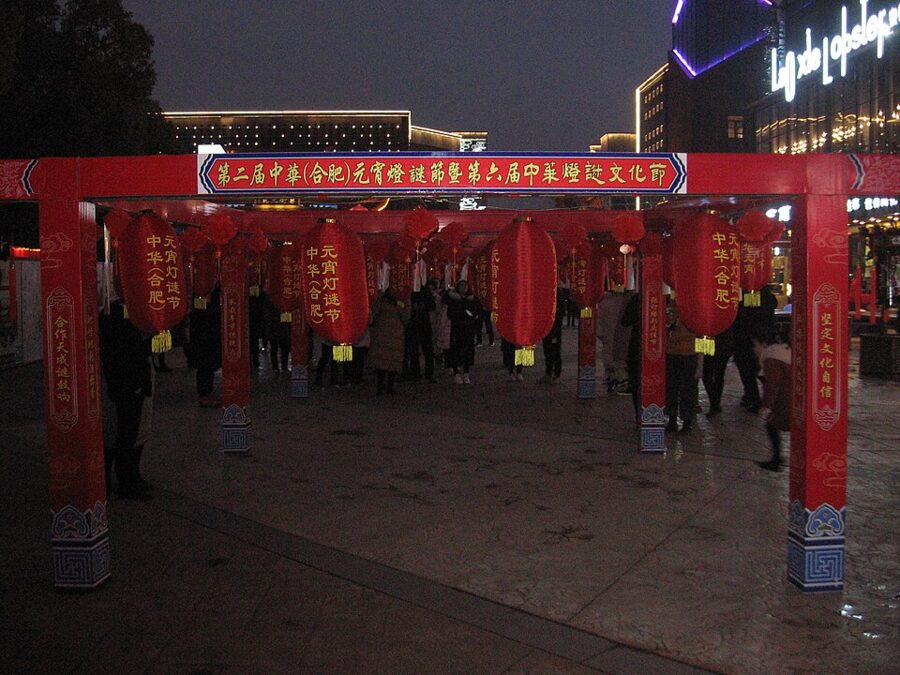
A lantern riddle (灯谜) is a slip of paper pinned under a lantern, and solving one is called “shooting” it. Because good ones are hard to bring down they are also called lantern tigers (灯虎). They play on the shapes, sounds and meanings of characters, and serious riddle makers work to formal rules: the standard lists give twenty-four named formats, and later collectors counted some four hundred.
A fair example of the simple kind: “One mouth bites off the ox’s tail; guess a character.” Take 牛 (ox), clip its tail, set a 口 (mouth) under it and you have 告. Organizers still hang them by the thousand. Nanjing hosted a nine-city riddle meet in 1979 with more than ten thousand slips, and over three days some twenty thousand people came to shoot them.

Yuanxiao or tangyuan: rolled in the north, wrapped in the south
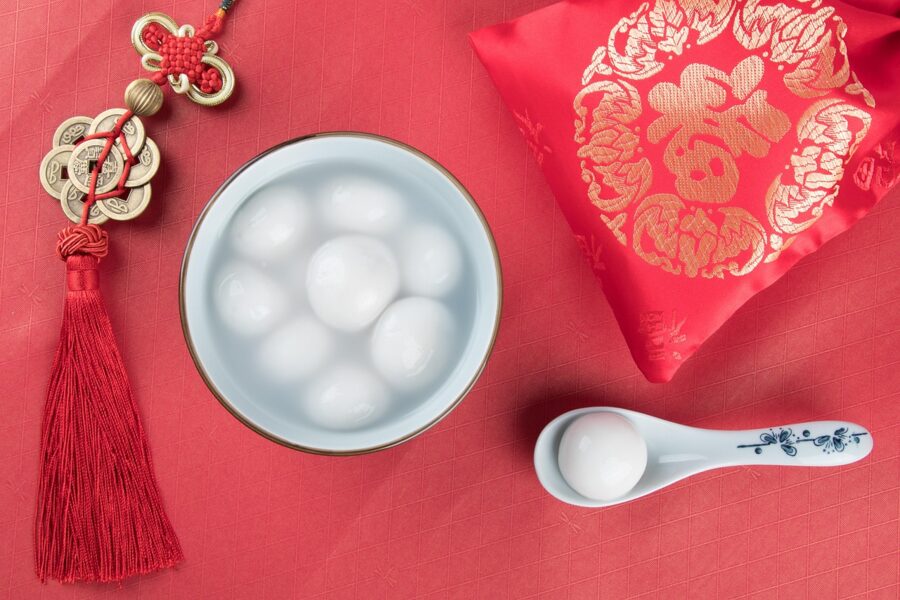
The festival’s food is a ball of glutinous rice with a sweet center, and it has two names that are not quite the same thing. Song writers called it fuyuanzi (浮圆子), floating round things, because it bobs up when it is cooked. By the Ming it had taken the festival’s own name.
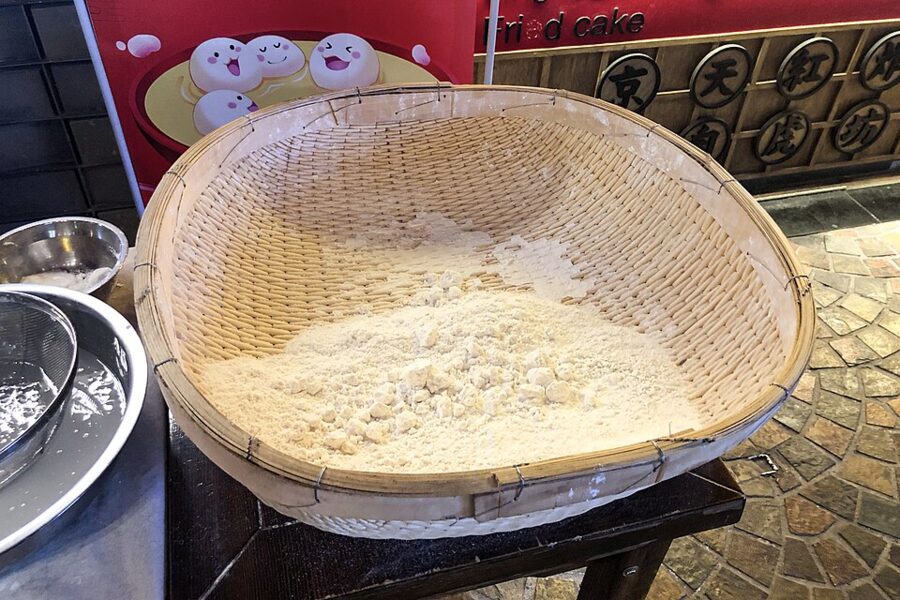
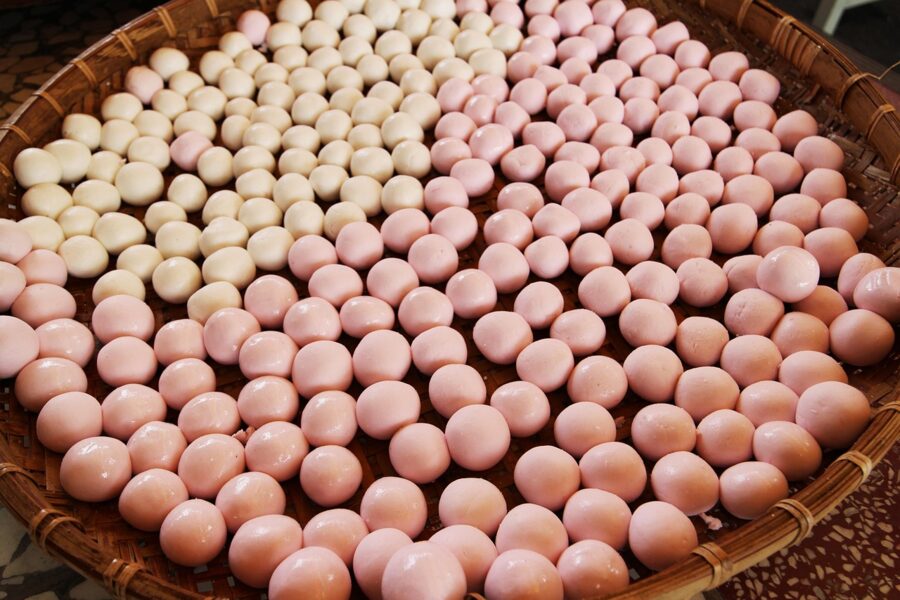
In the north, yuanxiao are rolled. Cubes of firm filling, usually sesame, nuts or bean paste set with sugar, are dipped in water and shaken in a shallow bamboo basket of dry rice flour, then dipped and shaken again until a coat builds up. The result is a little coarse and firm, and it is almost always sweet.

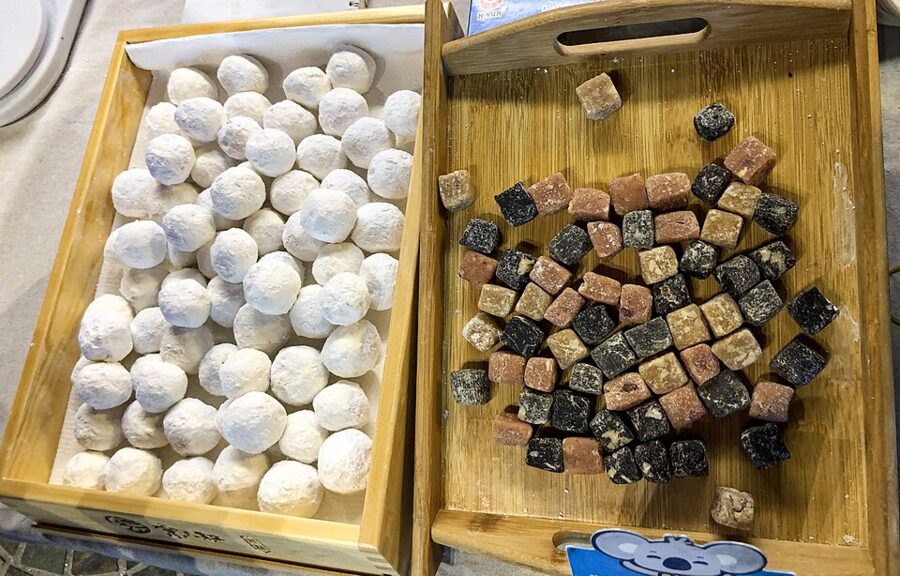

In the south, tangyuan (汤圆) are wrapped. A soft dough of wet-milled rice is pinched round a filling by hand, so the skin is thinner and smoother, and the filling can be runny. Black sesame with lard is the Ningbo classic that Shanghai eats on the fifteenth, and the south also makes savory tangyuan filled with meat. The round shape stands for tuanyuan (团圆), the family together, which is why the same food is eaten at the winter solstice across the south.
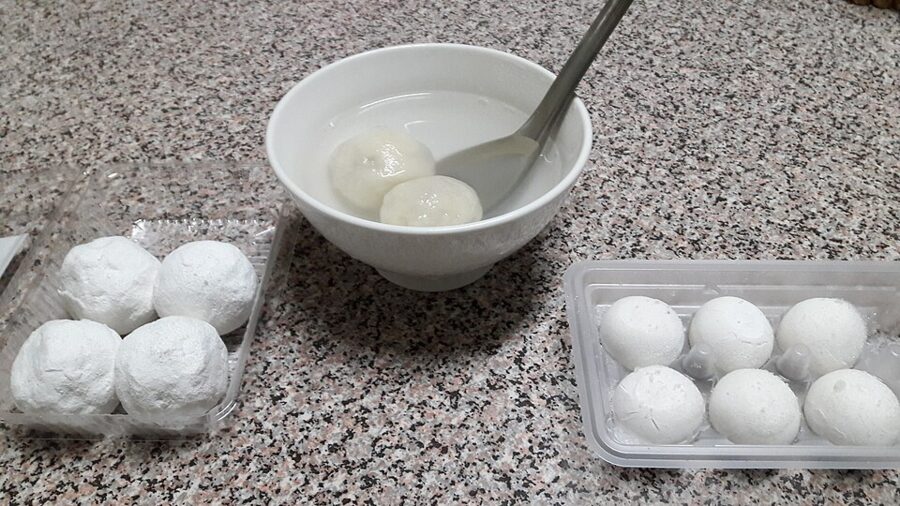


Which is better is a north–south argument with no winner. I’d eat both: a yuanxiao boiled until it is soft right through, and a tangyuan for the filling that runs out when you bite it.
Lions, dragons and stilts
Lion dances came into China with the music of the western frontier. Bai Juyi’s poem “Xiliang ji” describes one in the early ninth century: a head carved from wood, a tail of silk, eyes of gilt and teeth plated with silver, shaking its ears “as if it had come ten thousand li across the sand”. Today there are two schools. The northern lion is shaggy and acrobatic; the southern lion of Guangdong has the big painted head and the blinking eyes, built for expression as much as for tumbling.
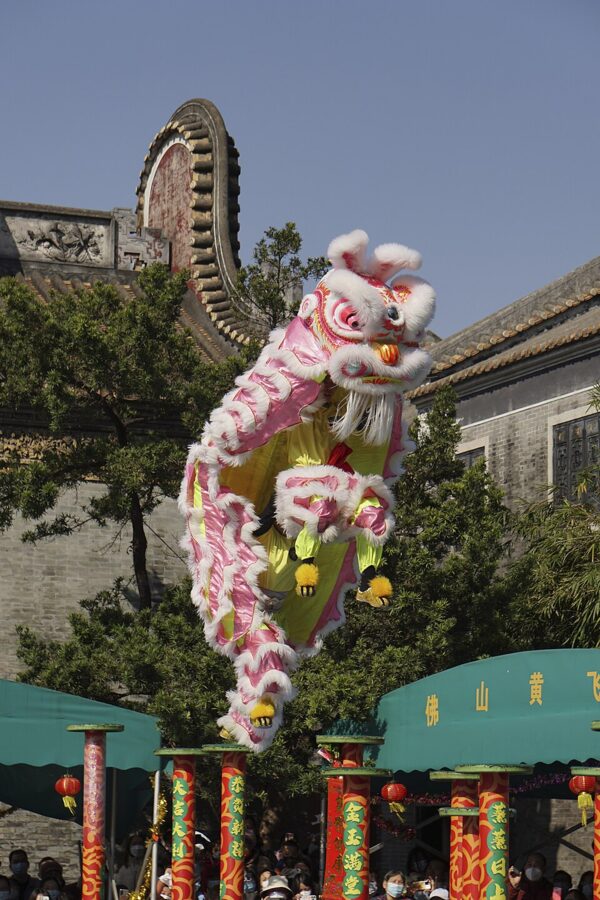

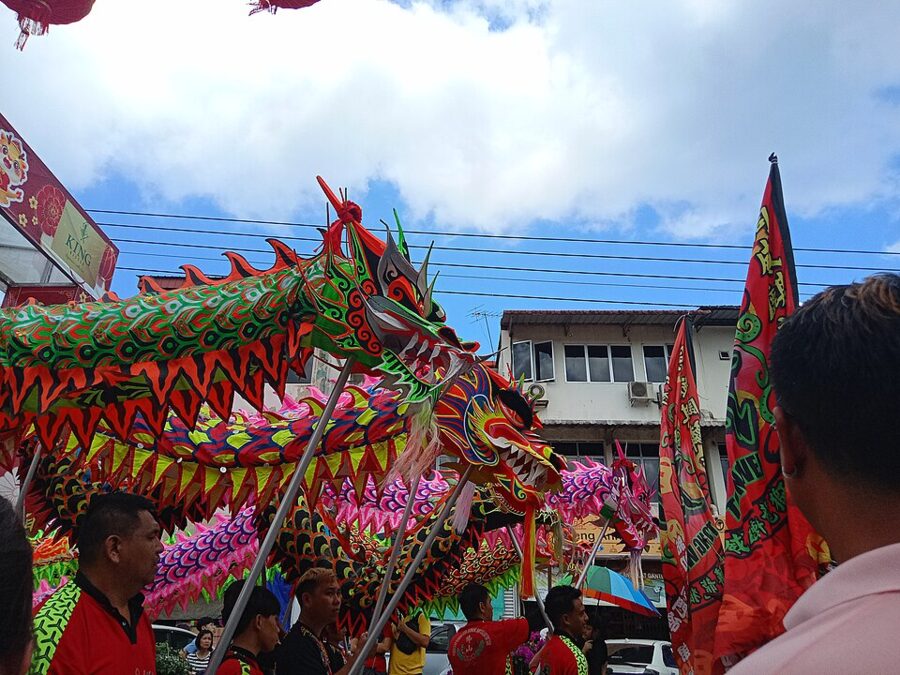
Dragon dances belong to the same night. In many villages a lantern dragon, a long cloth body with a light inside each section, is carried through the streets after dark. Stilt walkers, land boats and the yangge dance of the north fill out the procession: the old “hundred entertainments” that Liu Yu wanted banned.
Courting, and walking off illness
Because the Lantern Festival was the one night young women went out, it became the night for meeting someone. In the Hokkien opera of Chen San and Wu Niang, the lovers first see each other while viewing lanterns in Chaozhou. Ouyang Xiu’s poem, above, is a meeting after dusk on Lantern night. The custom survives in odd places: in Guangdong and Taiwan unmarried women “stole greens” from a vegetable patch that night, and a Taiwanese saying runs “steal a scallion, marry a good husband”.
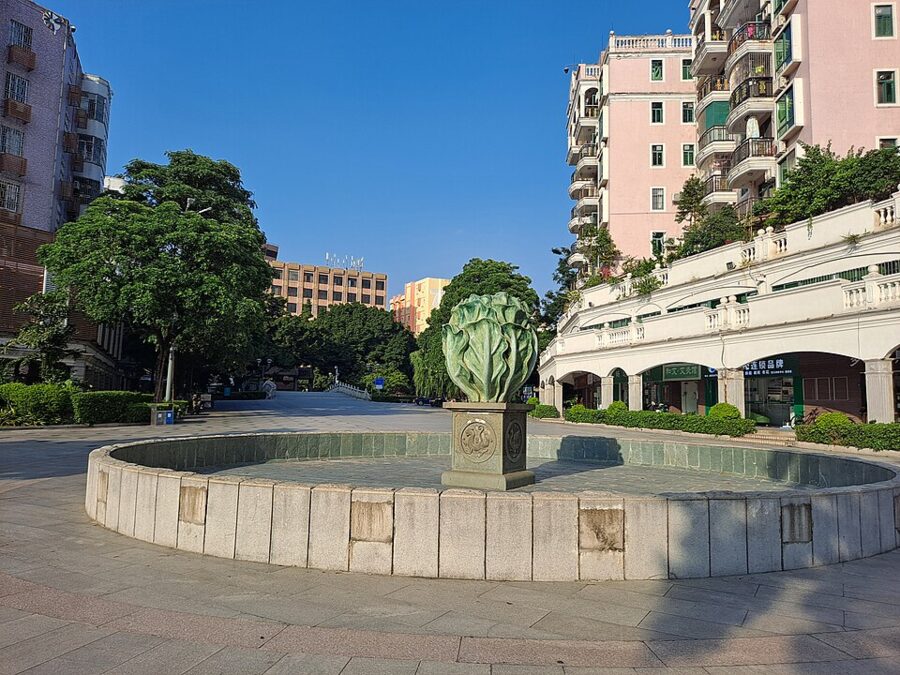
The other walk of the night is for health. In many regions women crossed bridges on the fifteenth to “walk off the hundred illnesses” (走百病). In Foshan the custom is called walking the Tongji (行通济): people cross the Tongji Bridge carrying pinwheels and lettuce, shengcai (生菜), which sounds like “making money”. The local saying promises that if you walk the Tongji, the year will go smoothly.

Nanjing: the Qinhuai lantern fair
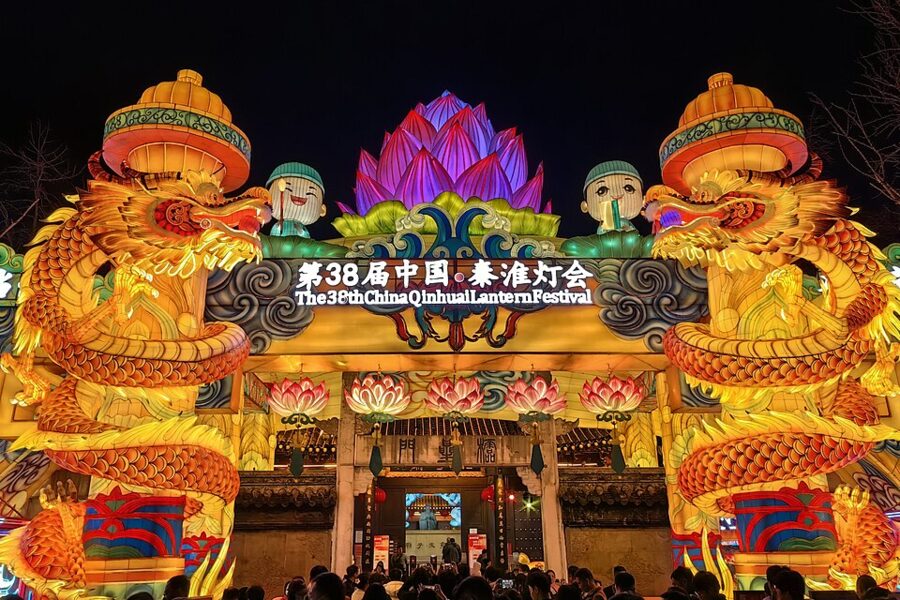
If you see one lantern fair in China, Nanjing makes the strongest claim. The Qinhuai fair (秦淮灯会), also called the Jinling fair, has been held around the Fuzimiao, the Confucius Temple first built here in 1034, for most of the past thousand years, and it went onto China’s first national list of intangible cultural heritage in 2006. The national heritage listing for the Qinhuai fair traces its fame to Zhu Yuanzhang’s festival and the saying that the Qinhuai’s lanterns are the best under heaven.
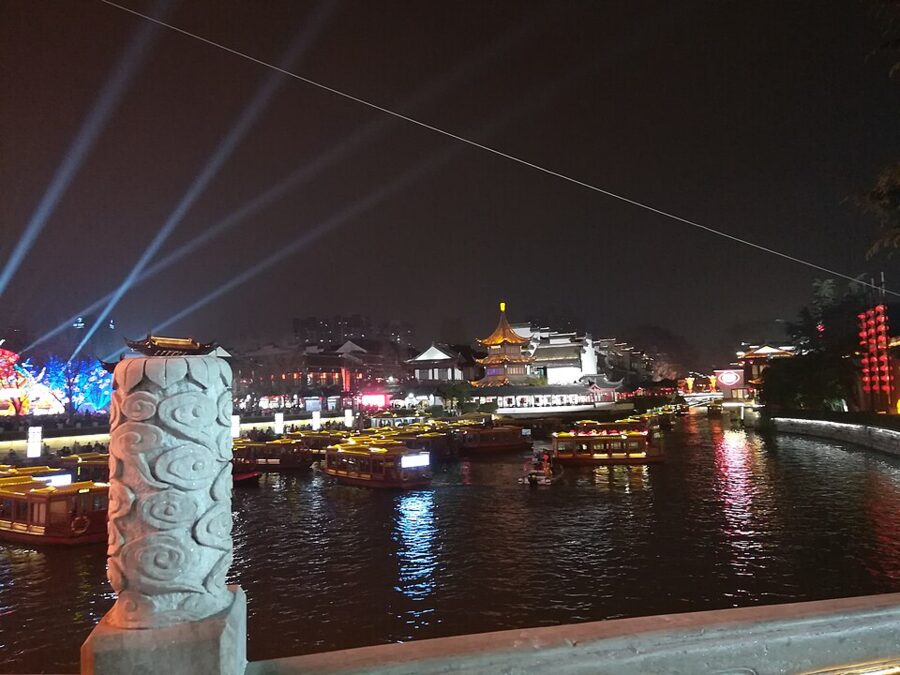

Banned as one of the “four olds” in the Cultural Revolution, the fair came back as a small lantern market in 1977 and as a yearly festival in the restored temple district from the mid-1980s. Local press counted 450,000 people at Fuzimiao on the night itself in 2006, and the crowds have grown since.
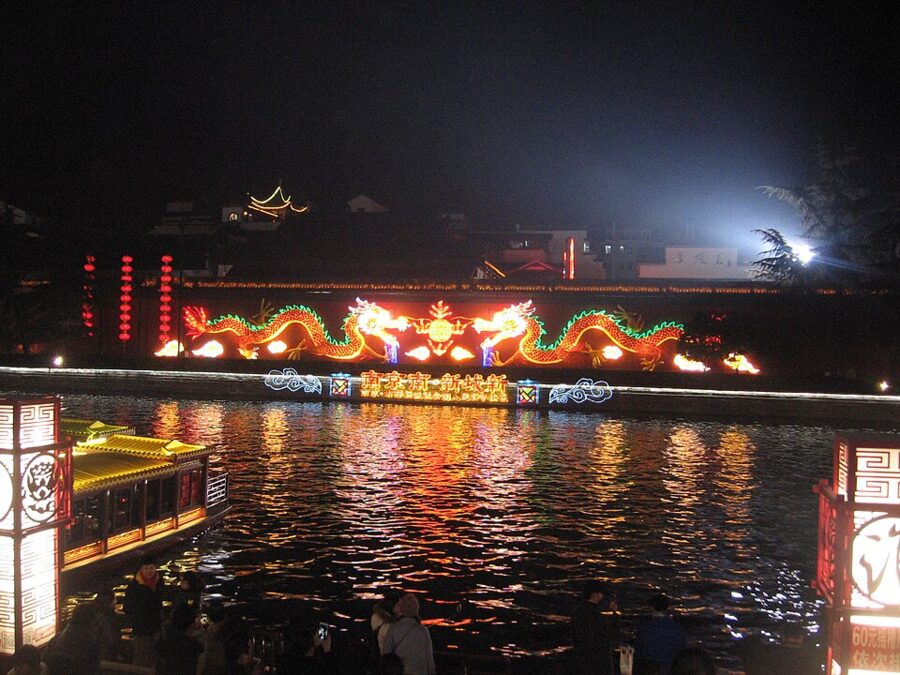

The 40th fair in 2026 ran from February 17 to March 6, the first to the eighteenth day of the first month, and was then extended to March 31; the two ticketed sites kept their lanterns until early May. It had eight display areas and about 390 lantern groups, according to Nanjing’s transport bureau guide to the fair, centered on three places a short walk apart.
The Fuzimiao core area put its biggest sets at the Lingxing Gate and on the Wende and Wenyuan bridges, and the lantern show inside the temple’s Dacheng Hall charged 49 yuan and up at night, 35 yuan by day. Laomendong, the rebuilt old quarter just inside the Zhonghua Gate, was free and lit until 23:00. Bailuzhou Park, the garden at the east end of the river walk, charged 40 yuan by day and 80 yuan at night for heritage lanterns from more than ten workshops around the country. Lights came on at 17:00.
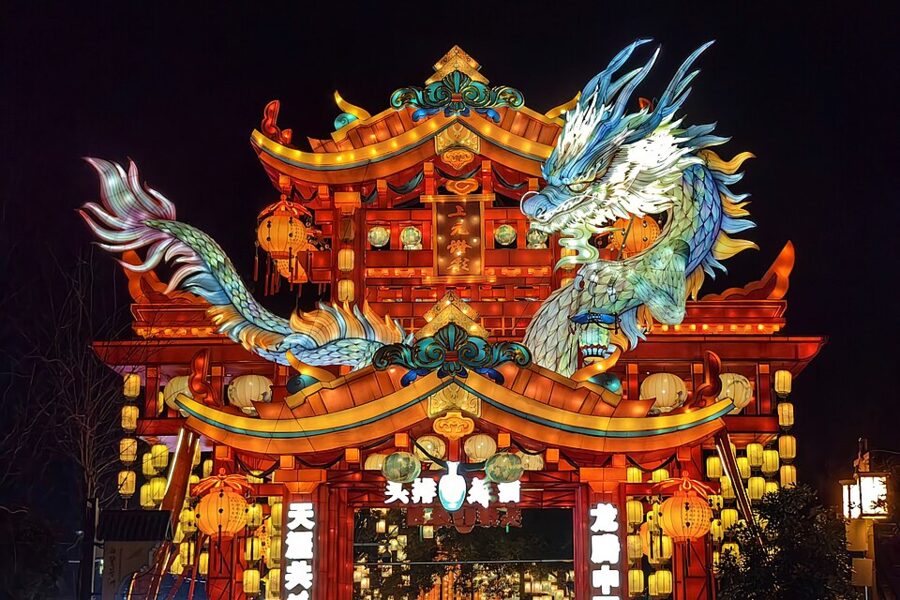

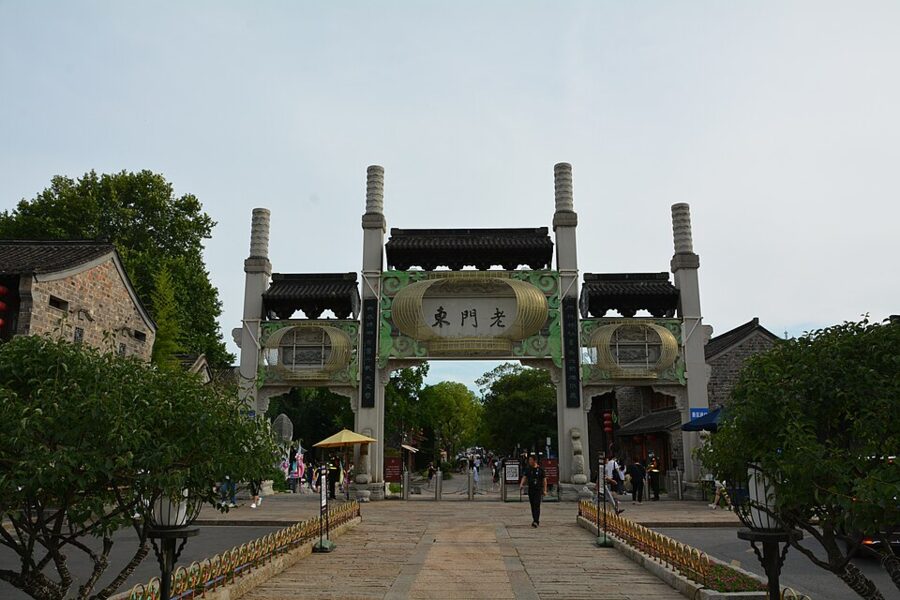

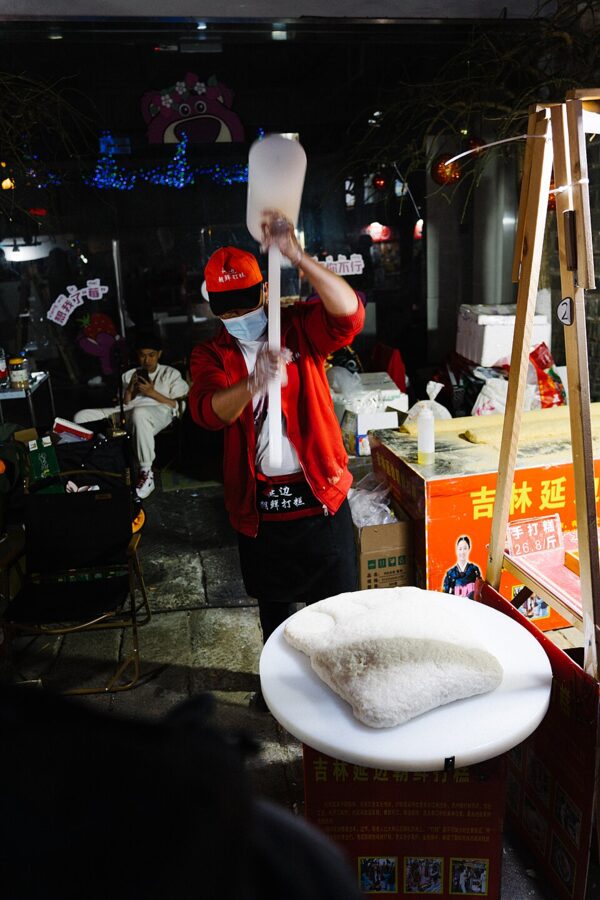

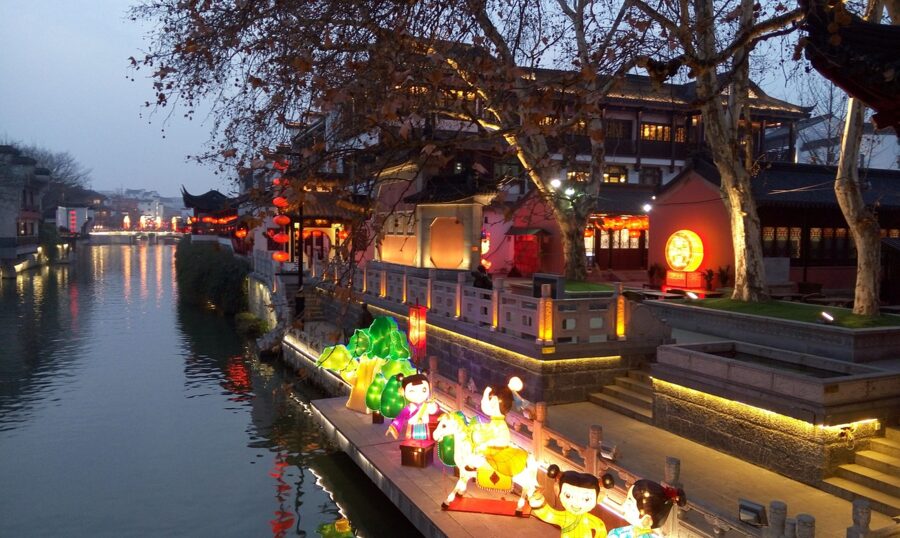
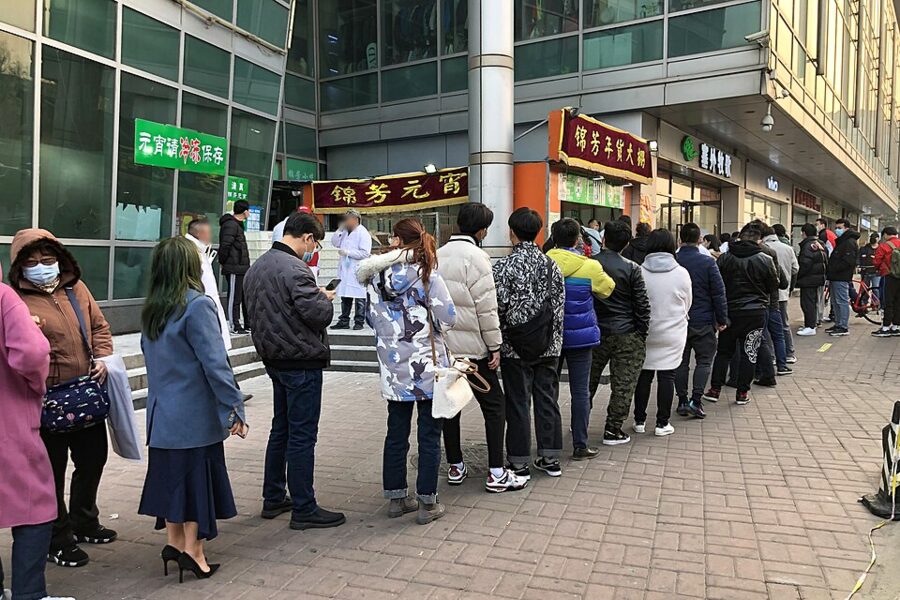
What changed in recent years is the gate. During the 2026 Spring Festival holiday the core of Fuzimiao, the area bounded by the east, west and north memorial arches, the Wende and Wenyuan bridges and Jinling Road, was open only with a timed booking. The Jiangsu police guide to the 2026 fair sends you to the official “南京夫子庙” mini program inside Alipay to reserve, with a scan at one of six entrances; residents, older people and service members use a separate lane. Whether the rule covers the fifteenth in 2027 will be set in the 2027 notices, so check before you go.
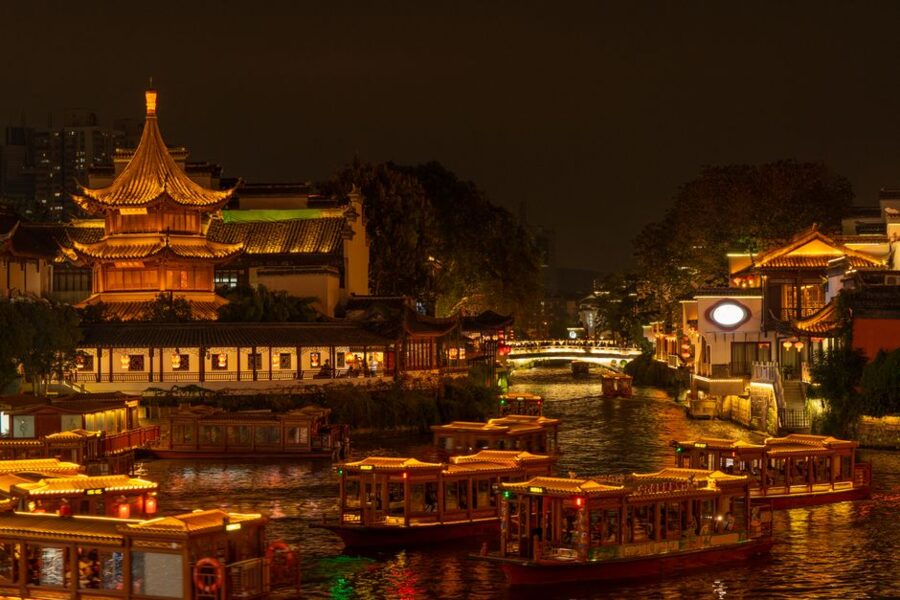
Cars were barred from the streets between Jiankang Road, Zhonghua Road, Changle Road and Pingjiangfu Road from February 15, and the police asked everyone to come by metro. Fuzimiao station on Lines 3 and 5 is the obvious stop and the most crowded one, run with one-way flow and entry limits through the evening peak, 18:00 to 20:00. I’d use Wudingmen on Line 3, exit 2, which puts you at the Laomendong and Bailuzhou end, or Sanshanjie on Lines 1 and 5, and walk in.
Zigong: lanterns made of china plates and silk cocoons
Zigong (自贡), under an hour from Chengdu by high-speed train, made its money from salt: its name joins those of two brine wells, Ziliujing and Gongjing. The salt paid for the lanterns. From the late Qing, salt merchants competed with lantern parades for every temple day, and the city’s street names still remember the tall lantern poles of its New Year fairs.
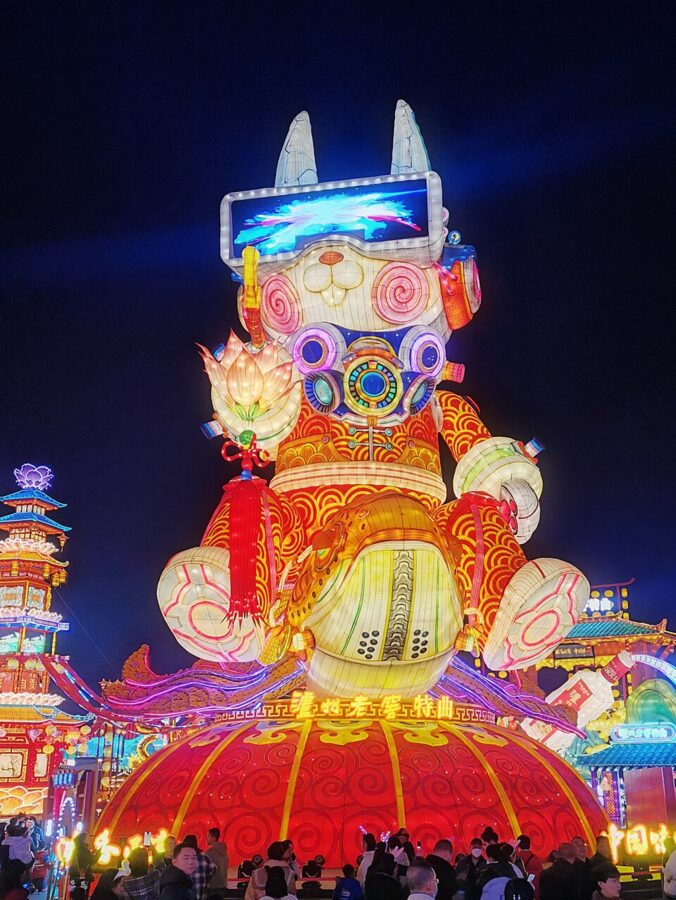

The modern festival began in 1964, and since then Zigong has turned it into an industry, sending lantern sets to other cities and abroad every winter. What marks its own work is material. The national heritage entry for the Zigong lantern fair lists china plates and bowls, glass bottles, silk cocoons, fine bamboo strips and tie-dyed cloth among the skins its makers use, and large linked groups that move.
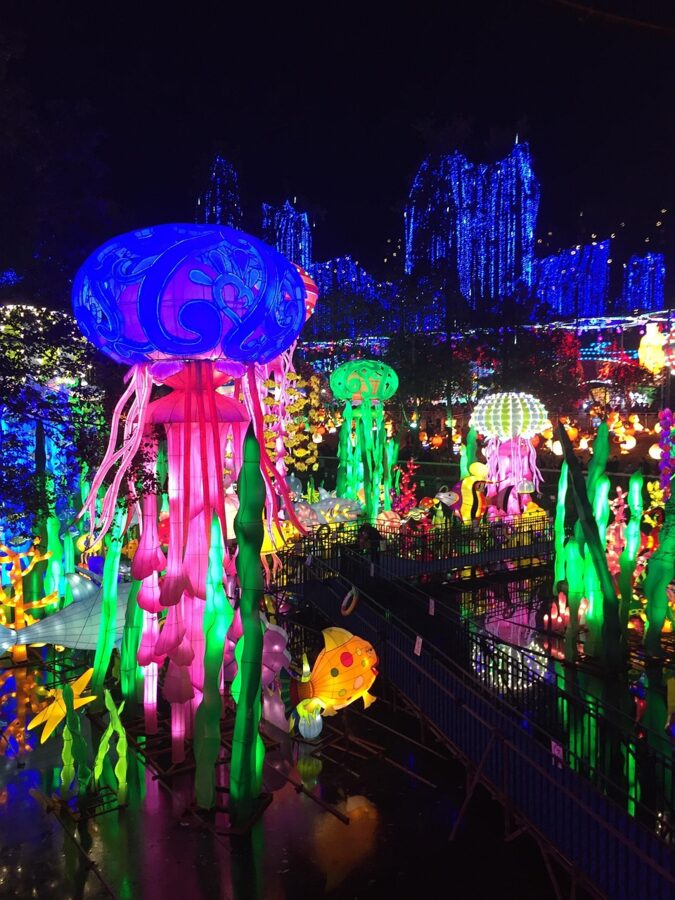
The 32nd festival opened at Chinese Lantern World (中华彩灯大世界) on January 23, 2026, and ran into the spring. Zigong’s 2026 ticket rules set two prices. Over the New Year period, February 15 to March 3, an adult ticket was 168 yuan and students and people aged 65 to 69 paid 98 yuan; outside it the prices fell to 118 yuan and 80 yuan. Children under 1.3 meters and anyone over 70 went free, and the park closed on New Year’s Eve.
All tickets are real-name, sold through the official “自贡灯会” and “自贡文旅” mini programs and the big travel apps, so have your passport number ready. In the busiest week, February 15 to 23 in 2026, the park ran two separate sessions a night, 17:00 to 20:30 and 21:00 to 23:30, each with its own full program of shows and a drone display, and each ID could buy one adult ticket per day. The late session released its tickets at about 20:00 on the day.

Getting there is simple. Trains on the Chengdu–Zigong–Yibin high-speed line run from Chengdu East to Zigong in about 45 to 55 minutes. During the 2026 festival a dedicated bus, line 11, ran nonstop from the high-speed station to the Lantern World visitor center, and a taxi takes about ten minutes. I’d allow four or five hours inside: the park is large and the shows run to a schedule.
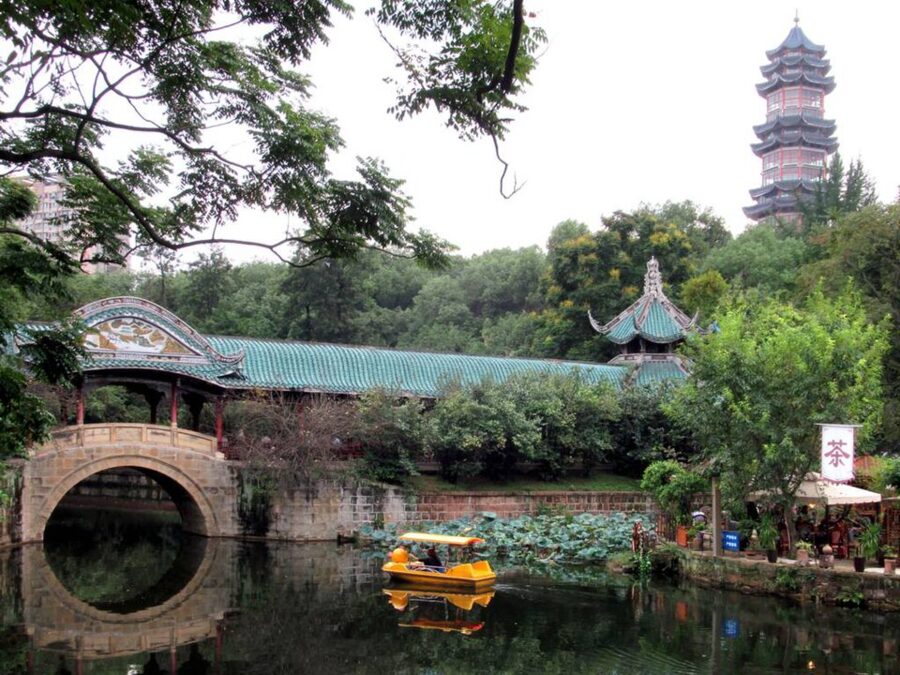

City walls, gardens and temple fairs
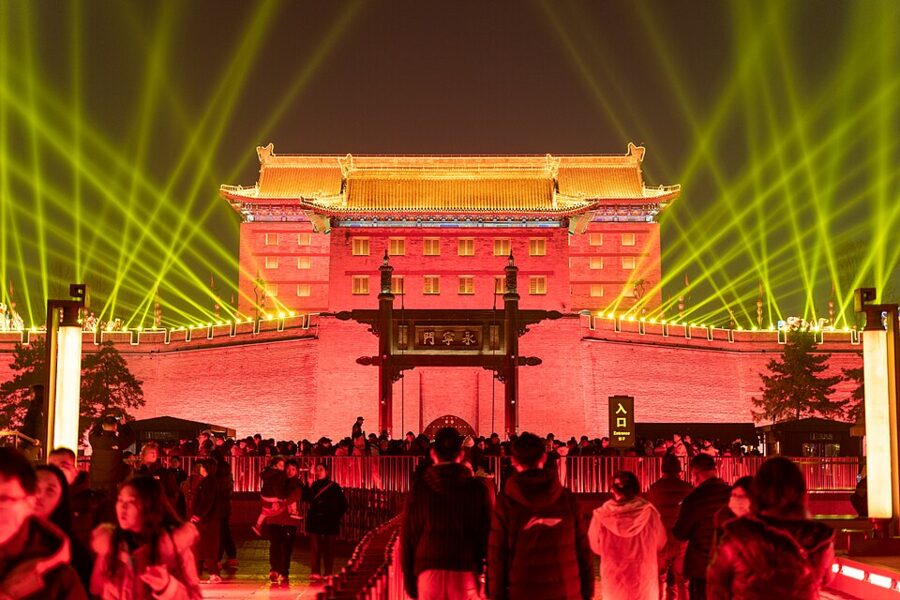
Xi’an builds its show on the Ming city wall, which makes it the nearest thing to Tang Chang’an’s open night. The 2026 Xi’an City Wall lantern show ran from January 1 to March 22, with the main sets in a core section between Hanguang Gate and Jianguo Gate on either side of the south gate, Yongning Gate. A core-area ticket was 100 yuan, or 50 yuan for children and students, booked through the city wall’s own mini program; the rest of the wall cost the normal 54-yuan entry.

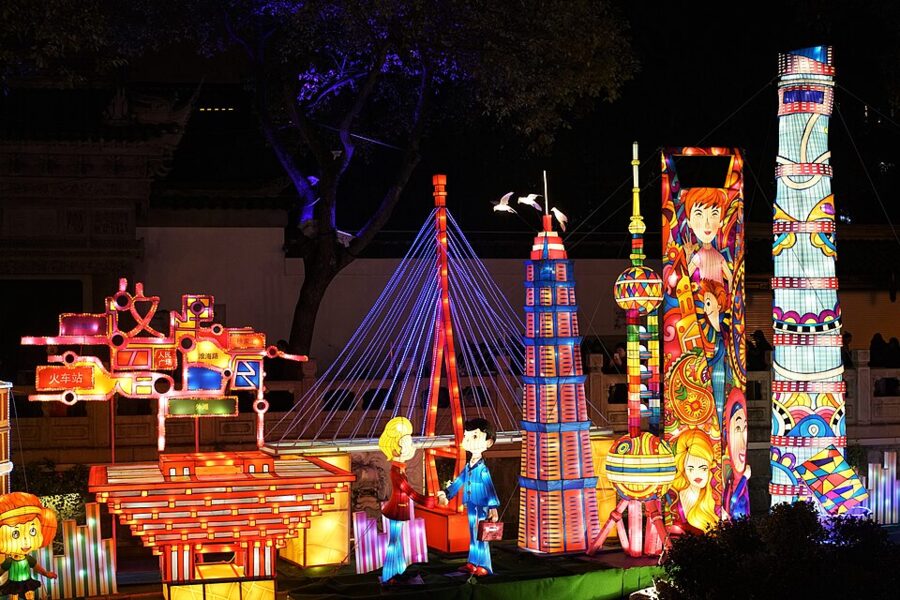
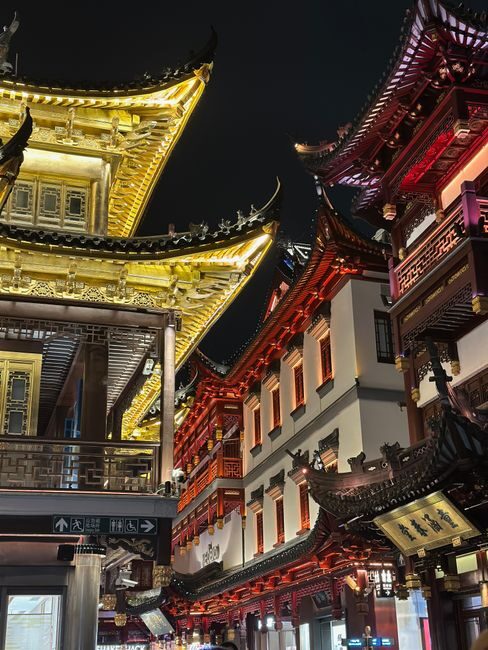
Shanghai’s show is at Yuyuan Garden and its bazaar, around the zigzag Nine-Turn Bridge. In 2026 the Yuyuan lantern show ran from January 26 to March 3, the fifteenth itself. Entry to the main folk-art lantern area was by timed ticket, 80 yuan for adults and 50 yuan for children, older people and service members, with entry from 14:00 on peak days (weekends, the first seven days of the year and Lantern Festival) and from 16:00 otherwise. Five linked lantern areas outside the garden were free.

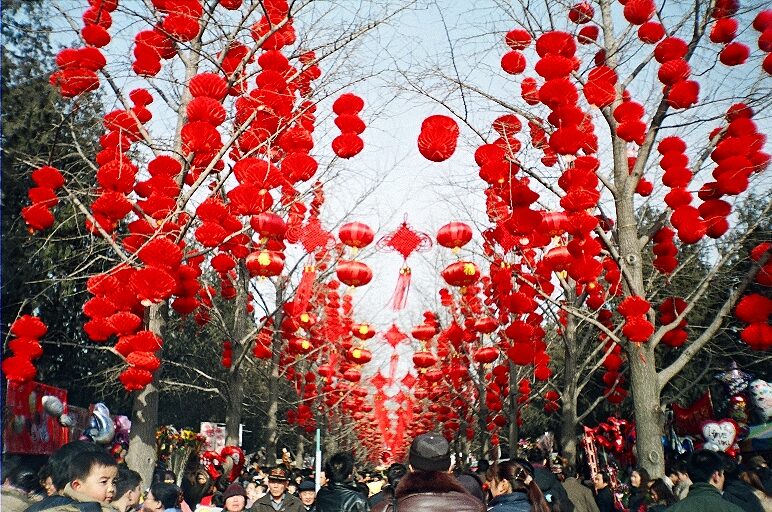
Beijing does things differently. Its temple fairs, at Ditan and Longtan parks and elsewhere, are a first-week affair, mostly over long before the fifteenth, and the capital’s old lantern market survives only as the name of Dengshikou station. On the night itself Beijing eats yuanxiao. Foshan’s walk across the Tongji Bridge is a better reason to be in the south on the fifteenth than most of the ticketed shows.

Beyond the mainland
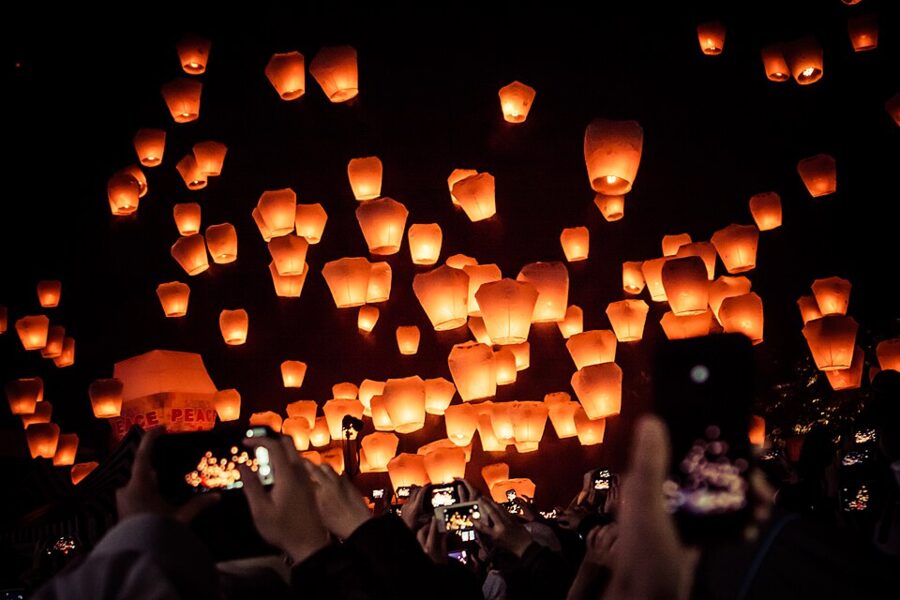
In Taiwan it is a national event. The Taiwan Lantern Festival moves to a different city each year; on the night the old mining valley of Pingxi, in New Taipei, releases sky lanterns written with wishes, and in Yanshui, in Tainan, “beehive” fireworks are fired straight into the crowd. Hong Kong holds lantern carnivals in its parks, and Macau, which put the festival on its own heritage list in 2020, closes its New Year fireworks on the fifteenth.


In Malaysia, unmarried women write their names and contact details on mandarin oranges and throw them into the river or the sea for the right person to find. Chinese Indonesians call the night Cap Go Meh, Hokkien for “fifteenth night”, and hold street parades. In Korea the same full moon is Daeboreum, kept with bonfires and nuts cracked between the teeth, and in Vietnam it is Tet Nguyen Tieu.

The 2027 date, and how to handle the crowd
The Chinese year starts on a new moon falling between January 21 and February 20, so the fifteenth of its first month, the full moon, falls between early February and early March. In 2027 the New Year is Saturday, February 6, and the Lantern Festival is Saturday, February 20. The State Council’s 2027 holiday notice gives the Spring Festival holiday as February 5 to 13, with Sunday, February 14 a working day. The fifteenth itself is not a public holiday, but in 2027 it lands on a weekend, which means the biggest possible crowd.
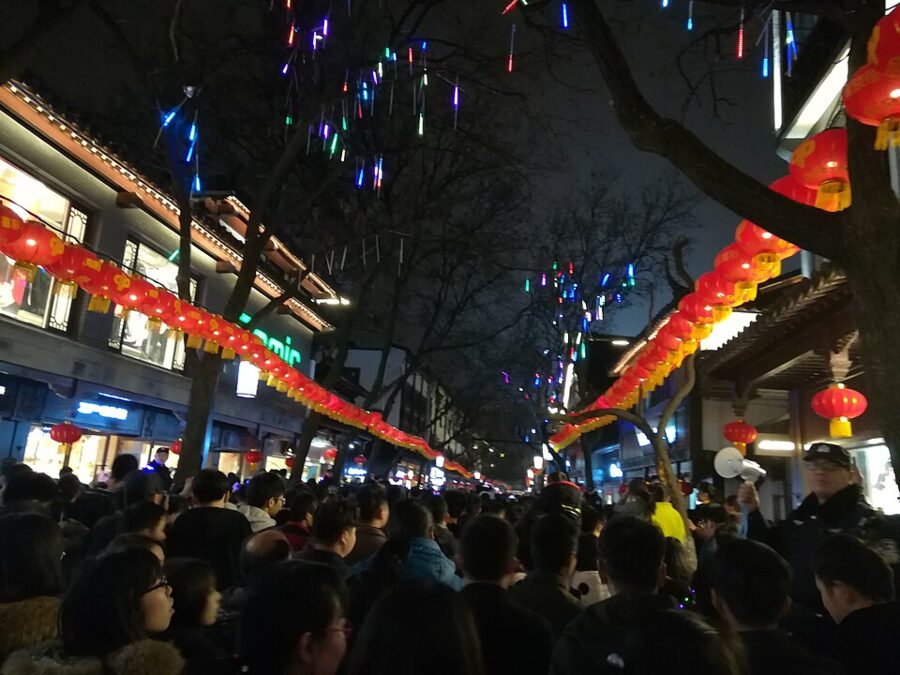

The lantern shows themselves start well before the fifteenth and usually run past it, and that is the main tool you have. The 2026 dates show the pattern: Xi’an opened on January 1, Zigong on January 23 and Yuyuan on January 26, while Nanjing ran from the first day of the year to the eighteenth and then for weeks more. A weekday visit outside the New Year holiday gets you the same lanterns with a fraction of the people.
If you want the night itself, plan for three things. Reservations: the big shows now sell real-name timed tickets through WeChat or Alipay mini programs, the forms take a passport number, and tickets for 2026 went on sale in mid-January. Timing: lights come on around 17:00, and the worst crush is between 18:00 and 20:00, so arrive before dark and leave late. Transport: the metro stations nearest each fair run one-way flow and entry limits, so get off a stop early and walk.
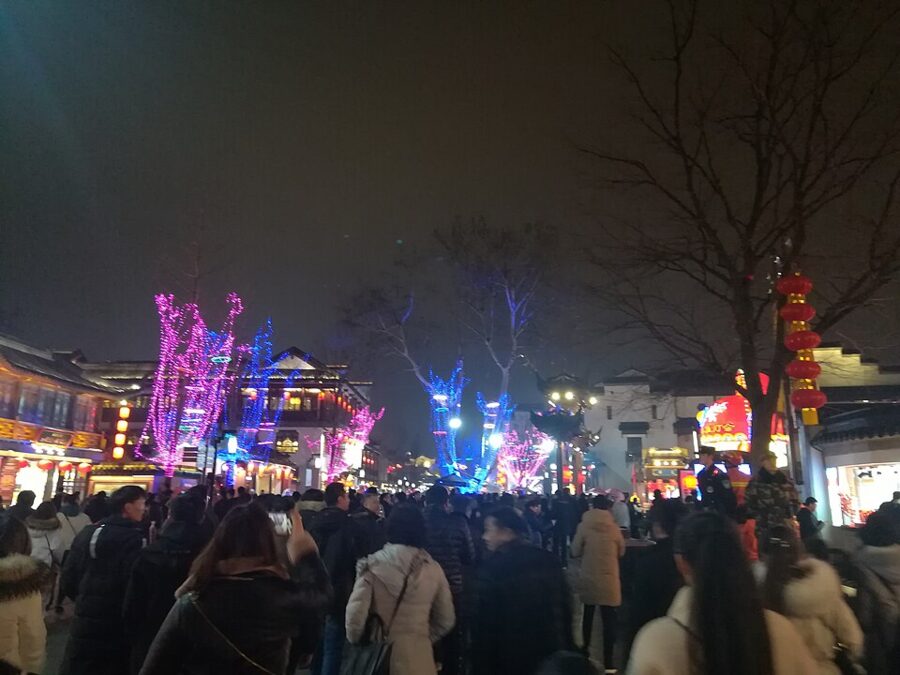

Where to stand on the night: Wende Bridge, Nanjing
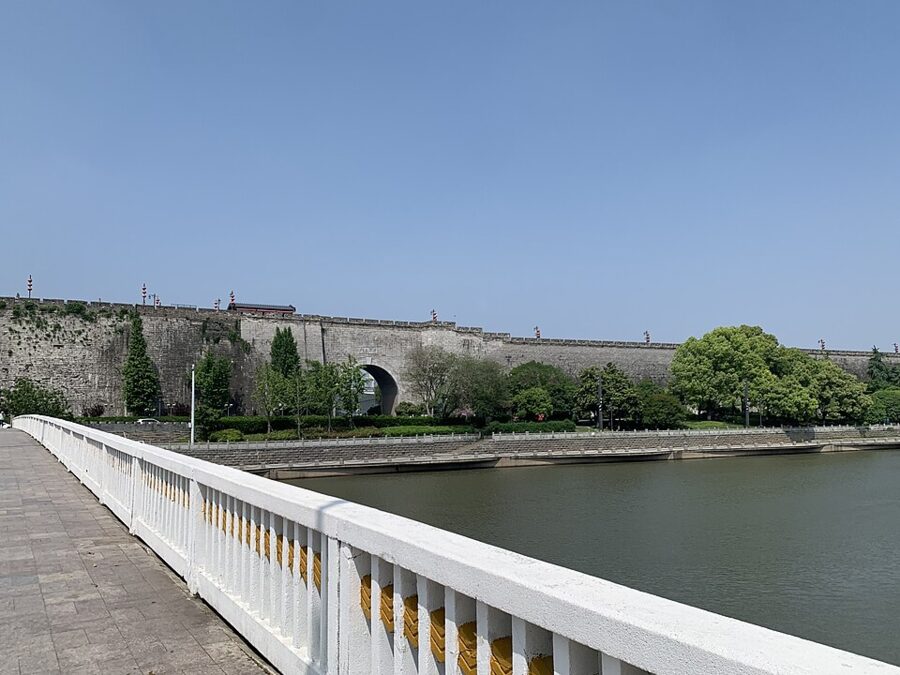
On February 20, 2027, I would be on the Qinhuai in Nanjing. Take Line 3 from Nanjing South Railway Station to Wudingmen, leave by exit 2 and walk west through Laomendong, which is free, to the Zhonghua Gate, the largest gatehouse of the Ming city wall. Then follow the inner river back northeast to the Confucius Temple, with your timed entry to the core area booked in Alipay before you set off.

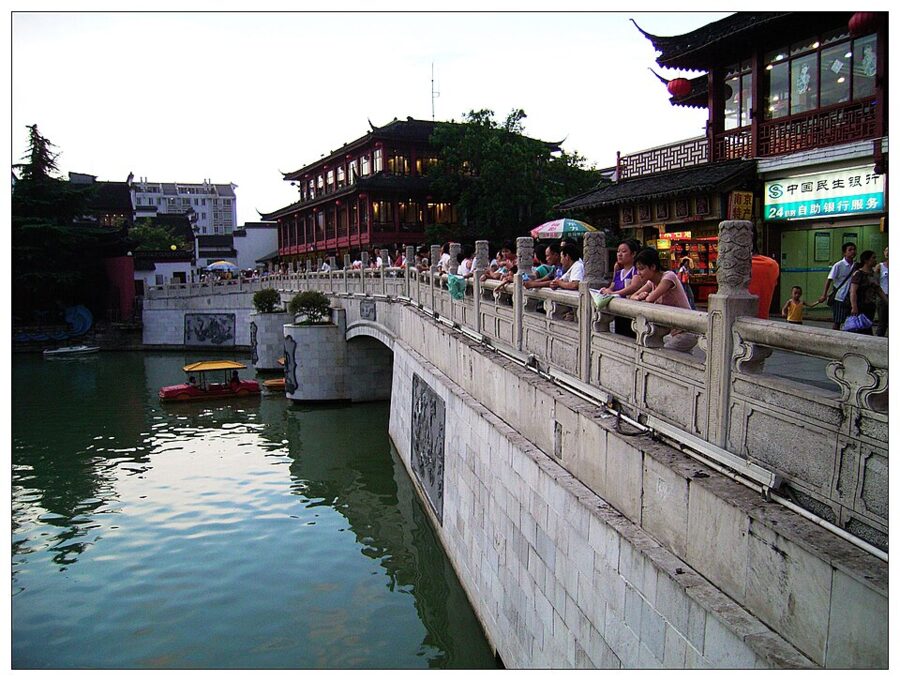
The place to stop is Wende Bridge (文德桥), the small stone bridge that crosses the river in front of the temple, with the Lingxing Gate behind you and the lanes toward Wuyi Lane on the far bank. In 2026 it carried one of the fair’s three biggest lantern sets. It crosses the same stretch of river where the first Ming emperor had ten thousand water lanterns set floating in 1372.

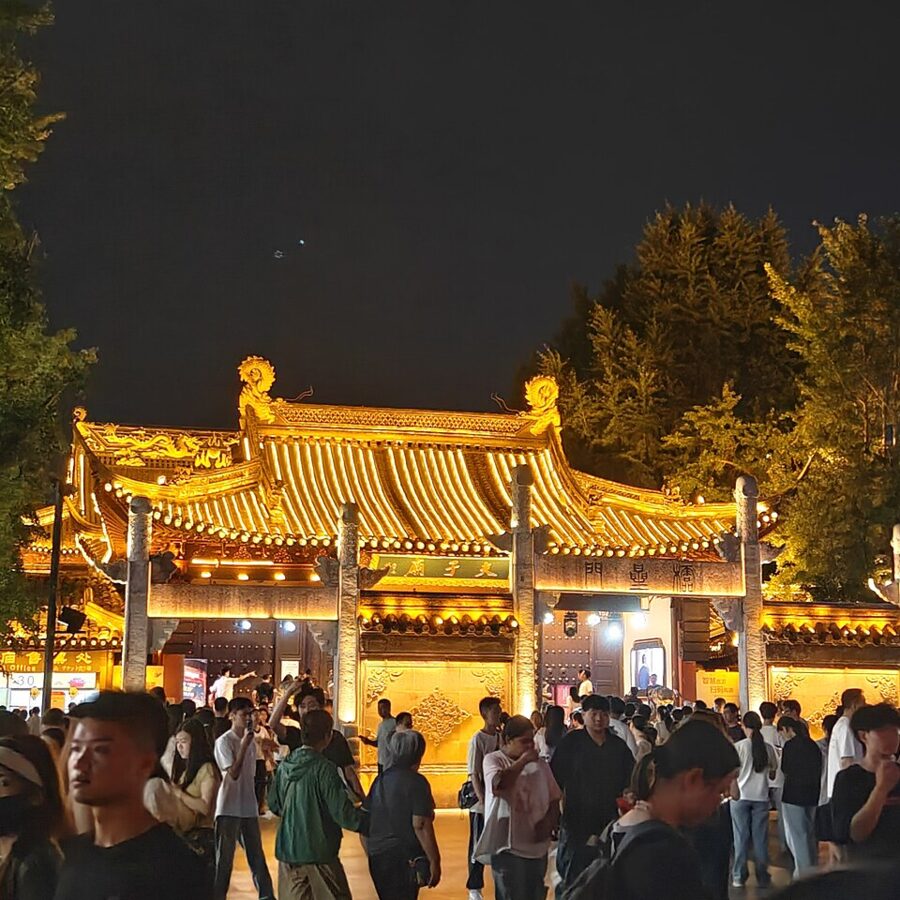

Stay until the crowd thins after 21:00. The drums Liu Yu complained about are still there, so are the masks, and so are the men and women, rich and poor, all mixed together in the road. Fourteen centuries on, nobody is asking the emperor to ban it.