
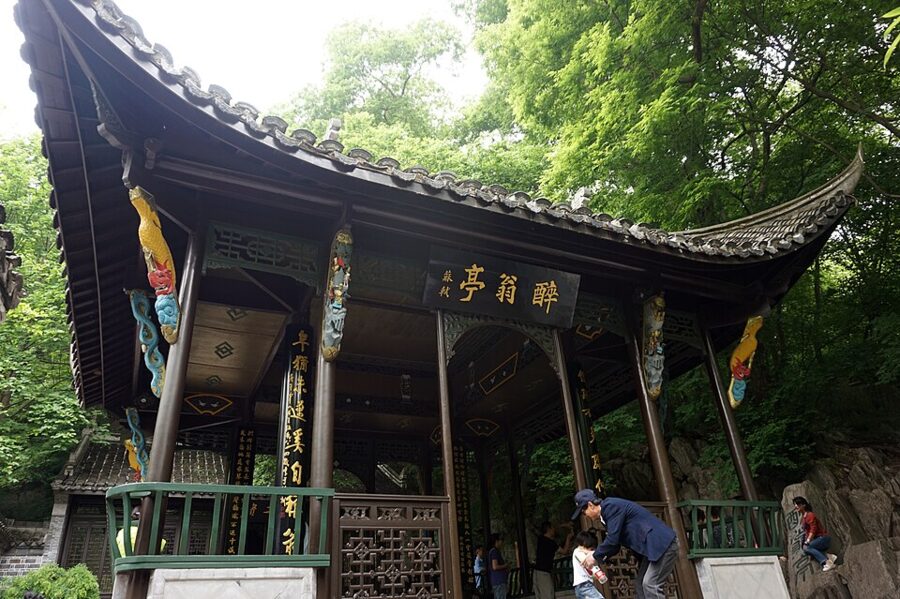

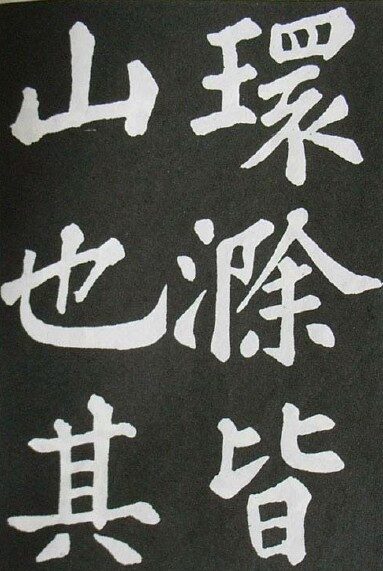
Five characters open the most memorized essay in Chinese: huan Chu jie shan ye (环滁皆山也), “All around Chu, it is mountains.” Ouyang Xiu wrote them in 1046 while serving out a demotion as prefect of Chuzhou, a small walled town in eastern Anhui, and he ended the same essay with a joke at his own expense. Schoolchildren across China still learn the whole thing by heart, and the pavilion it describes still stands in a wooded valley on Langya Mountain, a short train ride from Nanjing.
That essay, the Zuiweng ting ji (醉翁亭记, Record of the Old Drunkard’s Pavilion), is a piece of guwen (古文), “ancient-style prose”, which is what English-language scholarship usually means by Chinese classical prose. The word sounds like it should cover everything old. It doesn’t. Guwen was a program, argued for by particular men against a particular rival style, and the argument shaped how educated Chinese wrote for about a thousand years.

On this page
- Two ways to write a sentence: guwen against pianwen
- The models: philosophers and the Grand Historian
- Han Yu and Liu Zongyuan start the argument
- Ouyang Xiu, the Su family and the making of the Eight Masters
- Records, letters, prefaces and lives: the forms you will meet
- After the Eight: anthologies, examinations and the May Fourth verdict
- How to read guwen in English
- Where the essays happened, and what stands there now
- Back to the Old Drunkard’s Pavilion: how to get there
Two ways to write a sentence: guwen against pianwen
To see what guwen was for, start with what it was against. From the late Han through the Six Dynasties, the prestige style for anything serious was pianwen (骈文), “parallel prose”. The name comes from a pair of horses yoked side by side, and the sentences behave the same way: they come in matched pairs, each line the mirror of its partner in length, grammar and often tone.
Parallel prose also leaned on allusion, so a good line was dense with borrowed phrases from the classics. Most of its lines ran to four or six characters, which is why it was also called siliu wen (四六文), “four-six prose”. Its sixth-century masters, Xu Ling and Yu Xin, could make a palace memorial sound like a poem.
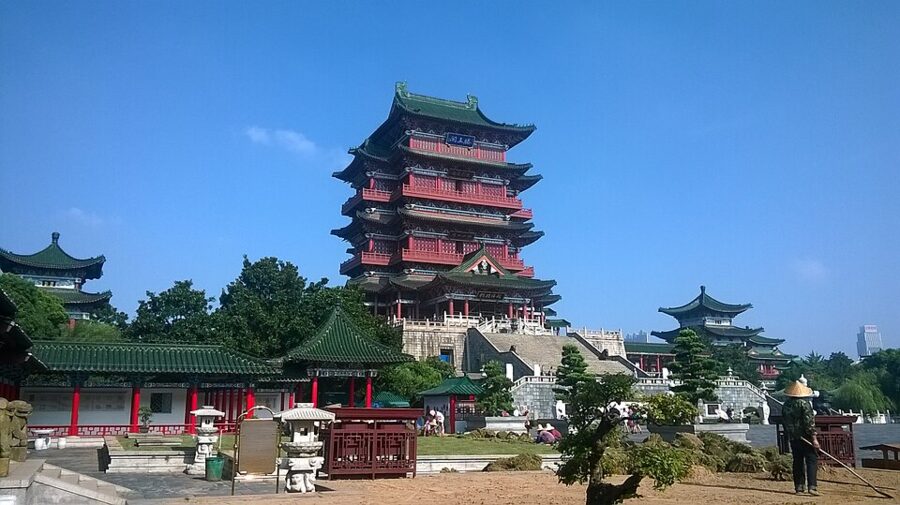

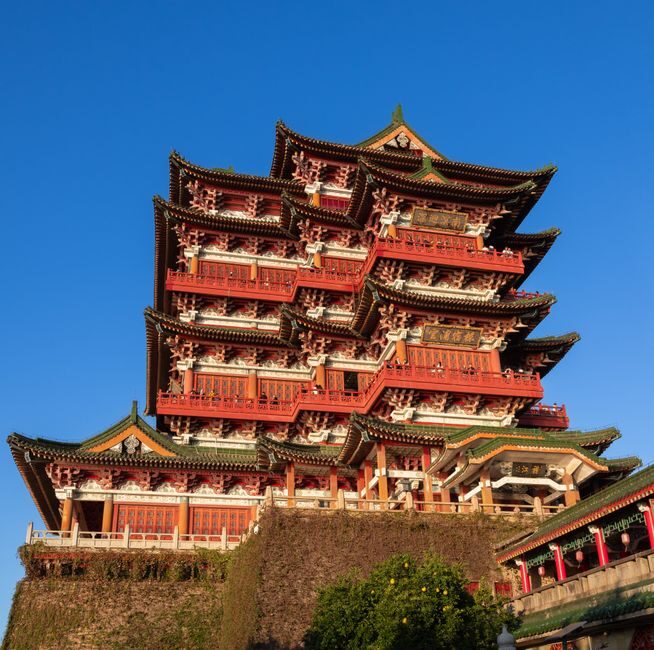
The example a traveler can visit is Tengwang Pavilion in Nanchang. Wang Bo, a prodigy in his twenties, wrote a preface there for a banquet in the 670s, and one couplet from it is quoted at every sunset over water in China: “Evening clouds fly level with a lone wild duck; autumn water and the long sky are one color.” Read aloud in Chinese, the two halves click together like the leaves of a door.
Guwen, by contrast, means prose written the way the pre-Qin philosophers and the early Han historians wrote: sentences of whatever length the thought needs, built for argument and narrative rather than display. The Tang writer Han Yu coined the label, and his point was moral as much as literary. Ornament had drowned out meaning; writing should carry the Way, the dao of the Confucian classics, and to do that it had to sound like the books where the Way was first written down.
The slogan English books often attach to the movement, wen yi zai dao (文以载道), “writing is a vehicle for the Way”, actually comes later, from the Song philosopher Zhou Dunyi. Liu Zongyuan’s own phrase was close: writing exists “to make the Way clear”. Either way, the fight was between prose as performance and prose as argument.
Neither side won outright. The best guwen writers used parallel phrases whenever they wanted the rhythm, and Ouyang Xiu’s pavilion essay is full of them. What changed was the default: after the Song, a scholar who wanted to be taken seriously wrote in guwen.
The models: philosophers and the Grand Historian
When Han Yu said “ancient”, he meant a short shelf of books written between about 500 and 90 BCE. The guwen writers did not imitate them line by line. They took from each a habit: an argument’s momentum, a story’s economy, a voice that sounded like a person rather than a court.
Mencius, Zhuangzi and the chroniclers
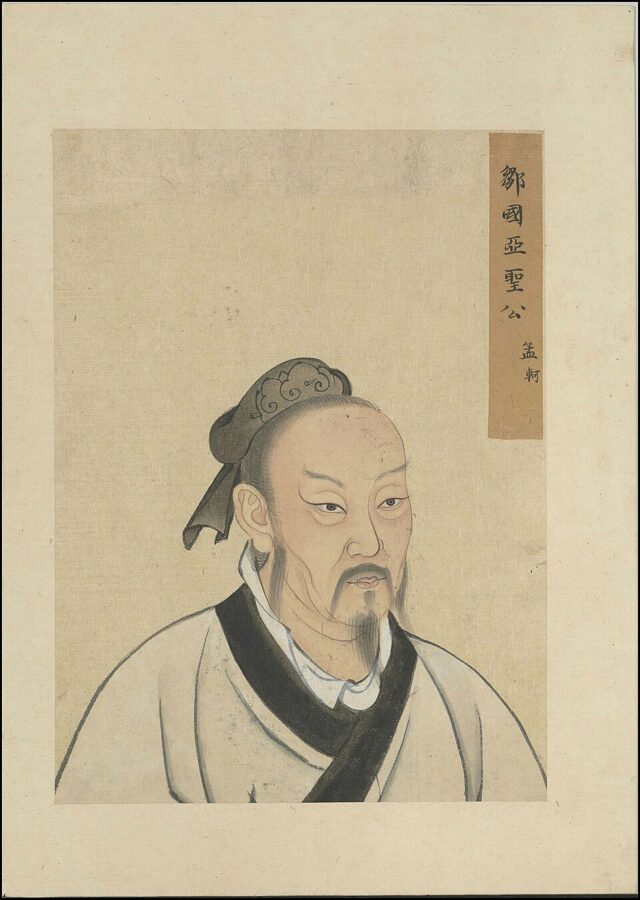
Mencius gave them argument by escalation. His most famous passage begins with food: “Fish is what I want, and bear’s paw is also what I want; if I cannot have both, I give up the fish and take the bear’s paw.” Two sentences later he has moved from dinner to the choice between life and righteousness, and the reader has followed without noticing the step.
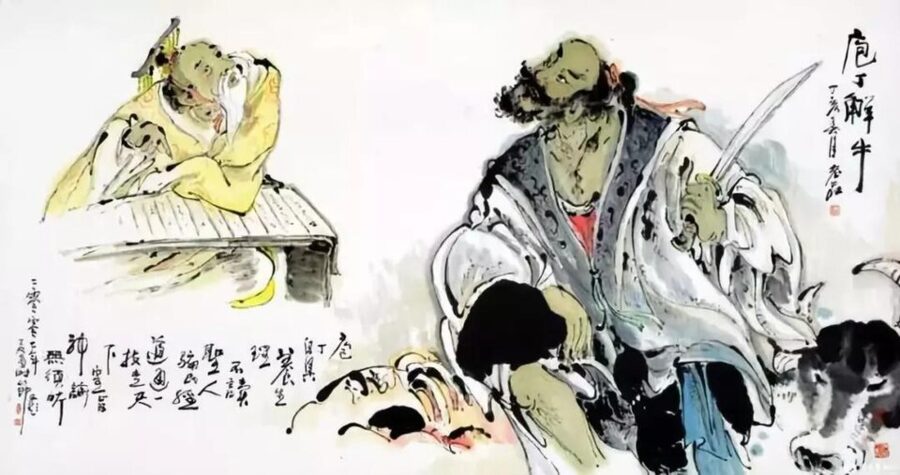
Zhuangzi gave them the parable and the joke. His butcher, Cook Ding, carves an ox so smoothly that after nineteen years his knife is as sharp as the day it left the whetstone, because he cuts only along the gaps. Every later essayist who used a craftsman to make a point about life was borrowing that knife.
The chronicles, the Zuo zhuan (左传) above all, gave them narrative compression: a battle in a paragraph, a reign summed up in one exchange of speeches. But the writer every later guwen master returned to was a Han court astrologer who had been castrated for telling the emperor the truth.
Sima Qian, who wrote the model biography
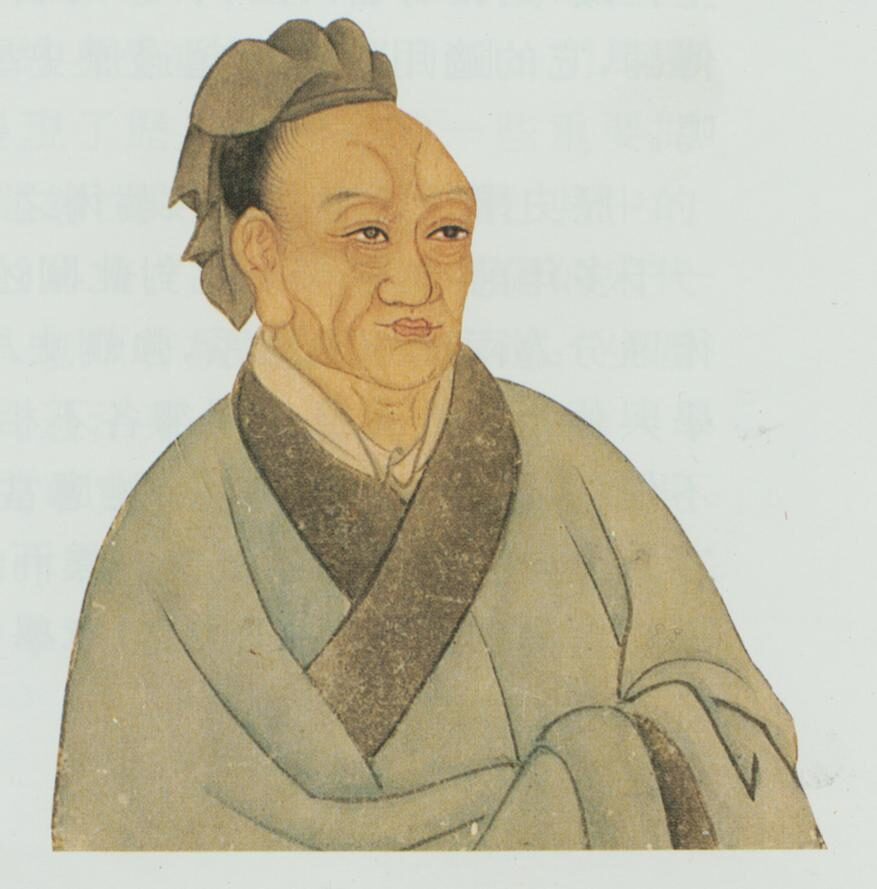
Sima Qian (about 145 to about 86 BCE) inherited the post of Grand Historian from his father, and with it a project: a history of the known world from the Yellow Emperor to his own day. In 99 BCE he spoke up at court for Li Ling, a general who had surrendered to the Xiongnu. Emperor Wu took it as an insult, and Sima Qian was sentenced to castration. He accepted it rather than suicide, the honorable exit, because the book was not finished.
He explained the choice in a letter to his friend Ren An that guwen writers treated as scripture: “Every man has one death. It may weigh more than Mount Tai, or less than a goose feather; it depends on what it is spent for.” The finished Shiji (史记), the Records of the Grand Historian, runs to 130 chapters and about 526,500 characters.
What later writers took from it was the liezhuan (列传), the arranged biography: a life put on the page through scenes and speech, then a short comment under the heading “the Grand Historian says”. The assassin Jing Ke singing on the bank of the Yi River before he sets off to kill the king of Qin, knowing he will not come back, is a scene Sima Qian lets stand without a word of praise. Nine hundred years later, Han Yu and Liu Zongyuan wrote short lives of a plasterer, a carpenter and a tree-planter in exactly that manner.
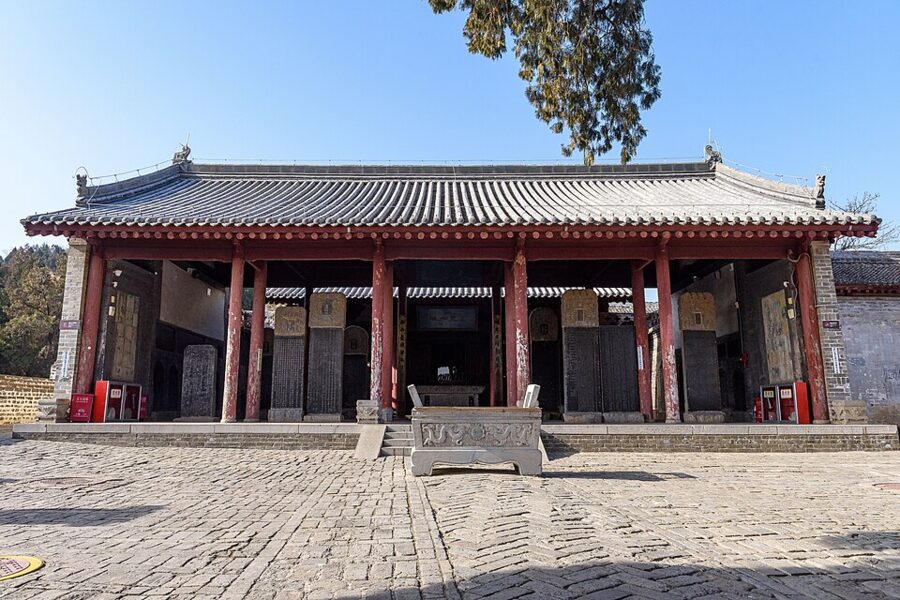

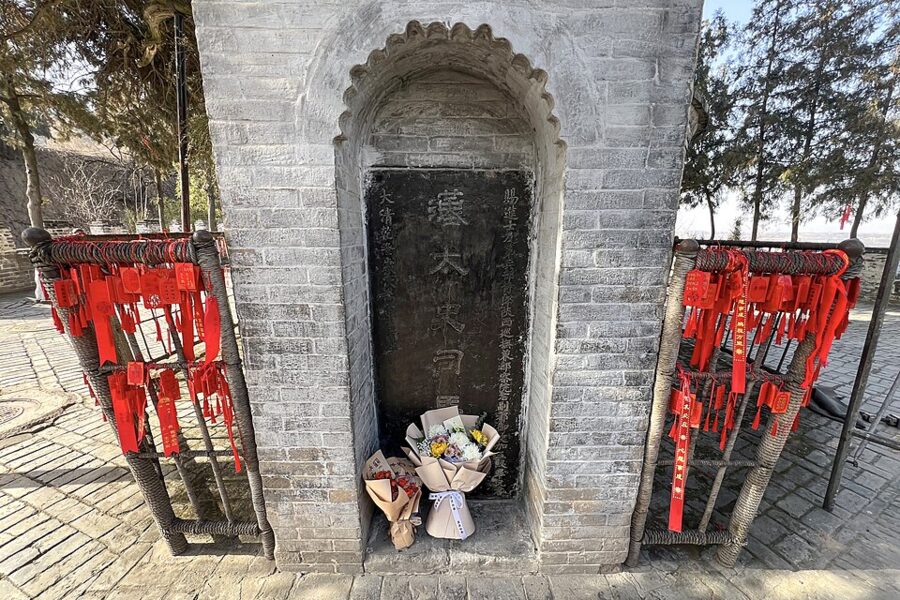
His shrine is still there, on a ridge over the Yellow River valley about 10 km south of Hancheng, first built in the early fourth century. You climb an old stone road worn with cart ruts, then four terraces and their wooden gateways, and at the top find the brick-ringed tomb mound with an old cypress growing out of it.

Han Yu and Liu Zongyuan start the argument
Guwen had earlier champions, but the movement as anyone remembers it belongs to two friends, Han Yu (768–824) and Liu Zongyuan (773–819). Both were officials, both were exiled to the far south, and both wrote their best prose in exile. That is one reason so much classical prose is tied to a specific, often remote, place.
Han Yu: “get rid of stale words”
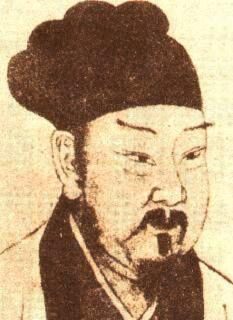
Han Yu was combative in print. His advice to a young writer boils down to one line, “the one task is to get rid of stale words”, and his essay “On Teachers” (师说) opens with a definition schoolchildren still recite: “A teacher is the one who passes on the Way, hands down the work, and resolves doubts.” It goes on to say a student need not be inferior to his teacher, a sharp thing to put in writing in a society built on seniority.
In 819 he went further. When the Xianzong Emperor had a finger bone of the Buddha carried into the palace, Han Yu sent up a memorial calling it a dried-up relic of a foreigner that should be thrown into water or fire. He was nearly executed and was instead sent to Chaozhou, on the coast of what is now eastern Guangdong, then a malarial frontier.
He stayed only about eight months, but Chaozhou adopted him: the river through the town is the Han River and the hill across it Han Mountain. Local tradition says he drove the crocodiles from the river with a written proclamation, which survives. It gives the animals three days to leave, then five, then seven at most.
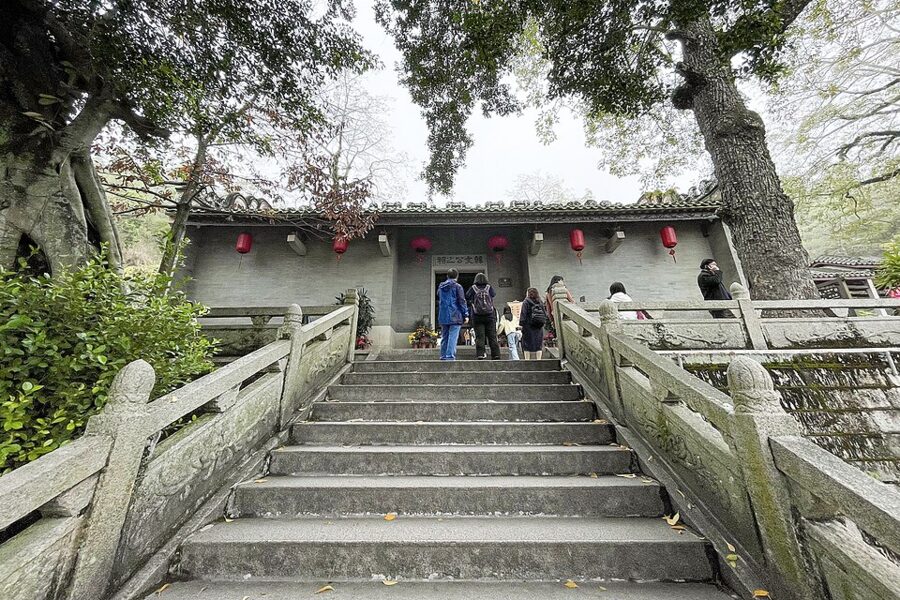

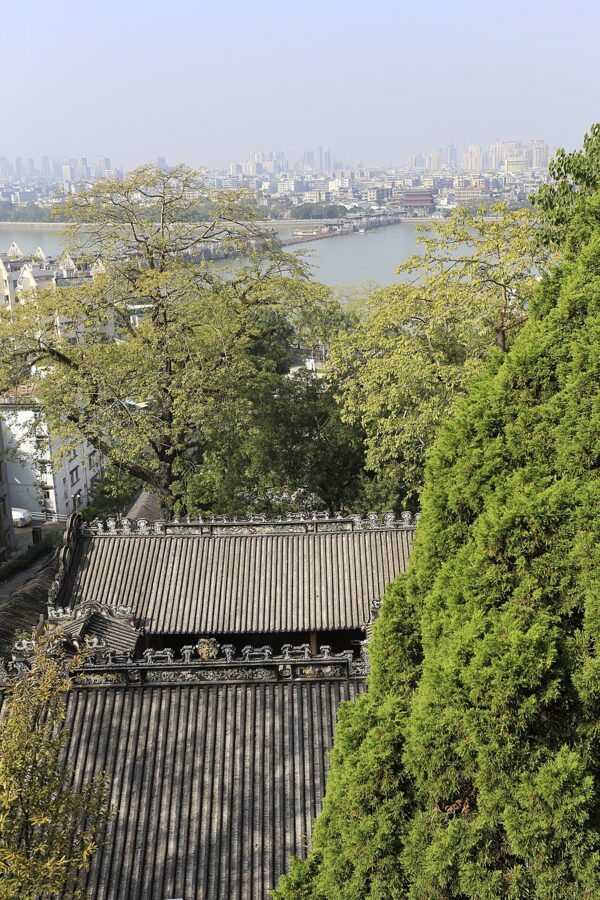
The Temple of Han Yu (韩文公祠) in Chaozhou is the oldest surviving shrine to him, first built in 999 and moved to its site across the river from the old town in 1189. It is free, open 08:30–17:00 and closed on Mondays except public holidays. The most quoted verdict on him comes from an inscription Su Shi wrote for an earlier Chaozhou shrine in the early 1090s: Han Yu’s writing “raised literature up from the decline of eight dynasties”.

Liu Zongyuan in Yongzhou
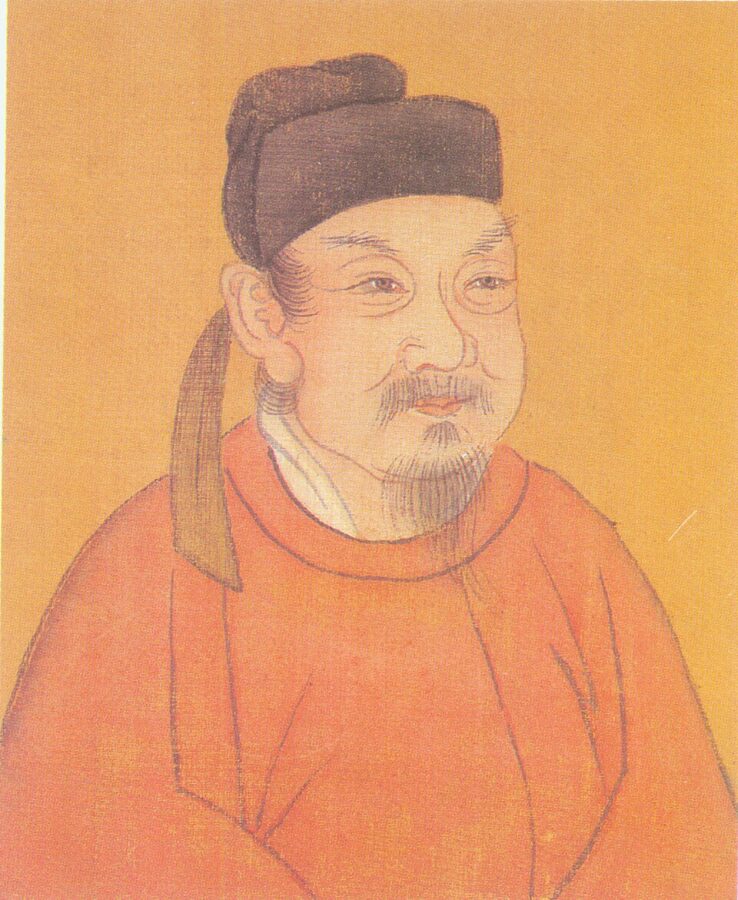
Liu Zongyuan backed the wrong side in a short-lived reform at court in 805 and was sent to Yongzhou, in southern Hunan, with a title that carried no duties. His mother died there within a year. He stayed ten years, then was sent further south to Liuzhou, where he died in 819.
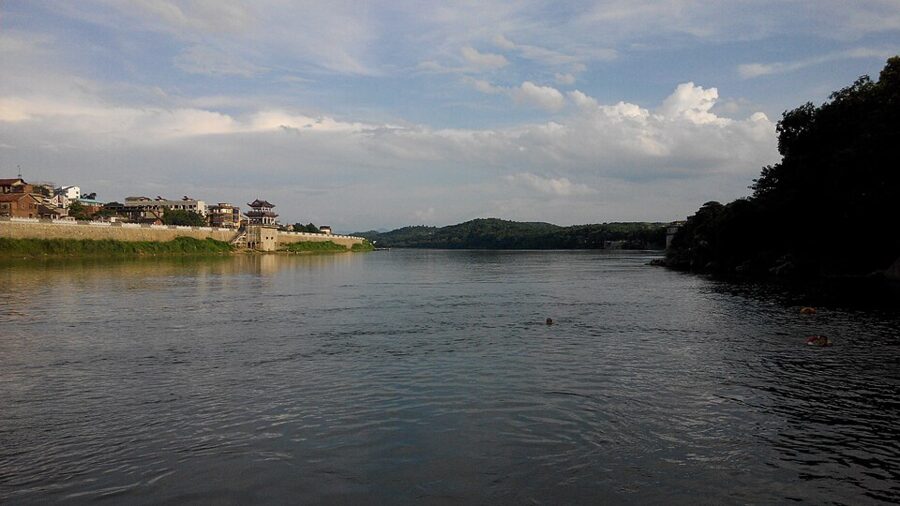
In Yongzhou he walked. Between 809 and 812 he wrote a sequence of short records of the hills, pools and streams outside the town, now called the Yongzhou ba ji (永州八记), the Eight Records of Yongzhou. They give directions you can follow: so many paces west, past a bamboo grove, then the sound of water.
The Little Rock Pool is the one Chinese students memorize. Its best-known sentence describes the fish: “There were perhaps a hundred of them, and they all seemed to swim in empty air with nothing to hold them up.” Then the cold and the silence get to him, and he leaves because the place is “too clear” to stay in for long. That turn from scenery to the writer’s own unease is the move every later travel record makes.
He also renamed the stream he lived beside. It had been the Ran Stream, after a local family; he called it the Yu Xi (愚溪), the Foolish Stream, because he was a fool to have ended up there and the stream was a fool to be so useless for irrigation. The name stuck.
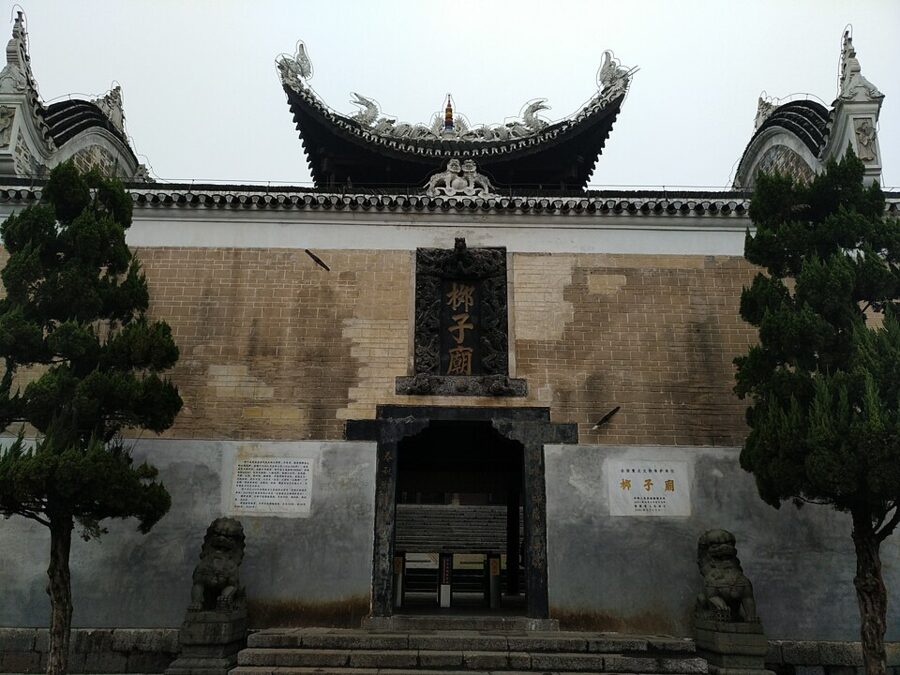
The Liuzi Temple (柳子庙) stands on that stream on Liuzi Street in the Lingling district of Yongzhou. It was first built in 1056; the halls you see, including a stage at the front, are Qing reconstructions. Lingling’s district government treats the temple, the street and the stream as a single scenic area, with three of the eight records’ sites upstream. Tickets to the temple were about 40 yuan in recent seasons.

Ouyang Xiu, the Su family and the making of the Eight Masters
After Han Yu and Liu Zongyuan, guwen faded, and by the early eleventh century the fashionable style at court was jeweled and allusive again. The revival had one patron above all: Ouyang Xiu (1007–1072).
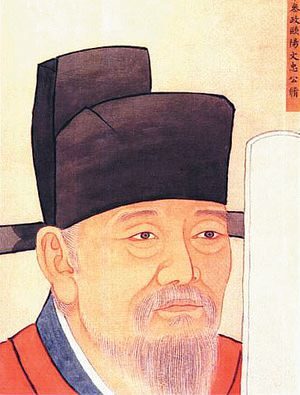
He told the story of his own conversion. As a boy in Suizhou, too poor for books, he found a damaged old copy of Han Yu’s works in a basket in a neighbor’s house and took it home. He did not understand all of it, but he decided this was what writing should be.
In 1057 he was chief examiner for the national jinshi examination. He failed the candidates who wrote in the strained style then fashionable at the capital’s academy and passed those who wrote plainly, and that single year’s list included Su Shi, his brother Su Zhe and Zeng Gong. The story goes that Ouyang Xiu thought Su Shi’s paper must be his own student Zeng Gong’s, and ranked it second to avoid the look of favoritism.
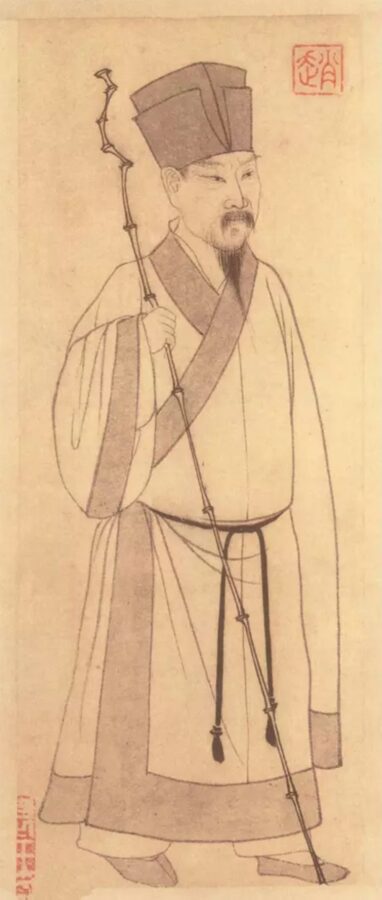
The “Eight Masters of the Tang and Song” (唐宋八大家) are the two Tang founders plus six Song writers: Ouyang Xiu, Su Xun and his sons Su Shi and Su Zhe, Wang Anshi and Zeng Gong. The list is an anthologist’s. Mao Kun fixed it in the sixteenth century with an anthology that began as a textbook for the young men of his own family and became the standard curriculum for three centuries.
The six Song writers could hardly have been more different. Su Xun wrote fierce political essays, the best known arguing that the six Warring States fell because they bribed Qin with land. Wang Anshi, the great reformer of the age, wrote with a minister’s economy, and Zeng Gong was the steady one Qing critics held up as the purest model. Su Zhe was the gentle brother; Su Shi could do everything.
Three records from one failed reform
Three of the most famous Song essays came out of one political defeat. In 1043 and 1044 a group of officials led by Fan Zhongyan pushed through administrative reforms now named after the Qingli reign period. Within two years the reformers had been pushed out of the capital, and each, in his place of exile, ended up writing about a building.
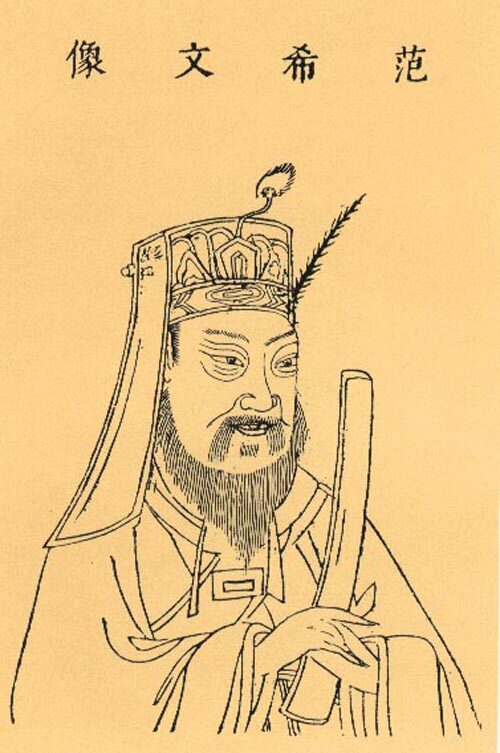
Ouyang Xiu, who had defended Fan Zhongyan, was sent to Chuzhou and wrote the Old Drunkard’s Pavilion. Su Shunqin, dismissed in 1044, bought an overgrown plot in Suzhou, built a garden he named the Surging Wave Pavilion and wrote its record. And Fan Zhongyan himself, from Dengzhou, wrote the Record of Yueyang Tower.
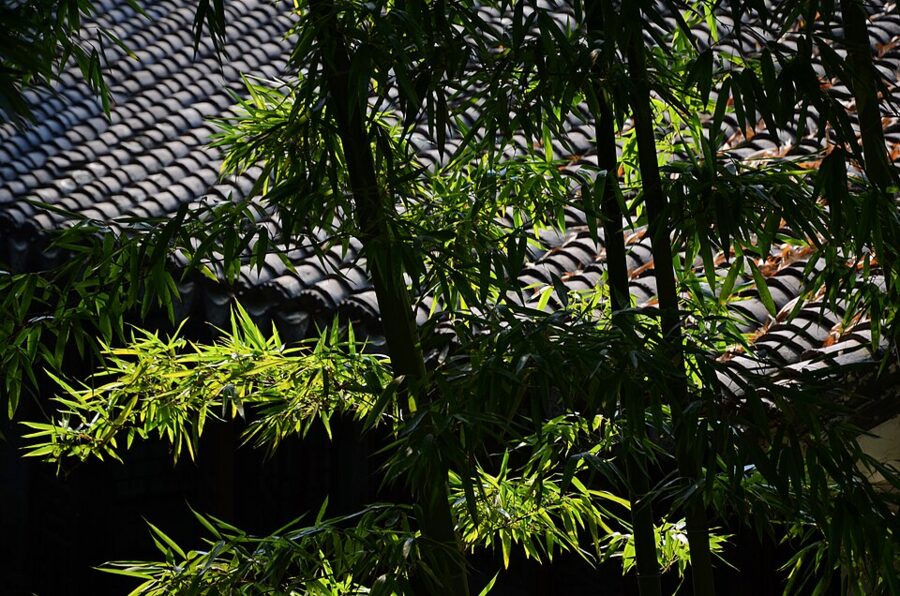

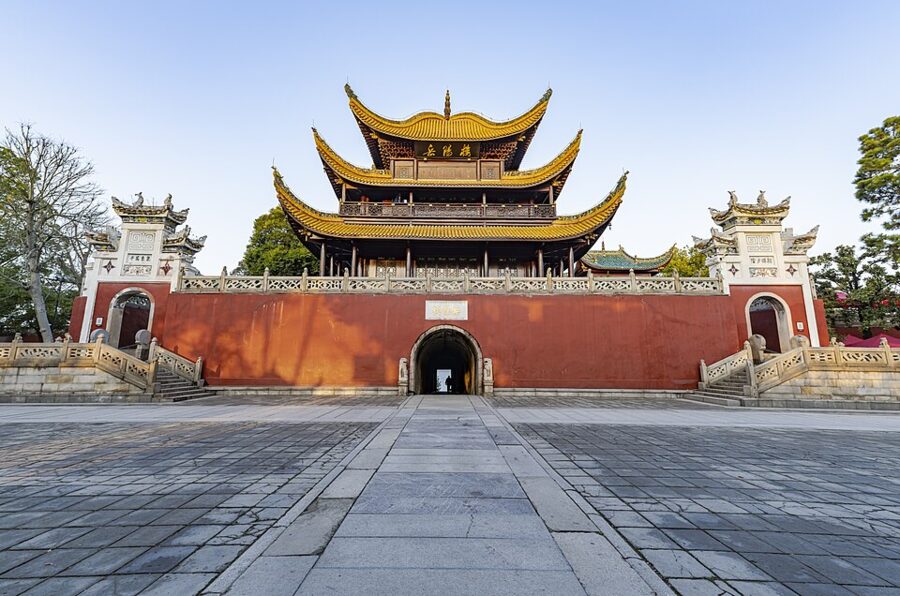

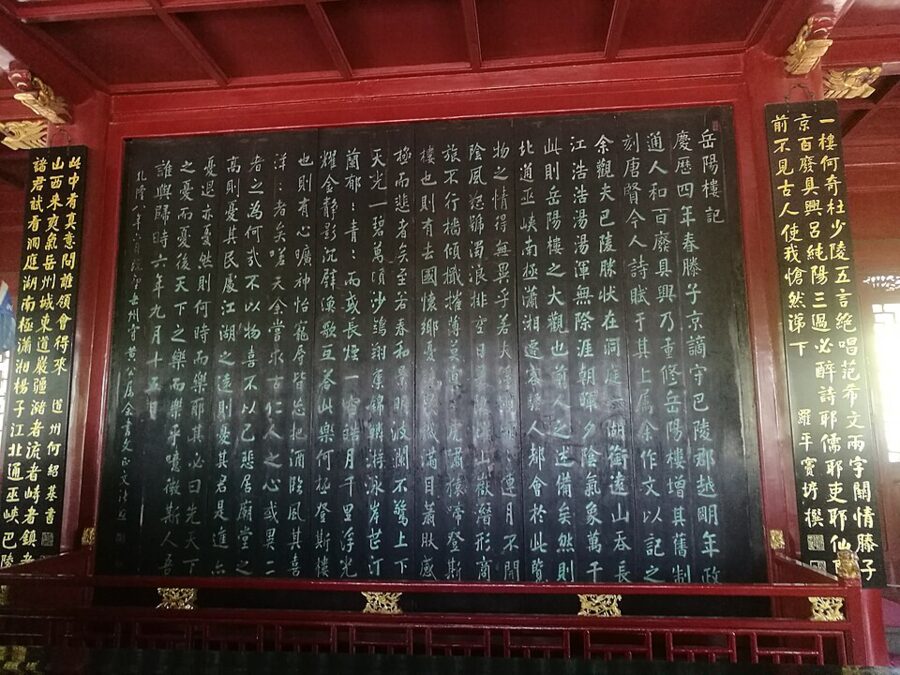
Yueyang Tower stands on the city wall of Yueyang, over Dongting Lake. Teng Zijing, another reformer sent away from court, rebuilt it in 1045 and asked Fan Zhongyan to write the record, sending a painting of the view to work from; whether Fan ever saw the tower himself is still argued. The essay is 368 characters long. It moves from the lake in rain to the lake in spring sunshine, and from the moods each brings out in visitors to the question of how a good man should feel at all.
His answer is the most quoted sentence in Song prose: a true gentleman is “anxious before the world is anxious, and happy only after the world is happy”. In Chinese it is a matched pair of seven-character phrases, parallel prose’s own trick used inside a guwen essay to land the moral.
Su Shi at the wrong Red Cliff
Su Shi spent his career being promoted and then exiled for what he wrote. In 1079 he was arrested over poems said to mock the government, held for months and then sent to Huangzhou, on the Yangtze in eastern Hubei, with a nominal post. He farmed a plot on an eastern slope, called himself Dongpo, “East Slope”, and wrote the works he is most loved for.
In 1082 he twice took a boat out under a red rock face on the river and wrote two fu (赋), rhapsodies, about it. In the first, his guest mourns how brief a life is, “a mayfly lodged between heaven and earth, a grain of millet in the blue sea”. Su Shi answers that seen from change nothing lasts an instant, and seen from what does not change, nothing ever ends.
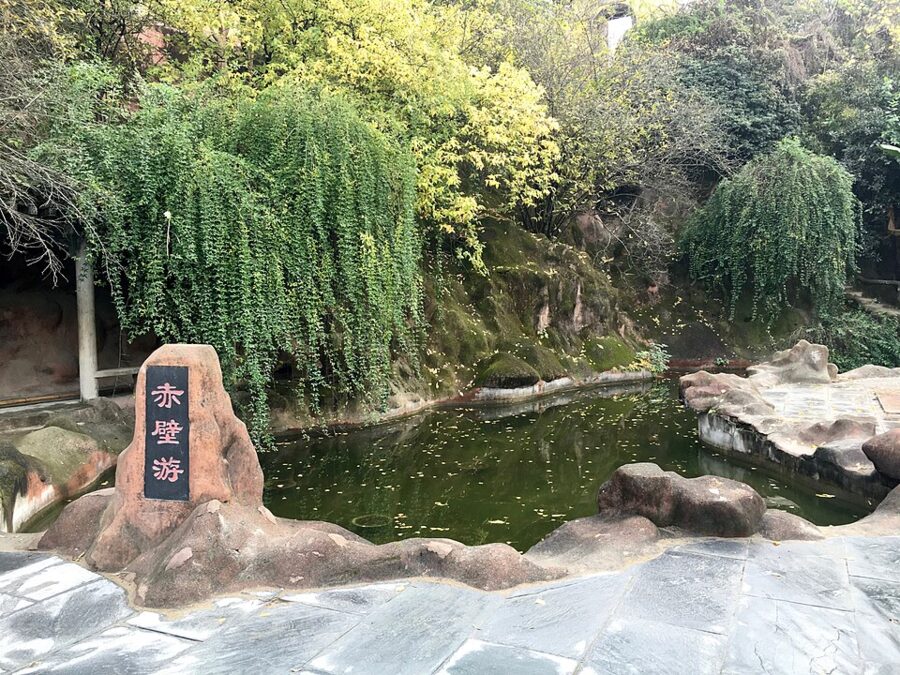

This was almost certainly not the site of the Battle of Red Cliffs of 208, which the odes evoke. The battle was fought upriver, near the city now called Chibi. Su Shi hedged in his lyric on the same theme, “people say this is Zhou Yu’s Red Cliff”, and later readers kept both: the battle site is the “military Red Cliff”, Huangzhou the “literary” one.
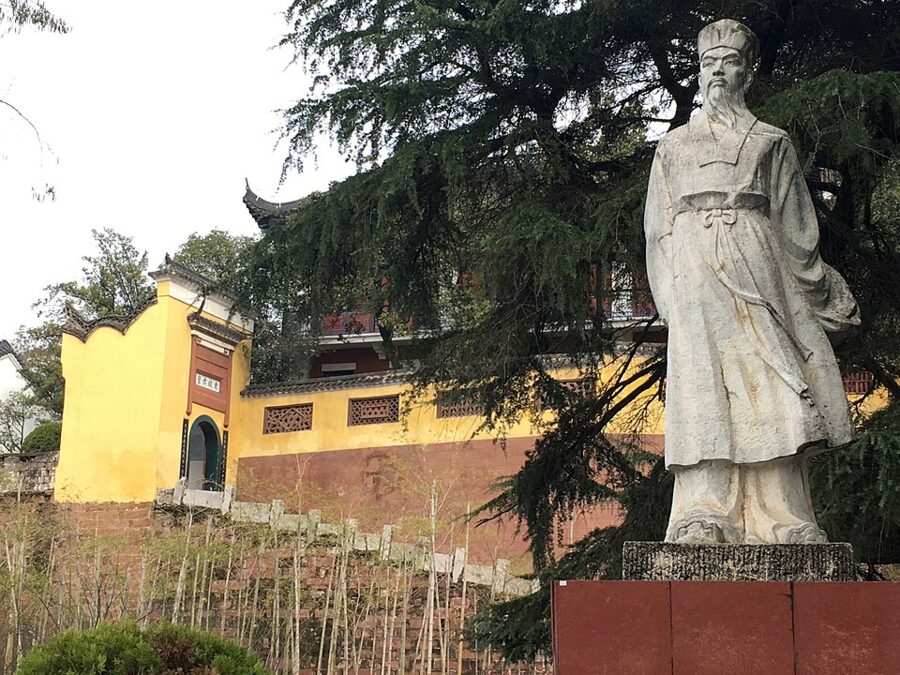

A year later, on a moonlit night, he went to find his friend Zhang Huaimin at the Chengtian Temple in Huangzhou and they walked in the courtyard. The record of that night is fewer than ninety characters long. It ends: “What night has no moon? Where are there no bamboo and cypress? There are just few idle men like the two of us.”
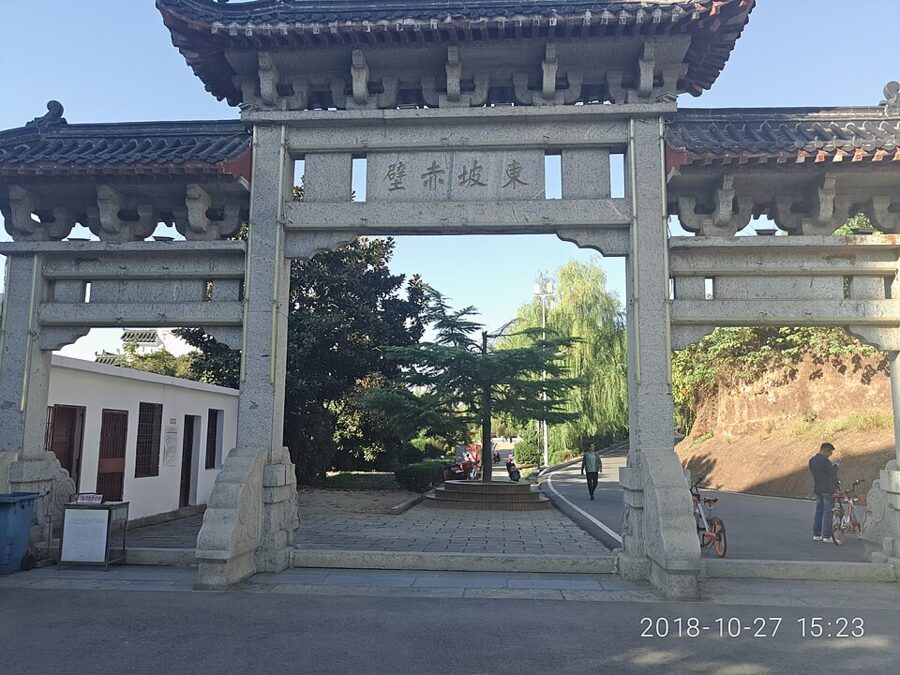
The park on the site, Dongpo Chibi (东坡赤壁), has Ming and Qing halls built against the rock, including the Hall of the Two Odes, and nearly 300 carved stones. The scenic area’s own notices give opening hours of 08:00–18:00 with last entry at 17:30, and the full ticket is about 35 yuan. In some festival seasons the park has let in free anyone who could recite one of the odes.
Records, letters, prefaces and lives: the forms you will meet
Classical prose is a family of named genres, and the name in the title tells you what to expect. Four come up again and again.
- Ji (记), the record. Originally a plain account of a new building, often carved on a stone in front of it. The guwen writers turned it into the essay of place.
- Shu (书), the letter. Written to friends, patrons and enemies, often to be copied and passed around. Sima Qian’s letter to Ren An is the model.
- Xu (序), the preface. For a book, a collection of poems or a farewell party. Wang Bo’s at Tengwang Pavilion and Wang Xizhi’s for the Orchid Pavilion poems of 353 are the most famous.
- Zhuan (传), the biography. Sima Qian’s form, carried on by the Tang writers into short lives of working people that read like parables.
Two others round out the shelf. The shuo (说), “explanation”, is a short argument hung on an anecdote, like Han Yu on teachers or Liu Zongyuan’s “The Snake Catcher” (捕蛇者说), about a man who prefers catching venomous snakes to paying the land tax. The fu began as a rhymed, ornate form; Su Shi’s Red Cliff odes loosen it into something close to guwen.
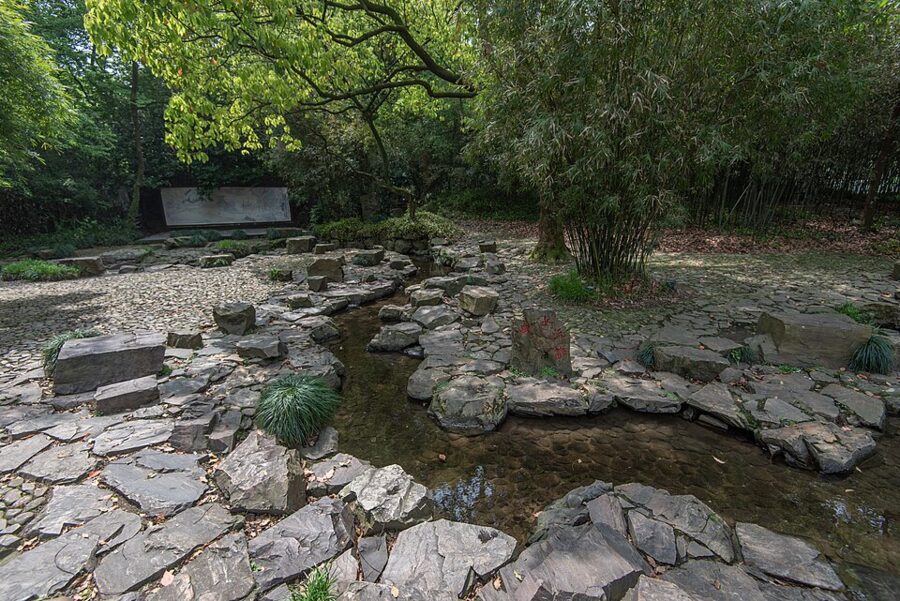

How a record of a pavilion became a genre
A Tang or Song official who put up a building had a record written for it, saying who built it, when, at what cost and what for. Liu Zongyuan wrote records for places nobody had built anything on, a pool, a hillock, a stretch of stream, and that made the form about seeing rather than building.
Ouyang Xiu then made the official record a portrait of a governor at ease. His essay explains the pavilion’s name, shows the mountain at dawn and dusk and through the seasons, the people of Chuzhou on the mountain road and the prefect’s drinking party. It ends on the prefect himself, tipsy, and its last sentence names him: “Who is the prefect? Ouyang Xiu of Luling.”
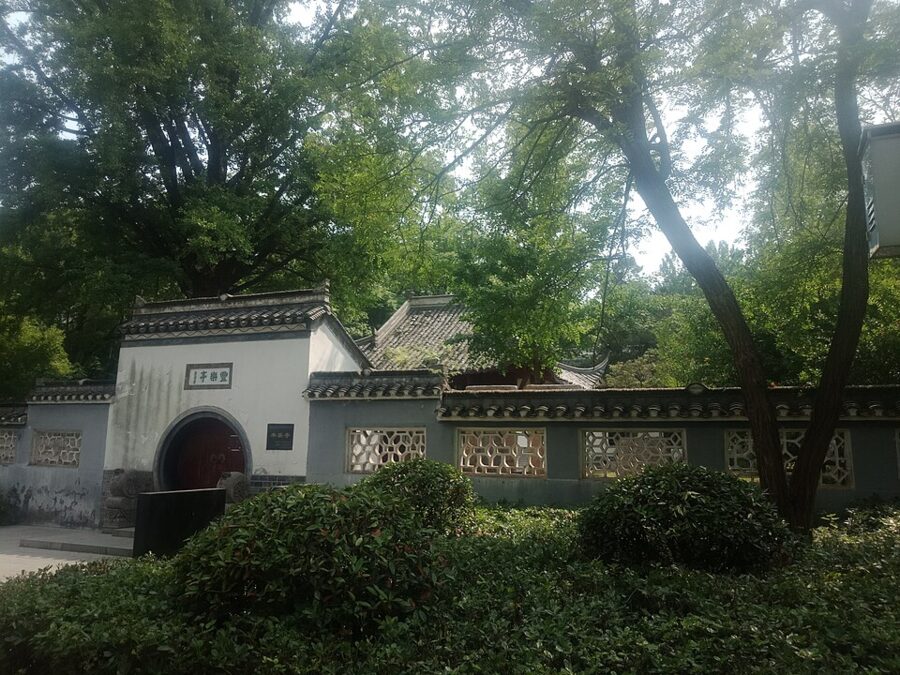

It is also a stylistic stunt. Almost every sentence ends with the particle ye (也), which marks a statement as settled; it appears twenty-one times in a short essay. Read aloud, the effect is something like a man nodding to himself between remarks.
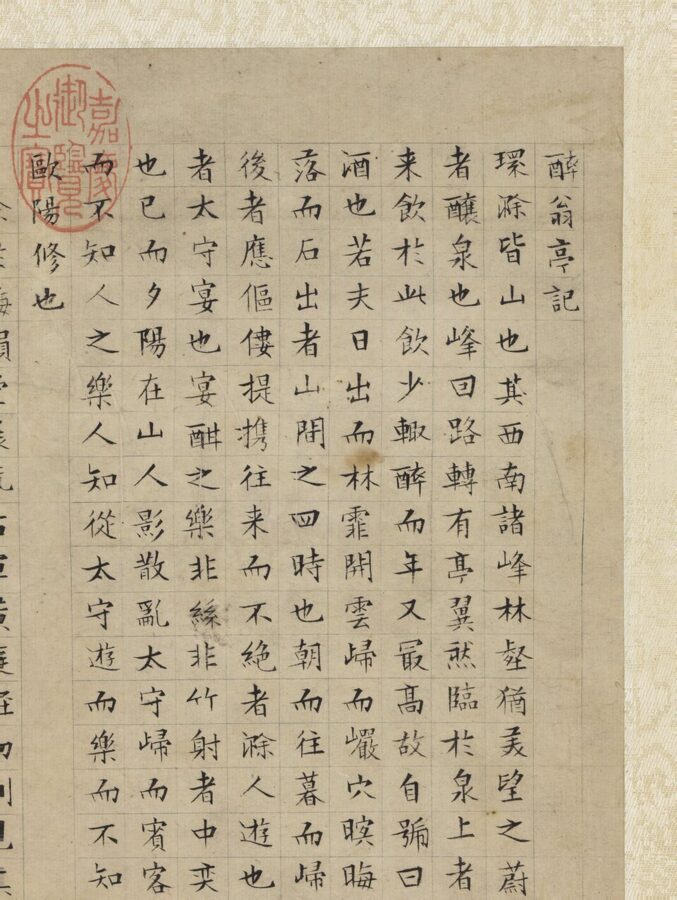
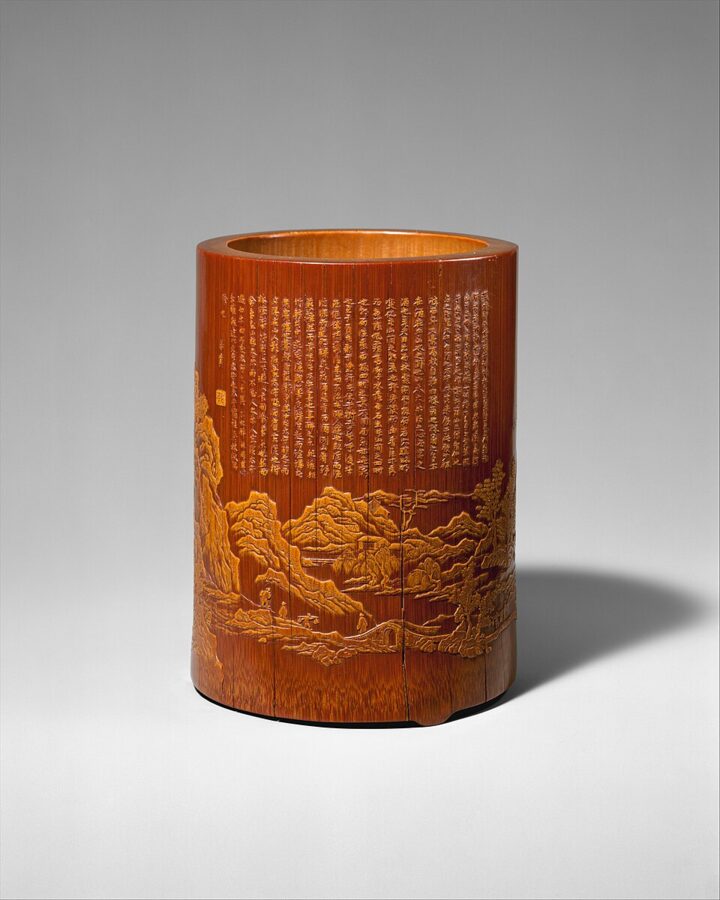
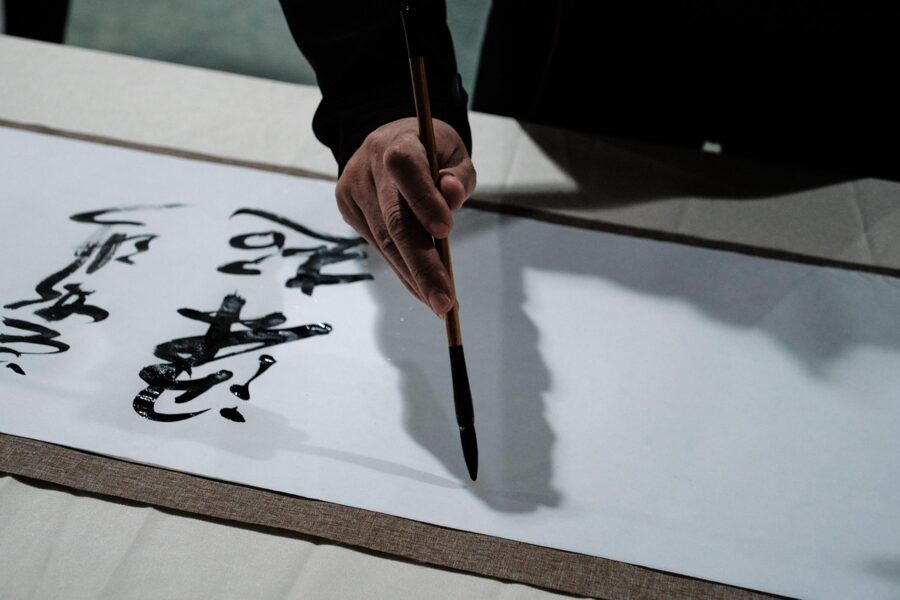
By the Ming, the masters’ essays were copied on scrolls and carved onto desk objects. Su Shi had already given the record another twist with Stone Bell Mountain in 1084. He took his son by boat to the foot of the cliffs at night to test two older explanations of the name, heard the water booming in hollow rocks, and concluded that you cannot judge whether a thing is true “without seeing it with your eyes and hearing it with your ears”.
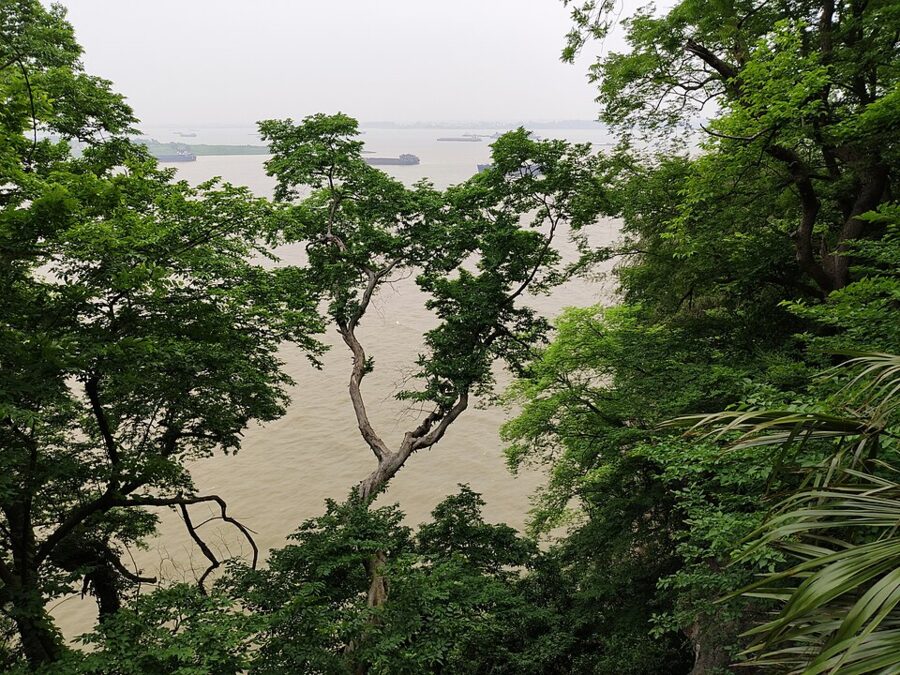

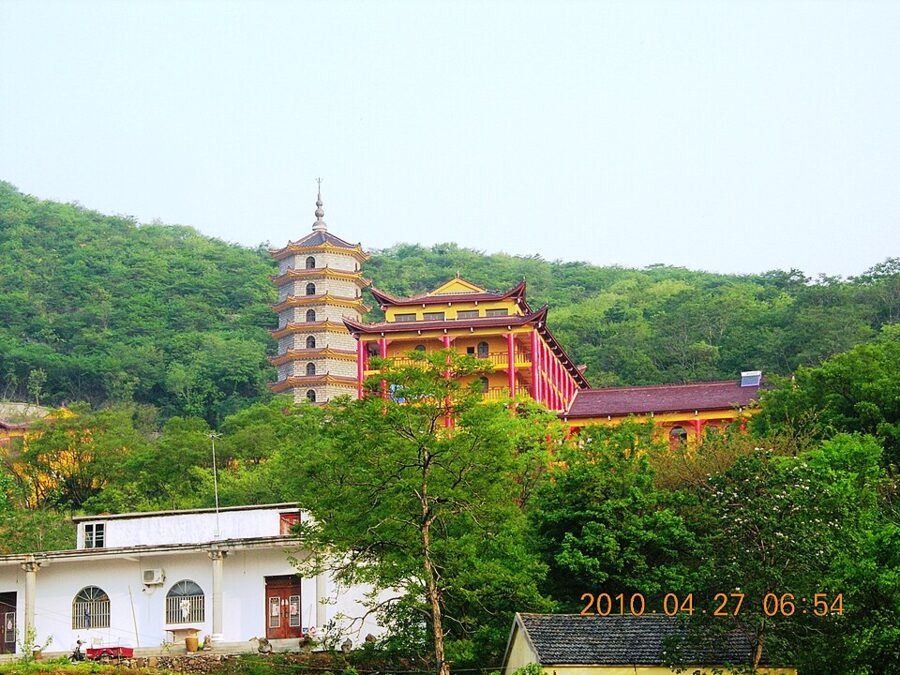
Wang Anshi wrote the opposite kind of trip. On Baochan Mountain, in what is now Ma’anshan in Anhui, he and his companions turned back from a cave because one of them said the torches were running low; outside, he realized they had had plenty of light. The lesson he draws is one Chinese students still quote: “The world’s most extraordinary sights are usually in places that are dangerous and far away.”

After the Eight: anthologies, examinations and the May Fourth verdict
The Ming and Qing kept guwen alive by turning it into a syllabus. In the early Qing a school of essayists from Tongcheng in Anhui, led by Fang Bao and later Yao Nai, made rules out of what the masters had done and taught them for two centuries. The examination system meanwhile demanded the rigid “eight-legged essay”, which every candidate learned and few admired.
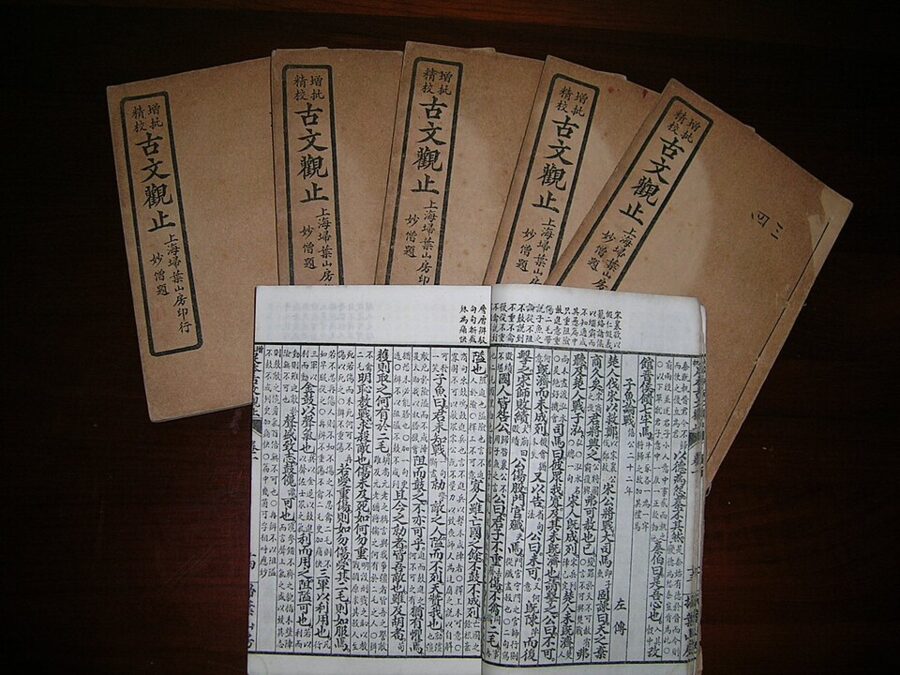
The book that reached the widest audience was the Guwen guanzhi (古文观止), whose title roughly means “ancient prose: you can stop here”. Two schoolmasters from Shaoxing, Wu Chucai and his nephew Wu Diaohou, compiled it in 1694 as a reader for village schools: 222 pieces from the Zuo zhuan to the late Ming, each with short notes. It is still sold in every Chinese bookshop.
The twentieth century nearly ended the tradition. In 1917 Hu Shi published his proposals for a literature in the spoken language, and the May Fourth reformers treated guwen and parallel prose alike as dead weight. Within a generation, written Chinese meant baihua (白话), the vernacular.
Classical prose survived in the classroom instead. Middle-school textbooks include the Little Rock Pool, the Old Drunkard’s Pavilion, Yueyang Tower and “On Teachers”, and the university entrance exam tests set passages from memory. That is why the scenic areas attached to these essays are full of families with teenagers.
How to read guwen in English
The canon is short and well translated, but the things that make these essays famous in Chinese are mostly the things English cannot carry. Here is what I would put on the shelf, in the order I would read it.
Translations and anthologies that hold up
- Stephen Owen, An Anthology of Chinese Literature: Beginnings to 1911 (Norton, 1996). One translator across three thousand years, with commentary on why each piece was admired. The best single starting point.
- Richard E. Strassberg, Inscribed Landscapes: Travel Writing from Imperial China (University of California Press, 1994). The travel records, including Liu Zongyuan’s Yongzhou set, Ouyang Xiu and Su Shi. If you are planning a trip around these places, this is the book.
- Burton Watson, Records of the Grand Historian (Columbia University Press, 1961, revised 1993). Sima Qian in clear, fast English.
- Liu Shih Shun, Chinese Classical Prose: The Eight Masters of the T’ang-Sung Period (Chinese University Press, 1979). Bilingual, Chinese on the facing page. Old-fashioned English, but the only book built entirely around the eight.
- Victor H. Mair, ed., The Columbia Anthology of Traditional Chinese Literature (1994). Useful for parallel prose, which most other anthologies skip.
- Ronald Egan, Word, Image, and Deed in the Life of Su Shi (Harvard, 1994). Not a translation but the book to read once you are hooked on Su Shi.
Older versions turn up free online, above all Herbert Giles’s 1884 anthology of Chinese prose. Giles has a Victorian ear, but he cuts and smooths; use him to find what you want to read properly in a modern translation.
What translation loses
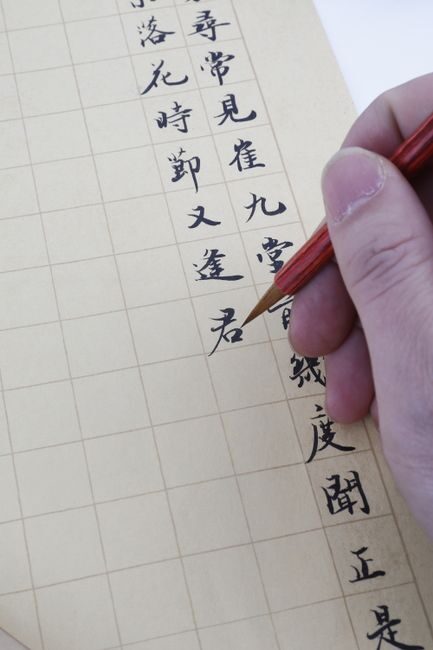
Rhythm. Classical prose is built for reading aloud, and much of it falls into four-character phrases that set a beat even where nothing rhymes. Ouyang Xiu’s mountain at dawn and dusk is a run of short balanced clauses; in English it becomes a list.
Particles. Words like ye, zhe and yi carry tone of voice: certainty, a pause, a sigh. The twenty-one ye in the Old Drunkard’s Pavilion have no English equivalent.
Allusion. A Song reader recognized a phrase from Mencius the way an English reader recognizes the King James Bible. Translators can footnote that, but the recognition is gone.
Compression. Classical Chinese leaves out subjects, tenses and connectives that English requires, so every English version of Su Shi’s moonlit walk is far longer than the original. Read a bilingual edition if you can, even without reading Chinese, just to see how short the originals are.
Where the essays happened, and what stands there now
Few of these buildings are original. Towers and pavilions in China were rebuilt every time they burned or fell, and most of what stands now is Ming, Qing or later. The sites are still worth the trip, because the hills and water the writers described are often still there, and reading an essay where it was written is how Chinese readers have always used them.
Yueyang Tower, Hunan
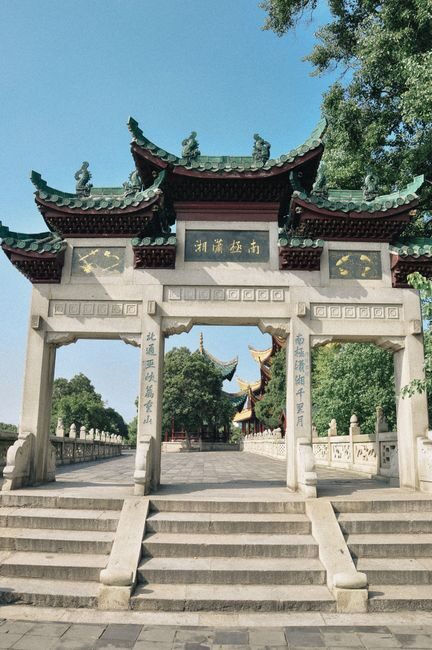
The tower is in the Yueyanglou district of Yueyang, over Dongting Lake; Yueyang East station on the Wuhan to Guangzhou high-speed line is the usual arrival point, then a taxi into the old town. A full ticket is 70 yuan, and in the cooler months the gates open 07:30–18:00. The scenic area runs a standing offer: recite the whole record in a soundproof booth, score 80 or more, and you get in free for the day. Slots are booked through the scenic area’s smart-recitation service on Alipay and go quickly.
Go late in the afternoon. Climb to the top floor, look across the water toward Junshan Island, and read the two paragraphs about rain and sun on the lake before you come down.
Dongpo Chibi, Huangzhou, Hubei
The Red Cliff park is on Gongyuan Road in the Huangzhou district of Huanggang, under an hour from Wuhan. Allow two hours: the halls are compact, but the carved stones of Su Shi’s calligraphy reward slow looking. Bring the first ode on your phone and read it at the pond under the cliff, where the river used to be.
Liuzi Temple and the Foolish Stream, Yongzhou, Hunan
The temple is at 86 Liuzi Street in Lingling, the old town of Yongzhou; buses 13, 31 and 303 stop at Liuzi Jie. Walk the stone-paved street, then follow the stream up toward the sites of three of the eight records. I would go in the morning, when the street is quiet.
Temple of Sima Qian, Hancheng, Shaanxi
Hancheng is about two hours twenty minutes from Xi’an on the C-series intercity trains, and the temple is about 10 km south of the town at Zhichuan, best reached by taxi. It opens 08:00–17:30 on winter weekdays and later in summer. The temple’s own notice sets out its free and half-price categories. Until the end of 2026, Hancheng gives half-price entry to anyone holding a Xi’an to Hancheng train ticket; recent reports put the full price at about 80 yuan.
Temple of Han Yu, Chaozhou, Guangdong
The nearest high-speed station is Chaoshan, a taxi or bus ride from Chaozhou. The temple is across the Han River from the old town: walk over the Guangji Bridge and combine all three in a day. It is free and closed on Mondays.
And the others
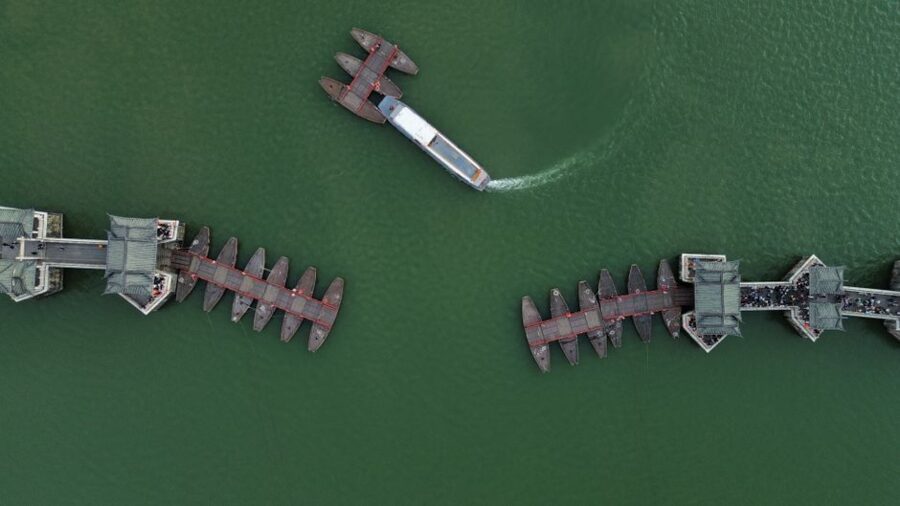
Tengwang Pavilion is right in Nanchang on the river. Stone Bell Mountain is at Hukou in Jiangxi, where Poyang Lake drains into the Yangtze, and Baochan Mountain is a scenic area in Hanshan county, Ma’anshan. Liu Zongyuan’s memorial mound is in Liuhou Park in Liuzhou, Guangxi, where he died.
Back to the Old Drunkard’s Pavilion: how to get there
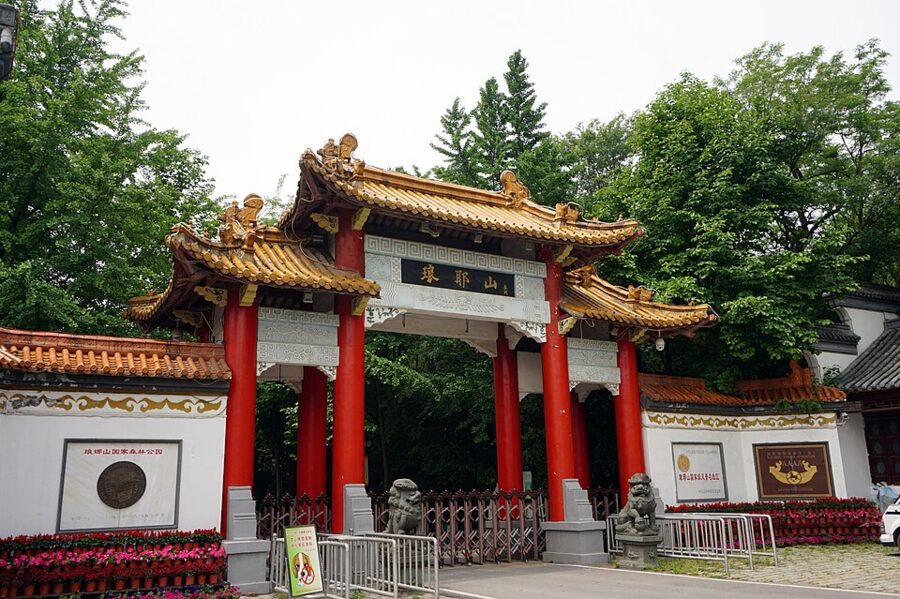

“Walk six or seven li into the mountain,” Ouyang Xiu wrote, “and you gradually hear the sound of water.” Langya Mountain lies on the southwestern edge of Chuzhou, about 55 km from Nanjing, and since February 2024 it has been one of China’s top-rated AAAAA scenic areas. A sightseeing bus runs up the valley from Yefang Garden past Zuiweng Pavilion and Shenxiu Lake to Langya Temple for 20 yuan one way, but walking up is the way the essay goes.
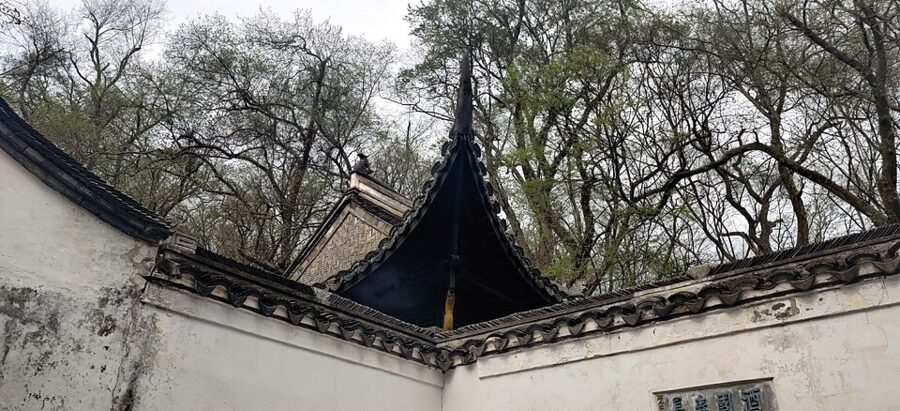

Entry to the mountain has been free since January 1, 2021. Four spots inside charge separately, and Zuiweng Pavilion is the main one: the scenic area’s own price notice lists it at 40 yuan, with Langya Temple at 10 yuan and the South Gate of Heaven at 15. The pavilion enclosure opens about 08:00–17:00.
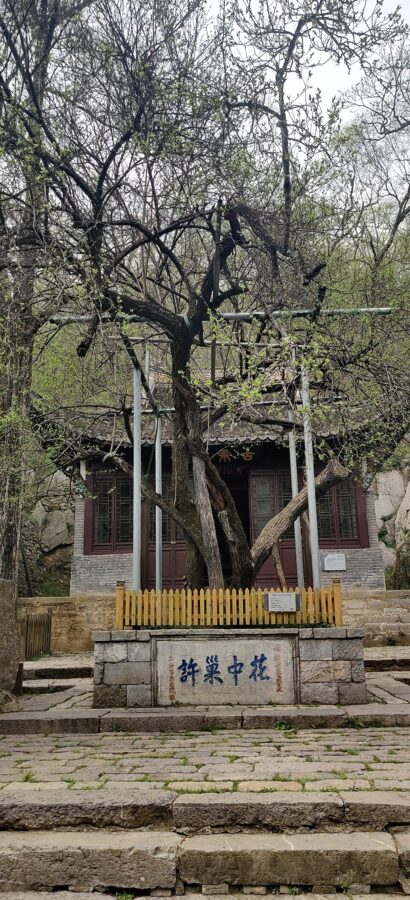
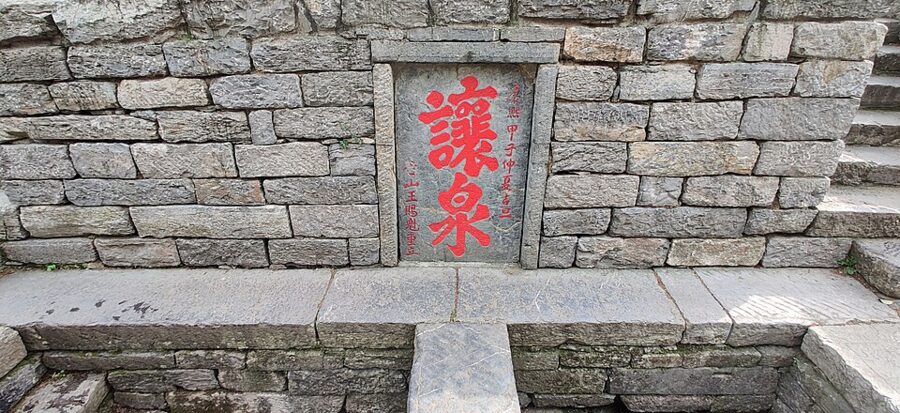
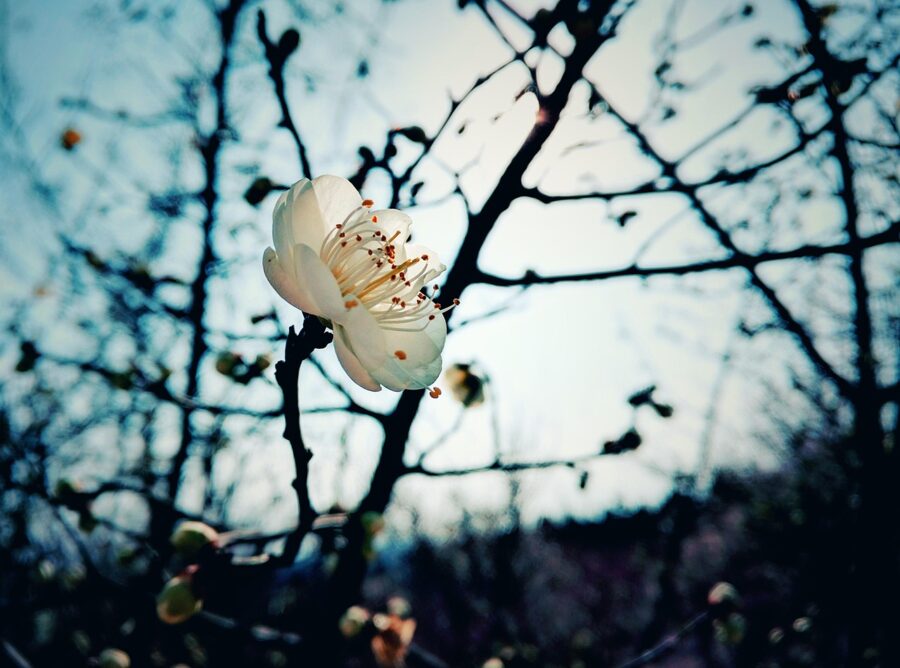
Inside the walls the compound is small, about 1,000 square meters of courtyards and pavilions laid out like a Suzhou garden. Look for the Baosong Studio, built to shelter the stone of Su Shi’s calligraphy, the old plum tree tradition credits to Ouyang Xiu, and the spring in front of the pavilion.


Plan the trip from Nanjing. High-speed trains from Nanjing South to Chuzhou station take about twenty minutes. From the same station the Chuzhou to Nanjing rail line, open on its Chuzhou section since June 2023, runs 06:30–22:00 to an underground Langyashan station at Longpan Avenue and Fengle Avenue, where city bus 12 also stops. From either station, a taxi to the scenic area gate is short.


Give it half a day. Walk up early, so you have the pavilion before the school groups, then continue up the valley to Langya Temple and the pavilions on the ridge. Fengle Pavilion, Ouyang Xiu’s second building and second record, is a short taxi ride away if you want both of his Chuzhou essays in one day.
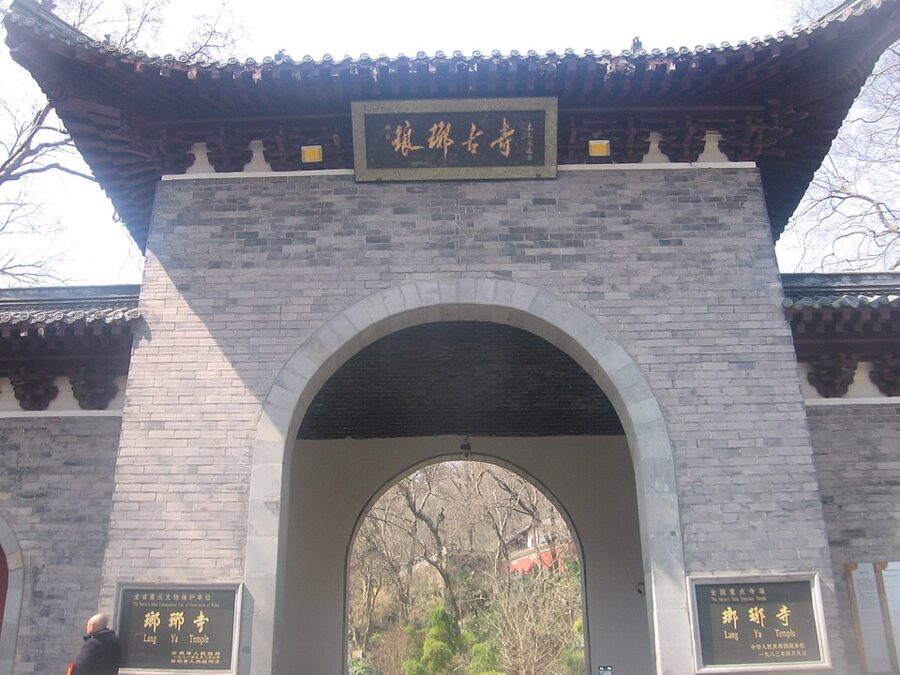
Spring and autumn are the seasons the essay praises: wildflowers and fine trees in one, frost and clear streams in the other. Winter has the plum blossom and far fewer people.
Stay until the light goes. The essay’s last scene is the end of the party: the sun setting over the hills, shadows scattered, the prefect heading home with the guests behind him, and the birds taking back the trees. “The birds know the joy of the hills and woods, but not the joy of the people; the people know the joy of following the prefect, but not that the prefect’s joy is in their joy.” All around Chu, it is still mountains.