
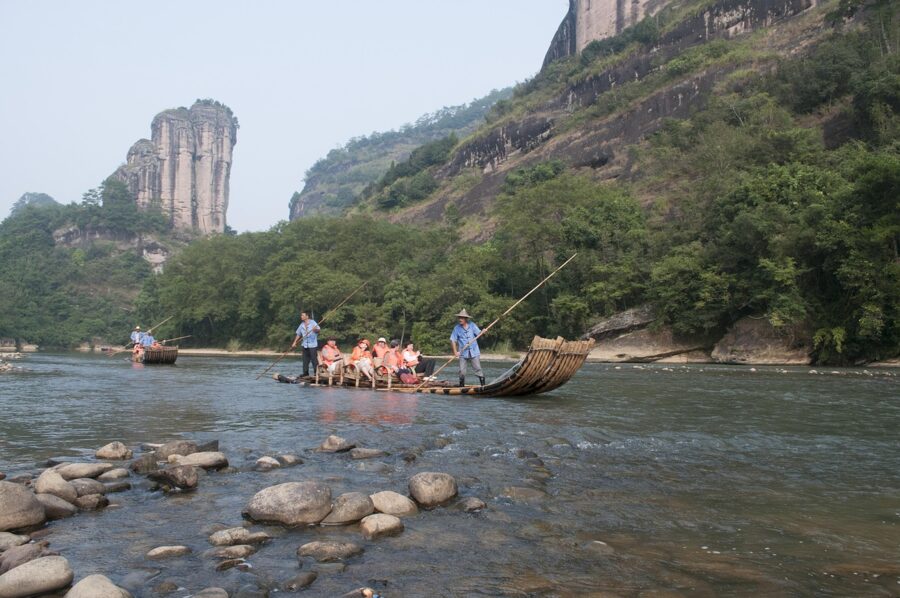
Every bamboo raft on the Nine-Bend Stream (九曲溪, Jiuqu Xi) runs the opposite way to the poem that made it famous. In 1184 the philosopher Zhu Xi wrote ten quatrains for boatmen to sing as they poled upstream, from the first bend at the mouth of the gorge to the ninth bend in the farmland beyond it. The rafts today start at the ninth bend and drift down to the first, so you read his Mount Wuyi backwards, and nobody seems to mind.
Mount Wuyi (武夷山, Wuyishan) sits in the far northwest of Fujian, on the border with Jiangxi, and it is really three things at once. It is a cluster of red sandstone towers about 70 square kilometers across, threaded by that stream. It is the home ground of rock tea, the dark, roasted oolong that includes Da Hong Pao. And it is the place where Neo-Confucianism, the school of thought that shaped government in China, Korea and Japan for six centuries, did much of its growing up.
Most people give it a day and leave with a raft ride and a photograph of Jade Maiden Peak. I’d give it three: one for the stream and the climb above it, one for the tea gorges in the north of the scenic area, and one for the Han-dynasty city ruins out in the countryside.
On this page
- Red rock, two listings and a forest you can’t enter
- The Nine-Bend Stream, from the ninth bend down
- Climbing Tianyou Peak, then Tiger Roar Rock
- Rock tea and the six bushes at Jiulongke
- Zhu Xi on the fifth bend
- The coffins in the cliffs
- Chengcun, the Han city in the fields
- Getting there by train, and around for free
- Which season, and why not July
- Where to stay
- Three days at Mount Wuyi
Red rock, two listings and a forest you can’t enter
UNESCO put Mount Wuyi on the World Heritage List in 1999 for both its nature and its culture, one of only four Chinese sites listed for both. The listed property covers 107,044 hectares in four pieces: the nature reserve in the west, the Nine-Bend Stream protection area in the middle, the scenic area in the east, and the Han city at Chengcun about 15 kilometers to the southeast. Protection here is old. An eighth-century ban on fishing and logging along the stream was enforced for more than a thousand years.
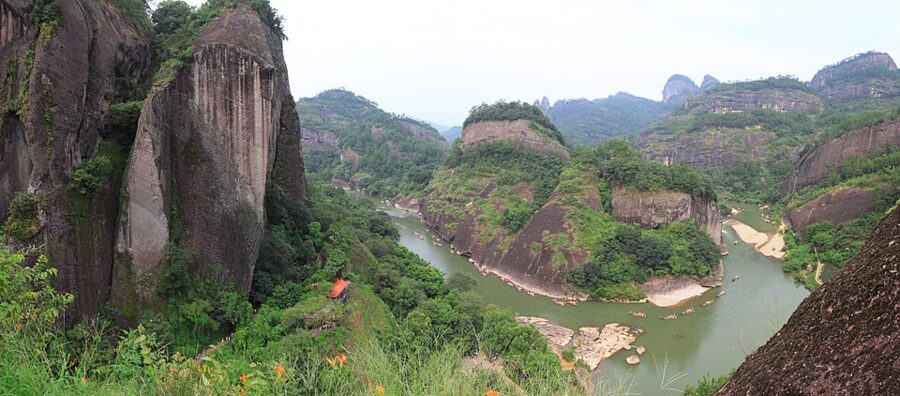
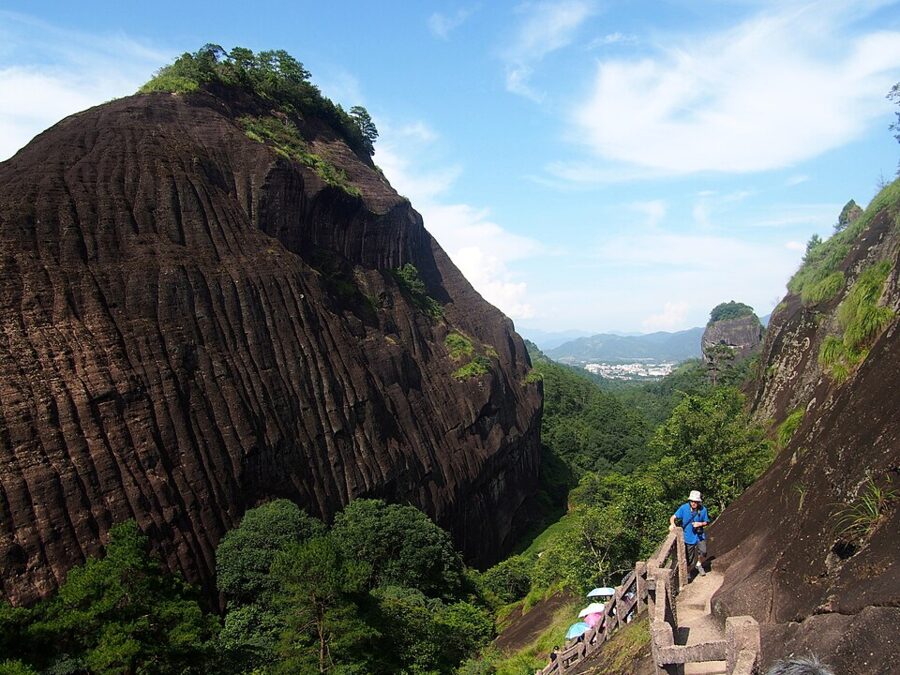
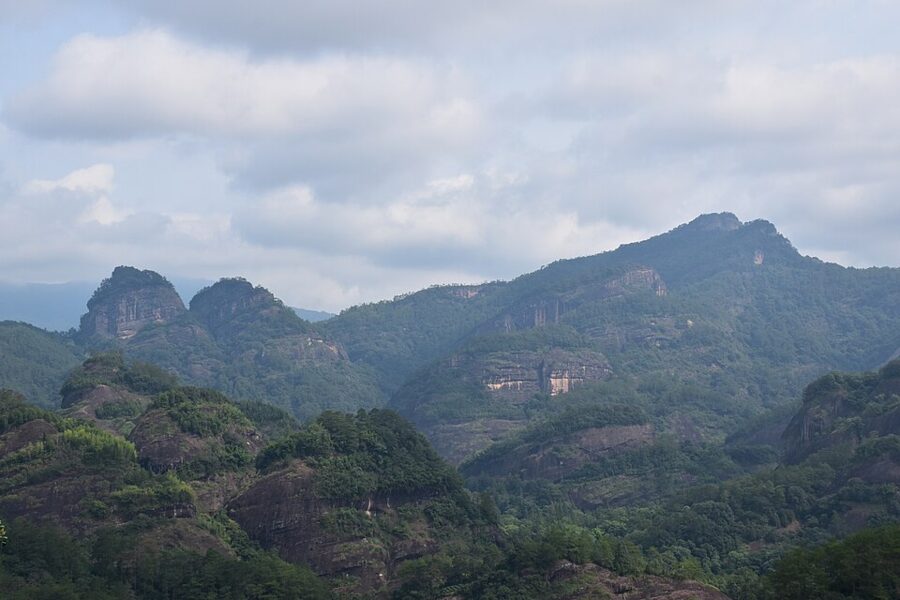
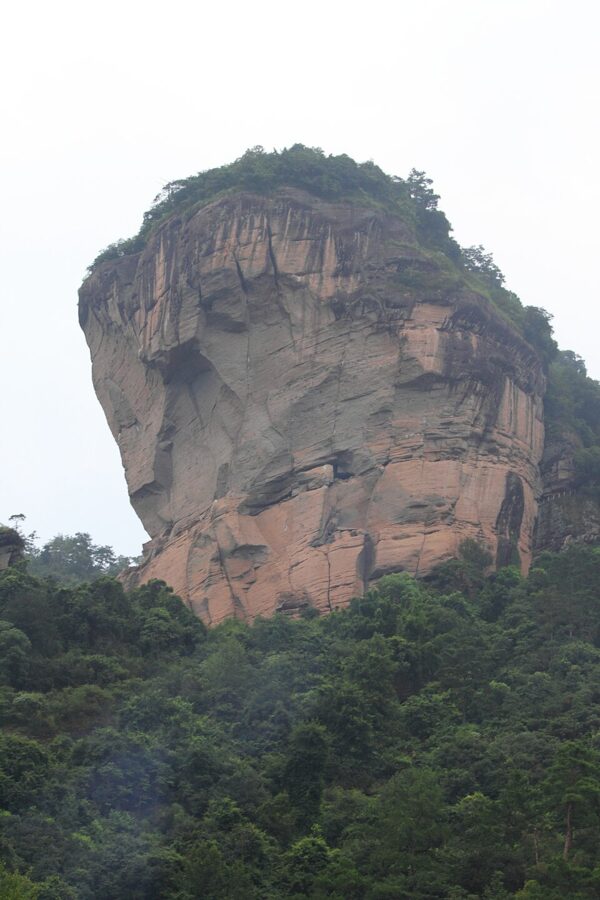
The rock is the reason for the shapes. Wuyi’s peaks are red sandstone and conglomerate, the formation Chinese geologists call Danxia (丹霞, “red clouds”), and it weathers into sheer-sided blocks with flat or rounded tops. Along a twisting 10-kilometer stretch of the stream these monoliths stand 200–400 meters above the water and drop straight into it. Dark streaks run down the faces where rainwater drains off them, which is why the big cliff on Tianyou Peak is called Shaibu Yan, “the cloth laid out to dry”.
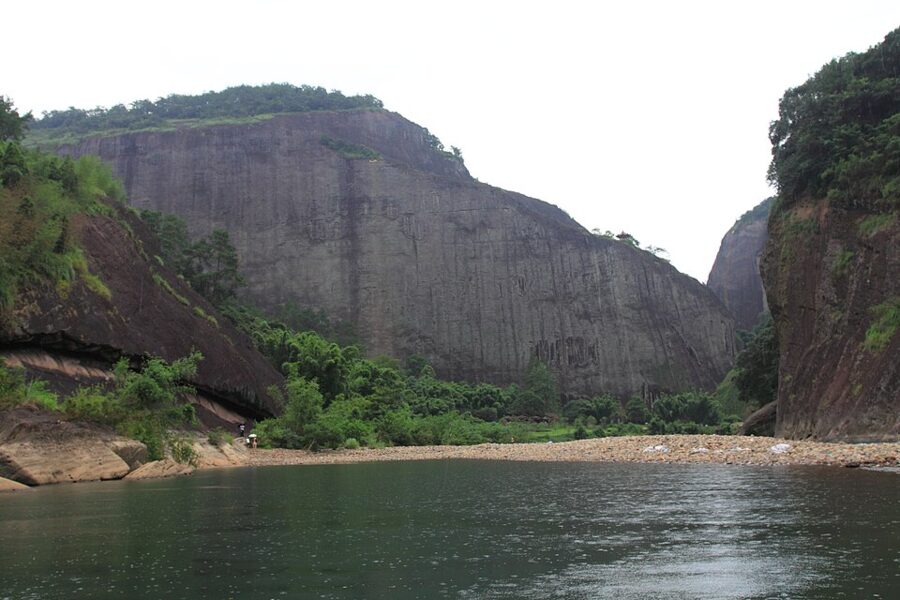

None of these peaks is high. The tallest point in the scenic area, Sanyang Peak, reaches 729 meters, and Tianyou Peak barely tops 400. The real mountains are to the northwest, where Huanggang Shan (黄岗山) reaches 2,160.8 meters on the Jiangxi border, the highest summit in eastern China. It is closed to visitors.
That split matters for planning. The scenic area (武夷山风景名胜区) is the part with rafts, steps, ticket gates and scenic buses. The forested north and west, the old Wuyishan National Nature Reserve, now sits inside Wuyishan National Park, set up in 2017 across about 1,280 square kilometers of Fujian and Jiangxi. UNESCO calls it one of the most outstanding subtropical forests in the world, a refuge for relict plants and an unusually rich population of reptiles, amphibians and insects.
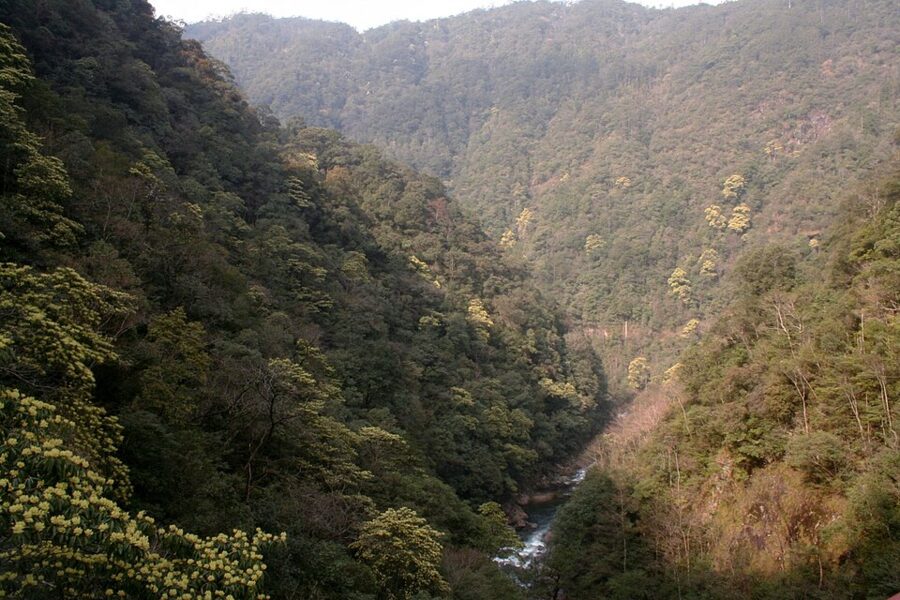

You can’t hike there on your own. In February 2026 the park’s Fujian and Jiangxi administrations and seven police and judicial bodies issued a joint ban on unauthorized entry for trekking, climbing, camping and even photography, with fines of up to 5 million yuan in the core zone. Tongmu (桐木), the village at the head of the Nine-Bend Stream where Lapsang souchong began, lies inside the park too, so treat any offer of an informal trip there with suspicion. The walks and sights that follow are all in the open scenic area or outside the park.
The Nine-Bend Stream, from the ninth bend down
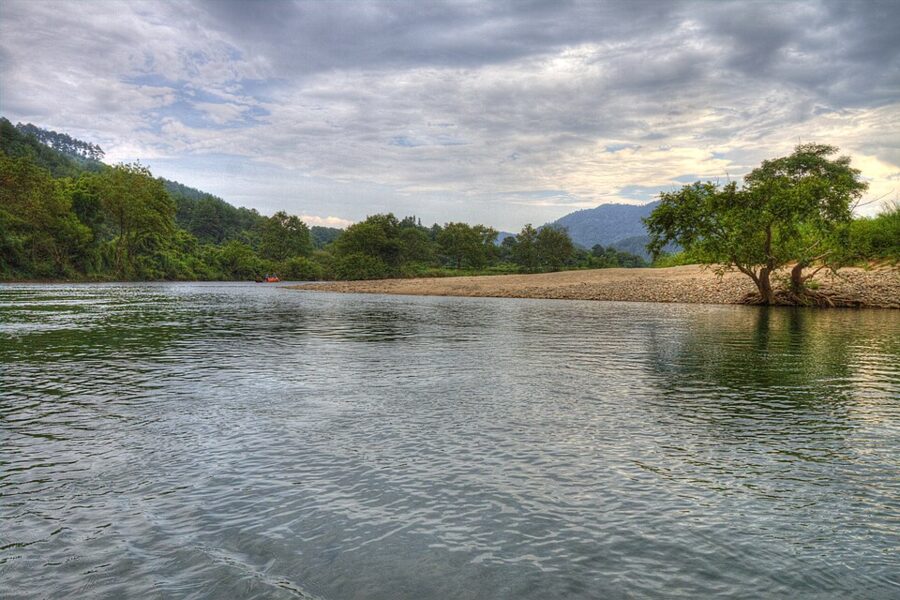
The stream rises on the southwest flank of Huanggang Shan and runs 62.8 kilometers in all, but the part that counts is the last 9.5, where it bends nine times through the sandstone before meeting the Chongyang River below Dawang Peak. The rafts cover exactly that stretch. They push off from the docks at Xingcun (星村) near the ninth bend and land about 90 minutes later at the first bend, a short walk from Wuyi Palace.

Booking a raft
The raft is the one thing at Mount Wuyi you must book early. According to the scenic area operator’s ticket notice, the fare is 130 yuan a head and every passenger needs a ticket, children who ride free elsewhere included. At normal water levels each raft takes eight people, and the operator groups strangers together. Tickets go on sale seven days ahead, at 08:00 on the scenic area’s WeChat mini program “中国武夷山” (Zhongguo Wuyishan), and in July, August and the October holiday they are gone within minutes.
Refunds get steadily more expensive as departure nears. The operator keeps 3% of the fare if you cancel between seven days and 72 hours ahead, 5% down to 48 hours, 8% down to six hours, 30% down to three hours and 50% inside that. Once your raft has gone, there is no refund at all.
Departures run from roughly 07:30 to mid-afternoon in shifts, and published times differ by half an hour at either end, so check your slot when you book. I’d take the first or second raft of the day. The light is low and gold on the cliffs, the stream is often still steaming, and you are off the water before the midday glare flattens everything.
The rules are short: no water pistols, scoops, nets, alcohol or pets, and waterproof your own camera. The polers expect a tip, usually about 20 yuan a raft, and the commentary tends to improve once it is paid. It is voluntary and nobody can make you, but it is all in Chinese either way.
What you pass, bend by bend
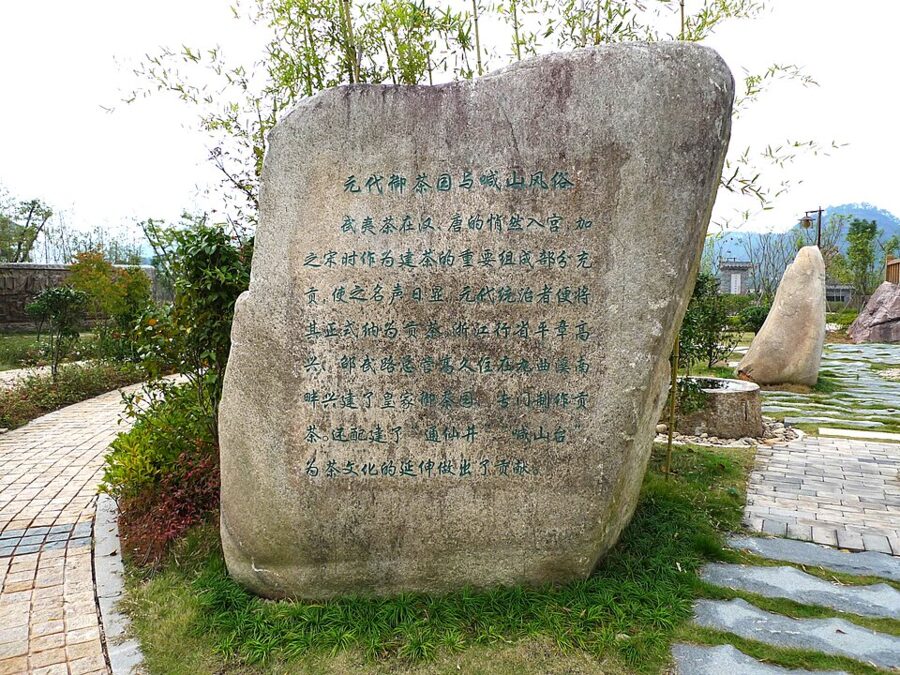
The upper bends, nine to seven, are farmland and shallows, and the polers mostly steer. Things tighten at the sixth bend, where Tianyou Peak and the Shaibu cliff close in on the north bank. At the fifth bend the stream passes Yinping Peak and the site of Zhu Xi’s academy. The fourth bend has the site of the Yuan-dynasty Imperial Tea Garden, where tribute tea was processed for the court.
The third bend is where to look up. High on the cliff of Xiaozang Peak (小藏峰), also called Boat Cliff, two boat-shaped coffins rest in a horizontal fissure, propped on wooden planks that local tradition calls rainbow bridges. They are more than three thousand years old, and how anyone got them up there is still argued over.
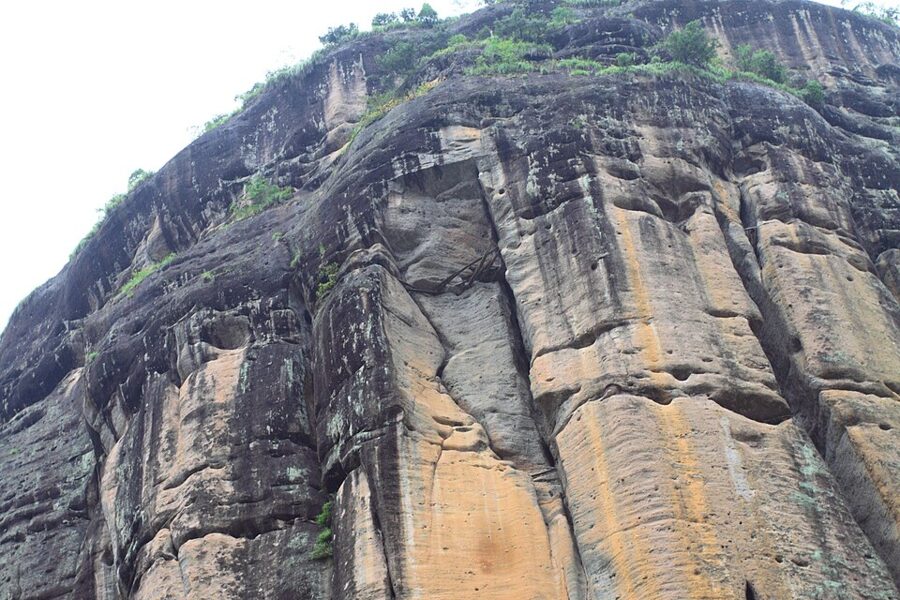

At the second bend comes Jade Maiden Peak (玉女峰), 313.1 meters, a column split by two vertical joints into three blocks that are likened to three sisters standing shoulder to shoulder. It is the picture on half the postcards in Fujian, and from the water it earns it. Below it the stream swings east toward Dawang Peak.
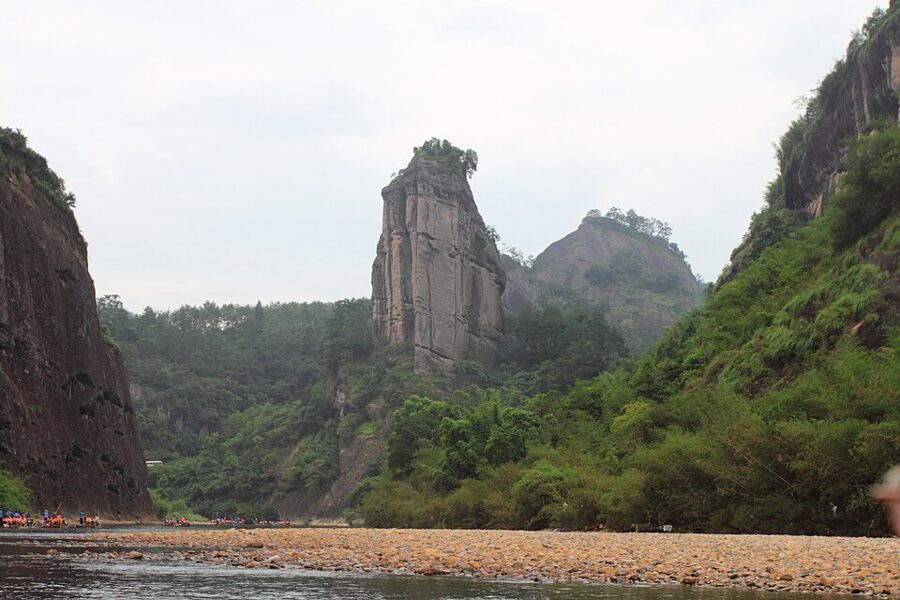

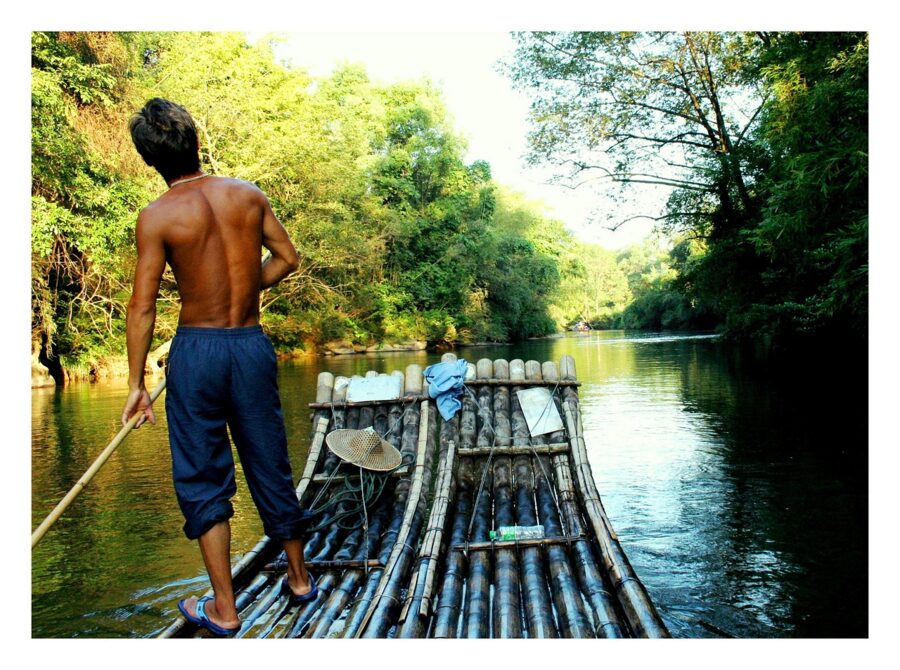
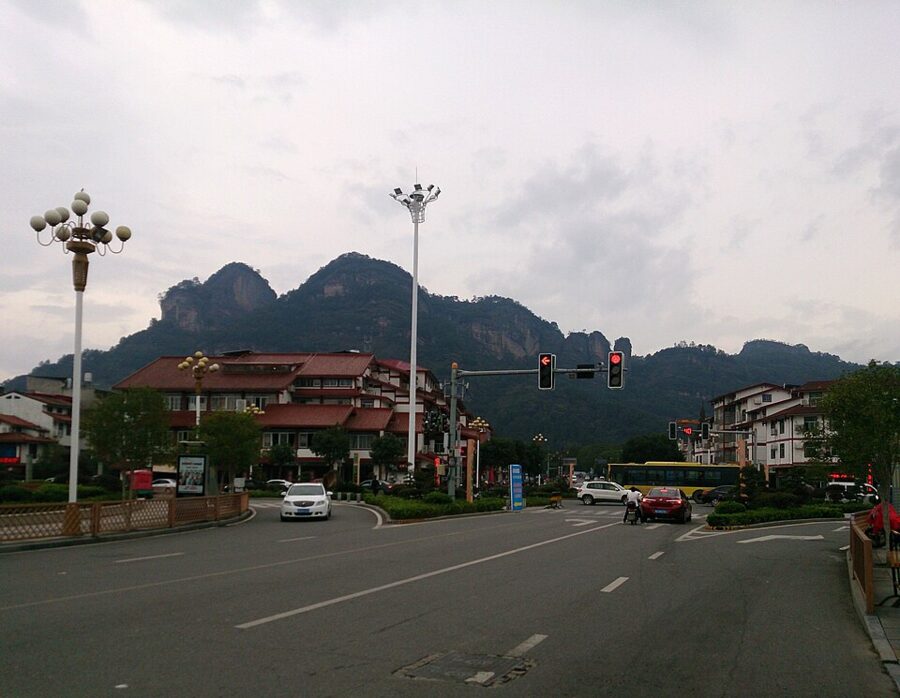
The first bend ends under Shuiguang Rock and Dawang Peak, 530 meters, the block at the mouth of the gorge that you will have seen from the bus. Landing is at the dock below Wuyi Palace. From there the scenic bus loop, the walk to the palace and the road out are all a few minutes away.

Climbing Tianyou Peak, then Tiger Roar Rock
Xu Xiake, the Ming travel writer who came here in 1616, ranked Tianyou Peak (天游峰) first among Wuyi’s views, and four centuries of visitors have agreed with him. The peak stands on the north side of the sixth bend. The name means roughly “wandering in heaven”, from the way the summit pokes out of morning cloud. Sources give its height as 408 or 408.8 meters, and the difference will not matter to your knees.
The front route starts at Yunwo (云窝), the “nest of clouds” at the foot of the cliffs, and climbs about 848 steps to the Tianyou Daoist hall on top. Fit walkers make the summit in 30–40 minutes; allow a full hour if you stop at every viewpoint, which you should. The steps are narrow and cut into the rock in places, with a rail on the drop side, and two-way traffic squeezes on the busiest stretch.
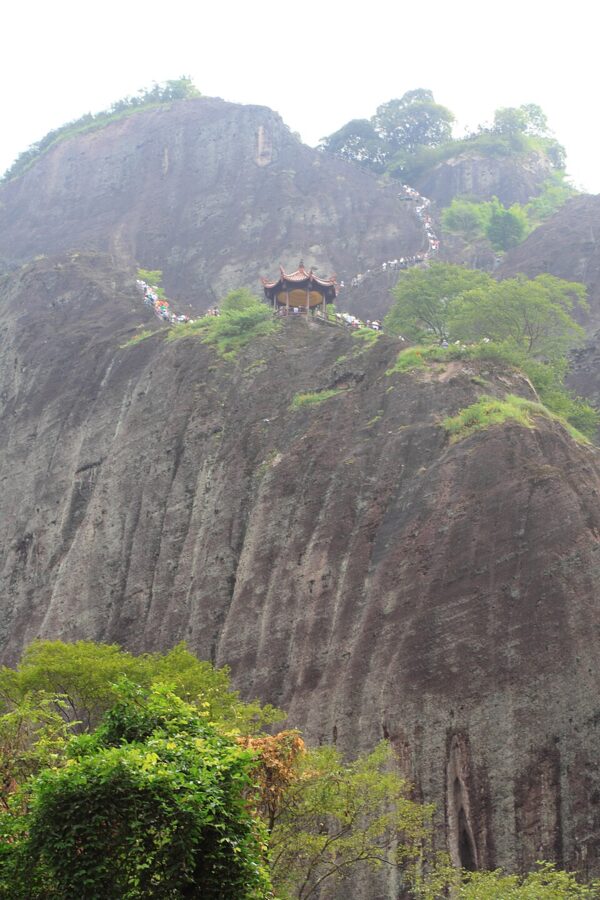

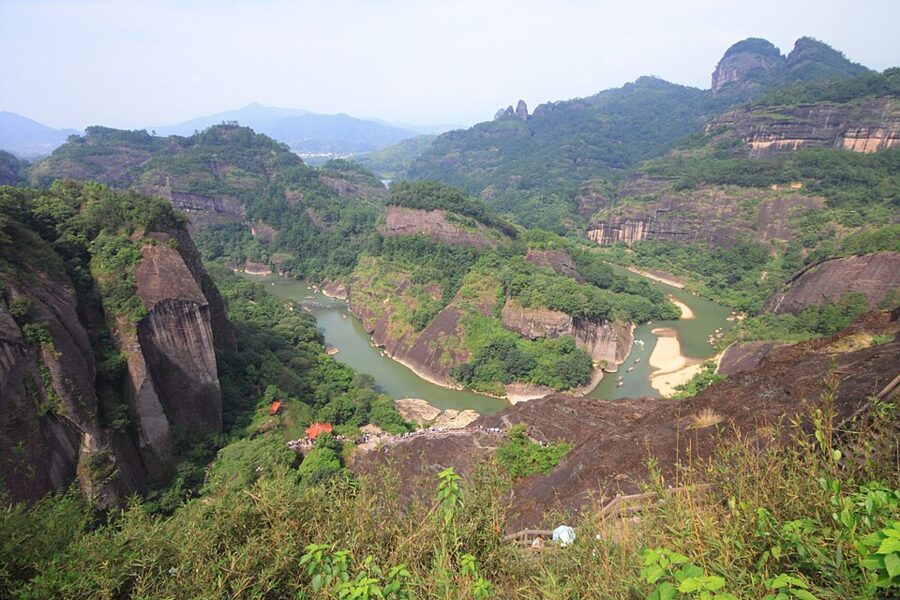

Don’t come back the way you went up. The back path descends to the east along Huma Stream (胡麻涧), through forest and past a cliff where, after rain, water drops about 120 meters, and it is far quieter. Up the front and down the back, with time at Yunwo’s inscriptions, takes about three hours. If your knees object, turn round at the half-way pavilion, where you already see most of the sixth bend.
The sedan-chair carriers at the bottom of the steps are a real option for anyone who cannot climb, but agree the price for the whole trip, up and down, before you sit. Arguments over the return leg are common.
Tiger Roar Rock (虎啸岩) is the second walk, on the south side of the second bend. It is named for the sound wind makes in a big cave on its face. The climb up the Haohan Slope, “the good fellow’s slope”, is shorter and steeper than Tianyou, and it passes Tiancheng Temple, built into a natural overhang, before reaching Dingming Bridge and a viewing platform. Give it 90 minutes to two hours, and save it for a cooler part of the day.


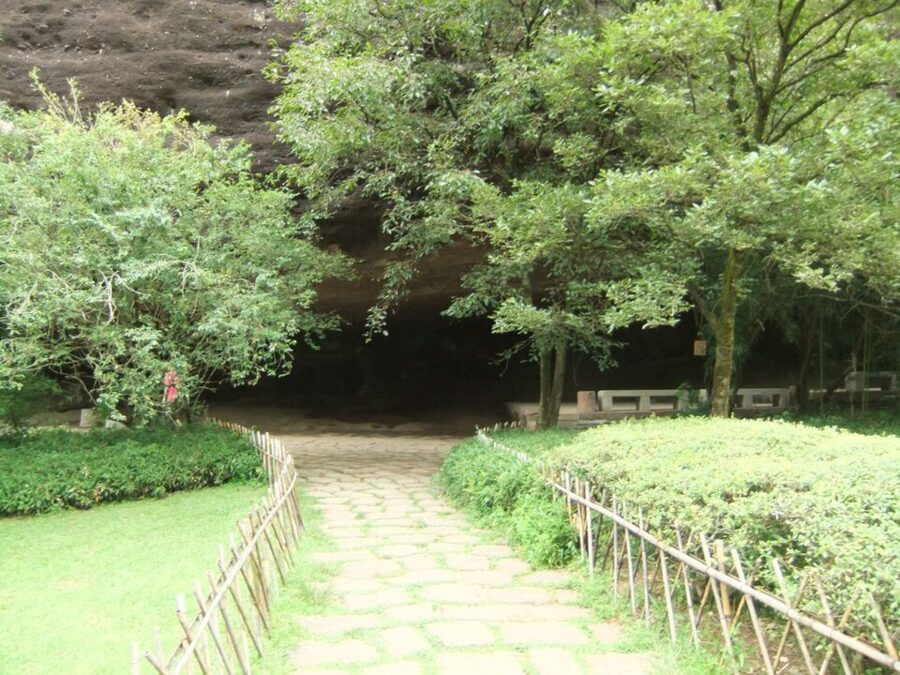
Yixiantian (一线天), “a thread of sky”, is a short detour from the same part of the scenic area. It is a fissure in the rock so narrow that in places you turn sideways, with a strip of daylight far overhead and bats squeaking in the dark corners. The left-hand passage is a little wider; skip it entirely if tight spaces bother you.

The order that works: raft early on day one, Wuyi Palace after landing, Tianyou Peak in the afternoon once the steps clear. Tiger Roar Rock and Yixiantian fit with the tea gorges on day two. The scenic area is officially open 06:30–18:00 in the warm months and 07:00–17:00 in winter, and on Lunar New Year’s Eve it closes at 14:00. Sources disagree on whether November counts as summer or winter hours, so check the date you plan to arrive.
Rock tea and the six bushes at Jiulongke
Wuyi’s tea farmers have a saying: where there is rock there is tea, and without rock there is no tea. Rock tea (岩茶, yancha) is oolong grown in the clefts and on terraces walled up against the cliffs, partly oxidized, then roasted over charcoal until it turns dark brown. The taste locals chase is yanyun, “rock rhyme”, a mineral depth under the roast and the floral notes, which a famous phrase calls “rock bones and flower scent”.
Where the bush grows decides most of the price. Zhengyan (正岩), “true rock”, is tea from the heart of the scenic area, above all the gorges known as the three pits and two streams (三坑两涧): Huiyuan Keng, Niulan Keng, Dakengkou, Liuxiang Jian and Wuyuan Jian. Banyan, “half rock”, comes from the edges of the hills. Zhoucha, “riverbank tea”, is grown on flat farmland, and some of it ends up dressed as better tea.
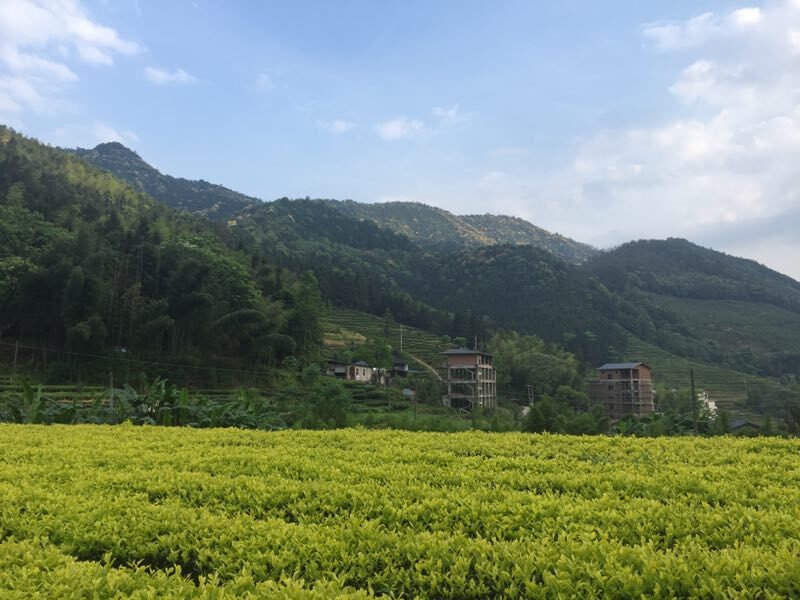

The varieties carry names that range from heroic to whimsical. The four famous bushes are Da Hong Pao, Tie Luohan, Bai Jiguan and Shui Jingui; the everyday workhorses are Rougui (“cinnamon”) and Shuixian (“narcissus”). Niulan Keng’s Rougui is famous enough to have a nickname, “Niurou”, which also means beef. The trade name Bohea, which eighteenth-century London used for all black tea, is simply “Wuyi” said in the Minnan dialect of the Xiamen port that shipped it.
The mother trees
Da Hong Pao (大红袍), “Big Red Robe”, started as a handful of bushes on a ledge at Jiulongke (九龙窠), “Nine Dragon Nest”, in the tea gorges north of the stream. Six remain, growing from a stone terrace halfway up the cliff, where water seeps down the rock all year and the overhang cuts off the harsh midday sun. The legends agree that a red robe was once draped over them in thanks for a cure. Whether it was an emperor’s robe for an empress, or a scholar’s robe after his exam, depends on who is telling it.
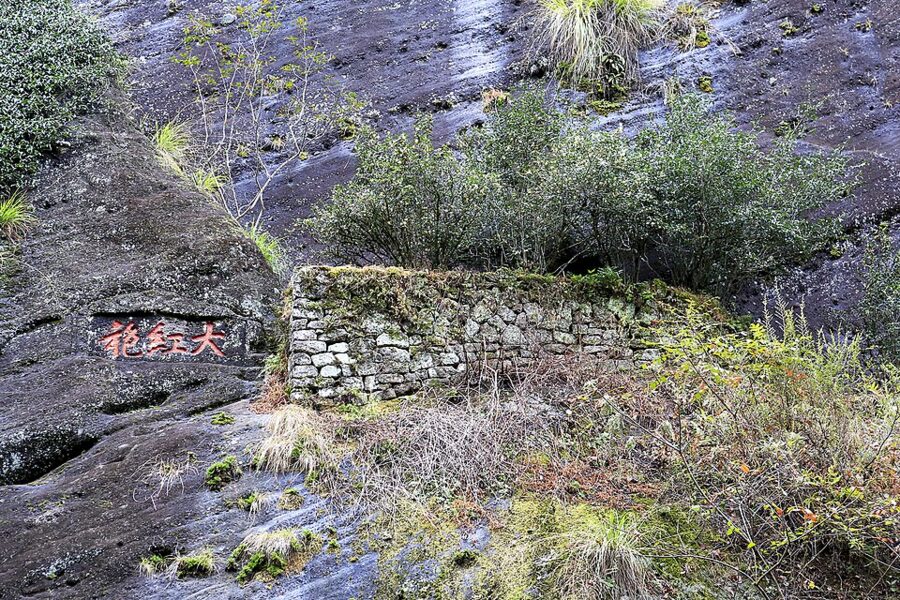

The three red characters carved beside them are themselves disputed. One account credits monks from Tianxin Temple in 1927; another credits a county magistrate in the 1930s. The bushes are said to be over three centuries old. The city has insured them for 100 million yuan.
Nobody drinks their tea any more.
The last harvest from the six bushes was picked on May 3, 2005, and 20 grams of it went to the National Museum of China in 2007. Picking stopped for good in 2006. All the Da Hong Pao on sale comes from cuttings, propagated from the mother bushes since the 1960s and grown commercially since the 1980s, or from blends sold under the name. Anyone offering you “mother tree” tea is selling a story.
Walking the rock-tea trail
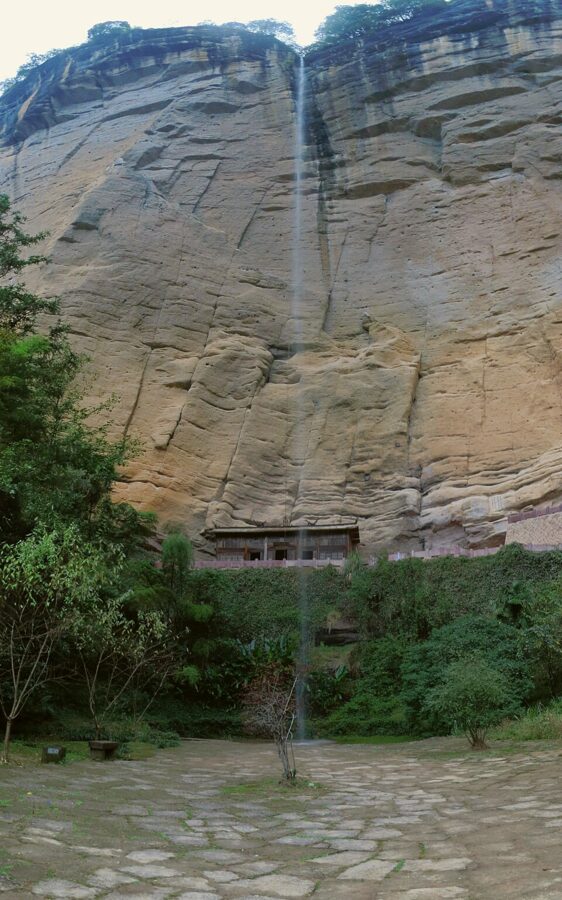
The best way to see zhengyan country is on foot, on the Yan Gu Hua Xiang trail (岩骨花香慢游道), named for that tasting phrase. It runs from the Da Hong Pao area past the mother trees, through Liuxiang Jian and Huiyuan Keng, past Huiyuan Temple and the Tianche Jia cliff to Water Curtain Cave. Recent sources give 4.5 kilometers, older ones 2.8 for the core section; budget two to three hours either way. It is mostly level or downhill, and most tour groups turn back after the mother trees.
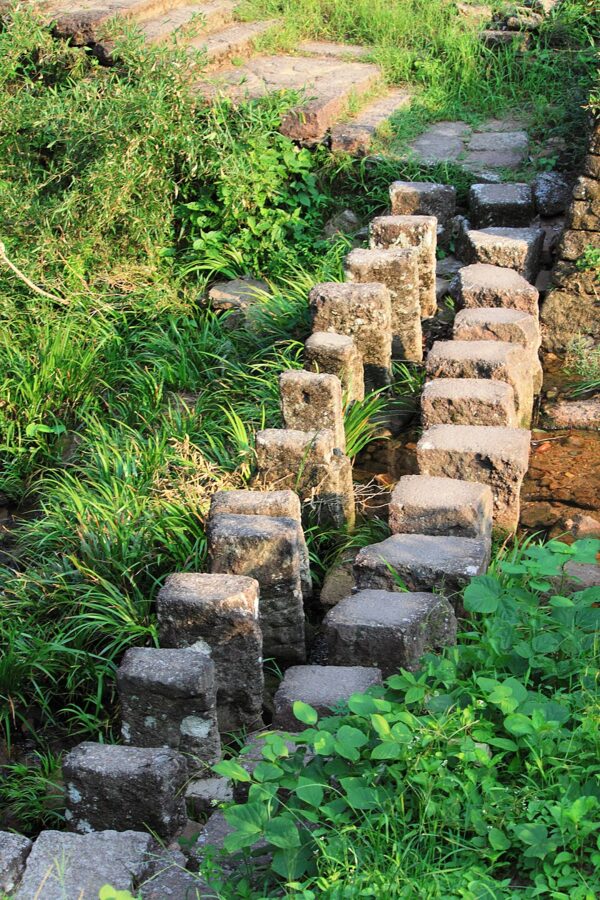

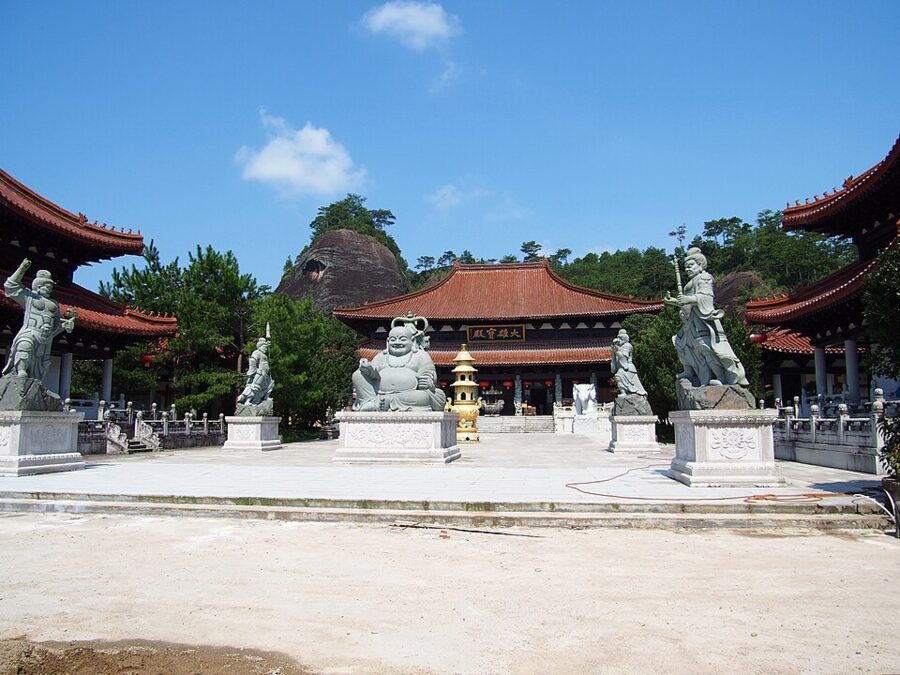
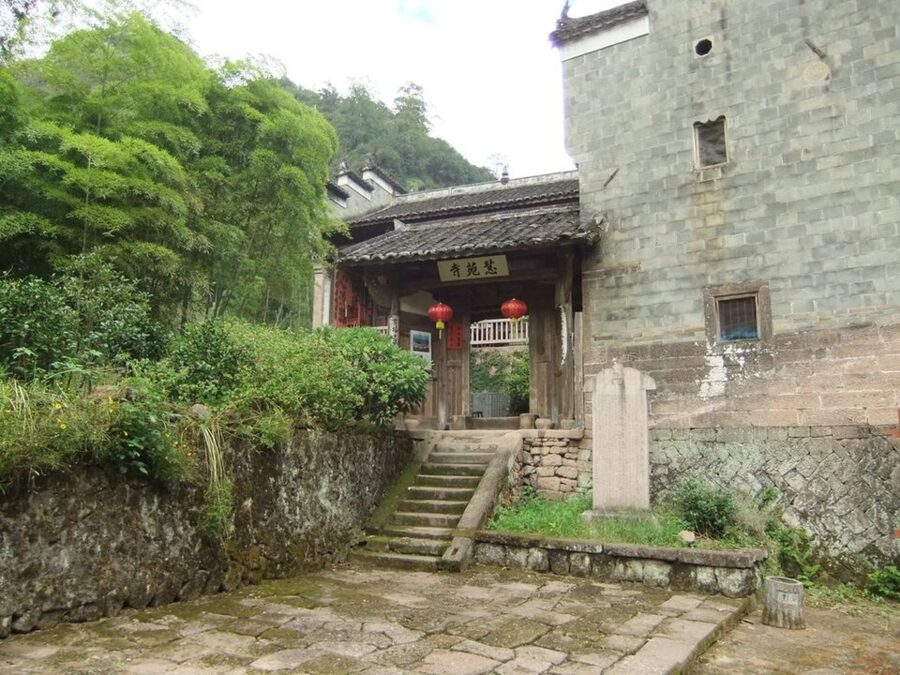
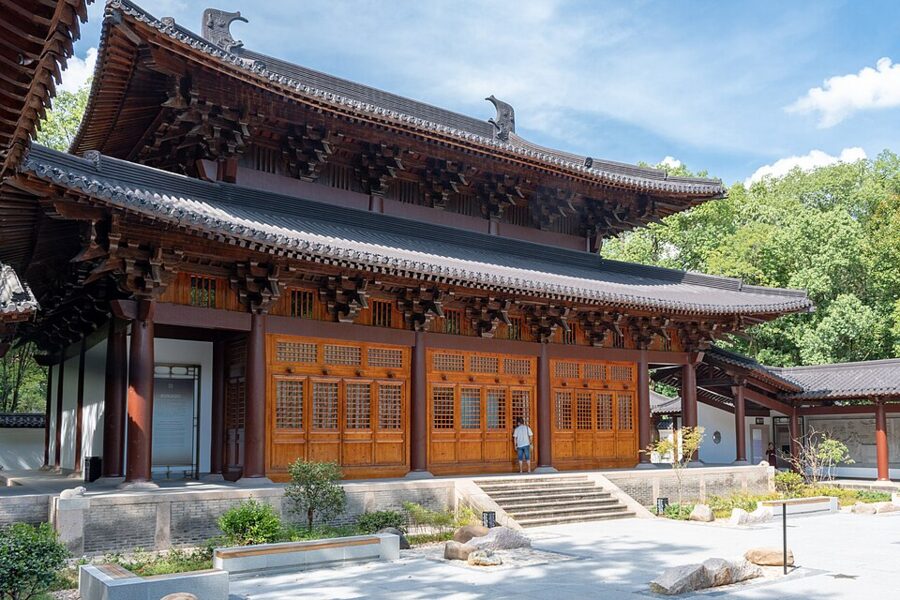
Along the way small signs name the bushes in the variety garden near the start, and the terraces show how tea is grown here: a meter or two of soil held up by dry-stone walls, wedged into every gap in the rock. Tianxin Yongle Temple (天心永乐禅寺), on the slope above, is part of the Da Hong Pao story and open 07:30–17:30. Enter by the scenic area’s north entrance for this half of the day, and leave by bus from Water Curtain Cave.




A tasting without the sales pitch
Everyone in Wuyishan sells tea, and many will offer you a free tasting that ends at a cash register. The free option without the pressure is the Tea Expo Park (中华武夷茶博园) in the resort area at the foot of Dawang Peak, a public park with exhibits on tea history and processing. Admission is free, and a session in its tea study room (武夷茶研习社) costs 30 yuan, which is the point: you have paid, so nobody is waiting for a sale.
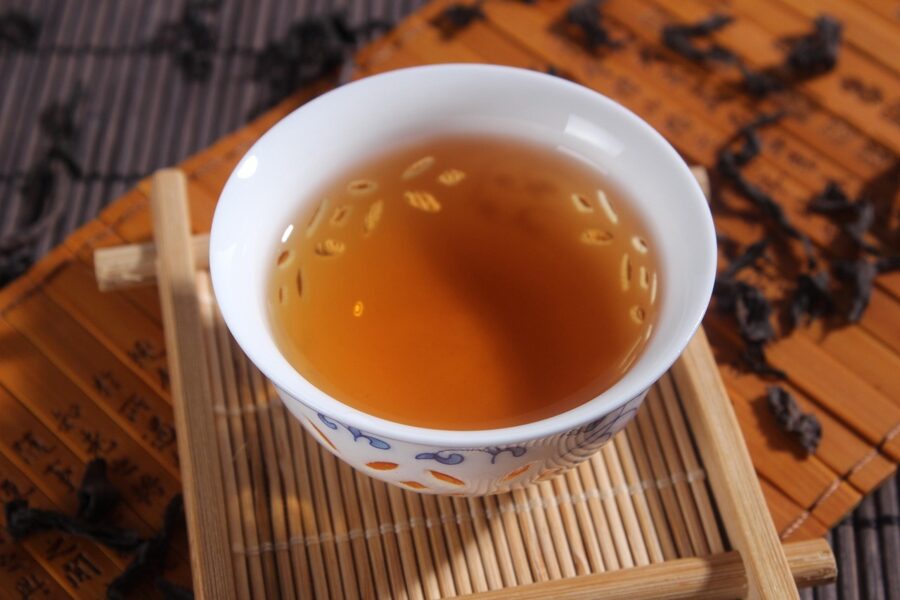
Wherever you taste, a few questions sort the serious sellers from the rest. Ask where the tea grew and whether it is zhengyan, banyan or zhoucha; ask the variety and the year; ask how heavily it was roasted. A seller who answers plainly and lets you taste three grades side by side is worth buying from, and one who only tells legends is not. The brands sold in proper shops in the city are a safer bet than “wild rock tea” from a stall inside the gates.
The show Impression Da Hong Pao (印象大红袍) is the other tea experience everyone pushes. Directed by Zhang Yimou with Wang Chaoge and Fan Yue, it opened on March 29, 2010 on an open-air stage facing Dawang Peak, with a rotating audience stand and a cast that is mostly local tea farmers and guides. Ordinary seats run about 208–238 yuan. It is spectacle rather than education, and I’d see it on a dry night or not at all.
When the tea is picked
Rock tea has one main harvest. Picking runs from mid-April to mid-May depending on variety, with Da Hong Pao and Rougui usually in early May, and the zhengyan gorges often last. Visit then and you see pickers on the terraces and smell withering leaf in every village. The finished tea, roasted and rested, reaches the market around the Mid-Autumn Festival and the October holiday, and in November the city holds its tea competitions.
Zhu Xi on the fifth bend
The cultural half of the World Heritage listing rests largely on one man. Zhu Xi (朱熹, 1130–1200) spent his youth in Wufu (五夫), a market town southeast of the scenic area, and spent most of his working life in these hills. His synthesis of Confucian ethics with a theory of principle and matter, known in English as Neo-Confucianism, became the official orthodoxy of the civil service exams from the fourteenth century until 1905, and spread to Korea and Japan.
In 1183 he built the Wuyi Jingshe (武夷精舍), a study retreat below Yinping Peak on the fifth bend, his third academy. Here he worked on his commentaries on the Four Books, the texts every exam candidate in China would later memorize, and taught close to a hundred students. The next year he wrote the Nine-Bend boat songs, which traveled as far as Korea, where the school of the scholar Yi Hwang took them up as a model.
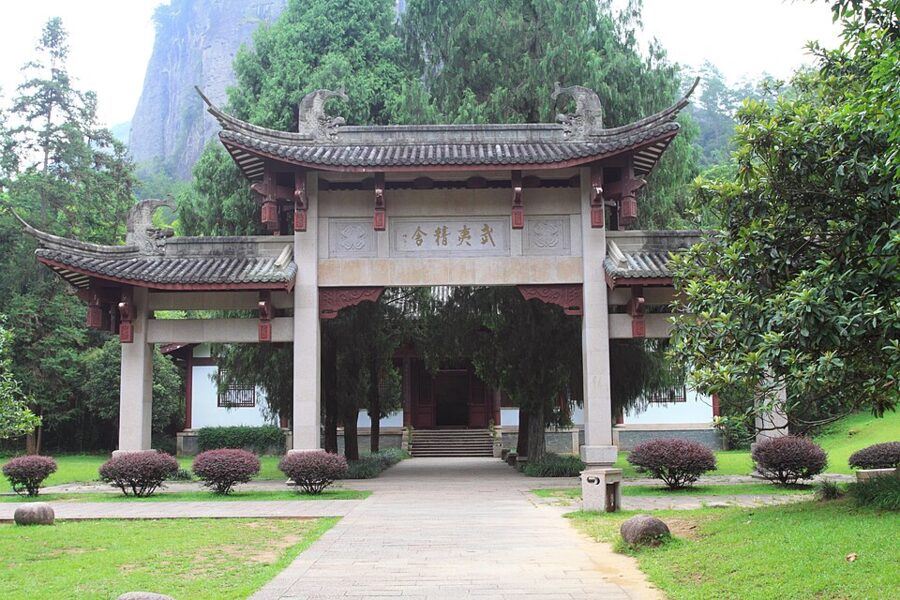

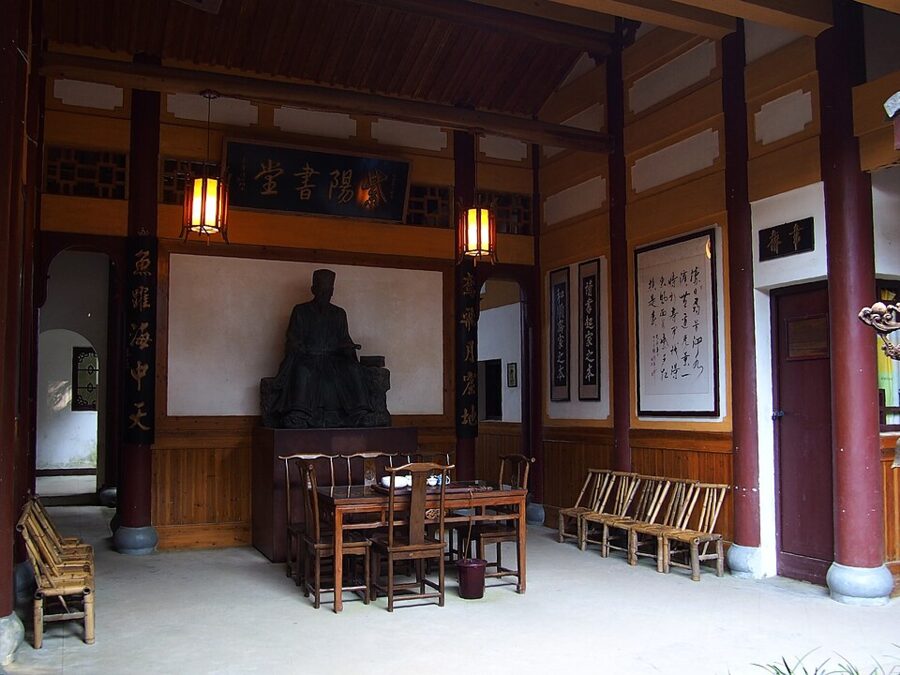
The academy was destroyed in 1365 and restored repeatedly under the Ming and Qing. In 1687 the Kangxi Emperor sent a plaque for it reading “learning reaches nature and heaven”. What you see now is the 2001 reconstruction with a small memorial garden, a short walk from Yunwo at the foot of the Tianyou trail. UNESCO counts at least 35 academies in the Wuyi area from the Northern Song to the Qing, and the remains of more than 60 Daoist temples.
For the man rather than the school, go to Wufu, southeast of the scenic area. Ziyang Lou (紫阳楼), the house where he lived after his father’s death, is kept as a memorial with a statue of him inside.

Words on the rock
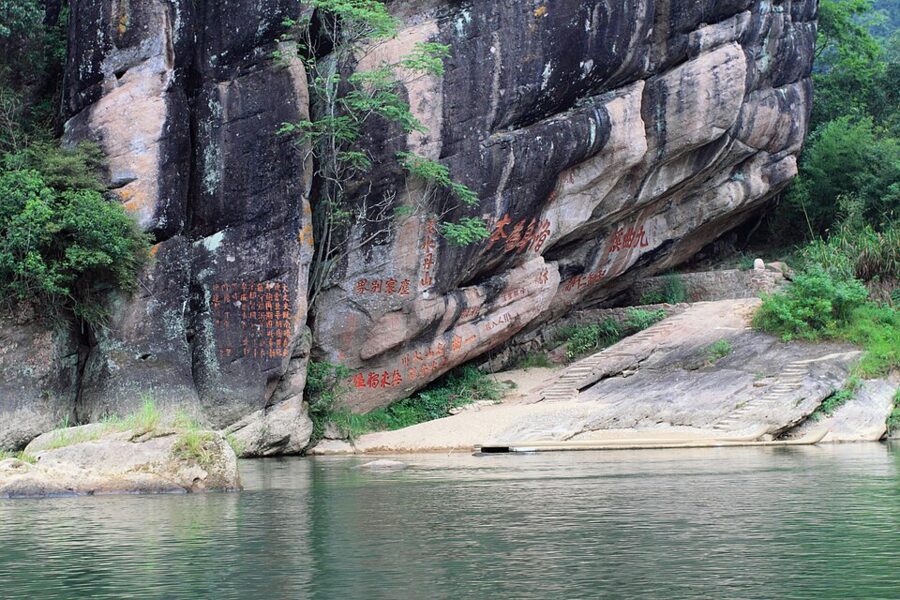
Mount Wuyi has more than 450 historic cliff inscriptions (摩崖石刻), and the Nine-Bend Stream is lined with them. Some are poems, some are place names cut in huge characters, some are the official record of a visit. Zhu Xi left his own in 1175 on Xiangsheng Rock on the south bank of the sixth bend: 18 vertical lines of regular script, each character about 19 centimeters square.
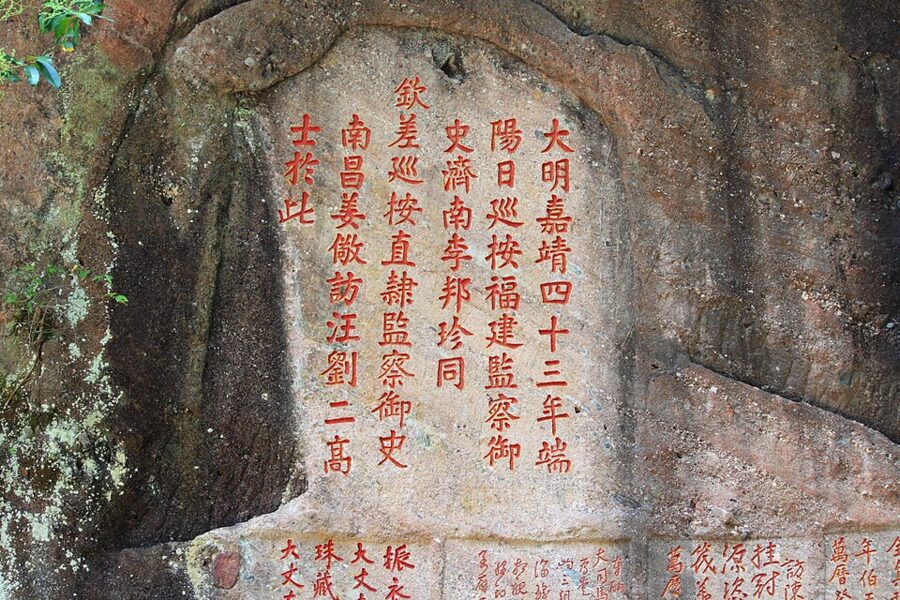

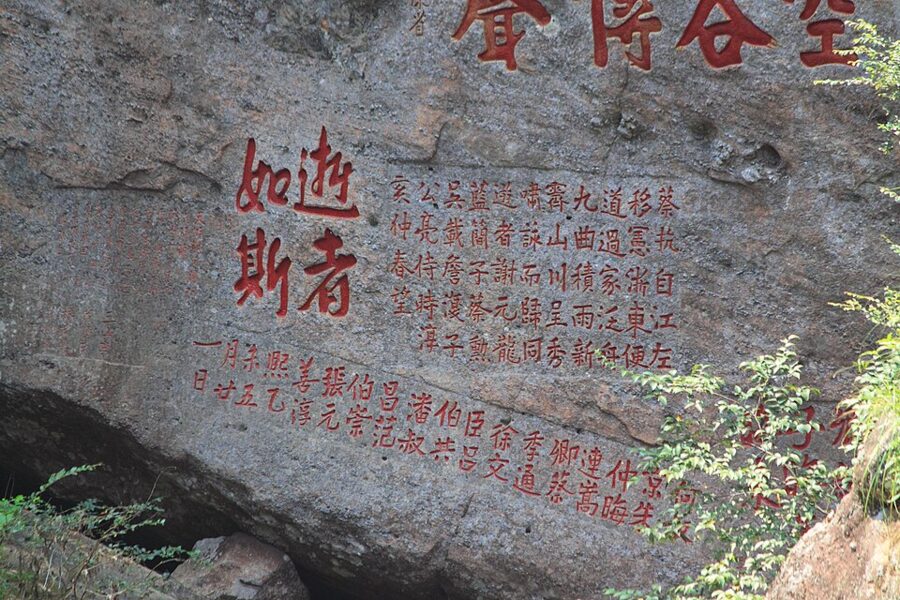

The tea gorges have their own. At Jiulongke there are poems on tea by Fan Zhongyan and Zhu Xi, and the phrase “Wan Gan Hou”, “the late-sweet lord”, an old literary name for Wuyi tea, set in characters collected from the calligraphy of Wang Xizhi. In Niulan Keng someone carved “不可思议”, “inconceivable”, which is either a comment on the tea or on the climb.
The coffins in the cliffs
Long before Zhu Xi, before the Han and before anyone wrote about the place, people here put their dead in the cliffs. The boat coffins (架壑船棺) were hollowed from single logs of nanmu wood, shaped like canoes, and lodged in natural caves and fissures tens of meters above the stream. Carbon dating puts the oldest at around 3,800 years, in the Shang and Zhou era, and archaeologists generally credit the ancestors of the Minyue people.
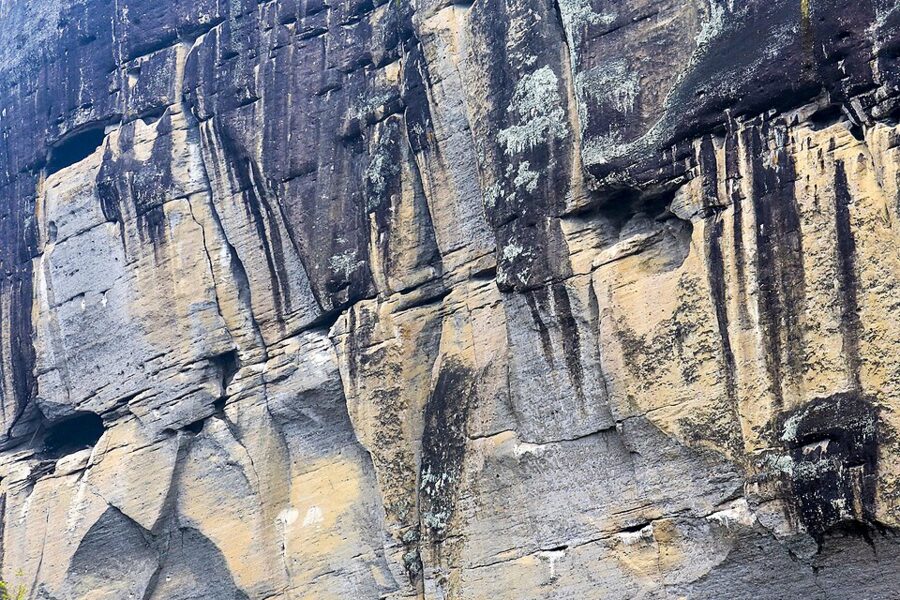

Chinese archaeologists widely regard Mount Wuyi as the place where cliff burial began. The surviving coffins have been under national protection since 2006. The best view is the pair on Xiaozang Peak from your raft at the third bend; on foot there is a viewing pavilion facing the coffin cliffs.
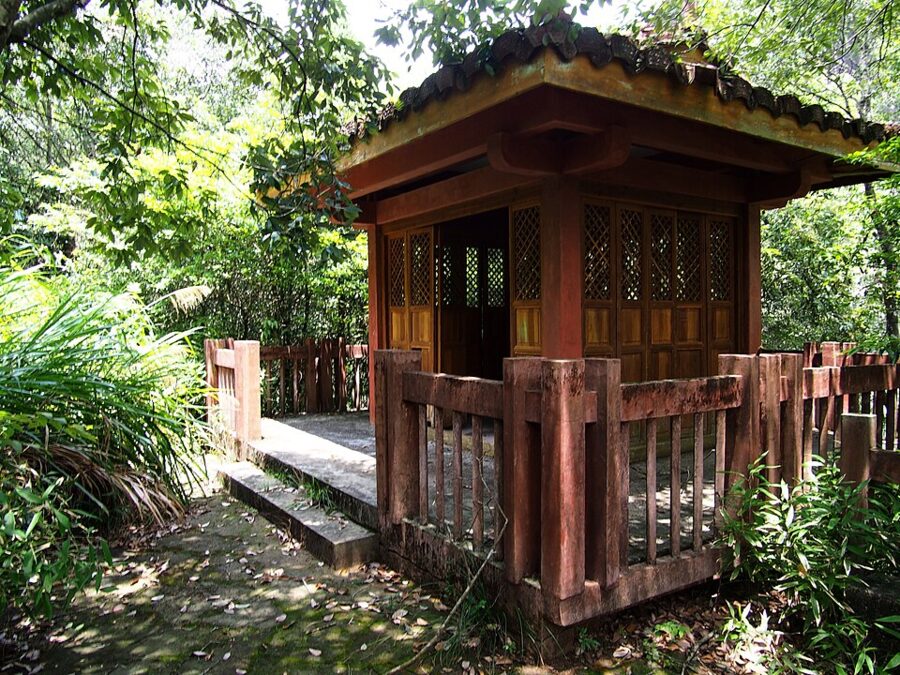

Chengcun, the Han city in the fields
The fourth piece of the World Heritage site is 35 kilometers from the city, near Chengcun village (城村) in Xingtian town. Here, on low hills wrapped on three sides by the Chongyang River, stand the walls of a city that sources describe in two ways. UNESCO’s listing credits Han-dynasty rulers with building an administrative capital here in the first century BCE. Chinese archaeologists call it a royal city of the Minyue kingdom, which the Han conquered in 110 BCE.
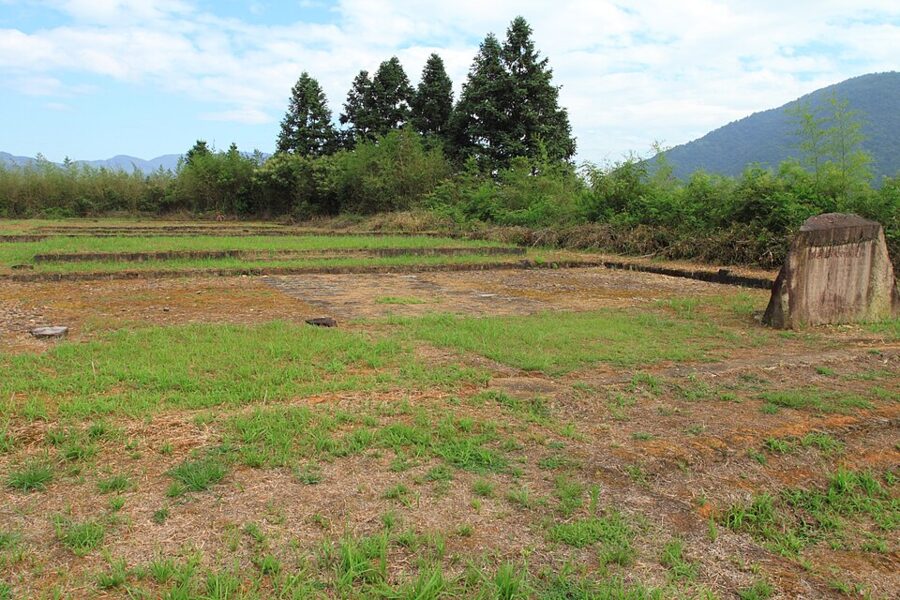

The rammed-earth wall runs 2,896 meters around an area of 48 hectares, with two gates. Inside, excavators have found four large building complexes, five ironworking sites, fifteen residential areas, beacon platforms, drains and roads. The palace at the center had a gate, a main hall, side halls and a heated room, with a proper drainage apron around it. It has been a national protected site since 1996.
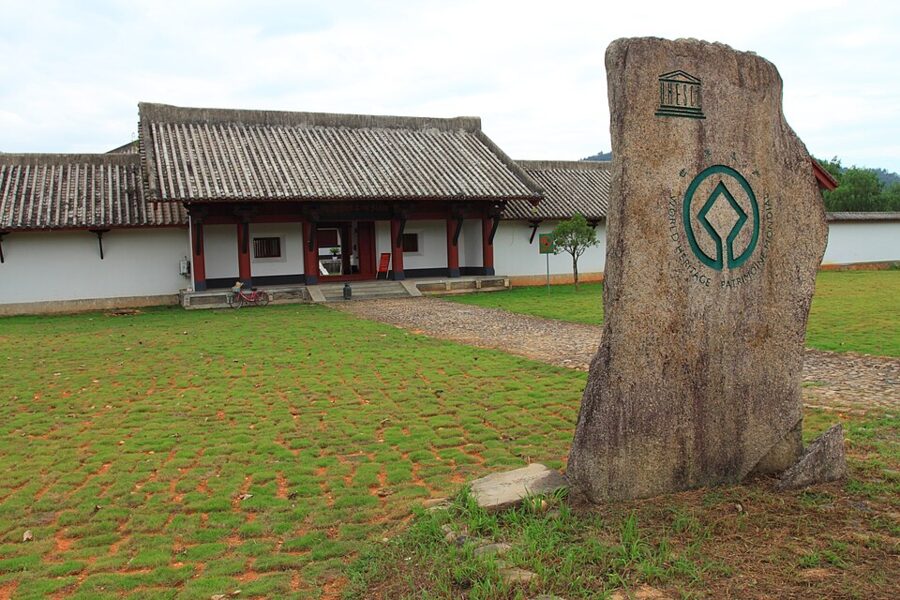
The Minyue Kingdom Museum (福建闽越王城博物馆) at the site holds some 3,600 objects, among them gold, silver, bronze and ceramics from the city, and is open 08:30–17:00. Sources still list an old 80-yuan fee, but the city’s 2026 culture bureau report lists Minyue city among the free sights you enter by scanning a code at the gate. Bring cash or a phone payment app in case that changes.

Even the teaware has local roots. The Song-dynasty kiln site at Yulin Ting (遇林亭窑址), between Xingcun and Wuyi town, made black-glazed bowls, the kind Song tea drinkers prized for showing off white froth; it covers about 60,000 square meters and was excavated in 1998–2000 when the scenic area road was built.
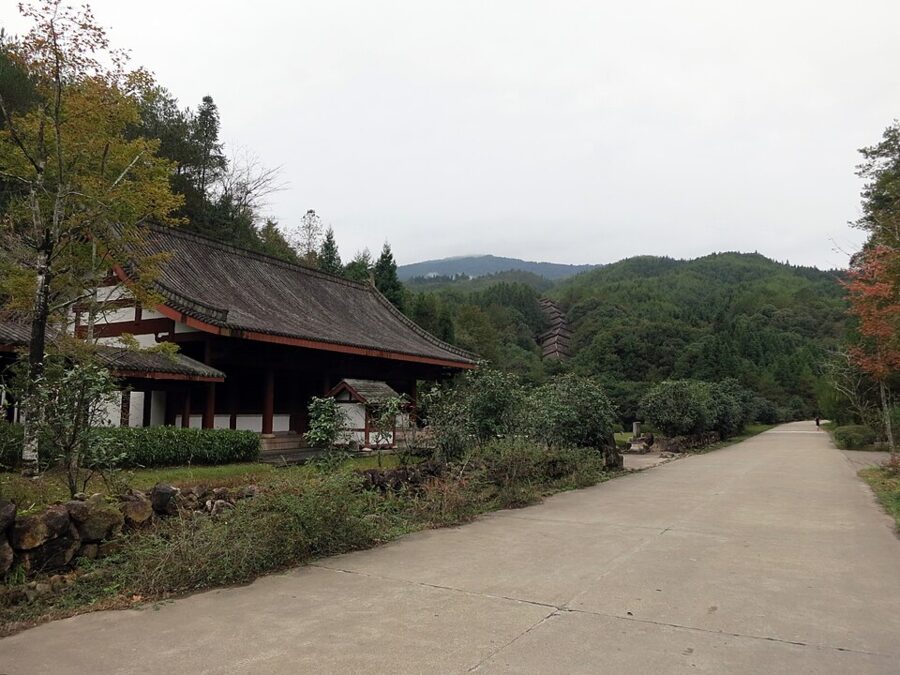

Getting there by train, and around for free
Come by high-speed rail. Wuyishan North (武夷山北站), on the Hefei–Fuzhou line, opened in 2015 and is the closest station, about 15 kilometers or a 20-minute taxi ride from the Sangu resort area at the scenic area’s south entrance. Trains from Fuzhou come up from the south; from the north the line connects through Shangrao with services to Hangzhou and Shanghai. Book on 12306, the national railway site and app, with your passport number.
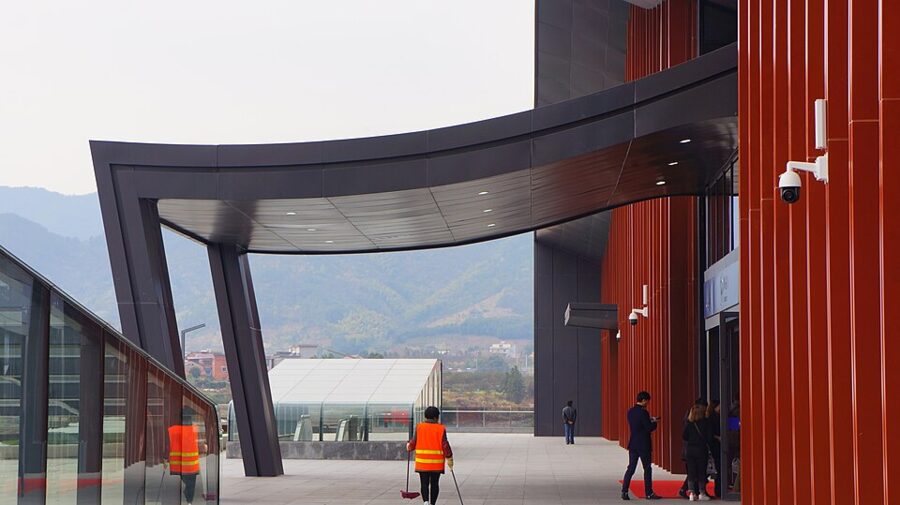

Many trains stop instead at Nanping City station (南平市站), which was called Wuyishan East until December 2019 and still confuses people under either name. It is in Jianyang, 26–30 kilometers from the scenic area. From there a tram line runs 26 kilometers to the south side of the scenic area, with fares of 5–10 yuan and services between about 07:00 and 20:00, more frequent at weekends. The express bus K1 charges 10 yuan for the same trip.
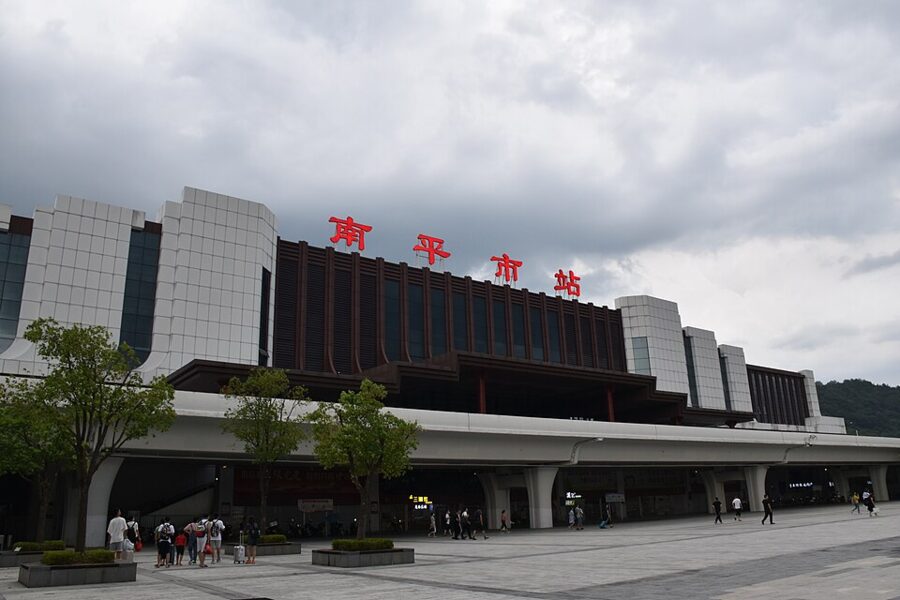

Watch the names. The tram’s terminal near the scenic area is called Wuyishan station, and so is the old conventional railway station in the city. Wuyishan’s small airport, a joint civil and military field right next to the scenic area, closed for runway repairs from November 2024 and reopened in February 2025 with a short list of routes; a replacement airport is planned. The jets you hear over Tianyou Peak are not airliners.
Once you are in town, the buses are free. Since September 27, 2023 all 13 lines of Wuyishan’s city bus network have carried passengers without a fare, and the policy passed its thousandth day in June 2026. Route 9 is the useful one: it links the high-speed station, the airport, the city, the resort area, the scenic area and the raft docks at Xingcun. Routes 6 and 7 also run from Wuyishan North toward the resort area.
Tickets in 2026
The scenic area has three kinds of ticket, and only one of them is free. The entrance ticket, nominally 140 yuan in March–November and 120 yuan in winter, has been waived for several years running; the city government kept the waiver for overseas visitors as well as domestic ones through 2025, and at its September 2026 holiday briefing confirmed it was still in place. You still have to reserve the zero-yuan ticket with your ID on the “中国武夷山” mini program, and 2026 reports say the gates no longer sell same-day entry.
| Ticket | Price (2026) | Notes |
|---|---|---|
| Entrance ticket | Free (waived) | Reserve in advance with passport or ID; one day ahead is usually enough outside holidays |
| Scenic bus | 70 / 85 / 95 yuan | One, two or three days; unlimited rides; half fare 40 yuan |
| Nine-Bend Stream raft | 130 yuan | Book seven days ahead from 08:00; eight to a raft |
The scenic bus is not technically compulsory, but private cars are kept out and the sights are kilometers apart, so in practice you will buy it. Use the south entrance for the raft landing, Tianyou Peak, Tiger Roar Rock, Yixiantian, Jade Maiden Peak and Wuyi Palace, and the north entrance for Da Hong Pao and Water Curtain Cave. Foreign visitors book with a passport number and should carry the passport to every gate.
Which season, and why not July
October and November are the months I’d pick. The air dries out, days run about 18–26°C (64–79°F), the light is clean on the rock, and the rafts are easier to book once the October holiday is over. Late April and early May are the other good window, wetter but with the tea harvest under way.
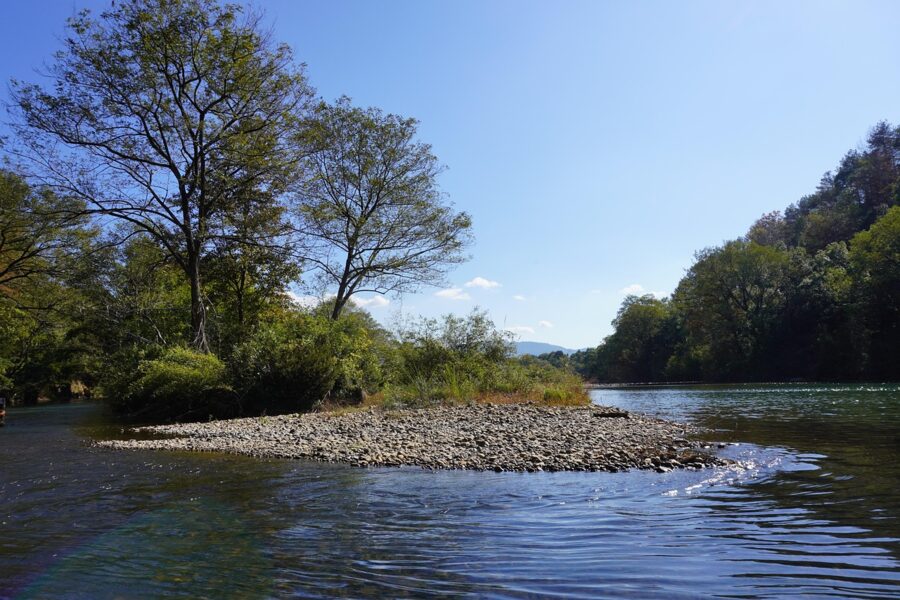
Spring brings rain, and May into June brings the plum rains, when the cloud sits low and the stream can rise fast. In June 2024 floods shut the scenic area and the rafts were out of action until June 22. July and August are hot, humid and the busiest months of the year, with school holidays filling every raft. Winter is cold and grey but quiet, and the winter hours shorten the day.
Where to stay
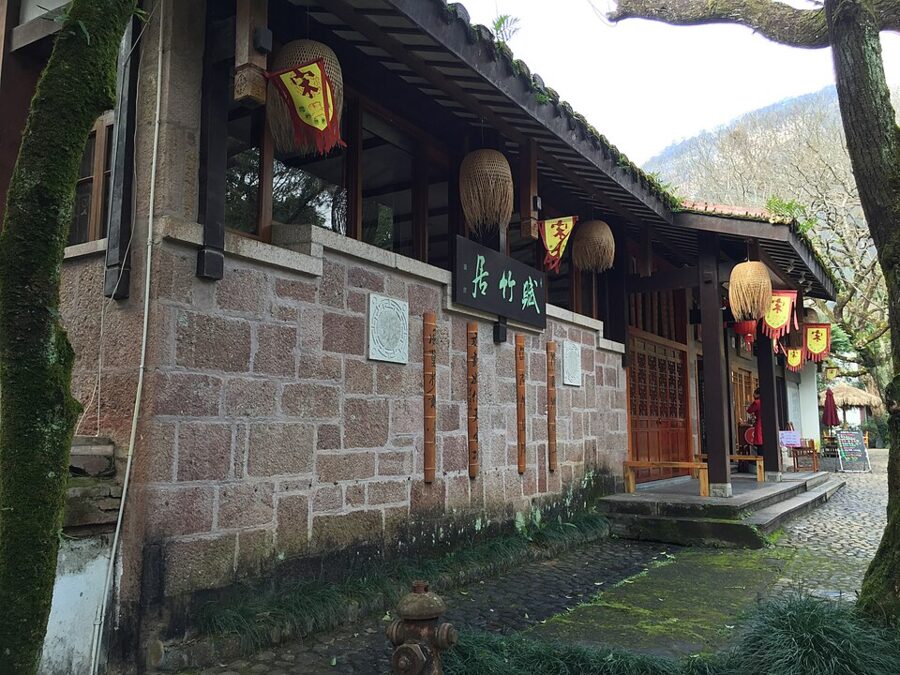
Sangu resort area (三姑度假区), by the south entrance and the Chongyang River, is where most visitors stay, and for a first trip it is the right call: hotels at every level, restaurants, the Tea Expo Park and the free buses all within walking distance. Xingcun, by the raft docks, suits anyone who wants to be on the first raft without an early bus. Nanyuanling (南源岭), a homestay village a little south, is quieter and greener, and the old city has the cheapest rooms but the longest daily ride.


Eat local while you are here. Langu smoked goose, named for a township in the north of the county; red-eye fish, a small river fish, steamed; and guangbing, the round baked biscuits, at breakfast. Places change hands fast in the resort area, so ask at your hotel rather than following a list.
Three days at Mount Wuyi
Day one: the stream and the peak. Take the earliest raft you could book from Xingcun, and drift down to the first bend by about 09:30. Walk up to Wuyi Palace (武夷宫), founded in the Tianbao era (742–755) and once one of the six great Daoist abbeys of the Song, then along Song Street (宋街) for lunch. In the afternoon take the scenic bus to Yunwo, see the Wuyi Jingshe site, and climb Tianyou Peak by the front steps and down by Huma Stream.


Day two: the tea gorges. Enter by the north entrance as it opens. See the mother trees at Jiulongke before the groups arrive, then walk the rock-tea trail to Water Curtain Cave with a stop at Huiyuan Temple. After lunch, take the bus round to Tiger Roar Rock and Yixiantian.
In the evening, book a paid session at the Tea Expo Park, or the show if the sky is clear.
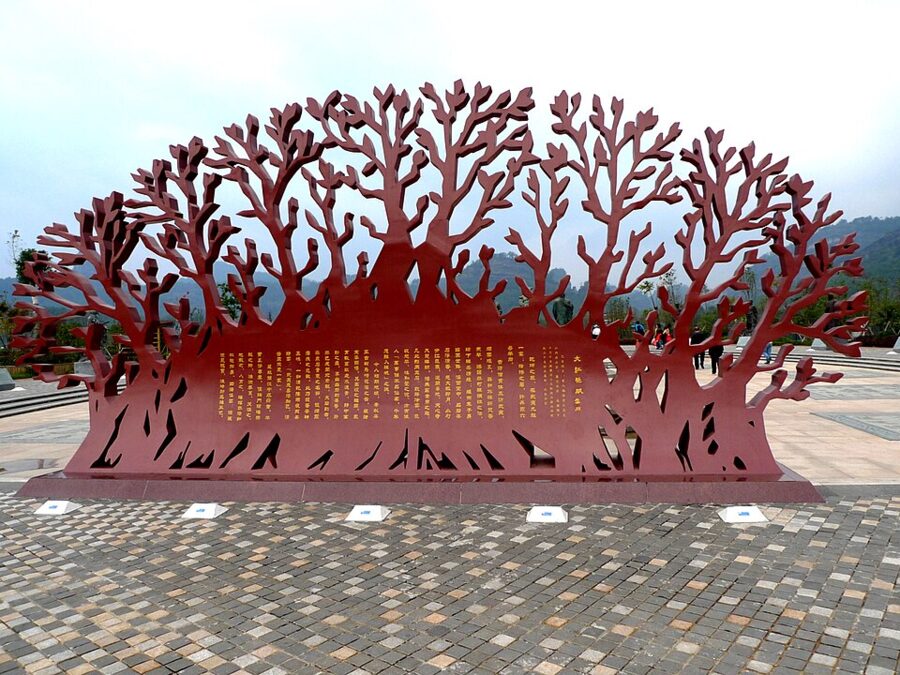

Day three: the Han city and back to the start. Take a taxi or a car to Chengcun for the morning, to see the Han city and the museum, which take about two hours together. Come back for the afternoon and walk the riverside below Dawang Peak to the first bend, where the rafts tie up for the night.
Finish there at dusk. The last raft has landed, the polers are stacking the seats, and the water goes still under the cliffs. This is where Zhu Xi’s song starts, at the first bend under Dawang Peak, with a boat about to go upstream into the gorge.